What a Skirted Conveyor Belt Is
A Skirted Conveyor Belt is a conveyor belt with raised flexible side walls, or skirts, running along one or both edges. The skirts sit on the belt surface and form a shallow channel that keeps loose material from spilling over the edges. This design is closely related to the corrugated sidewall conveyor belt, and the two terms are often used together when describing belts that combine edge containment with cleats or cross-ribs.
The main job of the skirt is simple: contain the load. On a flat belt, fine or free-flowing material tends to migrate sideways, especially on inclines or at transfer points. A skirted belt holds that material in the carrying zone, which reduces spillage and cleanup work around the conveyor.
How the Belt Is Built
The base is a standard fabric or steel cord carcass, depending on the duty. Common constructions include EP conveyor belt and NN fabric core types, while heavier duties may use a steel cord carcass. The skirt is usually a molded rubber or rubber-fabric profile bonded to the belt edge. Cross-ribs or cleats may be added between the skirts to lift material on steep sections.
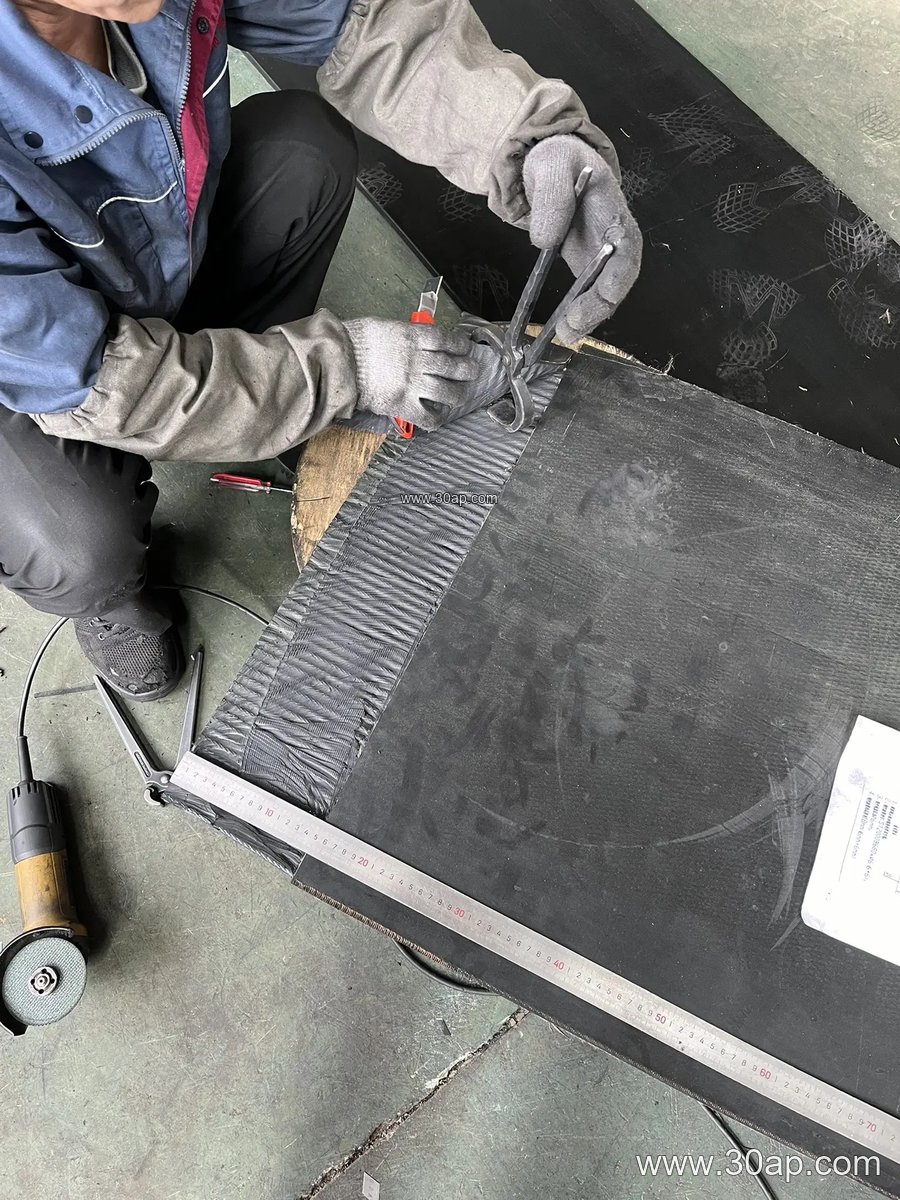
Typical build options include:
- Skirt height selected to match the material depth and angle of incline
- Reinforced skirt base to resist tearing at the bond line
- Cover grades for abrasion, heat, oil, or flame resistance
- Cross-ribs in various pitches for inclined conveying
Cover rubber thickness is commonly given in combinations such as 4+2 mm or 6+2 mm, with carcass plies ranging from 2 to 6 layers. These figures are reference values; actual construction is set by the conveyor design and the manufacturer.
Where Skirted Belts Are Used
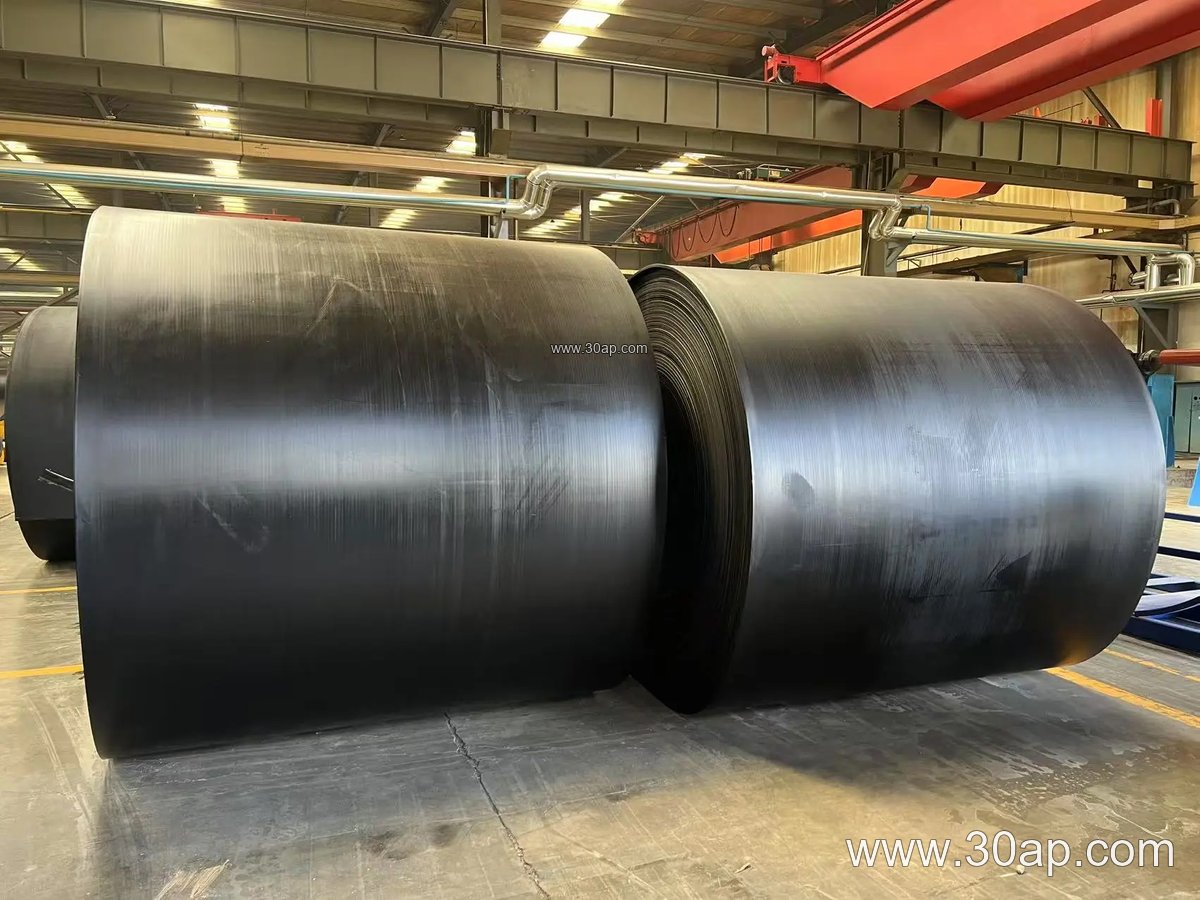
These belts suit applications where material must be contained without a full troughed idler set. They appear in cement plants, power plants, sand and gravel yards, fertilizer handling, and recycling lines. In mining and quarry operations, a skirted belt can carry crushed rock or ore on an incline while keeping the load centered. A flame retardant version is sometimes chosen for coal handling, and an abrasion resistant cover is common where sharp aggregate is present.
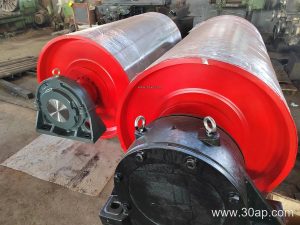
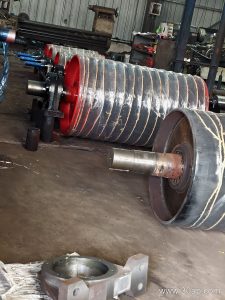
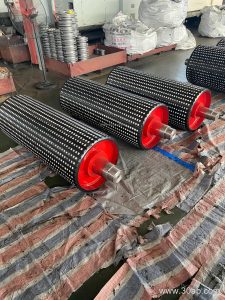
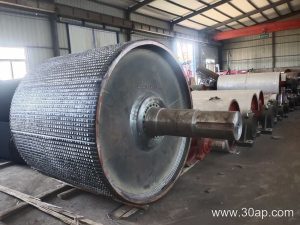
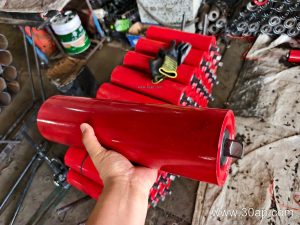
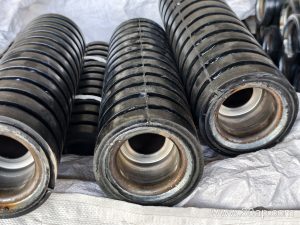
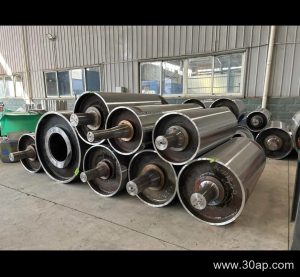
The belt still runs on a conventional frame with a drive pulley, tail pulley, and bend pulleys, supported by idler rollers or a slider bed. The skirt does not replace the pulley function; it only controls the load profile.
Specifications Buyers Should Confirm
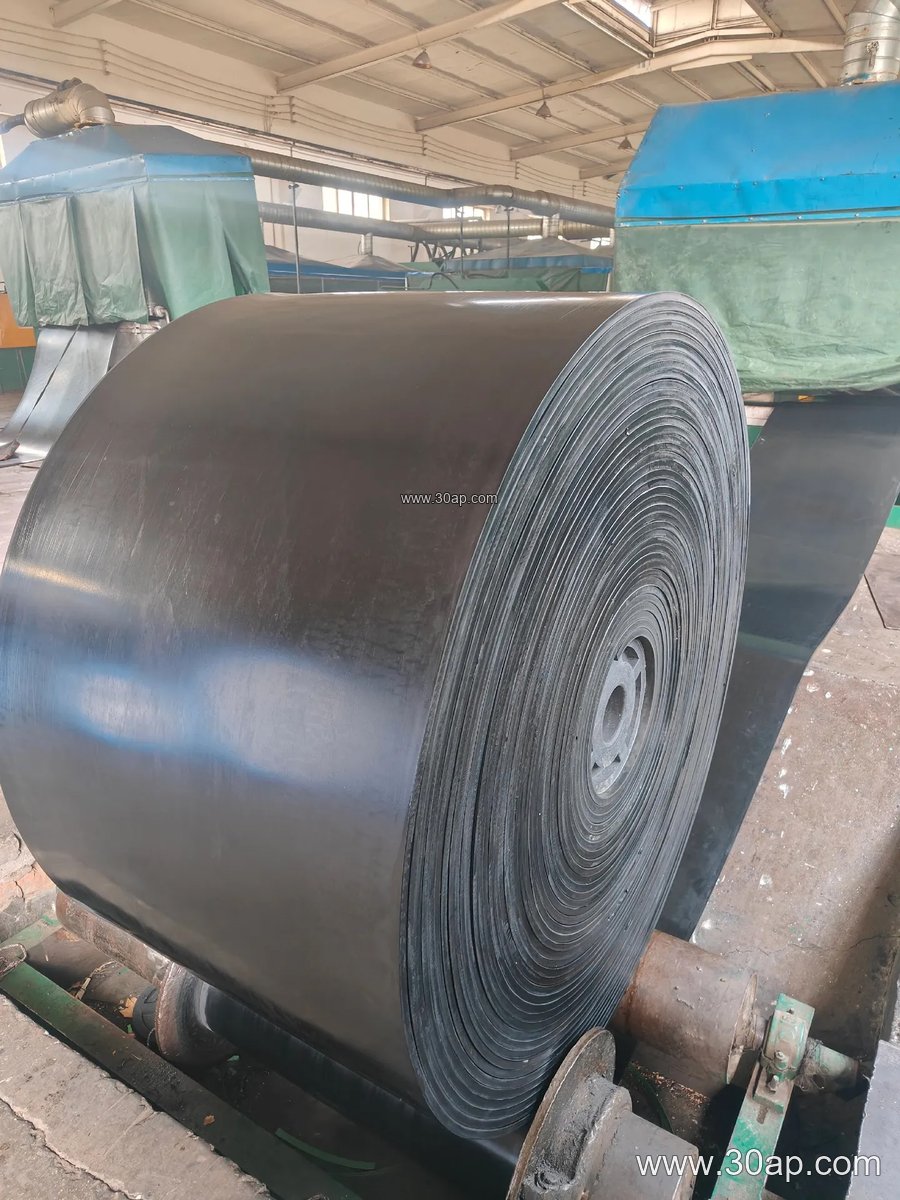
When specifying a skirted belt, buyers should confirm the carcass type and strength grade, the belt width, skirt height and profile, and the cover grade. Belt widths commonly range from B500 to B2000, and strength grades from EP200 up to EP2000 for fabric types. Steel cord grades are chosen separately when required.
| Parameter | Common Reference Range |
|---|---|
| Belt width | B500, B650, B800, B1000, B1200, B1400, B1600, B1800, B2000 |
| Fabric strength grade | EP200 to EP2000 |
| Cover thickness | 3+1.5 mm, 4+2 mm, 5+2 mm, 6+2 mm, 8+3 mm |
| Carcass plies | 2 to 6 layers |
| Skirt type | Corrugated sidewall, straight skirt |
Do not assume one belt width fixes a pulley diameter or shaft size; those are set by the conveyor drive calculation. The skirt height, rib pitch, and belt tension all interact, so the full conveyor layout should be reviewed before ordering.
Selection and Maintenance Notes
Check that the skirt profile matches the pulley and transition distances, because a tall skirt needs enough room to flex without rubbing. Keep the belt tracking straight; a misaligned belt wears the skirt edge quickly. Inspect the skirt-to-belt bond regularly, and clean material buildup from the return side. Where heat, oil, or flame risk exists, specify the matching cover grade rather than relying on a general-purpose belt.
For more belt options, see the rubber conveyor belt range and the related mining conveyor belt selections.