What a Custom Conveyor Pulley Really Is
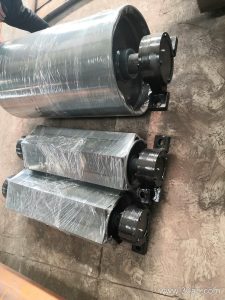
A custom conveyor pulley is a drum assembly built to match a specific conveyor layout rather than picked from a short list of stock sizes. It is the rotating component that carries the conveyor belt, sets its path, and in many cases transmits the drive torque. Because every conveyor has its own belt width, load profile, take-up arrangement and head or tail geometry, the pulley often has to be engineered around those conditions. A quarry line feeding a primary crusher and a coal handling circuit in a power plant rarely share the same drum dimensions, shaft size or surface treatment.
The same product is also called a custom conveyor drum or tailored belt pulley. Drive, tail and bend pulleys are distinct roles and should not be treated as interchangeable. A drive pulley delivers power, a tail pulley returns the belt at the loading end, and a bend pulley changes belt direction without driving. Each has its own design priorities.
How the Assembly Is Built
The core is usually a steel shell with machined end discs, a through shaft or stub shafts, bearing housings and a locking arrangement. Shell thickness, disc profile and weld detail are chosen for the belt tension and the radial loads expected in service. Shaft diameter is determined by torque and bending load, not by belt width alone, so a B800 drum and a B1400 drum can carry very different shafts depending on duty.
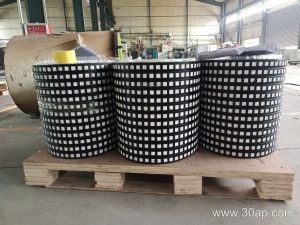
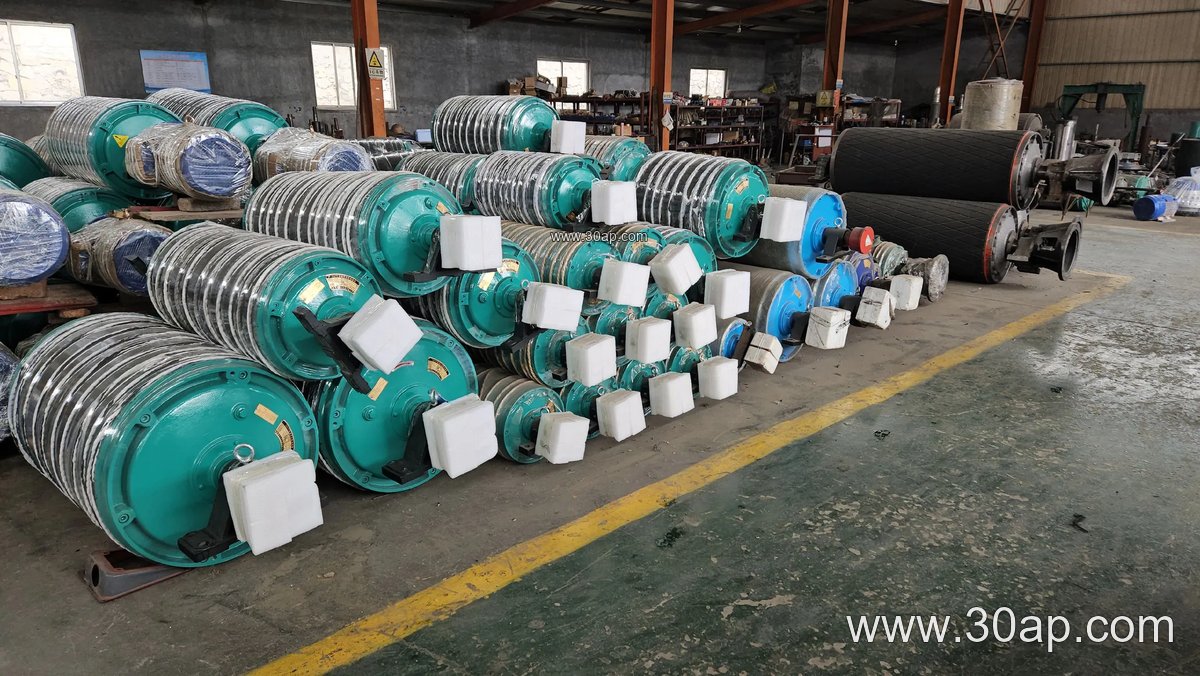
Surface form is a major part of the specification. Plain shells suit many non-drive positions, while lagging improves grip on drive pulleys and protects the shell in abrasive service. Common options include hot vulcanized rubber, cold bonded rubber, diamond grooved lagging, herringbone lagging and ceramic lagging, with lagging thickness often in the 8 to 20 mm range. In a cement plant or a sand and aggregate line, the choice between smooth and grooved surfaces can affect belt tracking and material carryback.
Matching the Pulley to Belt Width and Position
Face width normally runs a little wider than the belt so the belt is fully supported. Reference combinations such as B800 with a Ø500 shell, B1200 with a Ø1000 shell or B1400 with a Ø800 shell appear in real projects, but they are examples, not fixed rules. Diameter selection depends on belt tension, wrap angle, available space and the allowable shaft deflection. A tail pulley in a tunnel spoil system may be compact, while a head pulley on a long overland conveyor may need a larger diameter to reduce belt bending stress.
Where the drum sits also matters. A snub or bend pulley used to increase wrap angle on a drive pulley is exposed to different loads than a take-up pulley that moves along the tensioning frame. Matching the conveyor bracket and bearing housing to the frame is part of the same engineering task, and a poorly matched bracket can shorten bearing life regardless of shell quality.
Typical Duty in Mining, Power and Aggregate Plants
These drums appear wherever bulk material moves on a belt. In an iron ore or copper ore operation, a heavy-duty drum with abrasion resistant lagging helps cope with grit and continuous load. In a coal washing plant or a power station coal yard, flame retardant and anti-static belt requirements often shape the surrounding specification, and the pulley surfaces should be selected with the same fire safety thinking. Aggregate plants, stone crushing lines and concrete batching plants use them at head, tail and take-up points where dust and shock loading are routine.
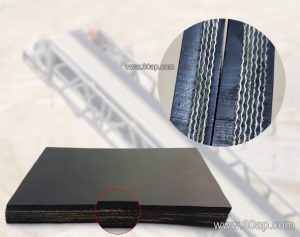
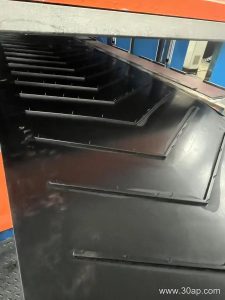
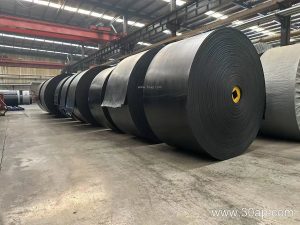
Belt type influences pulley design too. A steel cord conveyor belt may call for a larger diameter to limit bending fatigue, while an EP conveyor belt or NN conveyor belt on a shorter conveyor may accept a more compact drum. A chevron conveyor belt or a corrugated sidewall belt can require additional clearance and careful profile matching at the tail. Food grade and heat resistant belts in grain silos or fertilizer plants may need smooth, cleanable shells.
Specification Details Buyers Should Confirm
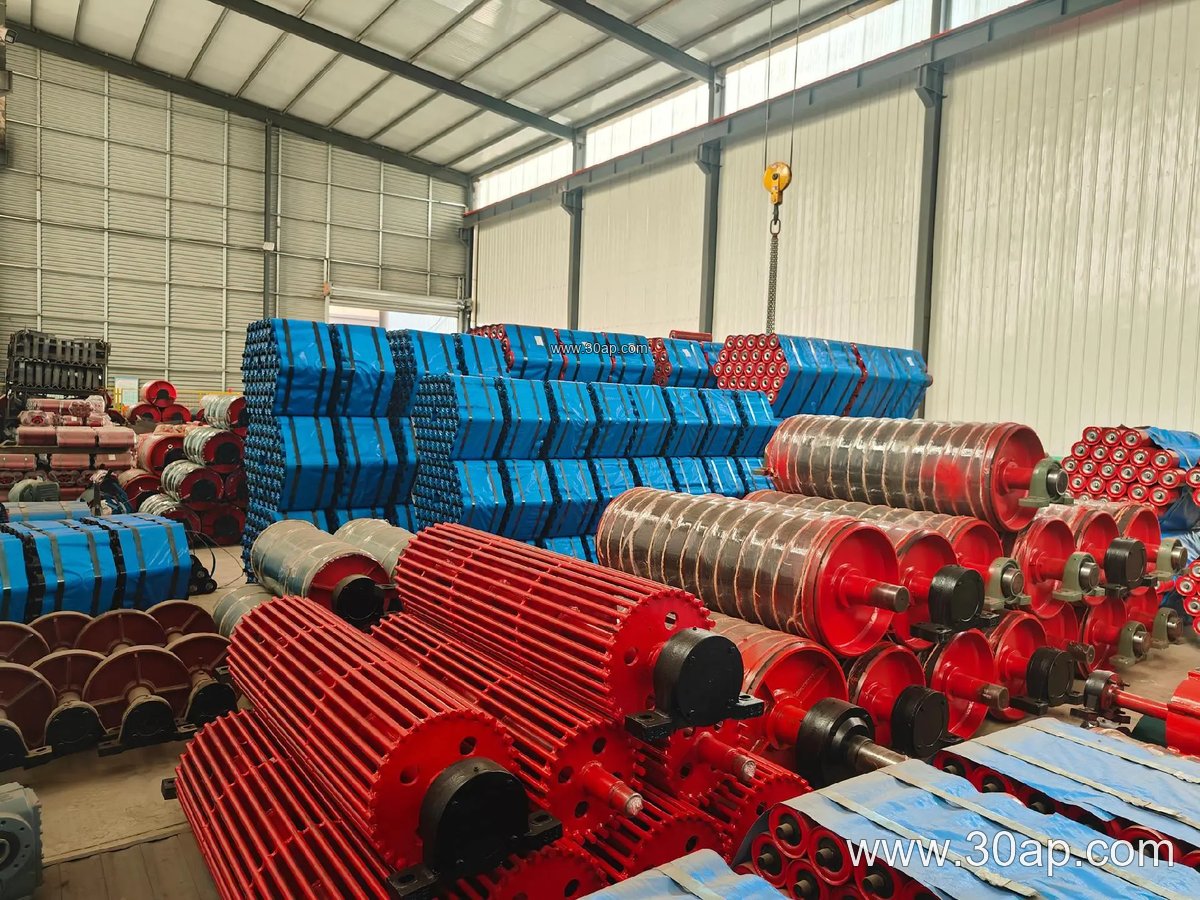
Before ordering, confirm the belt width, the pulley role, the required face width, shell diameter and shaft diameter, the lagging type and thickness, and the bearing and locking arrangement. It also helps to state the ambient conditions, the material being conveyed and whether the belt is a fabric core or steel cord construction.
| Parameter | Typical reference values |
|---|---|
| Belt width | B400, B500, B650, B800, B1000, B1200, B1400, B1600, B1800, B2000 |
| Shell diameter | Ø200, Ø250, Ø315, Ø400, Ø500, Ø630, Ø800, Ø1000, Ø1250, Ø1400 |
| Face width example | B650 about 750 mm, B1000 about 1150 mm, B1400 about 1600 mm |
| Shaft diameter | Ø50, Ø60, Ø80, Ø100, Ø120, Ø160, Ø200 (by torque and load) |
| Lagging thickness | 8, 10, 12, 15, 20 mm |
| Surface options | Plain, rubber lagging, diamond, herringbone, ceramic |
These figures are common references, not universal guarantees. A supplier should confirm every dimension against the actual conveyor design. Buyers should also ask how the drum will be balanced, how the lagging is bonded, and how the shaft will be locked to the end disc, since these details decide whether the pulley runs smoothly for years or develops problems early.
Installation and Maintenance Notes
Alignment is critical. A custom conveyor pulley that is correctly sized can still wear unevenly if the drum is not square to the belt centerline or if the take-up frame pulls at an angle. Check lagging wear at regular intervals, watch for material buildup on the shell, and inspect bearing seals in dusty aggregate or mining service. Keeping the belt tension within the design range protects both the pulley and the belt, and replacing worn lagging on time is often cheaper than replacing a scored shell.
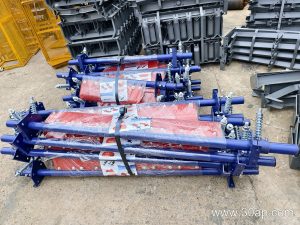
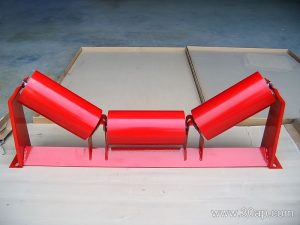
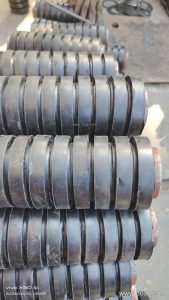
For related equipment such as idler rollers, conveyor brackets and the belt itself, the same rule applies: match the components as a system rather than as isolated parts. A well specified drum is only one link, but it is the link that decides how smoothly the belt travels around the head and tail of the conveyor.