What a Port Conveyor Pulley Does at the Dock
A port conveyor pulley is the rotating cylinder that turns, supports, and steers the conveyor belt in a bulk handling line. At a port, this component often works under continuous load, salty air, and heavy dust, so its construction and surface treatment matter as much as its nominal dimensions. The pulley is not a passive roller; it transmits torque from the drive to the belt, maintains belt tension at the tail, or changes the belt path at a bend. In a typical ship unloader or stockyard conveyor, several pulleys work together, each with a distinct role. Drive, tail, and bend pulleys are not interchangeable names, and confusing them can lead to the wrong selection.
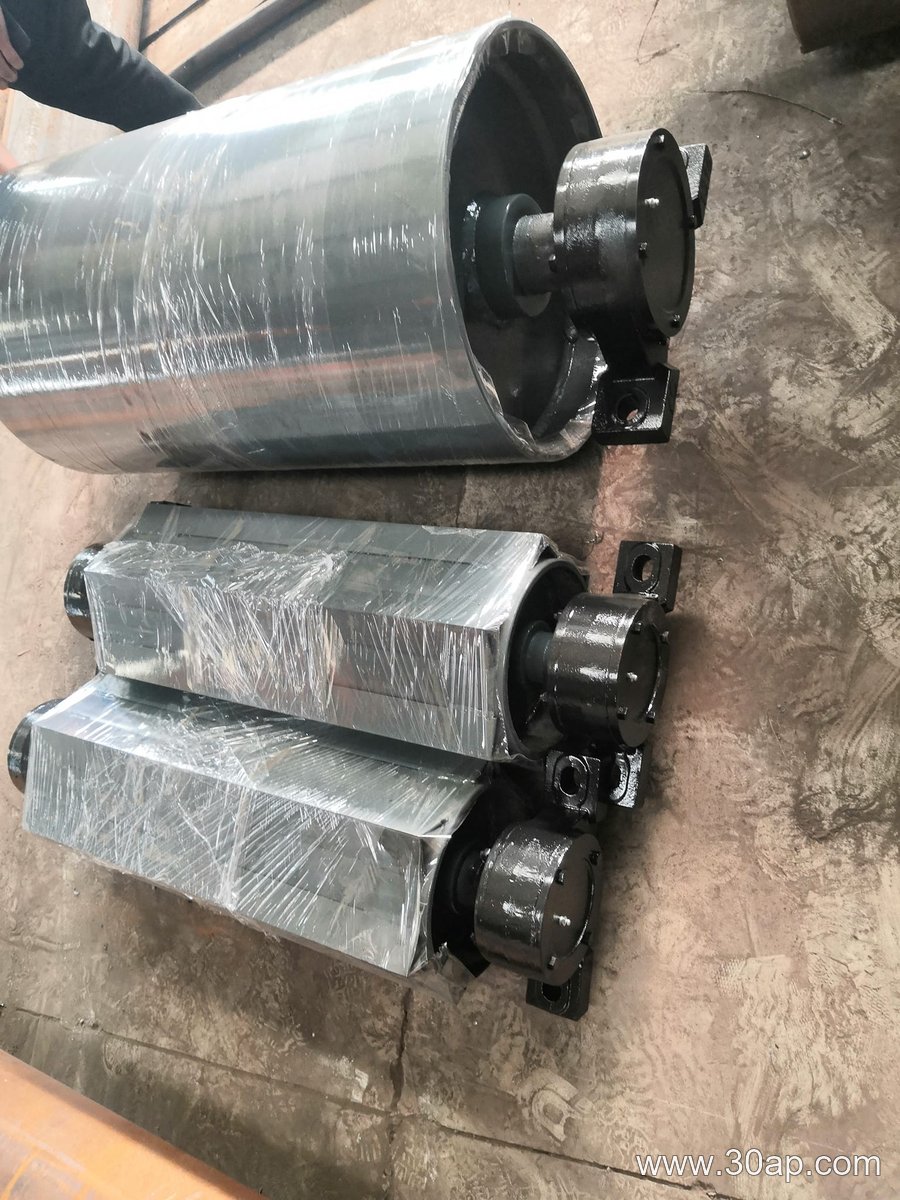
How the Pulley Is Built
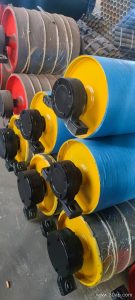
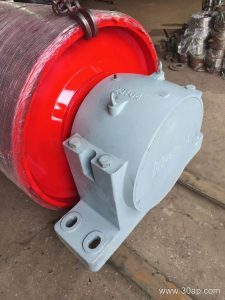
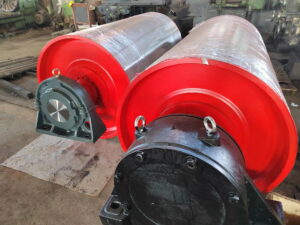
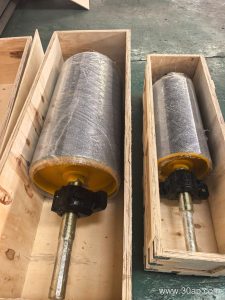
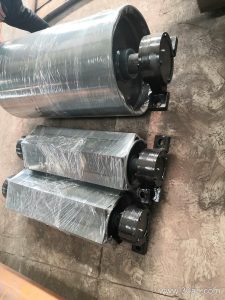
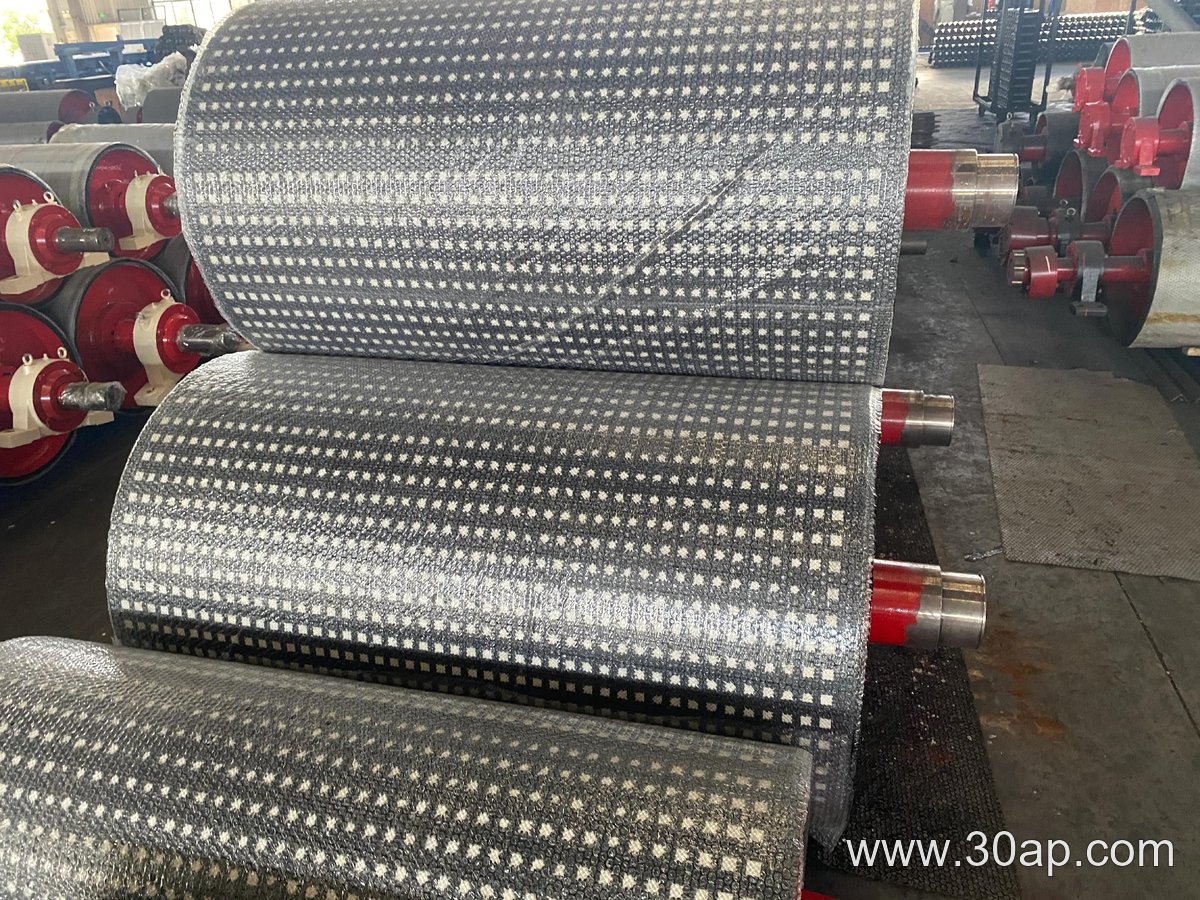
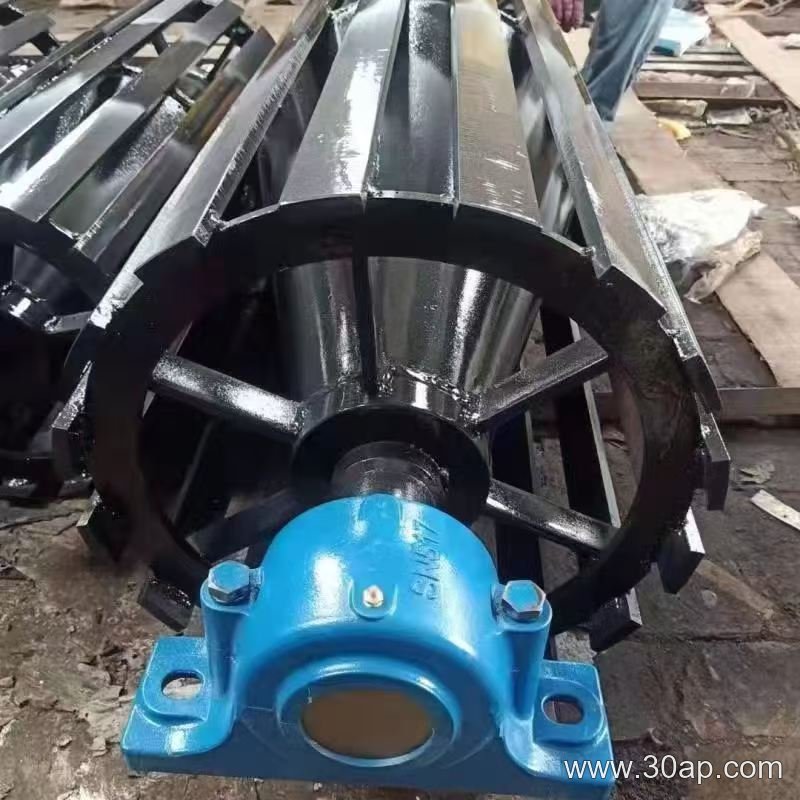
The core is usually a steel shell, machined and balanced, with end discs welded to a central shaft. The shaft carries the bearings and locking assemblies, and the shell may be covered with rubber or ceramic lagging. Common surface forms include plain steel, hot vulcanized rubber, cold bonded rubber, diamond grooved lagging, and ceramic lagging. Each surface affects grip and wear life. For example, a drive pulley on a wet coal conveyor may use diamond grooved rubber to shed water, while a bend pulley might stay plain or use a thin flat rubber cover. Lagging thickness often ranges from 8 mm to 20 mm depending on the duty. The shell width is normally wider than the conveyor belt, so a B1200 belt might run on a pulley face around 1400 mm, but this is a design practice, not a fixed rule.
Where It Fits in a Port Bulk Handling Line
Port conveyors move materials such as iron ore, coal, limestone, fertilizer, and grain. A single export terminal may use a head pulley at the shiploader boom, a tail pulley at the transfer tower, and several bend pulleys along the route. The drive pulley, sometimes called the head pulley when it is at the discharge end, is the one that pulls the belt. The tail pulley returns the belt and can be fitted with a tensioning device. A bend pulley changes direction without driving. In a stockyard, you may also see a take-up pulley on a gravity tower. Each position imposes different loads, so a pulley that works well at the tail may not suit the head drive.
Matching Belt Width, Diameter, and Shaft Size
Buyers often ask how to relate belt width to pulley diameter. There is no single mandatory match. A B800 belt might run on a Ø500 pulley in one conveyor and a Ø630 pulley in another, depending on belt tension, wrap angle, and space. Common combinations include B800 × Ø500, B1200 × Ø1000, and B1400 × Ø800, but these are examples, not universal rules. Larger diameters reduce belt bending stress and can improve tracking, but they also require more space and stronger shafts. Shaft diameter is determined by torque and load, not by belt width alone. Common shaft sizes include Ø80, Ø100, Ø120, Ø140, and Ø160, but the final value comes from the conveyor designer’s calculation. A simple tension check can be written as P = (qb + qm) x g x L / 2, where qb and qm are belt and material weights per meter, g is gravity, and L is the center distance. This is a rough estimate, not a substitute for proper engineering.
Selection and Maintenance Notes for Port Duty
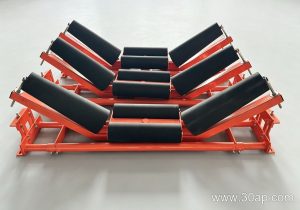
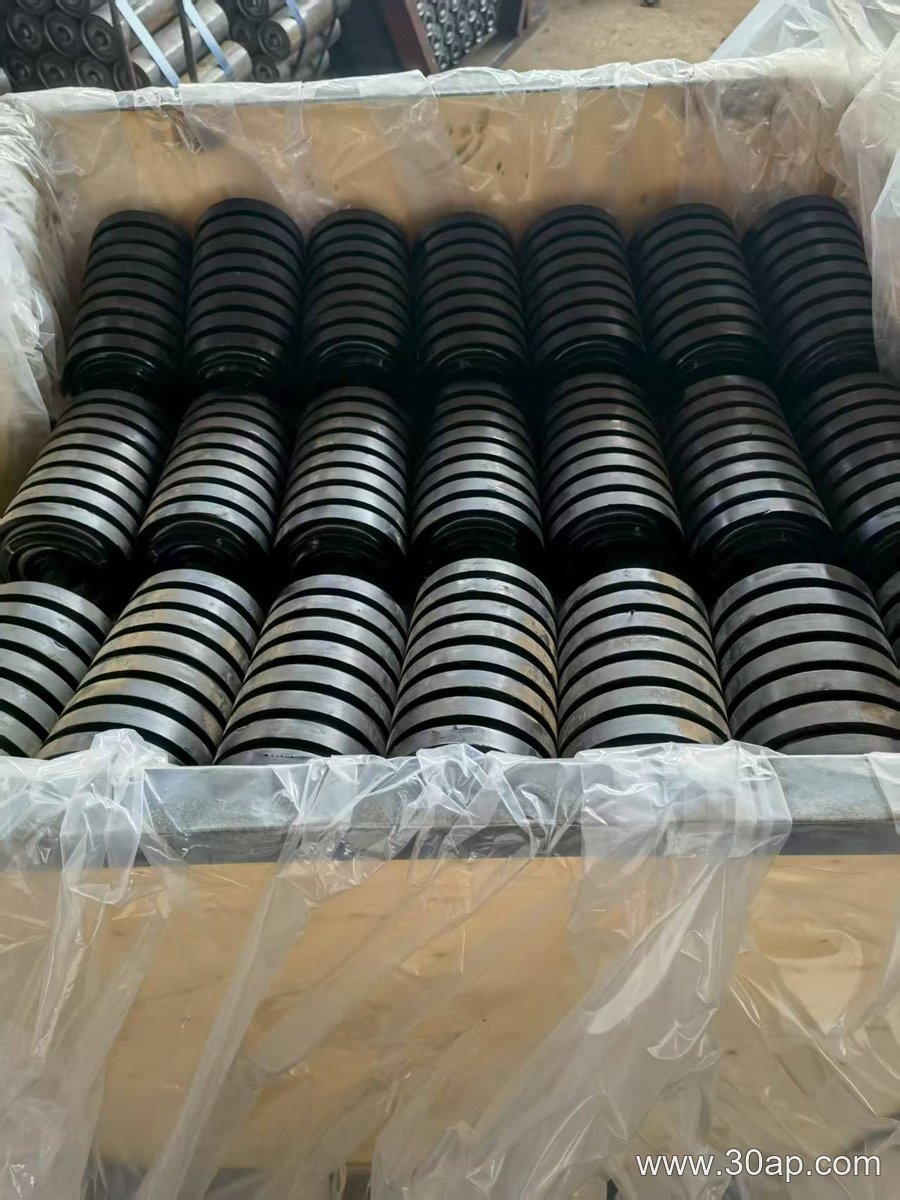
When choosing a port conveyor pulley, consider the environment first. Salt spray, abrasive dust, and high humidity call for sealed bearings, corrosion-resistant coatings, and lagging that resists tearing. Check the pulley’s dynamic balance if the belt speed is high. Confirm the shaft and bearing housing fit the conveyor bracket and the available space. For maintenance, inspect lagging wear, bolt tightness, and bearing temperature at regular intervals. A worn lagging can cause belt slip, while a seized bearing can damage the shaft. Keep a spare pulley for critical drive positions, because a port conveyor shutdown is costly. Also remember that an idler roller and a conveyor pulley serve different functions: idlers support the belt along the carrying run, while the pulley drives or redirects it. Do not substitute one for the other.
- Confirm the pulley role: drive, tail, bend, or take-up.
- Match lagging type to material and moisture.
- Verify shaft size by torque, not by belt width alone.
- Check face width against belt width with a small margin.
- Inspect bearings and lagging on a scheduled basis.
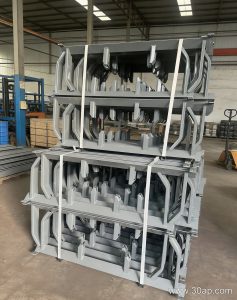
In short, a port conveyor pulley is a heavy-duty, application-specific component. Its size, surface, and shaft are selected together with the conveyor belt, idler roller, and bracket system. A good choice improves belt life and keeps bulk material moving through the terminal.