What a Plastic Idler Is and Where It Fits
A plastic idler is a conveyor roller whose body is made from engineering plastic rather than steel. It supports the conveyor belt on the carrying or return side, keeps the belt tracking smoothly, and reduces the load on the frame. In a sand and gravel line or a cement plant, dust and moisture are constant companions, so a non-corroding roller body has practical appeal. The plastic idler is not a drive pulley, a tail pulley, or a bend pulley; those are different components with different duties. It is a supporting roller, and it should be selected as such.
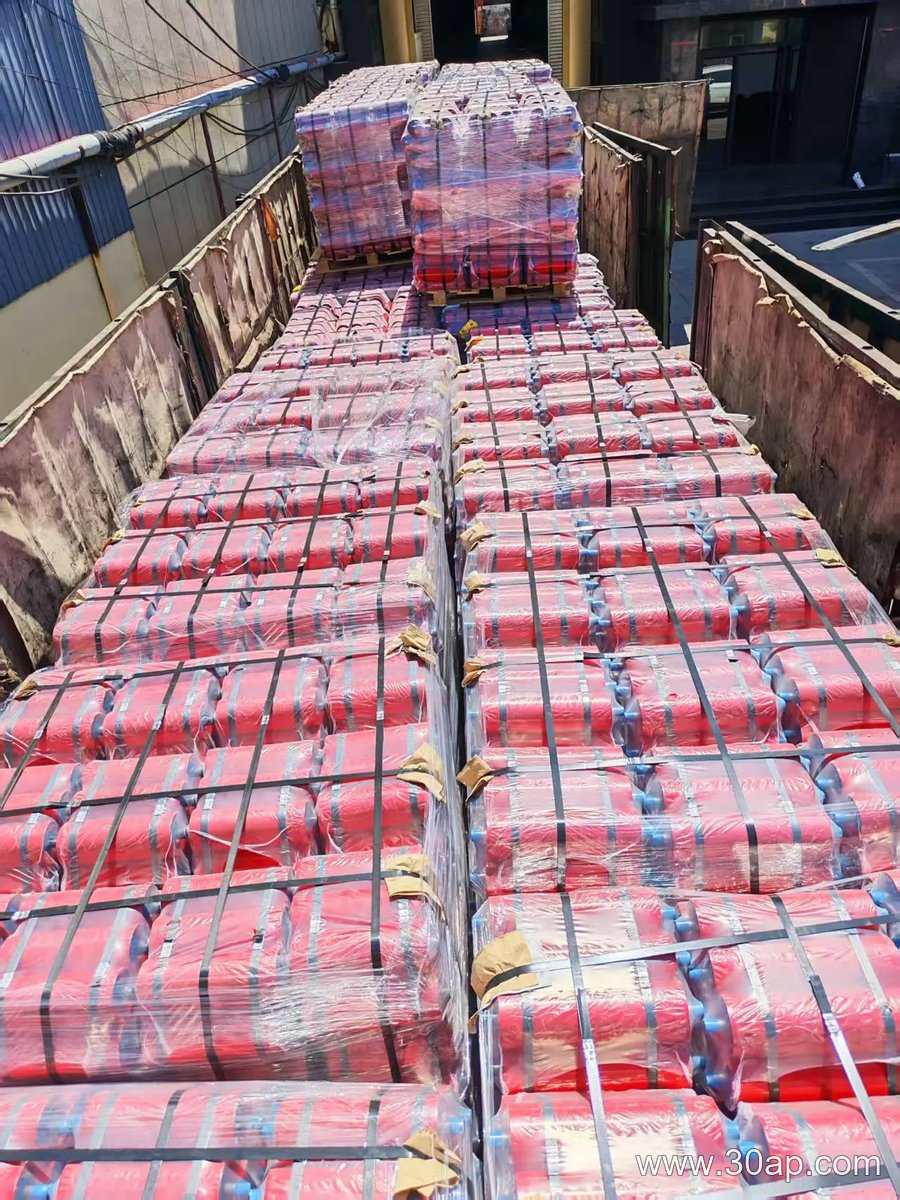
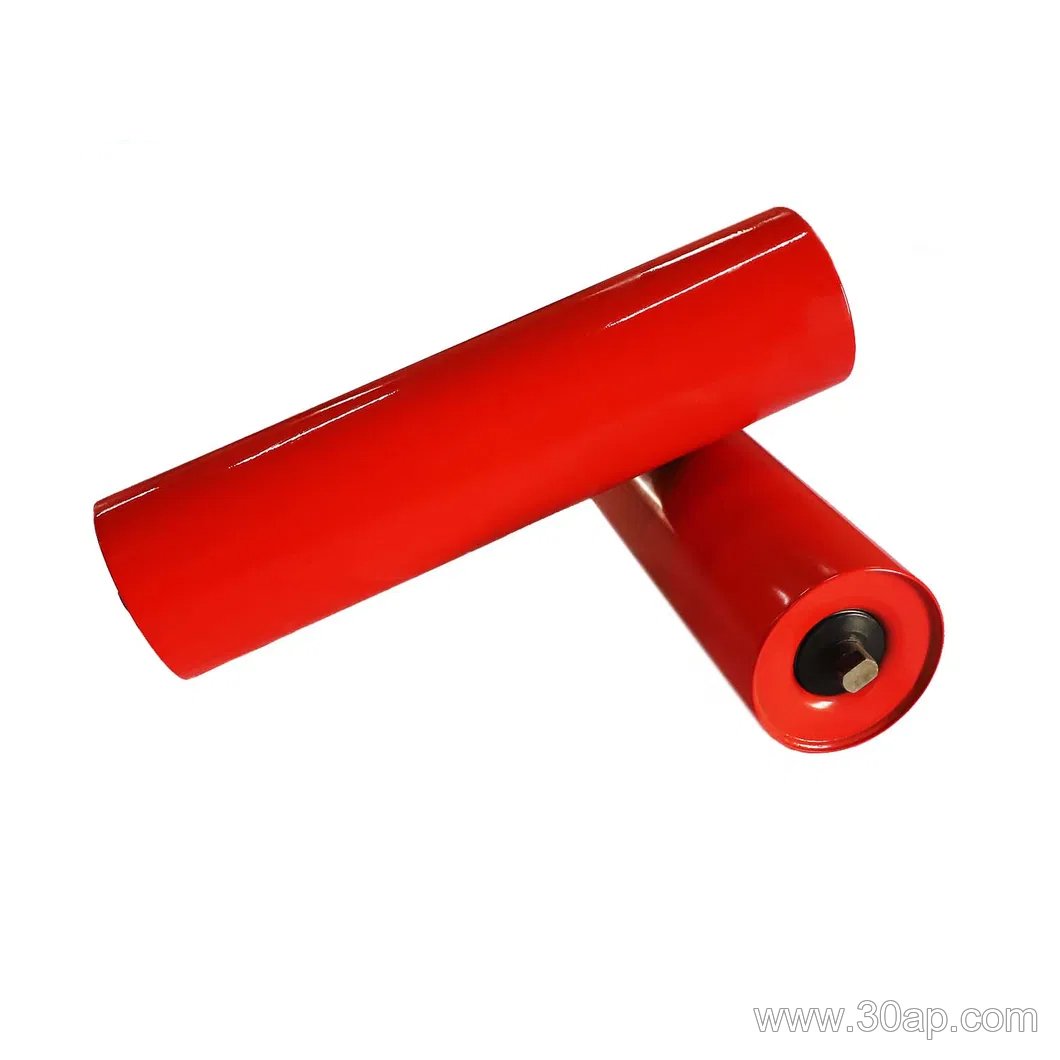
How the Roller Is Built
A typical plastic idler combines a molded or machined plastic shell with a shaft, bearing housings, and seals. The shell may be plain plastic, or it may carry a rubber ring for impact absorption. Common roller diameters for general conveying work include Ø63, Ø76, Ø89, Ø102, Ø108, Ø127, and Ø133. Larger diameters such as Ø159, Ø178, Ø194, and Ø219 appear in heavier duty positions. Bearings are usually selected from sizes like 6204, 6205, 6305, 6306, 6308, and 6310, but the bearing is matched to the load and speed of the application, not to the belt width alone.
Common Roller Diameters
| Roller diameter | Typical role |
|---|---|
| Ø63 to Ø89 | Light return and small belt conveyors |
| Ø102 to Ø133 | General carrying and return positions |
| Ø159 to Ø219 | Heavier loads and large belt widths |
Belt Width, Roll Length, and Trough Angle
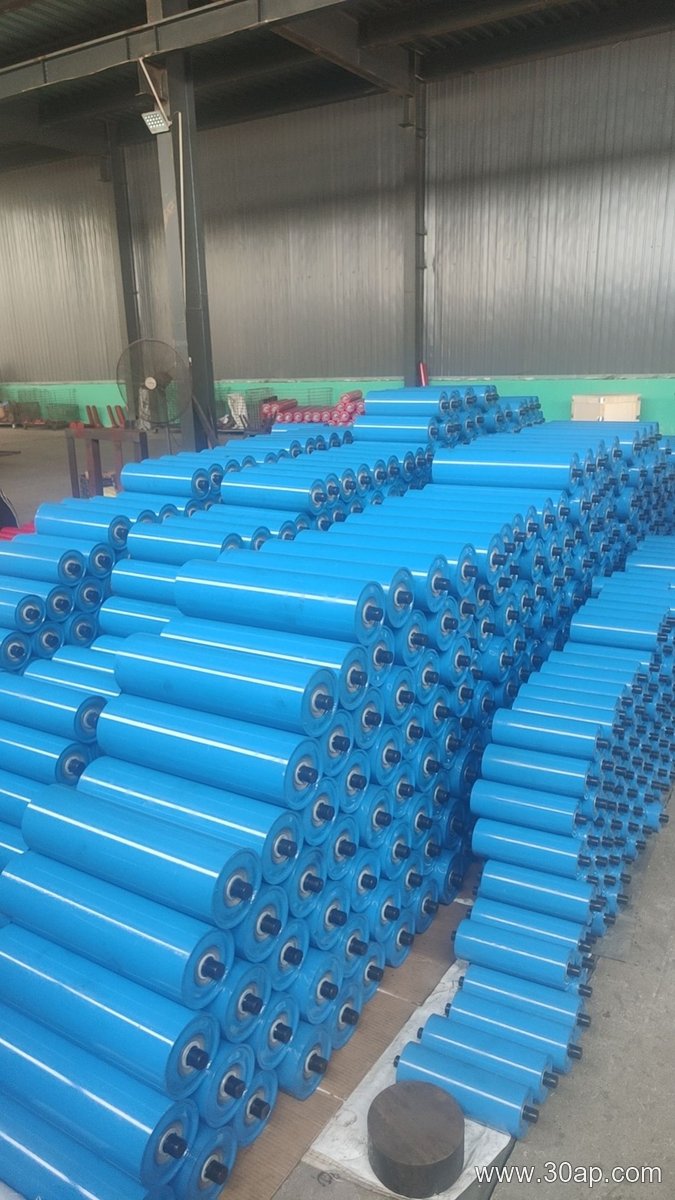
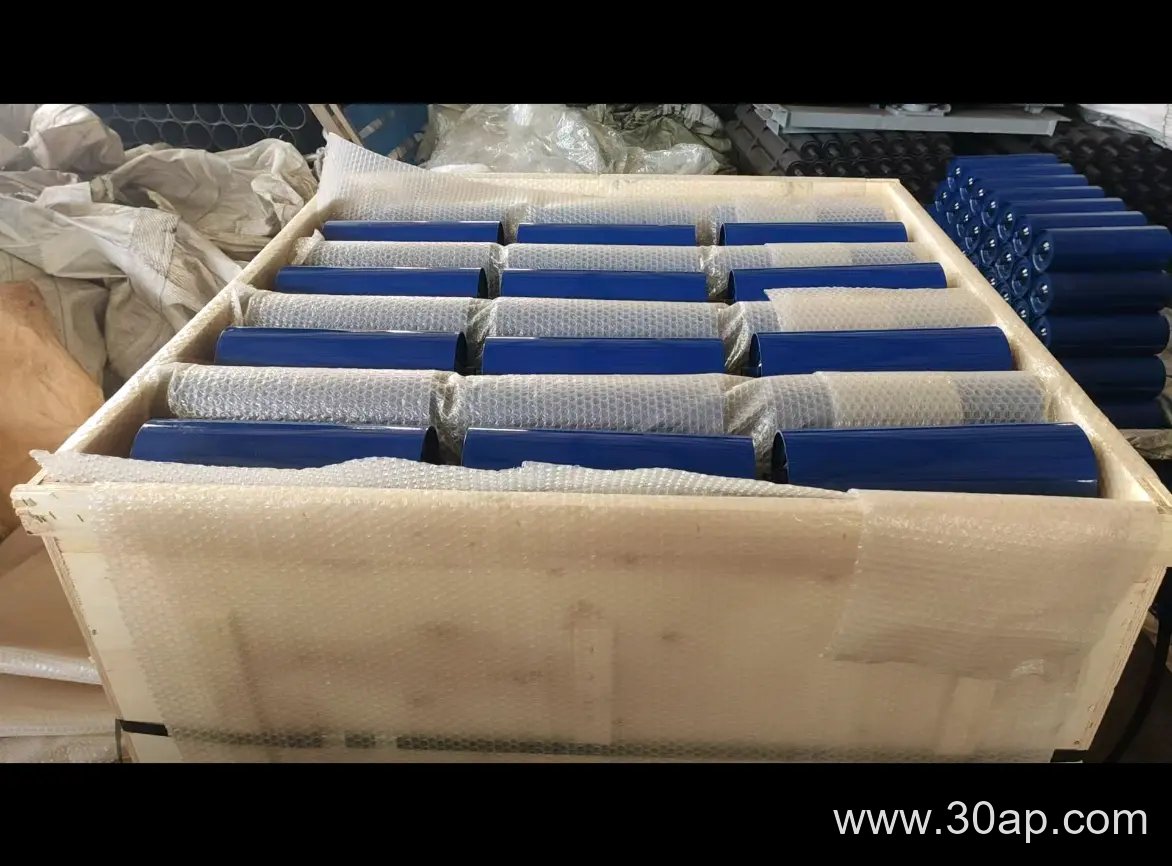
Roll length follows belt width, trough angle, and the number of rollers in the set. For a three-roll troughing set, common roller lengths are about 200 mm for B500, 250 mm for B650, 315 mm for B800, 380 mm for B1000, 465 mm for B1200, 530 mm for B1400, 600 mm for B1600, 670 mm for B1800, and 750 mm for B2000. Side rollers and the center roller can differ, so these figures are reference points rather than fixed pairings. Trough angles of 20, 30, 35, and 45 degrees are widely used, and a forward tilt of about 1.5 to 2 degrees is sometimes applied to help belt tracking. A plastic idler can be supplied as a single roller, a two-roll set, or a three-roll troughing set.
Reference Roll Lengths for Three-Roll Troughing Sets
| Belt width | Common roller length |
|---|---|
| B500 | about 200 mm |
| B650 | about 250 mm |
| B800 | about 315 mm |
| B1000 | about 380 mm |
| B1200 | about 465 mm |
| B1400 | about 530 mm |
Where Plastic Idlers Are Used
These rollers suit conveyor lines where corrosion, dust, or washdown would shorten the life of a painted steel roller. They appear in aggregate handling, fertilizer plants, and grain terminals, and they can also be found on lighter sections of a coal handling system. A plastic idler is often chosen for the return side, where the belt is empty and the load is modest. In a crushing and screening circuit, a rubber-ring version may be placed at the feed point to soften impact. For a comparison, a steel troughing idler may be preferred in a hot sinter or high-impact primary crushing position, but that is a different choice, not a replacement for the plastic roller discussed here.
Selection Points for Buyers
- Confirm the belt width and whether the position is carrying or return.
- Check the required roller diameter and shaft size with the conveyor bracket.
- Match the bearing and seal to the dust and moisture level on site.
- Decide between a plain plastic shell and a rubber-ring impact version.
- Verify the trough angle and roller set arrangement before ordering.
A plastic idler is a small part of a conveyor, but it affects belt life, energy use, and maintenance frequency. Buyers should treat the roller diameter, bearing size, and roller length as design inputs, not as universal rules. When the application is clear, a plastic idler can be a practical, low-corrosion support for the conveyor belt in many bulk handling environments.