What a High Impact Resistant Idler Does
A high impact resistant idler is a carrying roller built to absorb the energy of falling material at a conveyor loading point. Instead of a rigid steel shell that dents or cracks under repeated shock, this idler uses a cushioned surface and a reinforced body so that lumps of ore, crushed stone, or clinker do not destroy the roller or the belt beneath it. It is still an idler roller, not a drive pulley, and it sits in the carrying run where the conveyor belt first receives its load.
The same product is also called an impact idler or shock-absorbing roller. Those names describe the same function, and they should not be confused with a drive pulley, tail pulley, or bend pulley, which transmit or redirect belt tension rather than support the belt at the load zone.
How the Roller Is Built
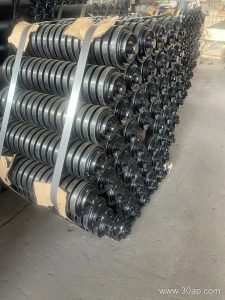
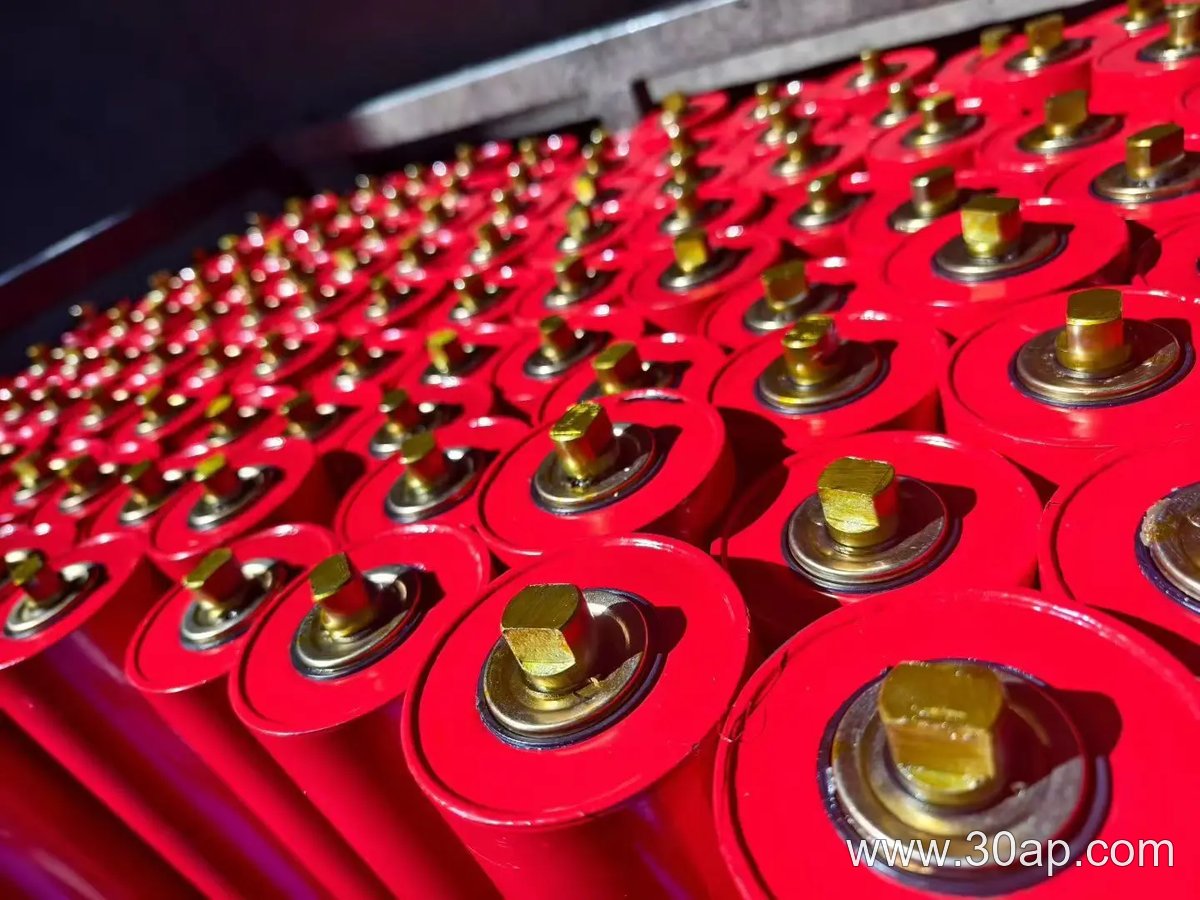
The core of the design is a steel tube fitted with a series of rubber rings or discs. These rings compress under impact and recover, spreading the force over a longer time and a wider area. In some versions the rings are molded directly onto the shell; in others they are separate and can be replaced individually. The end caps, bearing housing, and shaft are usually heavier than those of a standard carrying idler, because the load zone is where misalignment and fatigue appear first.
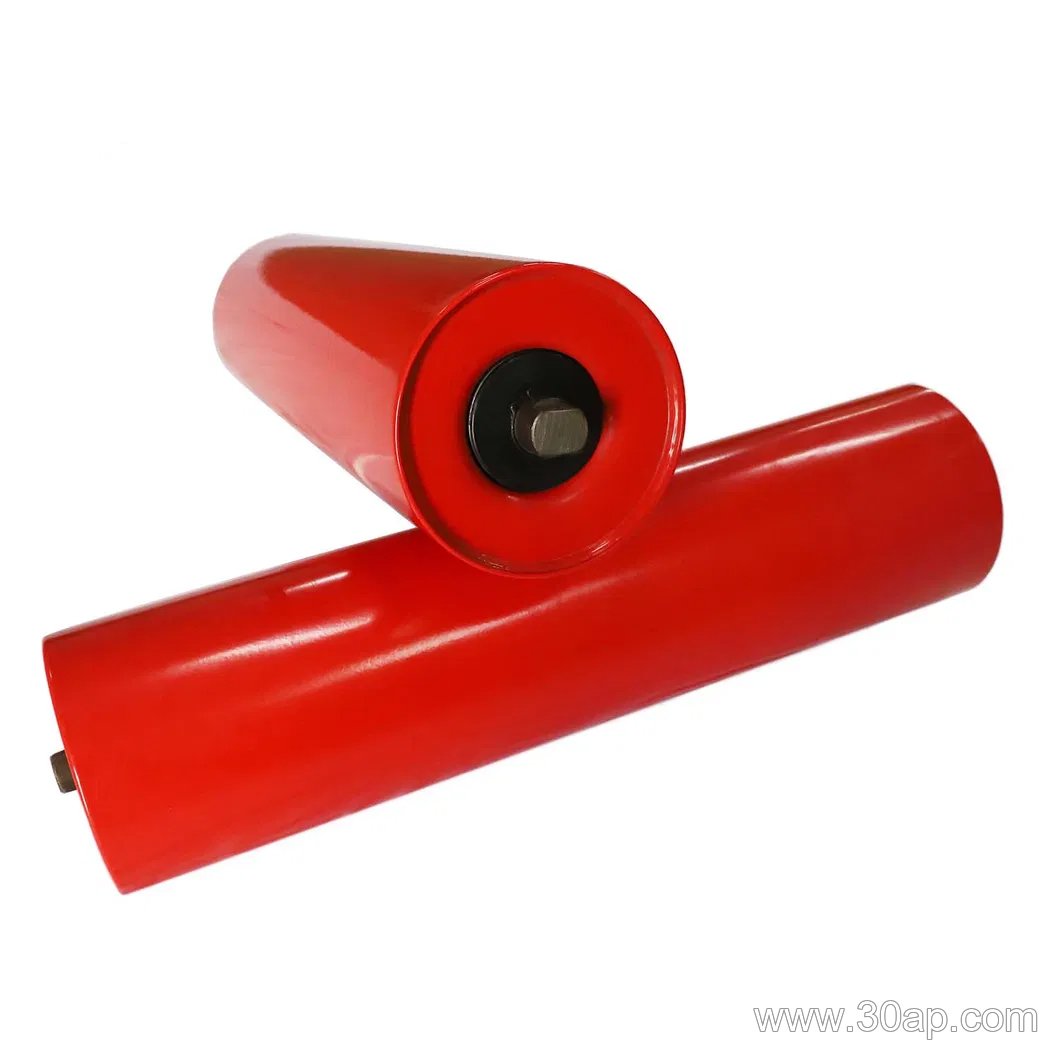
Bearing selection follows the duty rather than a fixed rule. Common bearings in conveyor idlers include 6204, 6205, 6305, 6306, 6308, and 6310, and a given roller diameter can accept more than one bearing size depending on the shaft and housing design. Labyrinth or contact seals keep dust and fine grit away from the grease, which matters most in dry, abrasive service.
Where It Is Used
The main applications are the points where material drops onto the belt. In a quarry or limestone mine, a high impact resistant idler is placed under the crusher discharge and at transfer chutes. In a coal handling plant or a power station coal yard, it protects the belt where coal falls from one conveyor to the next. Similar duties appear in sinter plants, aggregate lines, and tunnel mucking systems, where the drop height and lump size are both significant.
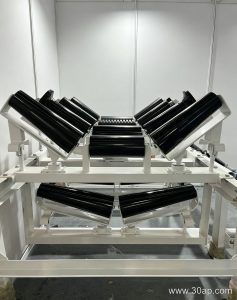
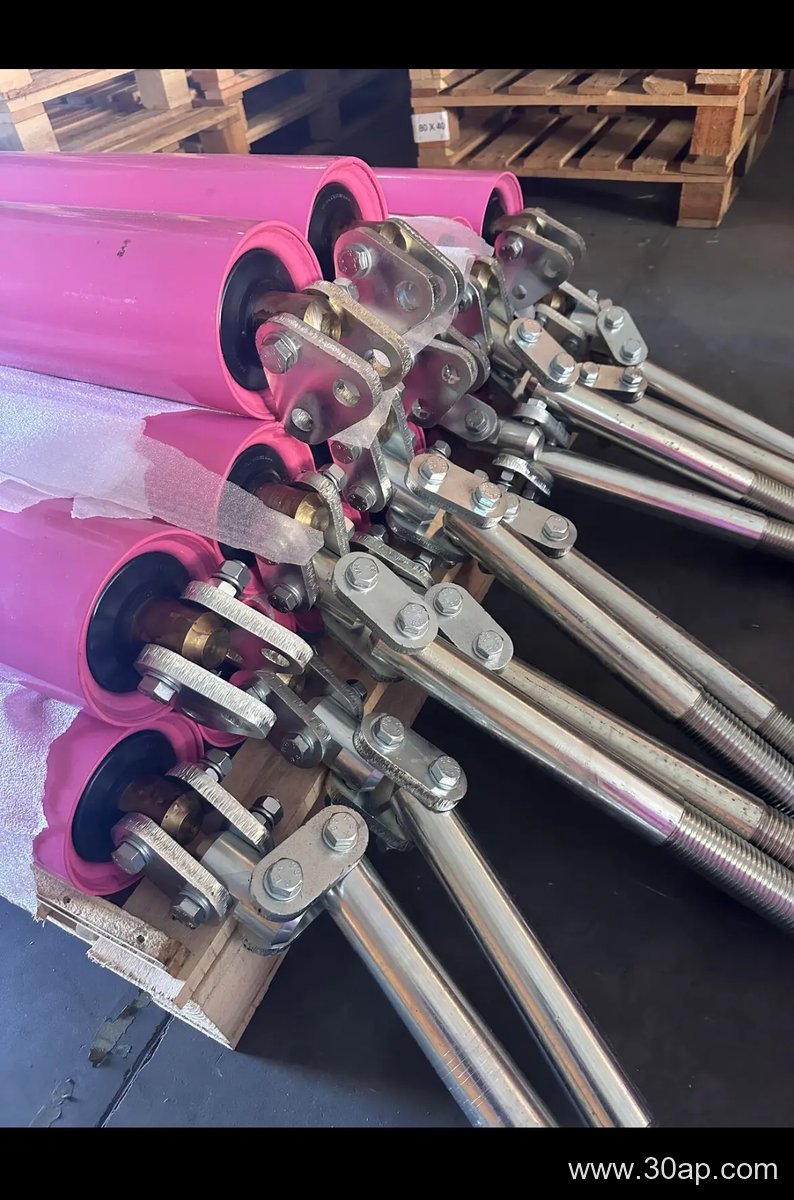
These rollers are normally installed as part of a troughing set. A three-roll troughing arrangement at 20, 30, 35, or 45 degrees is common, and the impact rolls are positioned directly beneath the chute. A transition idler may be used nearby to help the belt change from flat to troughed, but it is a different component and does not carry the same shock duty. At the tail end, return idlers and V-return idlers handle the empty belt; they are not substitutes for impact rollers.
Choosing the Right Size and Surface
Selection starts with belt width and the lump size being handled. Standard belt widths run from B400 up through B500, B650, B800, B1000, B1200, B1400, B1600, B1800, B2000, B2200, and B2400. Roller diameters commonly range from Ø63 and Ø76 for light duties up to Ø108, Ø127, Ø133, Ø159, Ø178, Ø194, and Ø219 for heavy ones. A wider belt does not automatically require one specific pulley diameter, and no single belt width is locked to one roller diameter; the correct combination comes from the load, the belt tension, and the trough angle.
Roll length also varies with belt width and troughing form. As a rough reference, a three-roll troughing set might use a roll around 200 mm for B500, 250 mm for B650, 315 mm for B800, 380 mm for B1000, 465 mm for B1200, 530 mm for B1400, 600 mm for B1600, 670 mm for B1800, or 750 mm for B2000, but side rolls and center rolls can differ and these figures are examples rather than fixed pairings.
Surface choice depends on the material. Rubber rings give the best shock absorption and grip for wet or sticky loads. A steel shell is more economical for lighter impact. Nylon and ceramic surfaces are sometimes used where wear or sticking is a concern, but they are not usually the first choice for a true high impact position.
What Buyers Should Check
- Confirm the drop height and maximum lump size before choosing the ring thickness.
- Match the roller diameter and bearing to the actual load, not to a single belt width.
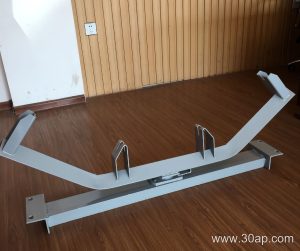
- Check that the shaft, bracket, and conveyor bracket dimensions fit the existing frame.
- Ask how the seals handle dust, since the load zone is the dirtiest part of the line.
- Plan for replacement: a roller with serviceable rings lasts longer between shutdowns.
A high impact resistant idler is a small part of the conveyor, but it decides how long the belt survives at the point where it is hit hardest. Getting the size, surface, and sealing right is more useful than buying the heaviest roller available.