What Conveyor Pulley Welding and Machining Involves
A conveyor pulley is the cylindrical drum that drives, tensions, or redirects a conveyor belt. Behind every dependable drum sits a combination of conveyor pulley welding and machining: the welded shell, hub, and shaft assembly must be joined soundly, then machined so that the finished pulley runs true, holds its lagging, and seats correctly in the conveyor bracket. In a quarry, a coal preparation plant, or a cement clinker line, poor welding or careless machining shows up quickly as belt mistracking, vibration, and shortened belt life.
How the Drum Is Built
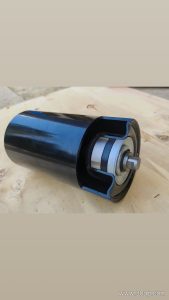
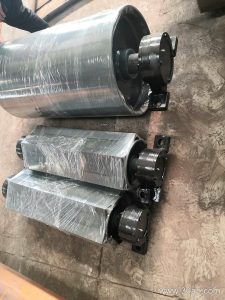
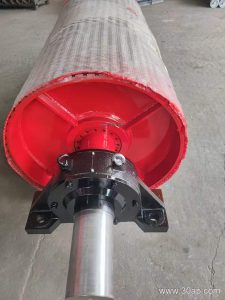
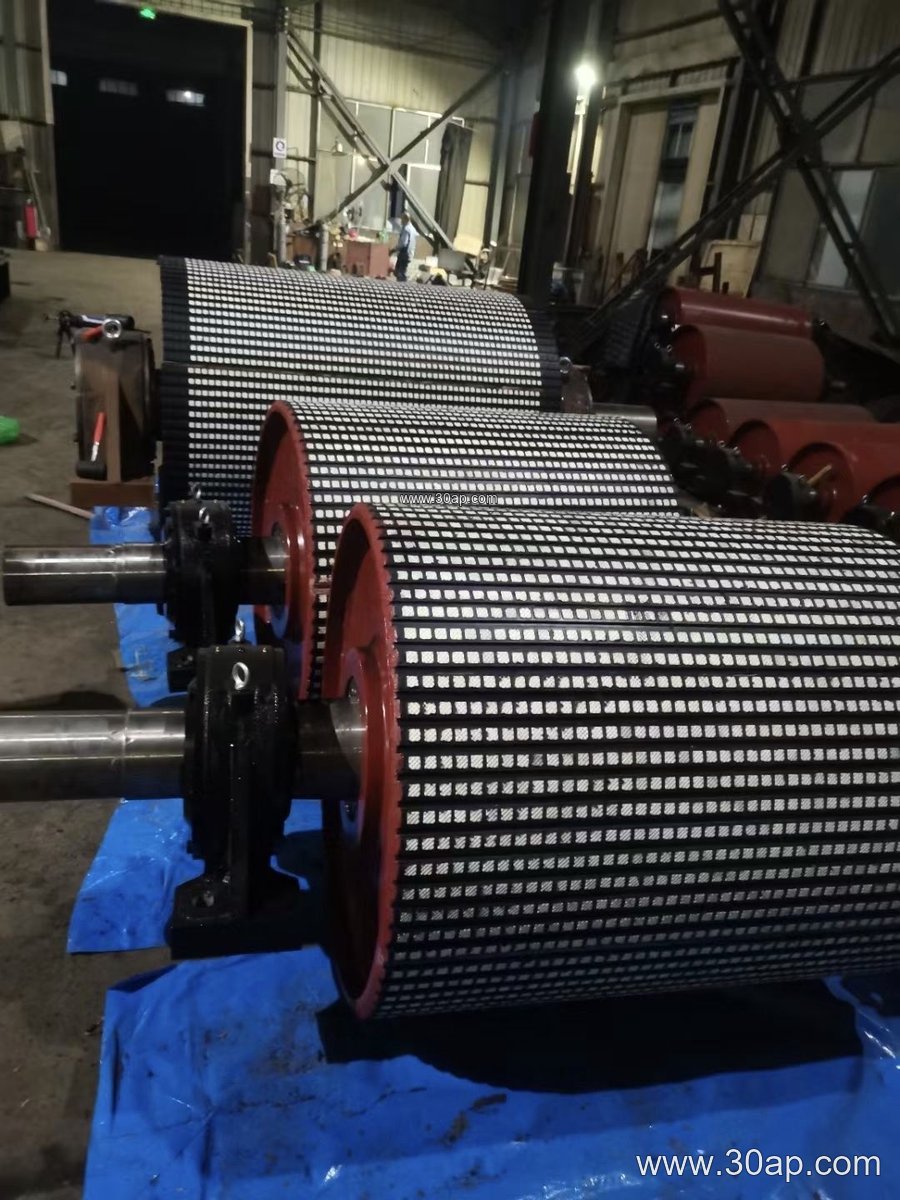
Most pulleys start as a rolled steel shell welded to end discs and a hub. The shaft is either welded into the hub or fitted through a bored hub, depending on the design. Weld quality matters because the shell carries the belt tension and the bending load from the shaft. After welding, the drum is machined: the shell face is turned to a consistent diameter, the ends are squared, and the shaft journals are finished to the bearing fit. A well-machined face gives the lagging a flat base and helps the belt track evenly.
Welding Points to Watch
- Full-penetration welds at the hub-to-disc and disc-to-shell joints where loads are highest.
- Controlled heat input to limit distortion of the shell before machining.
- Dressing and inspection of weld seams so no sharp edges contact the belt.
Machining Steps
- Turning the shell to the specified diameter and checking roundness.
- Facing the end discs so the pulley sits square in the conveyor bracket.
- Grinding and finishing shaft journals to the bearing tolerance.
- Dynamic balancing for larger diameters and higher belt speeds.
Matching the Drum to the Belt Line
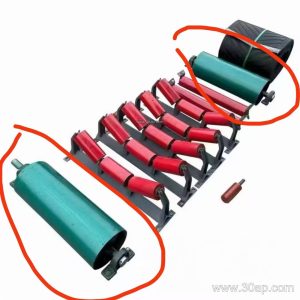
Conveyor pulley welding and machining should follow the duty of the position. A drive pulley in a heavy-duty mining conveyor sees high torque and needs a robust hub weld and a true machined face for its lagging. A tail pulley at the loading point benefits from a clean, well-finished shell so the belt returns smoothly. A bend pulley only changes belt direction, so its load is lower, but it still needs accurate machining to avoid edge wear. The drum face width is usually a little wider than the belt, for example a B800 belt typically runs on a shell around 950 mm wide, while a B1200 belt commonly pairs with a face near 1400 mm. Diameter is chosen from belt tension, wrap angle, and space, so B800 x Ø500 and B1200 x Ø1000 are both plausible combinations rather than fixed rules.
| Belt width | Typical shell face width | Common diameter range |
|---|---|---|
| B500 | about 600 mm | Ø250 to Ø400 |
| B650 | about 750 mm | Ø315 to Ø500 |
| B800 | about 950 mm | Ø400 to Ø630 |
| B1000 | about 1150 mm | Ø500 to Ø800 |
| B1200 | about 1400 mm | Ø630 to Ø1000 |
| B1400 | about 1600 mm | Ø800 to Ø1250 |
Shaft diameter is set by torque and bearing load, not by belt width alone. Common shaft sizes run from Ø50 up to Ø200, and the final figure should come from the conveyor design.
Surface Finishing After Machining
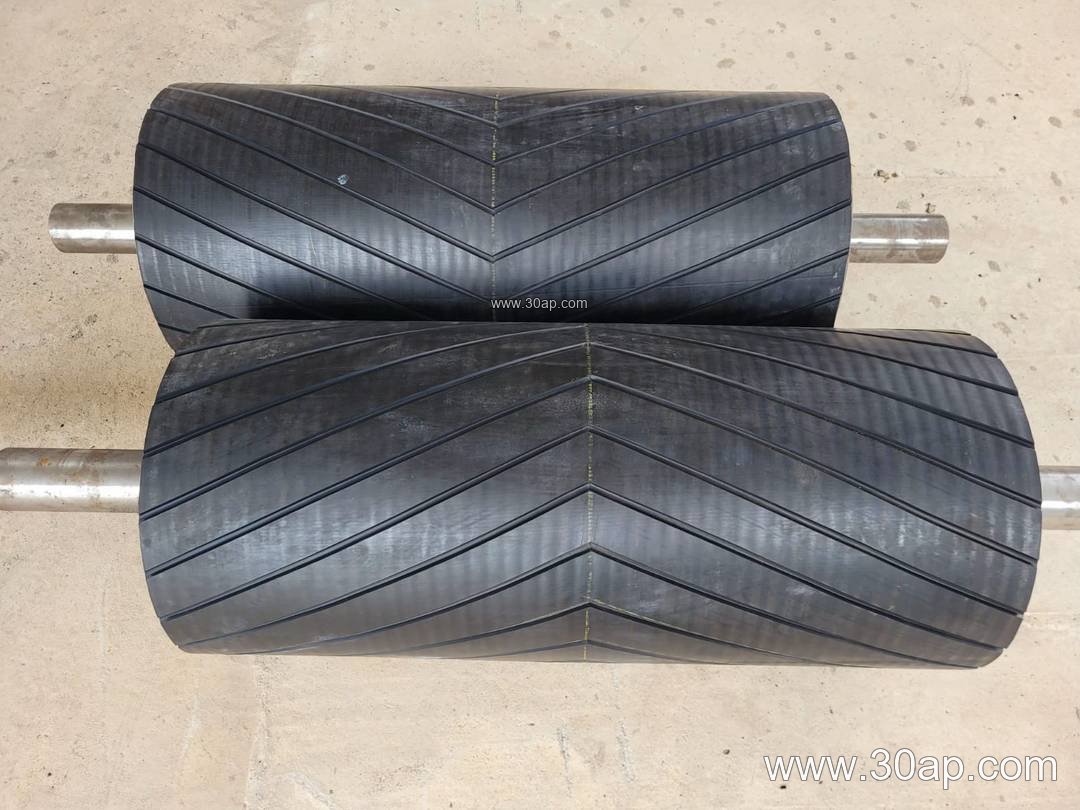
Once the shell is machined, the surface may stay plain or receive lagging. Rubber lagging in 8, 10, 12, 15, or 20 mm thickness is common, and the pattern can be plain, diamond, or herringbone. Ceramic lagging is used where grip and wear resistance matter. The machined face must be clean and true so the lagging bonds evenly; a wavy shell leads to uneven contact and belt slip. On a chevron conveyor belt or a corrugated sidewall conveyor belt line, a smooth, accurately machined drum face helps the belt run without catching the cleats or sidewalls.
Where These Pulleys Are Used
You will find welded and machined pulleys in limestone quarries feeding a crusher conveyor belt, in iron ore and copper ore handling, in power plant coal conveyors, and in sand and aggregate lines where an abrasion resistant conveyor belt carries sharp stone. The same drums support a steel cord conveyor belt on a long overland run or a fabric core conveyor belt in a smaller plant. Each position, whether head, tail, take-up, or snub, places its own demand on the weld and the machined fit.
What a Buyer Should Confirm
- Belt width and required shell face width, with the drum diameter stated separately.
- Shaft diameter and bearing fit, based on the actual load calculation.
- Lagging type and thickness, if the pulley needs grip or wear protection.
- Weld inspection and machining tolerance expectations, agreed before production.
- Balancing requirements for large diameters or high-speed lines.
Good conveyor pulley welding and machining is not a single operation but a chain of controlled steps. When the weld, the machined face, and the shaft fit all line up, the pulley and the conveyor belt work together with less wear, less noise, and fewer stoppages on the line.