What a Conveyor Carrying Bracket Does
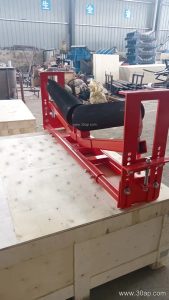
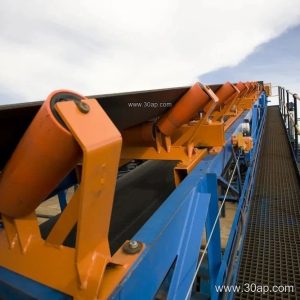
The conveyor carrying bracket is the steel support that holds the carrying-side idler rollers in their working position along a troughed belt conveyor. It sits between the conveyor frame stringers and the rollers, keeping the belt in a stable trough so bulk material stays centered on the run. In a quarry or a cement plant, this part is often the first thing maintenance crews check when a belt starts drifting or spilling.
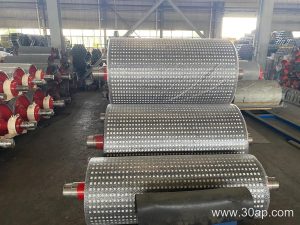
Also called a carrying idler bracket or troughing bracket, this component is distinct from a return bracket. Drive pulleys, tail pulleys and bend pulleys are separate parts of the conveyor and cannot substitute for it. The bracket is a structural interface, not a rotating element, and its alignment directly affects how the conveyor belt tracks.
Construction and Common Forms
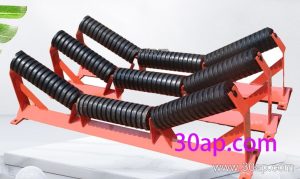
Most carrying brackets are fabricated from angle steel, channel steel or folded steel plate, then drilled to match the idler shaft and frame hole pattern. The trough angle is built into the bracket geometry, so a 35-degree bracket positions the side rollers differently from a 20-degree or 45-degree version.
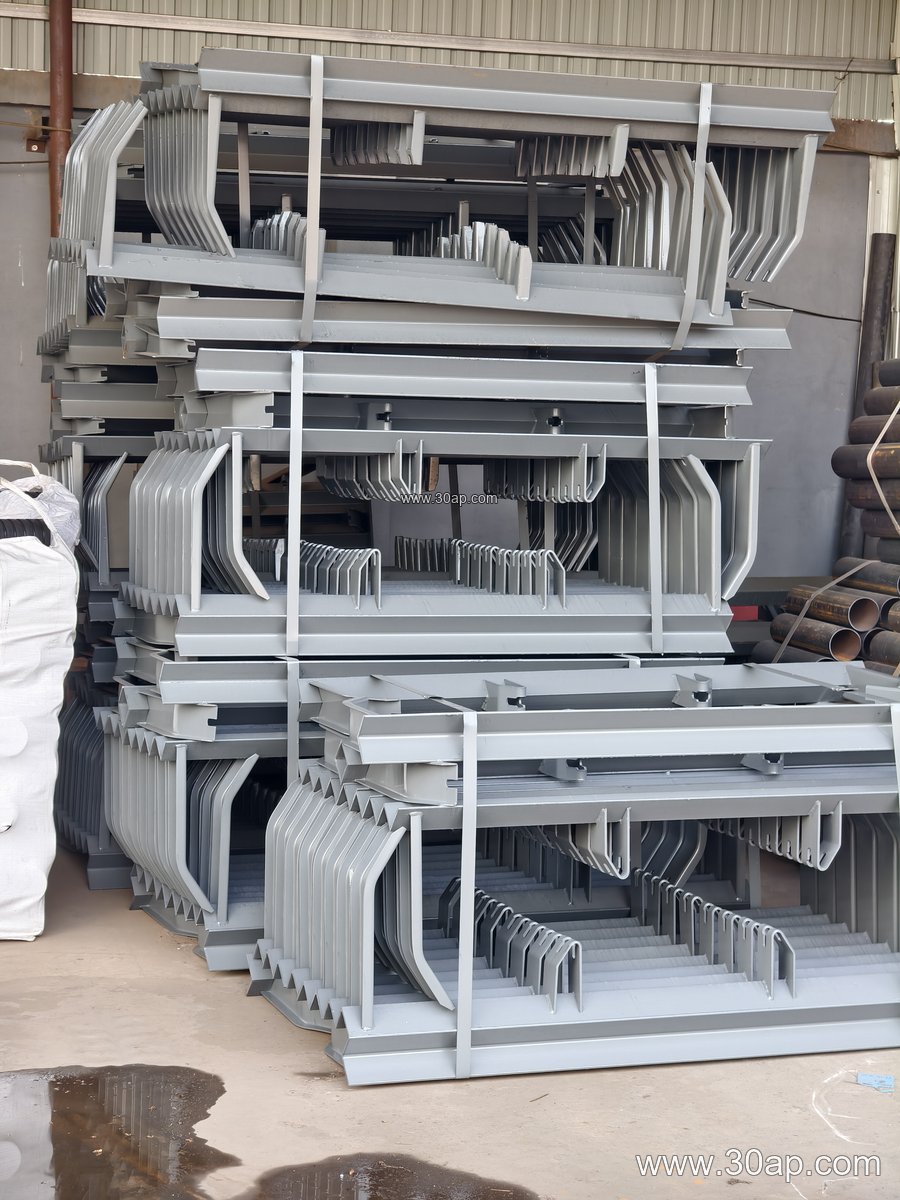
Common configurations include fixed troughing brackets, transition brackets near the pulleys, adjustable brackets that can be set between standard trough angles, and self-aligning or forward-tilted designs used where belt training is difficult. A forward tilt of roughly 1.5 to 2 degrees is sometimes used to encourage centering, though it must be matched to the roller and belt direction.
Where It Fits in the Conveyor
Carrying brackets are installed on the loaded strand, spaced at regular intervals between the tail and head of the conveyor. In a coal handling system at a power plant, or on a limestone transfer line at a cement works, the spacing and trough angle are set by the belt width, material load and design speed. The bracket works together with the conveyor belt, idler roller and conveyor pulley to keep the trough shape consistent.
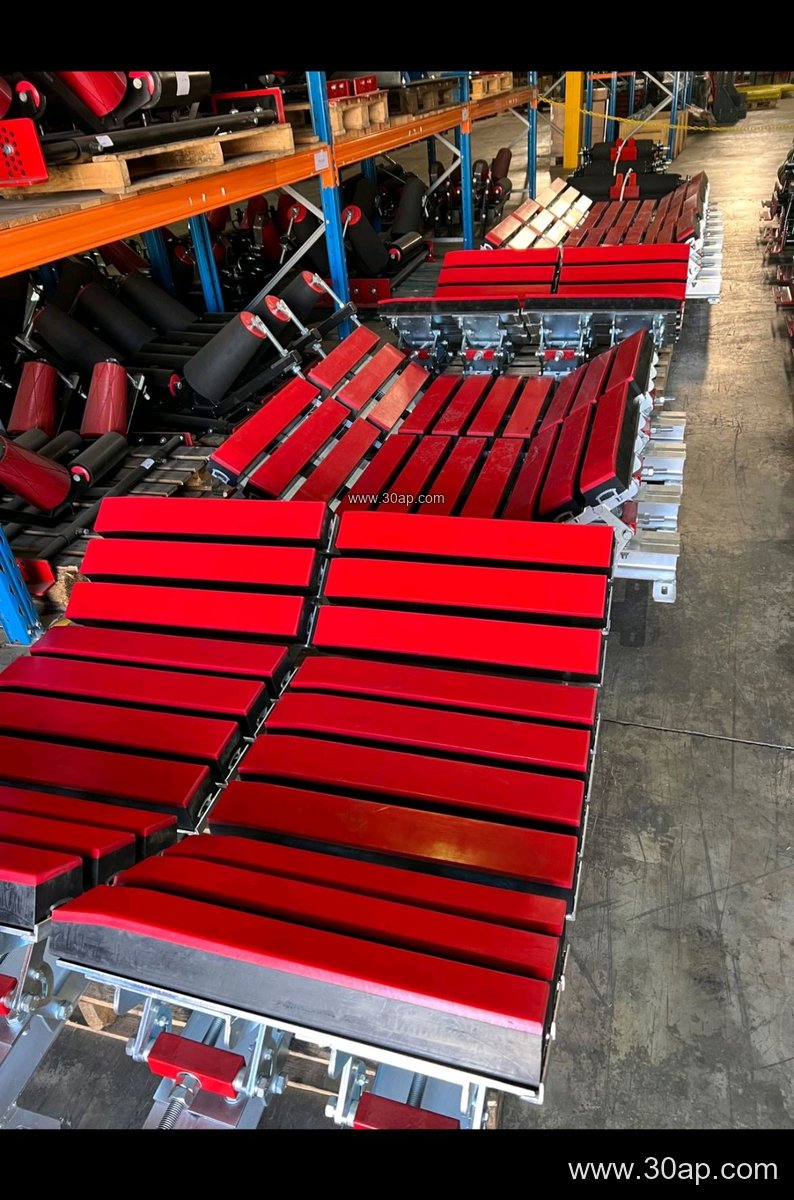
Transition brackets are placed where the belt changes from flat at the pulley to troughed in the carrying run. This gradual change reduces edge stress and helps prevent material spillage at loading points.
Matching Bracket, Belt and Roller
Selection starts with the belt width and the required trough angle, then moves to the roller diameter and shaft details. There is no fixed rule that one belt width matches one pulley diameter or one roller size. Typical reference combinations include B800 with a 35-degree trough and Ø108 rollers, B1200 with 45 degrees and Ø133 rollers, or B650 with 30 degrees and Ø89 rollers. These are examples only; the final choice depends on the conveyor design.
| Reference Item | Common Range |
|---|---|
| Belt width | B500 to B2200 |
| Trough angle | 20, 30, 35, 45 degrees |
| Roller diameter | Ø89, Ø108, Ø133, Ø159, Ø194 |
| Material | Angle steel, channel steel, folded plate |
| Mounting hole spacing | By belt width and trough angle |
Heavy-duty mining conveyor belt or a high abrasion resistant conveyor belt carrying iron ore will usually call for a sturdier bracket and larger roller than a light aggregate line. The bracket must suit the belt load, not just the belt width.
Buyer Checklist
- Confirm belt width, trough angle and roller diameter before ordering.
- Check the frame hole pattern and crossbeam length, which vary with width and angle.
- Decide between fixed and adjustable brackets based on how often the trough angle may change.
- Specify material and finish for dusty, wet or corrosive sites such as a wash plant or port terminal.
- Ask how the bracket aligns with transition and return sections.
For a coal mining conveyor belt or a steel cord conveyor belt running at high tension, bracket rigidity matters as much as roller quality. A loose or misaligned carrying bracket can wear the belt edge and shorten roller life.
Installation and Maintenance Notes
Mount brackets square to the conveyor centerline and at the spacing shown on the layout drawing. Check bolt torque after the first run-in period, since vibration can loosen fasteners. Inspect for bent brackets after impact events at transfer points, and replace any bracket that no longer holds the correct trough angle.
When replacing rollers, keep the same bracket position so the belt profile does not change. For more details on compatible rollers and belts, see the conveyor bracket and conveyor belt pages at www.yourdomain.com, and review the conveyor pulley range for the head and tail ends of the same system.