What a Belt Conveyor Pulley Does on the Line
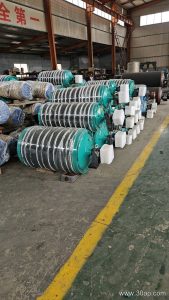
A belt conveyor pulley is the rotating drum that carries, drives, or redirects the conveyor belt at key points along a bulk handling line. It is not simply a roller with a shaft: the pulley transfers torque, sets belt tension, and helps keep the belt tracking correctly. In a stone crushing plant or a cement clinker line, a single poorly matched drum can cause belt wander, surface wear, or unplanned downtime. The drum is matched to the conveyor belt width, the load profile, and the position it occupies in the conveyor structure.
Buyers often use “conveyor pulley” and “belt conveyor pulley” interchangeably, which is fine for general conversation, but the position on the machine matters. Drive, tail, and bend pulleys perform different duties and should be specified separately.
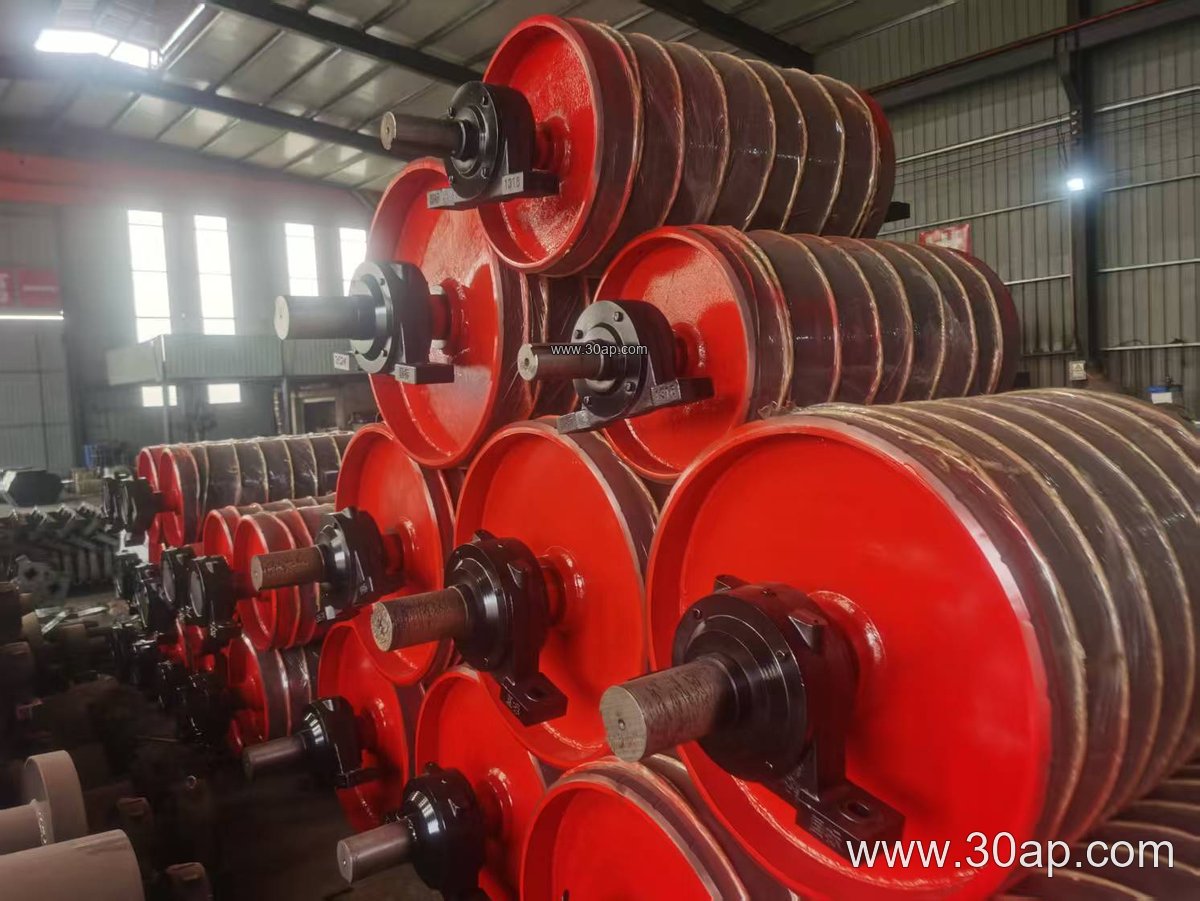
How the Drum Is Built
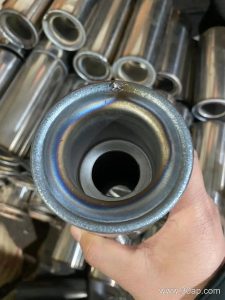
A typical unit combines a cylindrical shell, end discs, a shaft, bearing housings, and a locking assembly. The shell is usually rolled from steel and machined at the ends to accept the discs. Shaft diameter is determined by torque and radial load, not by belt width alone. Common shaft sizes include Ø80, Ø100, Ø120, Ø140, Ø160, and Ø180, but the final value comes from the conveyor design calculation.
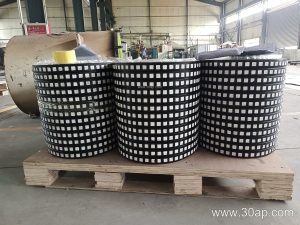
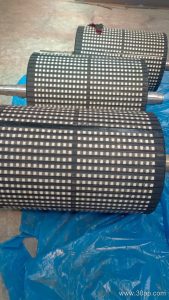
Surface treatment is a major decision. Options include plain finish, hot-vulcanized rubber, cold-bonded rubber, diamond grooving, herringbone grooving, and ceramic lagging. Lagging thickness commonly runs 8, 10, 12, 15, or 20 mm. On a drive pulley, lagging raises friction between drum and belt; on a bend pulley, a plain or lightly lagged face may be enough.
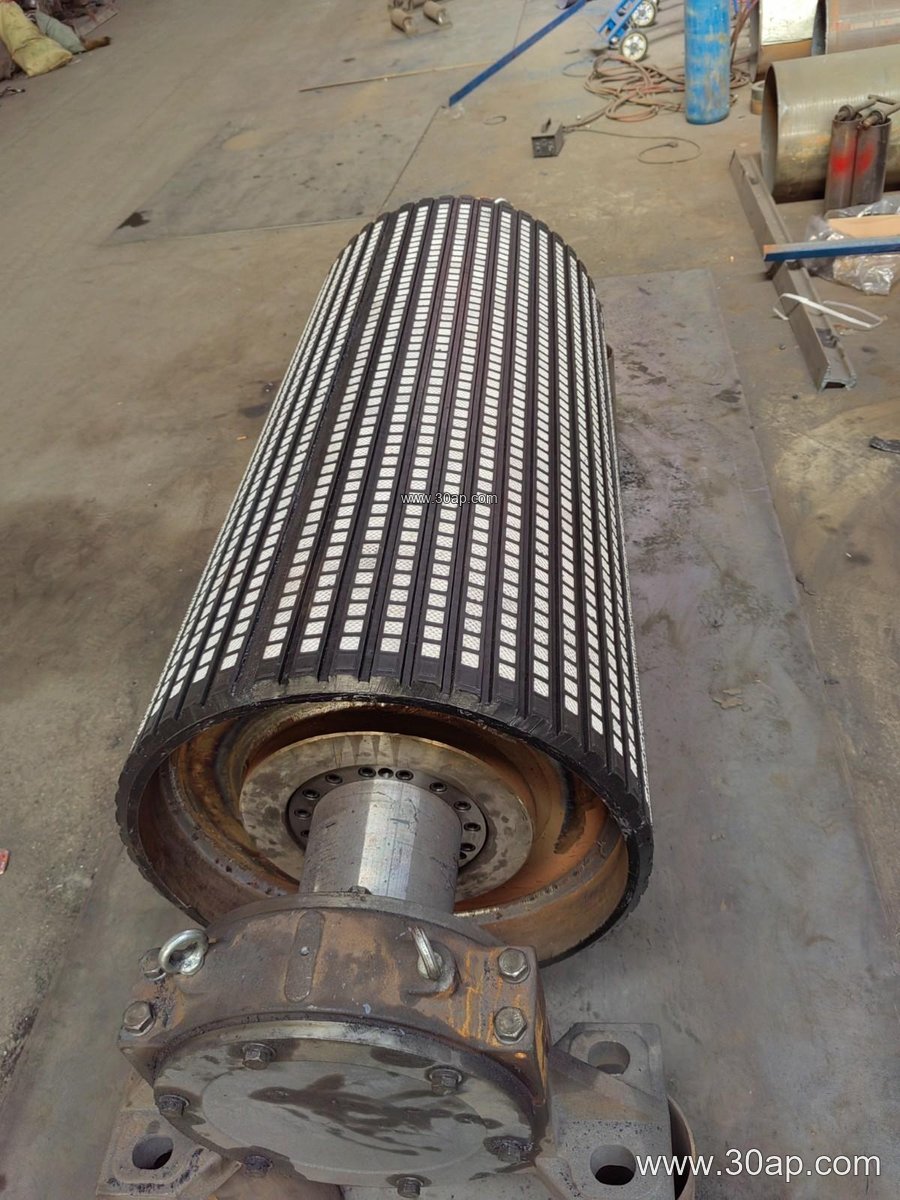
Typical Reference Dimensions
The table below shows indicative combinations. These are reference values, not fixed rules, and every project should confirm its own dimensions.
- B400 belt width — shell face about 500 mm, diameter often Ø200 to Ø315
- B650 belt width — shell face about 750 mm, diameter often Ø315 to Ø500
- B800 belt width — shell face about 950 mm, diameter often Ø400 to Ø630
- B1000 belt width — shell face about 1150 mm, diameter often Ø500 to Ø800
- B1200 belt width — shell face about 1400 mm, diameter often Ø630 to Ø1000
- B1400 belt width — shell face about 1600 mm, diameter often Ø800 to Ø1250
- B1600 belt width — shell face about 1800 mm, diameter often Ø1000 to Ø1400
- B1800 belt width — shell face about 2000 mm, diameter often Ø1250 to Ø1600
Note that B1200 × Ø1000 and B800 × Ø500 are both valid, and B1400 × Ø800 appears on many medium-duty lines. There is no single diameter that must follow a given belt width.
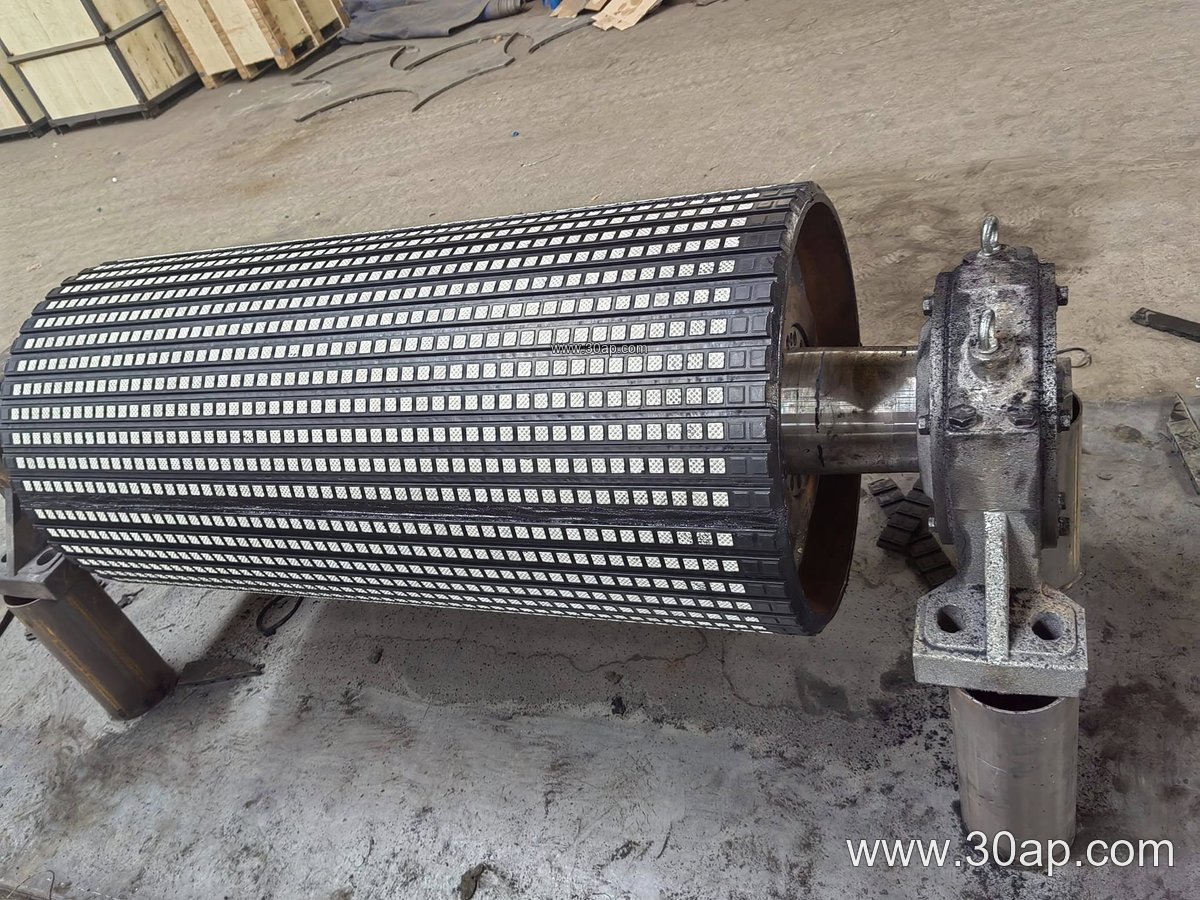
Position Matters Drive, Tail, and Bend
At the head of a conveyor, the drive pulley is connected to the gearbox and motor and transmits motion to the belt. The tail pulley at the return end usually sets belt tension and guides the belt back into the carrying run. Bend pulleys change belt direction around take-up systems or vertical curves, and a snub pulley increases wrap angle on the drive drum.
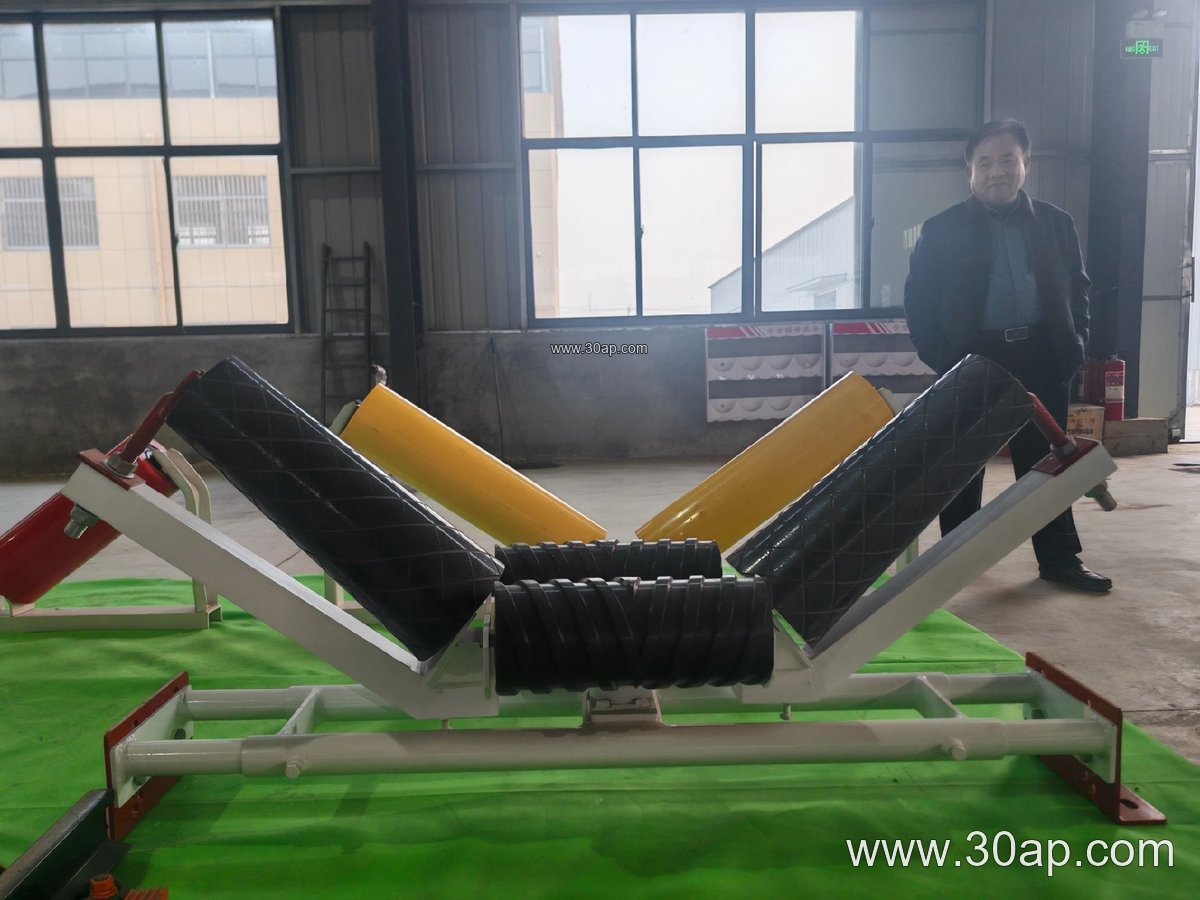
In a coal mining conveyor or an underground coal mining conveyor, flame retardant conveyor belt and fire resistant conveyor belt grades are often specified alongside the drums. The pulley itself must suit the same environment, with lagging and bearings chosen for dust and moisture. In a port bulk terminal, a heavy-duty drive pulley with diamond lagging helps maintain grip when the belt carries wet ore or aggregate.
Matching the Pulley to the Belt and the Duty
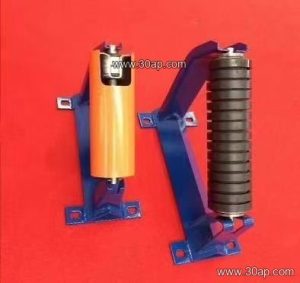
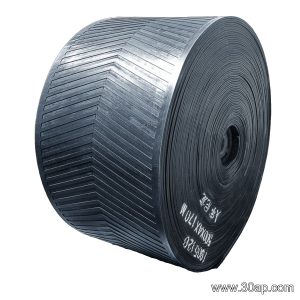
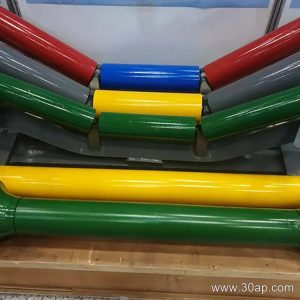
The drum does not work alone. It interacts with the conveyor belt, the idler roller sets, and the conveyor bracket that holds the bearing housings. A fabric core conveyor belt such as an EP conveyor belt or NN conveyor belt flexes differently from a steel cord conveyor belt, and the pulley diameter should respect the belt’s minimum bend radius. Thin, flexible belts tolerate smaller drums; thick, stiff belts and high-tension steel cord belts need larger diameters to avoid ply fatigue.
For abrasive duties, an abrasion resistant conveyor belt paired with rubber-lagged drums reduces slip and shell wear. In hot clinker or sinter service, a heat resistant conveyor belt calls for heat-tolerant lagging and bearing lubrication. Where oil mist or chemical splash is present, an oil resistant conveyor belt and chemically compatible lagging should be considered together.
What Buyers Should Confirm Before Ordering
- Belt width, belt type, and belt tension, so the shell face and shaft can be sized together.
- Mounting position: drive, tail, bend, take-up, or snub, since each has different load and wrap requirements.
- Lagging form and thickness, including whether grooving or ceramic tiles are needed for grip.
- Bearing type, housing style, and the conveyor bracket interface.
- Environmental conditions such as dust, water, temperature, and flame retardant requirements.
Ask for a dimension drawing showing shell diameter, face width, shaft end, keyway, and bearing centers. Confirm that the drum’s rated load matches the conveyor’s calculated tension, and check that the pulley will fit the existing frame without modification. On a quarry conveyor belt line or a power plant coal handling system, a correctly specified belt conveyor pulley keeps the belt centered, reduces spillage, and extends the service life of both the drum and the belt.