What a Turning Pulley Does on a Conveyor
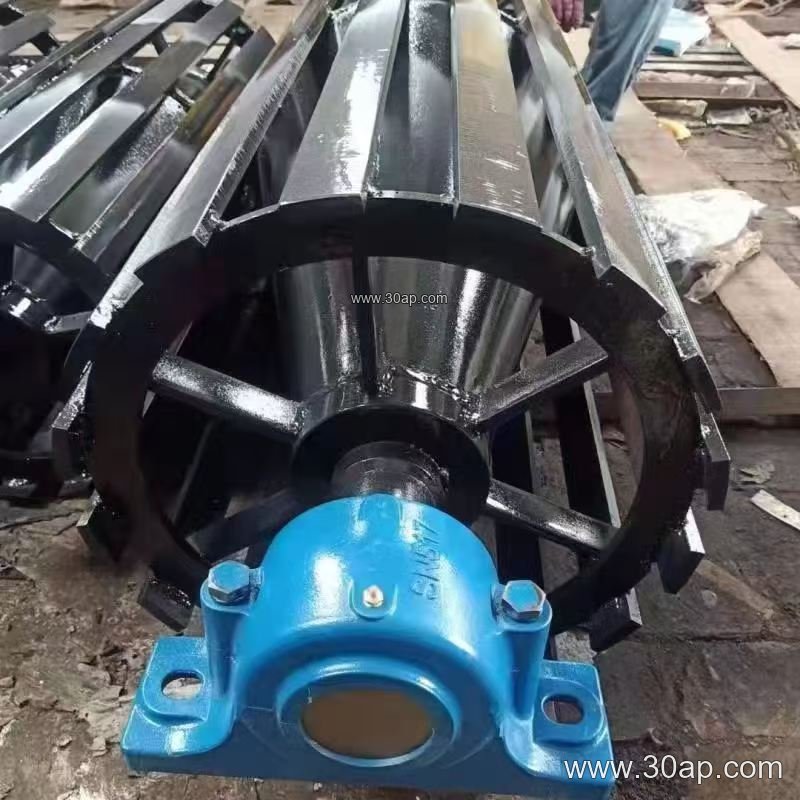
A turning pulley is a cylindrical drum that redirects the path of a conveyor belt, typically at the tail end, a tensioning station, or an intermediate bend point. Unlike the drive pulley that transmits power, or the tail pulley that serves as the return point, the turning pulley’s primary job is to guide the belt smoothly through a change in direction while maintaining proper tension and alignment. In quarry and aggregate lines, for example, a turning pulley often sits at the discharge end of a short transfer conveyor, redirecting the belt back toward the tensioning take-up. The same component appears in cement plant clinker transport, where space constraints require the belt to bend around a compact radius before returning to the loading zone.
Construction and Key Components
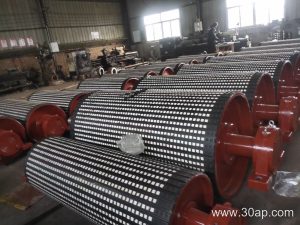
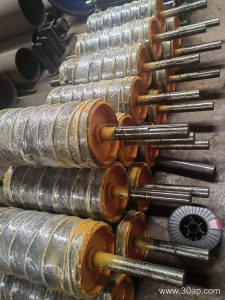
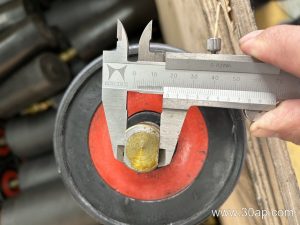
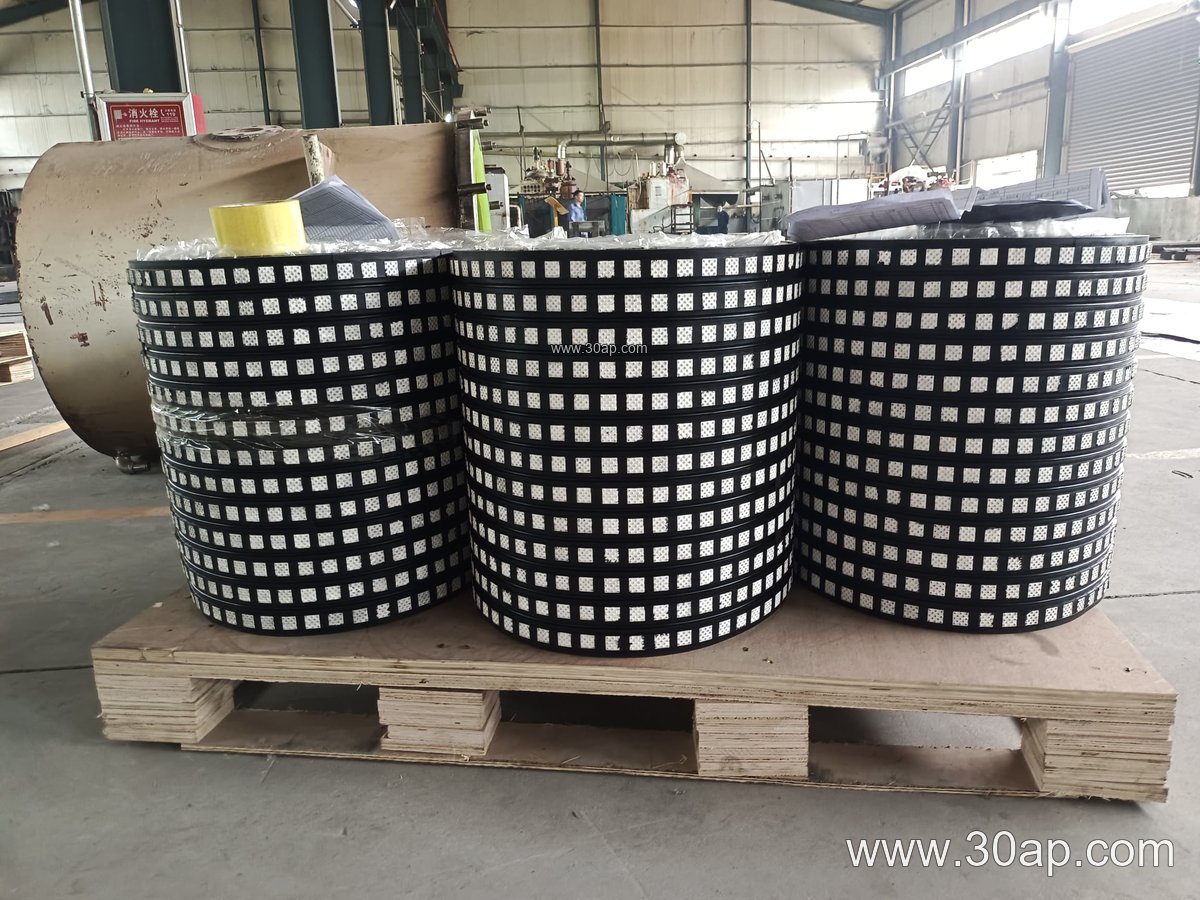
A typical turning pulley consists of a steel shell, end discs, a shaft, and bearing housings. The shell is usually machined or rolled from mild steel, with the surface left plain or covered with rubber lagging for grip and wear protection. Bearing selection depends on the radial load and belt tension, not simply on belt width. Common shaft diameters range from Ø50 to Ø200 mm, determined by torque and load calculations. The pulley face width is normally wider than the belt to allow for minor misalignment; for instance, a B800 belt typically runs on a pulley with a face width around 950 mm. Typical diameter choices for turning pulleys include Ø315, Ø400, Ø500, and Ø630 mm, though larger sizes such as Ø800 or Ø1000 mm may appear in high-tension applications. Lagging thickness commonly falls between 8 mm and 20 mm, with plain, diamond, or ceramic patterns available depending on whether the goal is traction, self-cleaning, or abrasion resistance.
Where It Fits in the Conveyor Layout
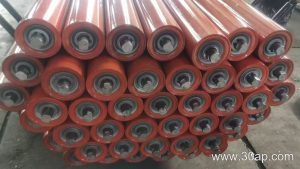
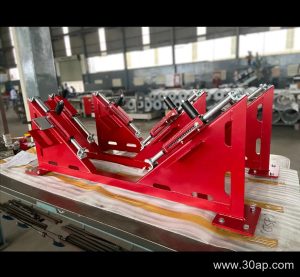
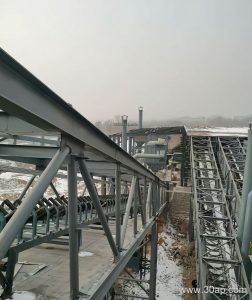
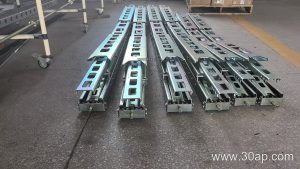
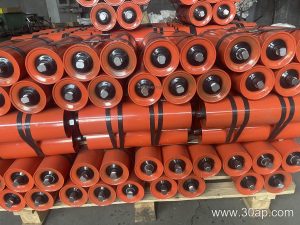
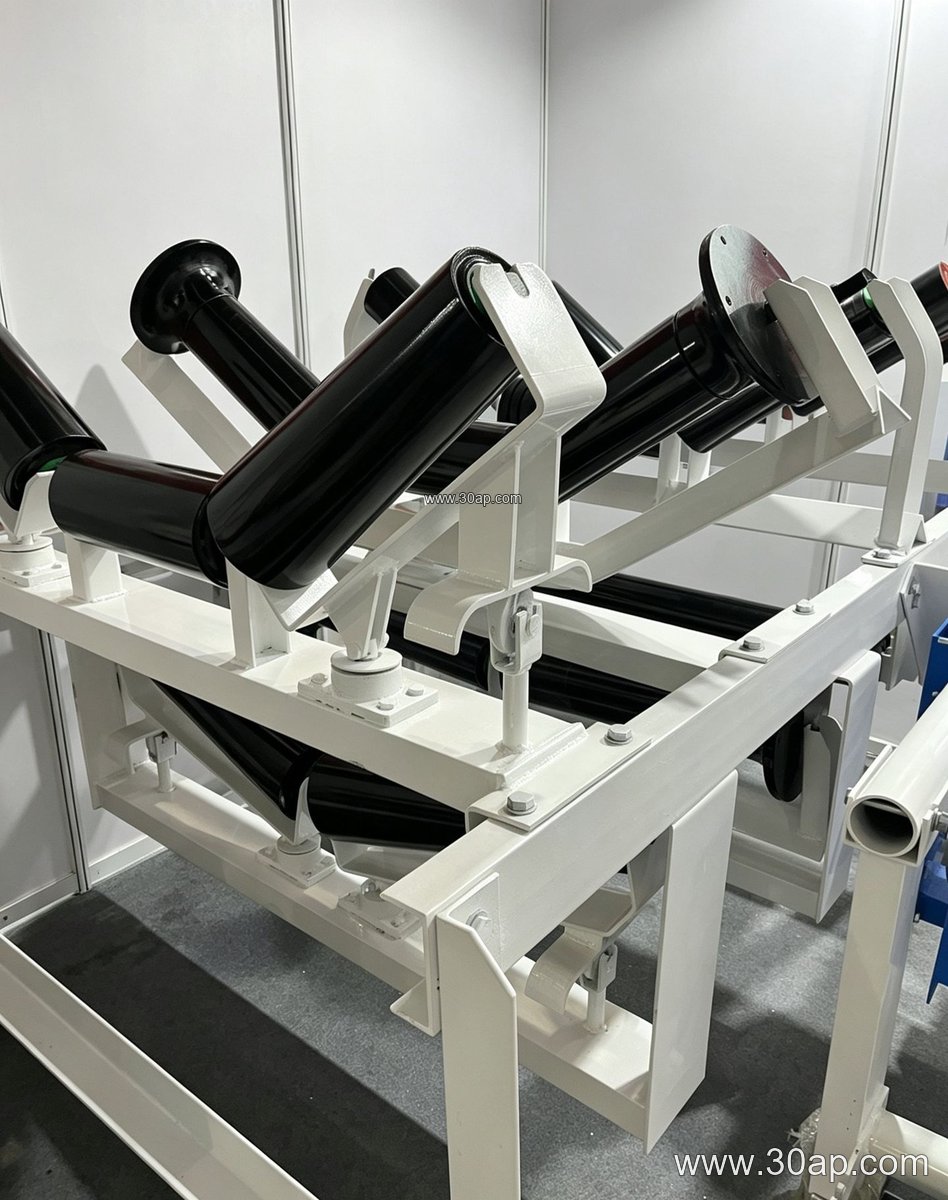
Turning pulleys appear in several positions. At the tail of a conveyor, a turning pulley (often called a tail pulley in that role) redirects the empty belt returning from the head. In a tensioning station, a turning pulley mounted on a movable carriage maintains belt slack. At an intermediate bend, a turning pulley allows the belt path to navigate around obstacles such as structural columns or chute walls. In coal mining conveyor systems, underground installations may use a turning pulley to route the belt around a curve, working alongside idler rollers and conveyor brackets to keep the belt centered. The pulley must be aligned precisely with the approaching and departing belt runs; even a small angular error can cause edge wear and mistracking.
Matching the Pulley to the Belt and Duty
Buyers should consider belt type, tension, and environment when specifying a turning pulley. A heavy-duty mining conveyor belt or a steel cord conveyor belt carrying iron ore will impose higher loads than a lightweight EP conveyor belt in a sand making plant. The pulley diameter must be large enough to limit bending stress in the belt carcass; fabric core belts generally tolerate smaller diameter-to-thickness ratios than steel cord belts. Surface lagging helps prevent slip on the turning pulley, especially in wet or dusty conditions found in wash plants and port bulk terminals. For abrasive service, ceramic lagging can extend shell life. The shaft diameter should be confirmed by the pulley manufacturer based on actual belt tension and torque, not guessed from belt width alone.
Installation and Maintenance Notes
Proper installation begins with checking that the pulley shaft is level and square to the conveyor centerline. Bearing housings should be shimmed as needed, and the pulley should rotate freely by hand before the belt is tensioned. During operation, listen for unusual noise and check bearing temperature periodically. Lagging wear, shell corrosion, and loose bolts are common issues; in dusty environments such as a lime kiln discharge or a fertilizer granulation line, accumulated material on the pulley face can cause tracking problems. Keep the area around the turning pulley clean and inspect the lagging surface for glazing or chunking. When replacing a turning pulley, match the face width and diameter to the original design unless an engineering change has been approved.
Selection Checklist for Buyers
- Confirm belt width and type (e.g., EP conveyor belt, steel cord conveyor belt, chevron conveyor belt).
- Provide actual belt tension and desired pulley diameter range.
- Specify lagging type and thickness if needed for traction or wear resistance.
- State the operating environment (dust, moisture, temperature) to guide bearing and surface choices.
- Verify shaft diameter and bearing size with the supplier based on load calculations.
Whether the application is a quarry conveyor belt line, a coal mining conveyor system, or a cement plant clinker transport, the turning pulley plays a quiet but critical role in keeping the belt on track and under control. Selecting the right size, surface, and shaft for the duty helps avoid unplanned downtime and extends the life of the entire conveyor.