What an Impact Idler Does at the Loading Point
A belt conveyor impact idler is the shock-absorbing roller set placed directly under the chute or transfer point where material hits the conveyor belt. Its job is not to carry the belt along the whole route, but to take the first hit. In a quarry, a limestone mine, or a coal preparation plant, lumps of rock can drop several meters before meeting the belt. A standard carrying idler would transfer that energy straight into the frame and the belt cover. An impact idler spreads the force over a longer section and softens the peak load.
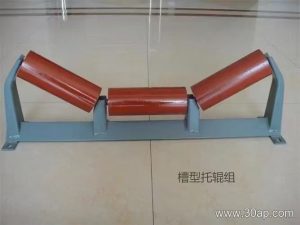
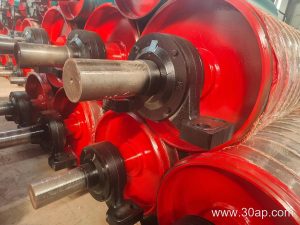
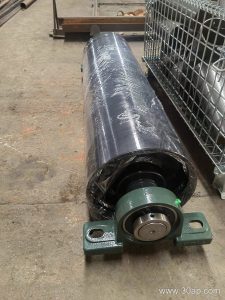
This is a buffer roller, not a drive pulley. Drive, tail, and bend pulleys serve completely different purposes and are not interchangeable with any idler. When you see the term belt conveyor impact idler, it always refers to the roller assembly at the loading zone, usually built as a three-roll trough set or a single heavy-duty roll with rubber rings.
Construction and Common Parts
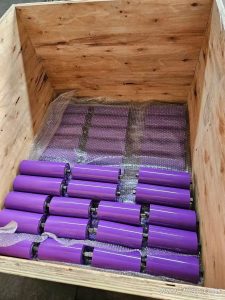
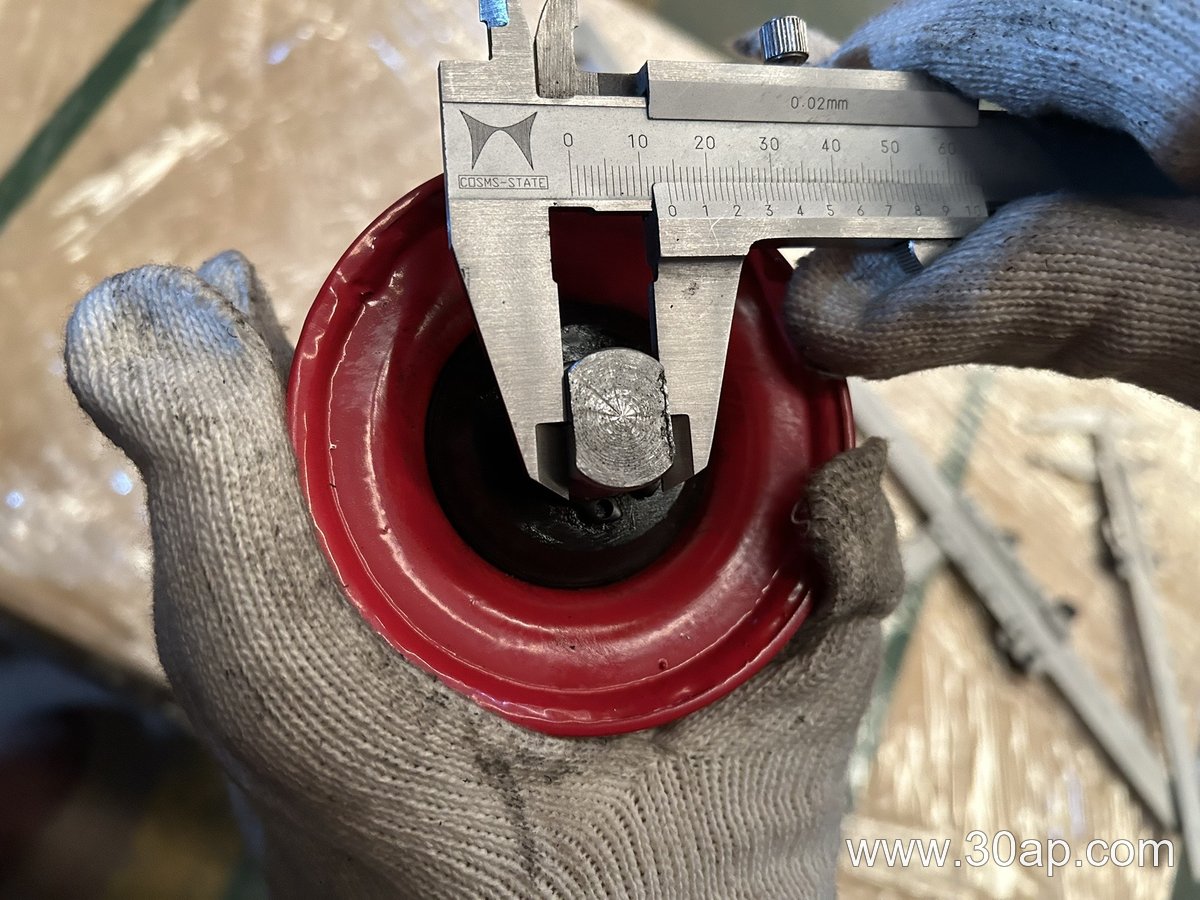
The basic body is a steel tube, often thicker than a normal idler roller because the load is not steady. Around that tube, rubber rings or a rubber-covered shell absorb the impact. The shaft runs through sealed bearings, and the whole assembly sits in a conveyor bracket that bolts to the conveyor frame.
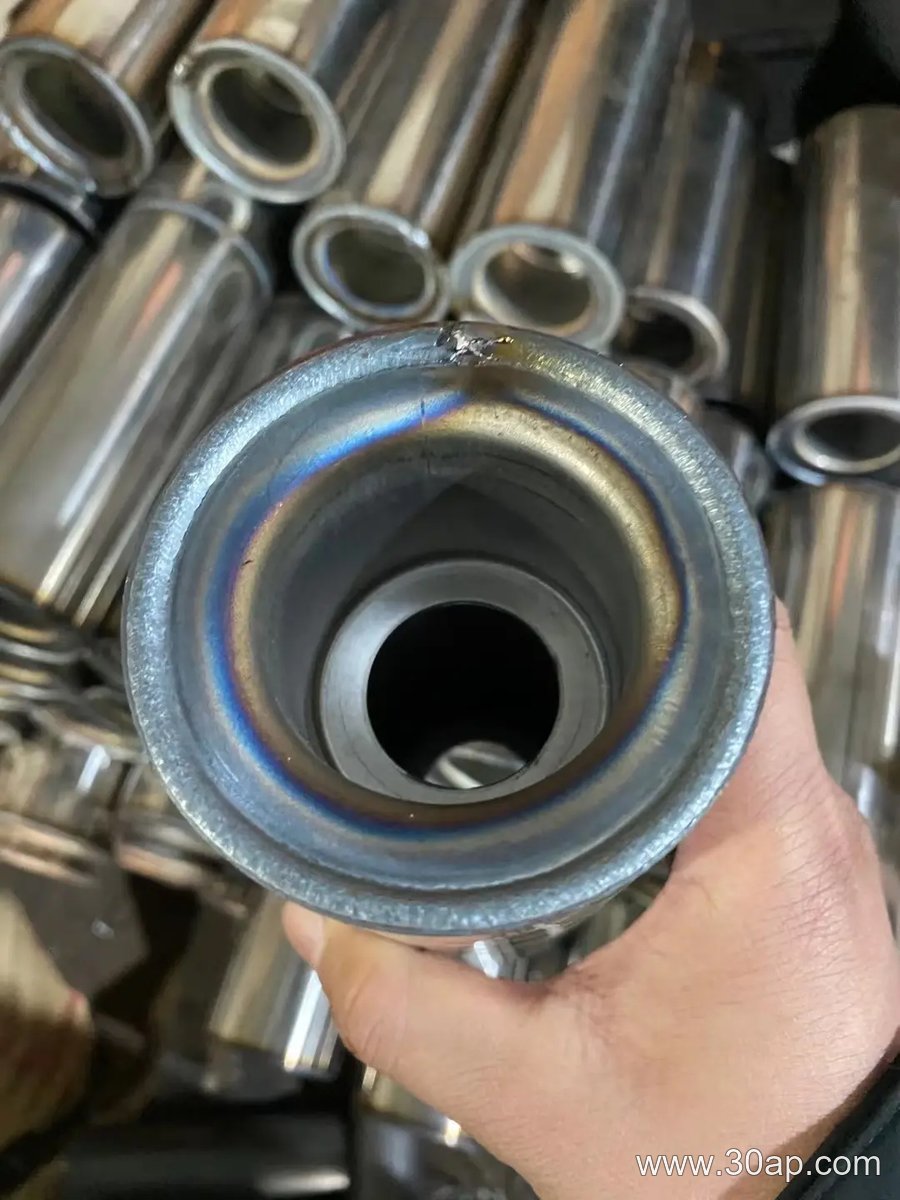
- Tube: steel, sometimes nylon-coated for wear or noise reduction
- Rubber rings: the defining feature of most impact idlers
- Bearings: common sizes include 6204, 6205, 6305, 6306, 6308, 6310
- Seals: labyrinth or contact seals to keep dust out
- Bracket: fixed or adjustable, matched to the conveyor structure
Roller diameter is selected by load and belt speed, not by belt width alone. Typical diameters for this family include Ø89, Ø108, Ø127, Ø133, Ø159, and larger. A B800 belt might use a Ø108 or Ø133 roller, but the same belt width can also work with other diameters depending on the duty. There is no rule that one belt width must match one roller diameter.
Where It Fits on the Conveyor
The impact idler belongs at the transfer point, under the skirtboard, and sometimes for a short distance after it. It is common in sand and gravel lines, cement plants, power station coal handling, iron and copper mines, and crushing and screening circuits. A belt conveyor impact idler is also used in tunnel mucking and at the discharge of a primary crusher, where lump size is large and fall height is significant.
On the return side, you would normally see a flat return idler or a V-shaped return roller, not an impact idler. A troughing idler with a 20, 30, 35, or 45 degree trough angle carries the loaded belt along the route. The impact version is a specialized carrying idler for the moment of impact.
Choosing the Right Size and Type
Selection starts with the material, the drop height, and the lump size. Soft grain or fertilizer may need only light rubber rings. Run-of-mine ore may need a heavy rubber-ring impact idler with a thick tube and large bearing. Belt width sets the roller length, but the exact length also depends on trough angle and whether the set is single-roll, two-roll, or three-roll.
Common belt widths range from B400 to B2400. For a three-roll trough set, roller length often follows the belt width, as shown in the table below. These are typical examples, not fixed matches.
| Belt Width | Typical Roller Length (three-roll trough) | Common Roller Diameter |
|---|---|---|
| B500 | about 200 mm | Ø63 to Ø89 |
| B650 | about 250 mm | Ø76 to Ø108 |
| B800 | about 315 mm | Ø89 to Ø133 |
| B1000 | about 380 mm | Ø108 to Ø159 |
| B1200 | about 465 mm | Ø127 to Ø178 |
| B1400 | about 530 mm | Ø133 to Ø194 |
| B1600 | about 600 mm | Ø159 to Ø219 |
| B1800 | about 670 mm | Ø159 to Ø219 |
| B2000 | about 750 mm | Ø178 to Ø219 |
Side rollers and center rollers can differ in length, so the table is only a starting point. The conveyor designer confirms the final dimensions.
Buyer Checklist
- Confirm the actual drop height and lump size before choosing rubber thickness.
- Match the bearing and seal to the dust and water conditions, not just to the roller size.
- Check that the conveyor bracket and frame holes fit the impact idler set.
- Ask for the roller length for each position if the set is not symmetrical.
- Remember that an impact idler complements troughing and return idlers; it does not replace them.
A well-chosen belt conveyor impact idler reduces belt cover damage, lowers noise, and protects the conveyor structure at the point where the belt works hardest. It is a small part of the total conveyor, but at the loading zone it is often the one that decides how long the belt lasts.