What a Conveyor Support Bracket Does on the Line
A conveyor support bracket is the structural link between the idler roller and the conveyor frame. It holds each roller at the correct height and angle so the conveyor belt keeps its trough shape and tracks properly under load. In a quarry, a cement plant, or a power plant coal yard, these brackets carry the full weight of the belt plus the material, which makes them a wear part worth specifying carefully. When a bracket is weak or misaligned, the result is usually a wandering belt, premature roller failure, and spillage along the transfer points.
The bracket is often called a conveyor bracket or idler bracket, and on troughing sections it may be described as a troughing support bracket. These are different names for the same component, not separate products.
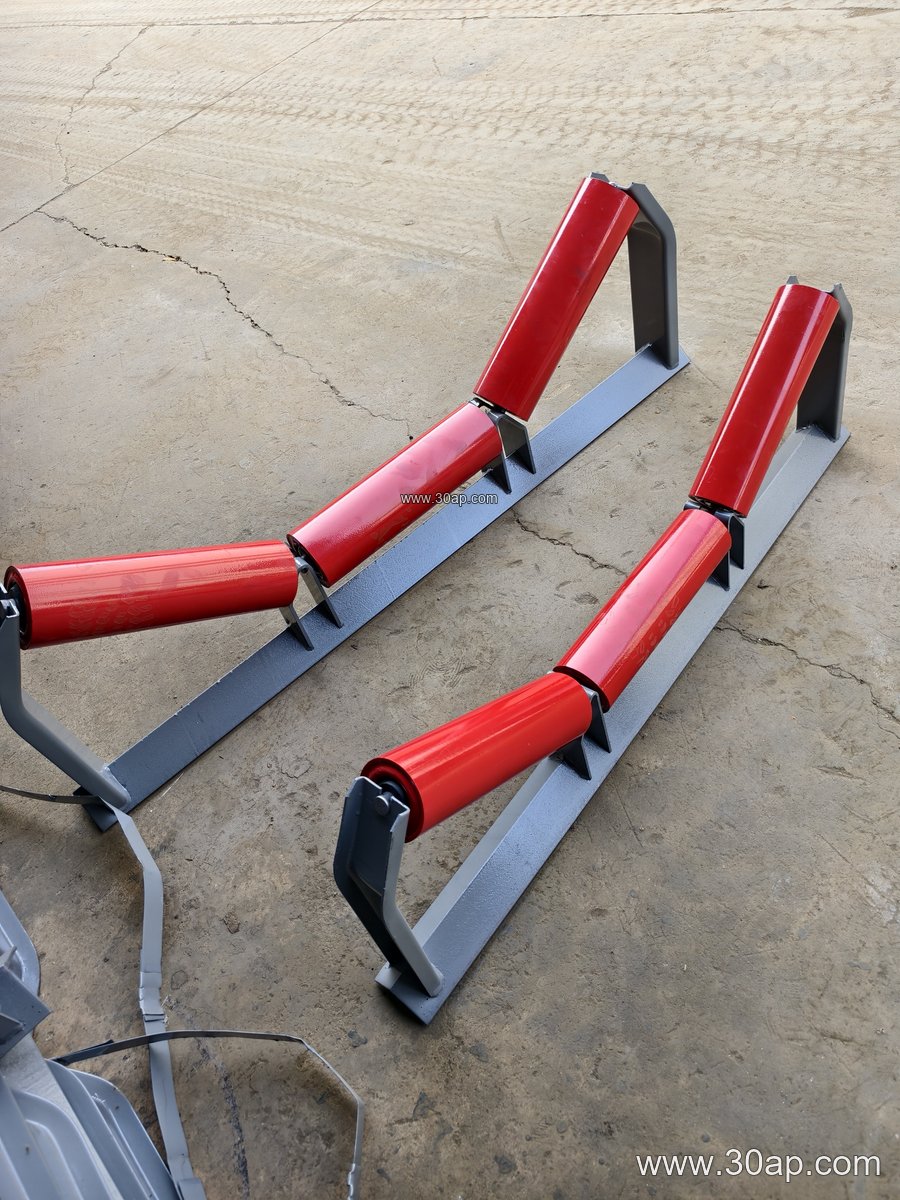
How the Bracket Is Built
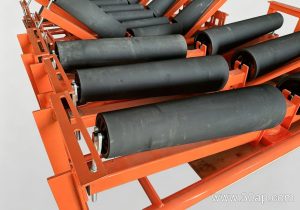
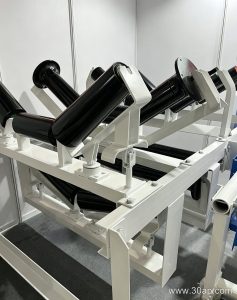
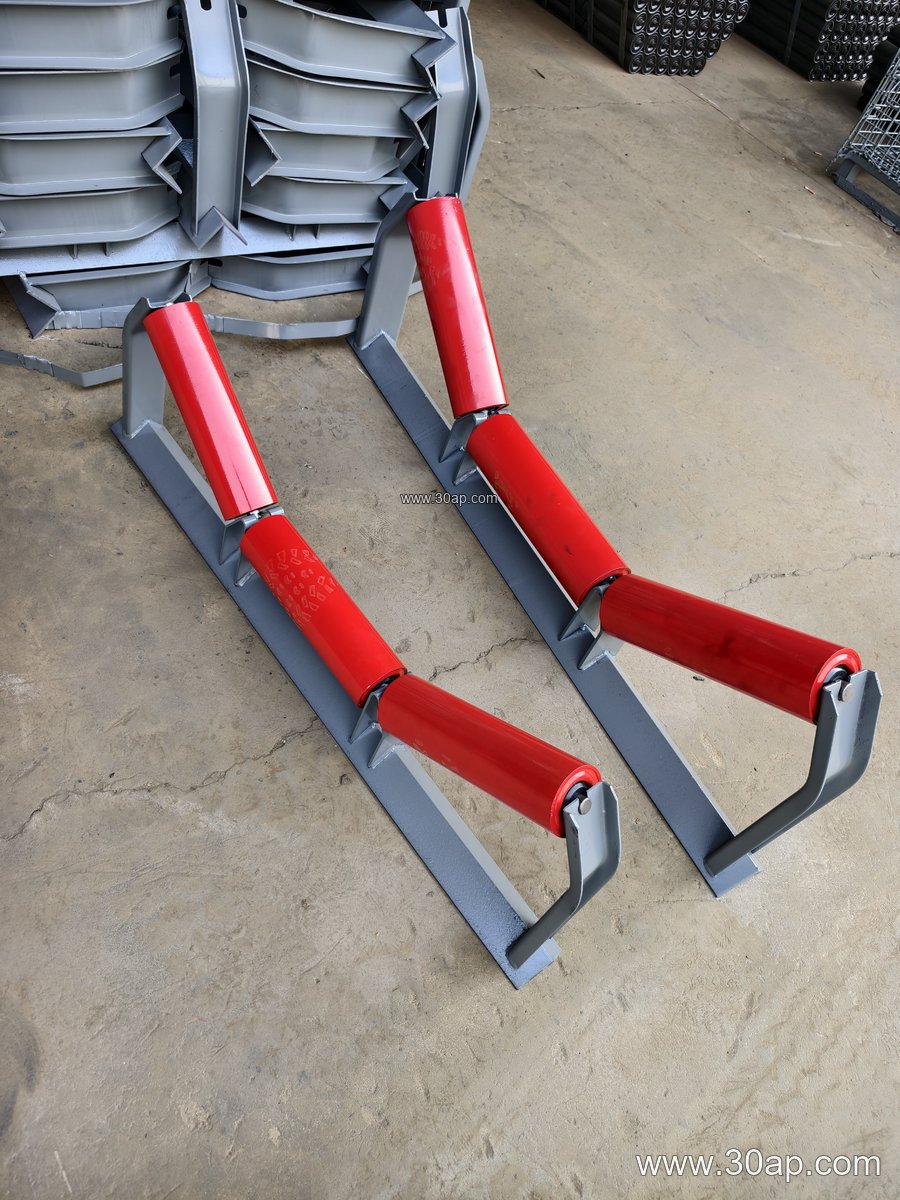
Most brackets are fabricated from angle steel, channel steel, or folded steel plate. The frame is welded or bolted into a rigid shape, and the mounting slots are punched or drilled to match the roller shaft ends. A typical troughing bracket carries three idlers: one center roller and two side rollers set at the trough angle. Return brackets are simpler, often a single flat or V-shaped support under the returning belt.
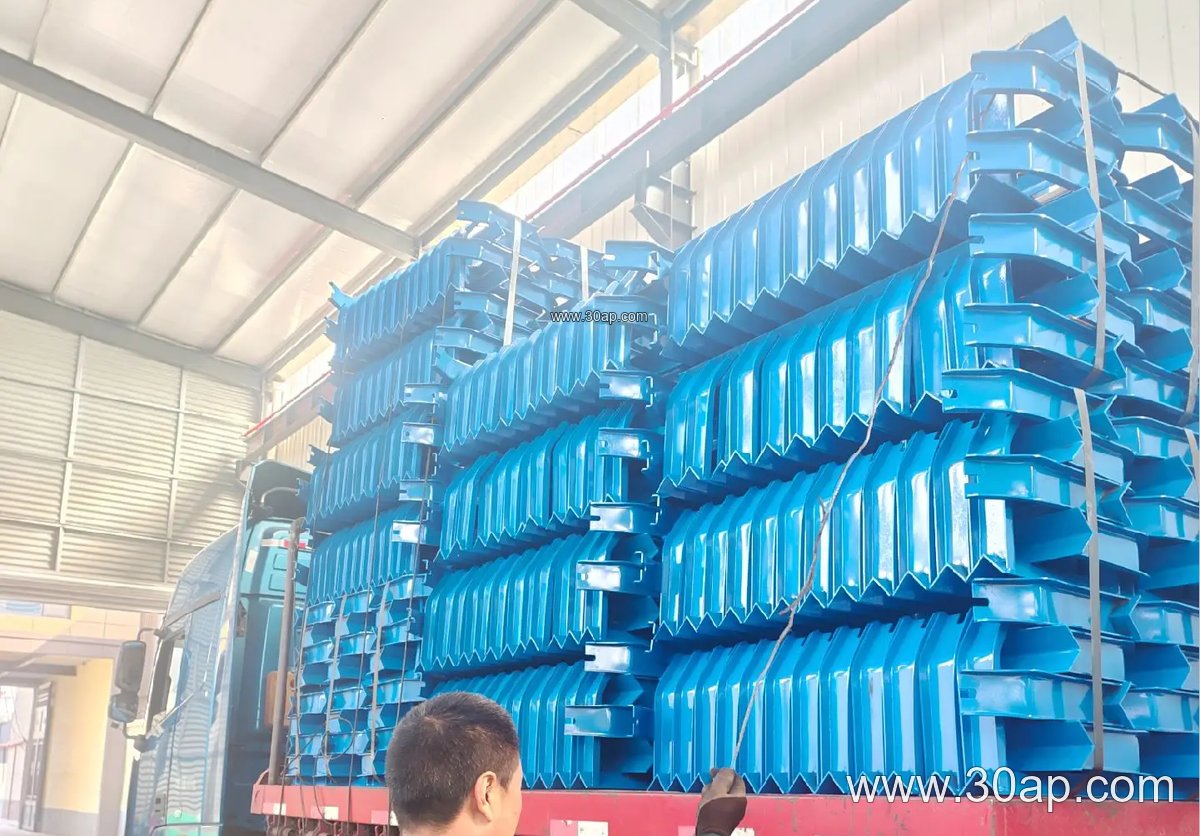
Because brackets are welded assemblies, weld quality and hole alignment matter more than the paint finish. A bracket with distorted slots will pull the roller out of square, and that misalignment transfers directly to the belt edge.
Common Types and Where They Sit
- Troughing bracket – carries the three-roller troughing set on the carrying side; the most common type on bulk lines.
- Transition bracket – used near pulleys where the belt changes from flat to troughed, easing the belt into the trough gradually.
- Return bracket – supports the belt on its return run, including flat and V-shaped return sets.
- Impact bracket – reinforced version placed under loading points to absorb the drop of ore, rock, or aggregate.
- Self-aligning bracket – allows slight rotation so the idler set can correct belt tracking.
- Adjustable bracket – lets maintenance staff set the trough angle on site.
These subtypes are not interchangeable. An impact bracket cannot replace a transition bracket, and a return bracket is not a substitute for a carrying-side troughing bracket.
Matching Bracket, Belt Width, and Roller Diameter
Bracket selection starts with belt width and roller diameter, then moves to trough angle. The table below shows common reference combinations; actual mounting hole spacing and crossbeam length are determined by design, not by a single fixed rule.
| Belt Width | Typical Trough Angle | Common Roller Diameter |
|---|---|---|
| B500 / B650 | 20° – 30° | Ø89 |
| B800 / B1000 | 30° – 35° | Ø108 |
| B1200 / B1400 | 35° – 45° | Ø133 |
| B1600 / B1800 | 35° – 45° | Ø159 |
| B2000 / B2200 | 35° – 45° | Ø194 |
A wider belt does not force one particular trough angle, and one belt width does not lock in a single roller diameter. Use the table as a starting point, then confirm with the conveyor designer. Forward-leaning brackets are usually set at about 1.5° to 2° to help tracking.
Where These Brackets Are Used
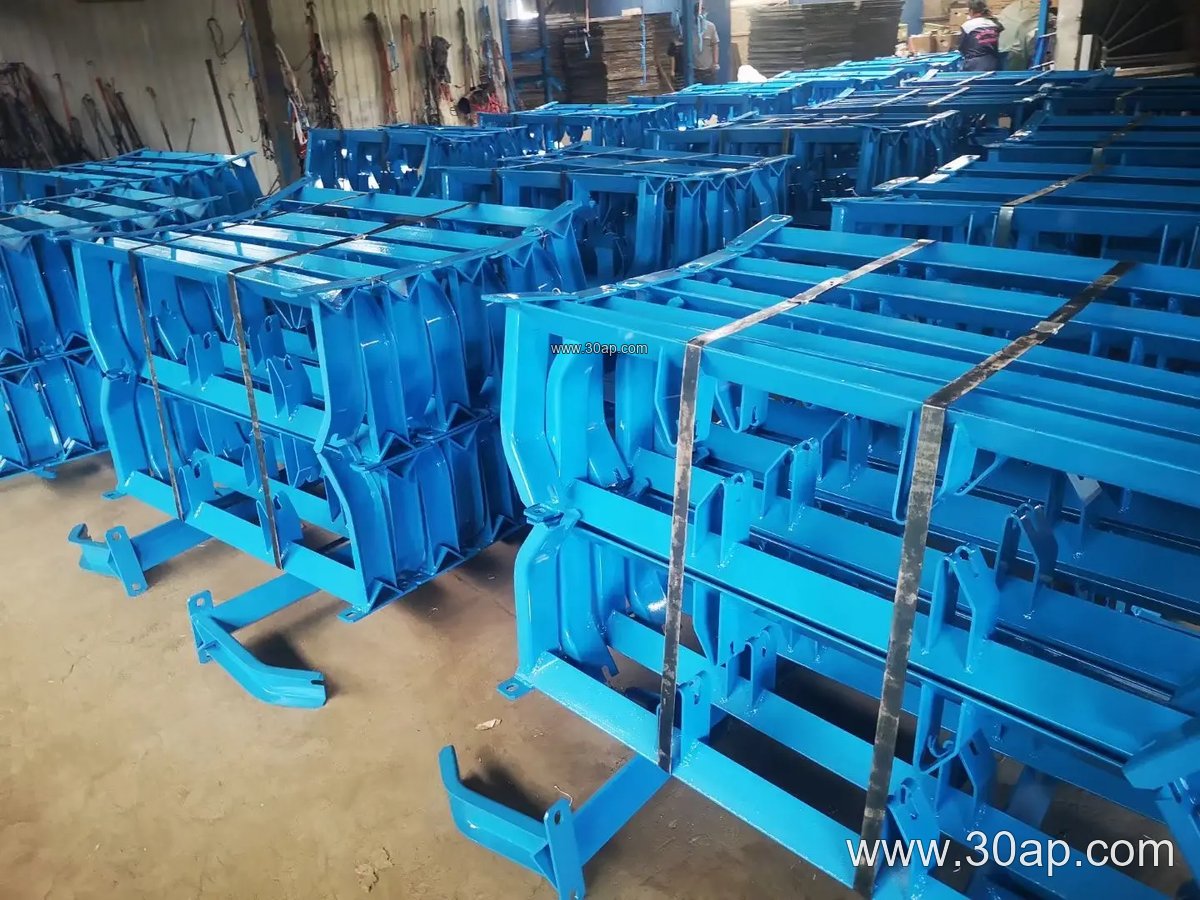
In a limestone quarry or stone crushing line, troughing brackets run continuously under the crusher conveyor belt, while impact brackets sit directly below the crusher discharge. In a coal handling system at a power plant, flame retardant conveyor belt and anti-static belt grades are common, and the brackets must suit the same dusty, sometimes wet conditions. Cement plants use them on clinker and raw meal lines, and port ship-loading conveyors rely on heavy brackets where belt tension is high.
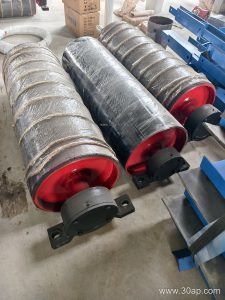
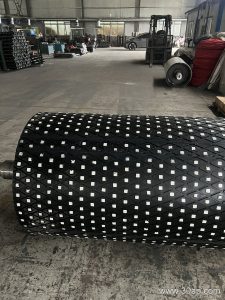
The bracket works alongside the conveyor pulley at the head and tail, the idler roller along the run, and the belt itself. A steel cord conveyor belt or a heavy-duty mining conveyor belt adds load, so bracket wall thickness should be reviewed together with roller spacing.
What Buyers Should Check Before Ordering
- Confirm belt width, trough angle, and roller shaft diameter as a set, not separately.
- Ask for the mounting hole pattern drawing and check it against the existing frame.
- State the material being carried: abrasive ore, hot clinker, or wet coal each changes the wear allowance.
- For corrosive or outdoor sites, discuss surface treatment rather than assuming standard paint is enough.
- Order brackets and rollers as a matched batch so slot alignment is consistent across the line.
Spare brackets are cheap compared with a torn belt. Keeping a few troughing and return brackets in the warehouse is a practical habit for any plant that runs a conveyor belt around the clock. For more on matching brackets with rollers and belts, see conveyor bracket and idler roller references.