What Makes a Conveyor Pulley Heavy Duty
A heavy-duty conveyor pulley is the rotating drum at the heart of a bulk material handling system. It transmits power to the conveyor belt, changes the belt path, or keeps tension steady under continuous load. The term covers several functional positions, but the component itself is always a fabricated or cast cylindrical shell with end discs, a shaft, and bearing supports. In demanding environments, the difference between a standard pulley and a heavy-duty one comes down to wall thickness, weld quality, shaft size, and the surface treatment that grips the belt.
Although people sometimes use the phrase as a general label, a drive pulley, a tail pulley, and a bend pulley are not interchangeable. Each sits in a different location and performs a distinct job. A drive pulley, also called the head or discharge pulley, powers the belt. A tail pulley at the loading end redirects the belt and often works with a tensioning device. A bend pulley simply changes direction without driving or tensioning. Understanding this distinction helps a buyer specify the right unit instead of assuming one drum fits every station.
How a Heavy-Duty Drum Is Built
The shell is usually rolled from steel plate and machined to a slight crown or left flat. End discs are welded inside the shell to support the shaft, and the shaft itself is sized by torque and radial load, not by belt width alone. Common shaft diameters include Ø50, Ø60, Ø70, Ø80, Ø90, Ø100, Ø120, Ø140, Ø160, Ø180, and Ø200, but the final choice depends on the drive power, belt tension, and bearing life required. Larger shafts and thicker shells are typical when the pulley must survive shock loading from coarse rock or high-capacity ore.
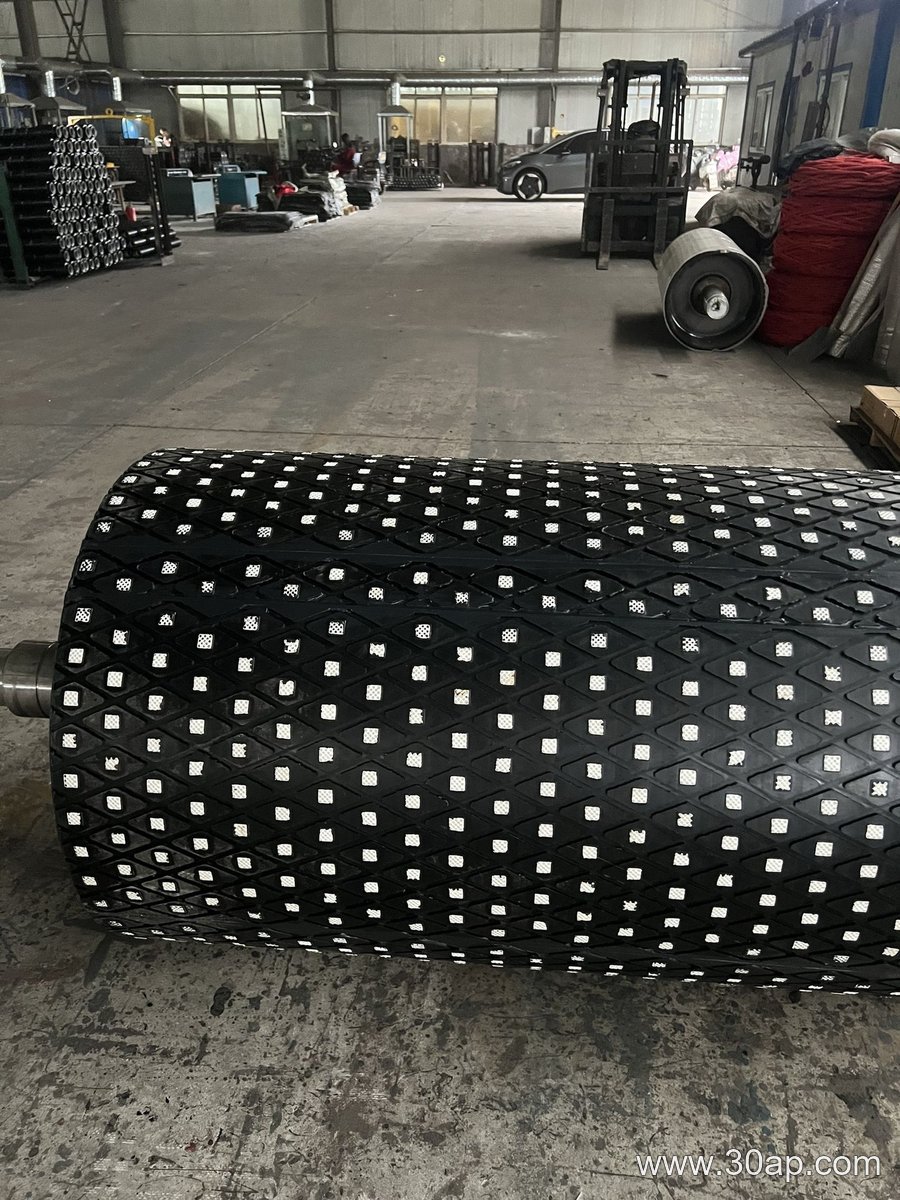
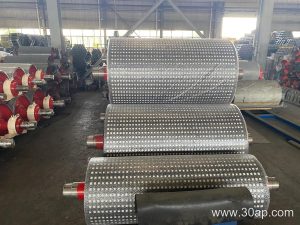
Surface treatment is another defining feature. A heavy-duty conveyor pulley may be supplied with a plain finish, cast rubber, cold-bonded rubber, hot-vulcanized rubber, diamond grooving, herringbone grooving, ceramic lagging, or a flat rubber sheet. Lagging thickness commonly ranges from 8 mm to 20 mm. The right surface depends on whether the pulley needs extra grip, protection from abrasive material, or both. For example, a drive pulley on a wet, dusty aggregate line often benefits from diamond or herringbone lagging to shed water and maintain traction.
Where These Pulleys Are Used
Heavy-duty conveyor pulleys appear wherever the belt carries a serious load. In a quarry or limestone mine, they move crushed rock from the primary crusher to the stockpile. In a coal preparation plant, they handle wet, fine material that can slip on a smooth drum. In a cement plant, they transport clinker and raw meal through hot, abrasive conditions. Port bulk terminals use them on long overland conveyors where reliability matters more than initial cost. The same component may also appear in a tunnel boring operation, a fertilizer granulation line, or a grain silo discharge system, though the duty cycle and environment change the specification.
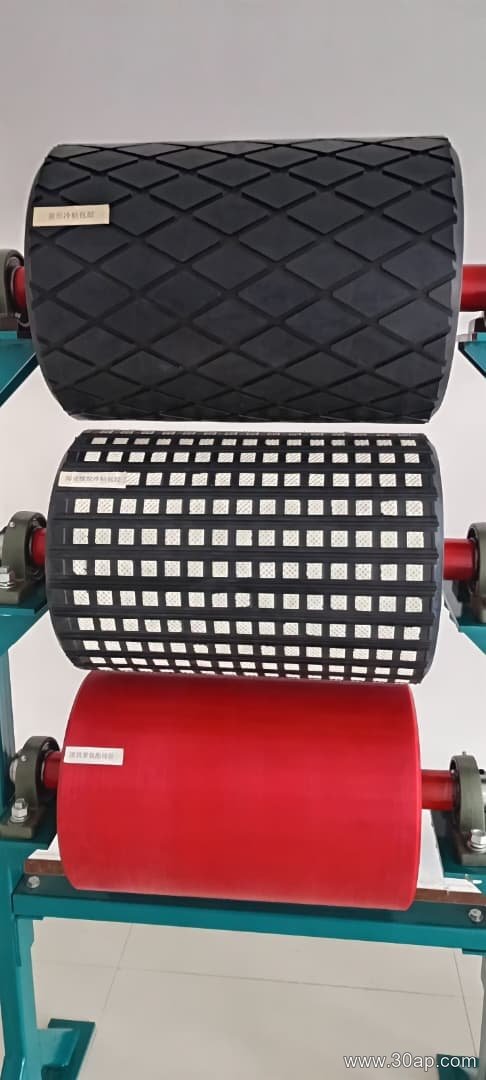
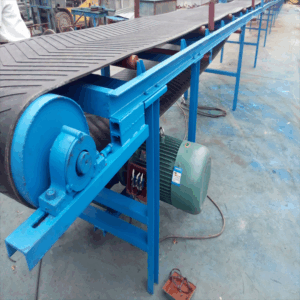
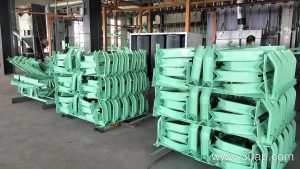
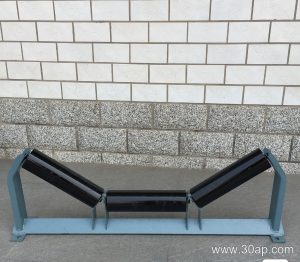
At each location, the pulley works with a conveyor belt, idler rollers, and a conveyor bracket or frame. The belt wraps around the drum, the idlers support the belt between pulleys, and the bracket holds the bearing housing in place. If any of these parts is undersized, the pulley may still fail early. That is why a heavy-duty pulley should be selected as part of the whole conveyor system, not as an isolated item.
What a Buyer Should Check Before Ordering
Start with the function. Is the pulley driving, tailing, bending, tensioning, or simply increasing wrap angle? A drive pulley needs more grip and a stronger shaft than a bend pulley of the same diameter. Next, confirm the belt width and the pulley face width. The face is usually wider than the belt; for example, a B400 belt often uses a face around 500 mm, a B800 belt around 950 mm, and a B1200 belt around 1400 mm. These are common references, not fixed rules. A B1200 × Ø1000 or B800 × Ø500 combination can work, but the diameter should be chosen from belt tension, speed, and bearing load, not from width alone.
Ask about lagging type and thickness, shaft material, bearing type, and balancing. Also check whether the pulley will be welded or bolted to the frame, and whether the shaft needs a keyway, locking assembly, or shrink disc. For abrasive or wet conditions, consider ceramic lagging or a grooved rubber surface. For high-tension drives, verify the weld details and non-destructive testing if the supplier offers it. Finally, keep spare pulleys or lagging kits on hand for critical conveyors. A heavy-duty conveyor pulley is a long-life component, but it still needs correct alignment, proper belt training, and routine inspection of the lagging and bearings to deliver that life.