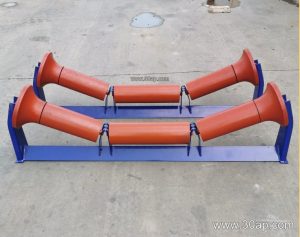
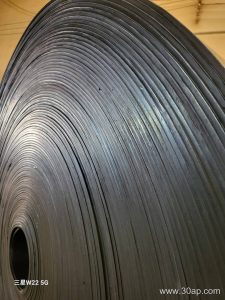
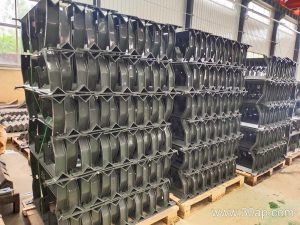
What a Driving Pulley Does
A driving pulley, often called the head pulley or drive pulley, is the powered drum that transmits motion to the conveyor belt. It grips the belt on the carrying side and pulls the entire loop, while the belt returns over a tail pulley and is supported by idler rollers along the route. In a quarry, cement plant, or coal preparation facility, this single component sets the pace for every tonne of material moved.
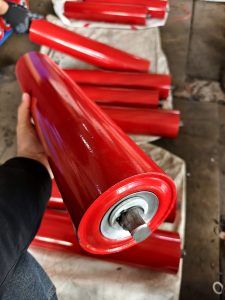
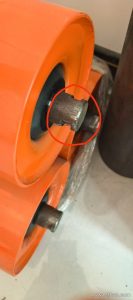
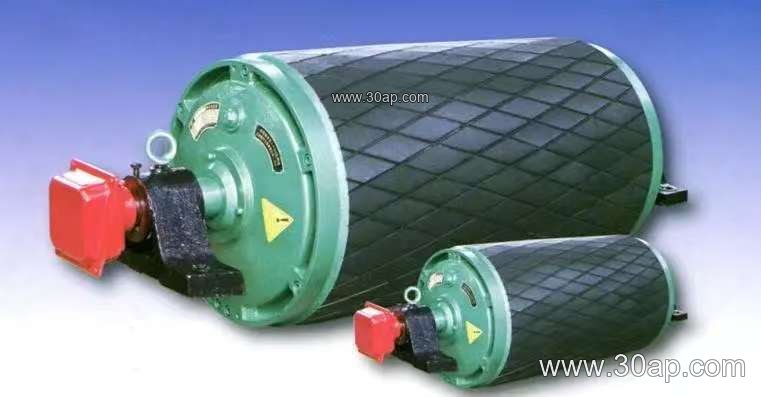
The driving pulley is not simply a steel cylinder. It combines a shell, end discs, a shaft, and a locking assembly that must withstand continuous torque and belt tension. The surface is usually lagged to increase friction, and the lagging choice directly affects slip risk and belt life.
Construction and Surface Options
Most driving pulleys use a welded steel shell with machined end faces. The shaft is sized by torque and load, not by belt width alone—a B800 conveyor might use a Ø100 shaft in one layout and a Ø120 shaft in another. Common diameters range from Ø200 to Ø1000 or more, and shell width typically exceeds belt width by 100 to 200 mm.
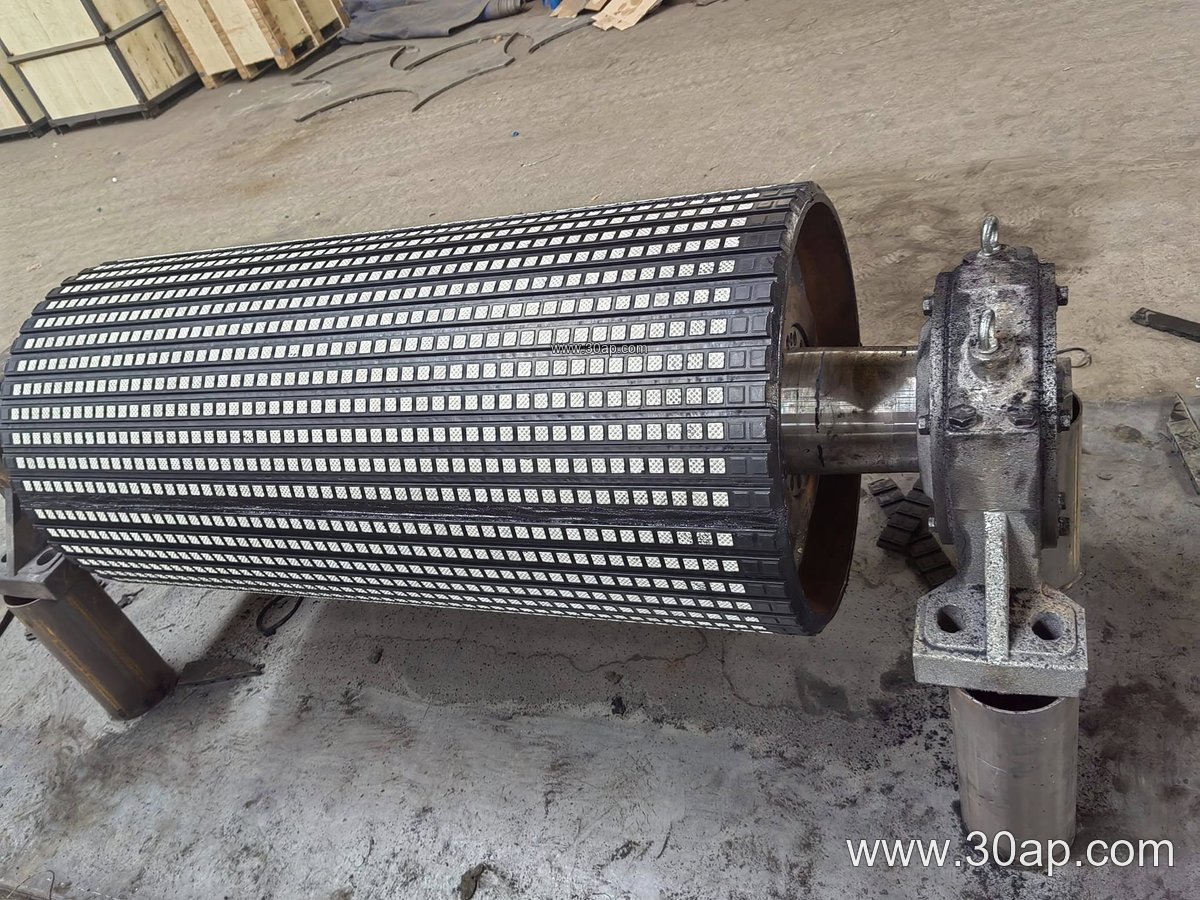
Lagging is where the driving pulley earns its grip. Plain steel is rare on a drive; instead, buyers see hot-vulcanized rubber, cold-bonded rubber, diamond groove, herringbone, or ceramic lagging. Thickness often falls between 8 mm and 20 mm depending on tension and material. In a sand and gravel line, diamond rubber lagging sheds water and fines well; in a coal mining conveyor, flame retardant lagging may be specified for underground use.
Matching the Pulley to the Belt
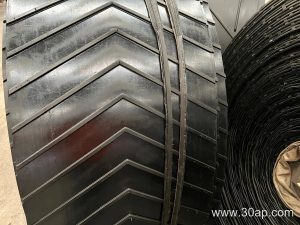
Belt width and pulley diameter work together but are not locked in a fixed ratio. A B1200 belt may run on a Ø1000 driving pulley in a high-tension main haul, while a shorter transfer conveyor might use a Ø800 drum. The belt itself matters: a heavy-duty mining conveyor belt with steel cord reinforcement needs a larger diameter to limit bending stress, whereas a multi-ply fabric core belt can tolerate a tighter wrap.
For abrasive ore, the driving pulley lagging should resist cutting and wear. Ceramic lagging is common where the belt carries iron ore or copper ore and slip would be costly. For heat resistant conveyor belts in a cement plant clinker line, the lagging compound must also tolerate elevated temperatures without hardening.
Where It Sits in the Conveyor
The driving pulley usually sits at the head, discharging material onto the next stage. It can also be placed at an intermediate point or inside a take-up arrangement, but the function remains the same: transfer power to the belt. A bend pulley only changes belt direction; a tail pulley only supports the return side. These are different roles, and replacing one with another is not a valid substitution.
In a coal mining conveyor or underground coal mining conveyor, the driving pulley may be part of a flame retardant conveyor belt system with strict surface and material requirements. In a port ship loading conveyor, the drive is often larger to handle high capacity and long centers.
Buyer Checklist
- Confirm belt width, belt type, and required power before selecting diameter.
- State the lagging surface and thickness needed for the material—abrasion resistant conveyor belt duties may need ceramic or thick rubber.
- Provide shaft torque and bearing load data so the shaft diameter is calculated, not guessed.
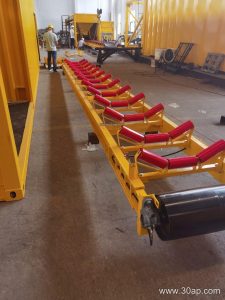
- Check that the pulley shell width clears the conveyor bracket and idler roller frames.
- For underground or coal applications, specify flame retardant and anti-static requirements for both belt and lagging.
Maintenance is straightforward but important. Worn lagging reduces friction and invites slip, which raises belt tension and heat. Inspect the driving pulley surface during scheduled shutdowns, and keep the belt tracking straight so the drum wears evenly. A well-matched driving pulley, belt, and idler roller set keeps a conveyor running quietly from crusher to stockpile.