What an Idler Bracket Does on a Conveyor
An idler bracket is the structural support that holds a conveyor idler roller at the correct position and angle beneath or beside the conveyor belt. It is a fabricated steel component, usually bolted or welded to the conveyor frame, and its geometry decides how the belt is supported along the carrying and return runs. In a quarry, a cement plant, or a coal handling line, the bracket is the quiet element that keeps every roller aligned, so the belt tracks straight and the load is spread evenly.
The bracket should not be confused with a conveyor pulley. A drive pulley, a tail pulley, and a bend pulley each perform a different job at the ends or turning points of a conveyor, while the idler bracket works along the length of the structure. This article focuses on the bracket, its construction, and the choices a buyer faces.
Construction and Common Materials
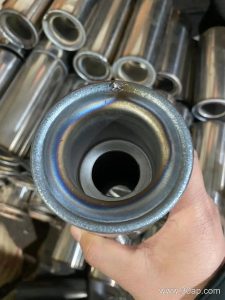
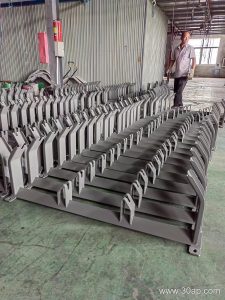
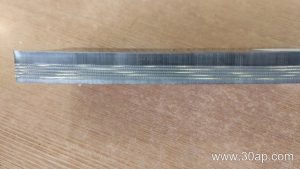
Most brackets are made from angle steel, channel steel, or folded steel plate. The frame is cut, drilled, and formed so the idler roller sits in a fixed cradle or in an adjustable slot. Welded brackets suit permanent installations, while bolted designs allow replacement without cutting the frame.
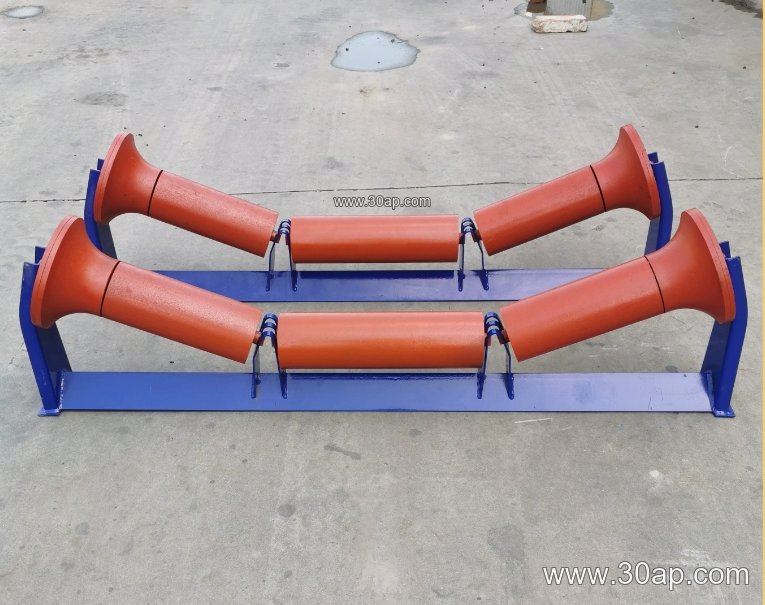
Typical material choices and their roles:
- Angle steel for lighter carrying brackets and simple return supports.
- Channel steel for heavier troughing brackets and long spans.
- Folded plate for compact brackets with formed mounting ears.
Surface treatment matters in dusty or wet plants. A painted finish is common, and galvanized or powder-coated versions are chosen where corrosion is a concern. The buyer should confirm the steel thickness and the hole pattern, because mounting hole spacing and crossbeam length change with belt width and trough angle.
Bracket Types in the Conveyor Line
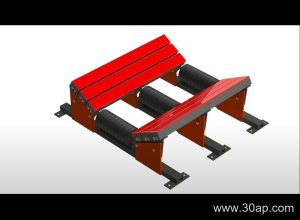
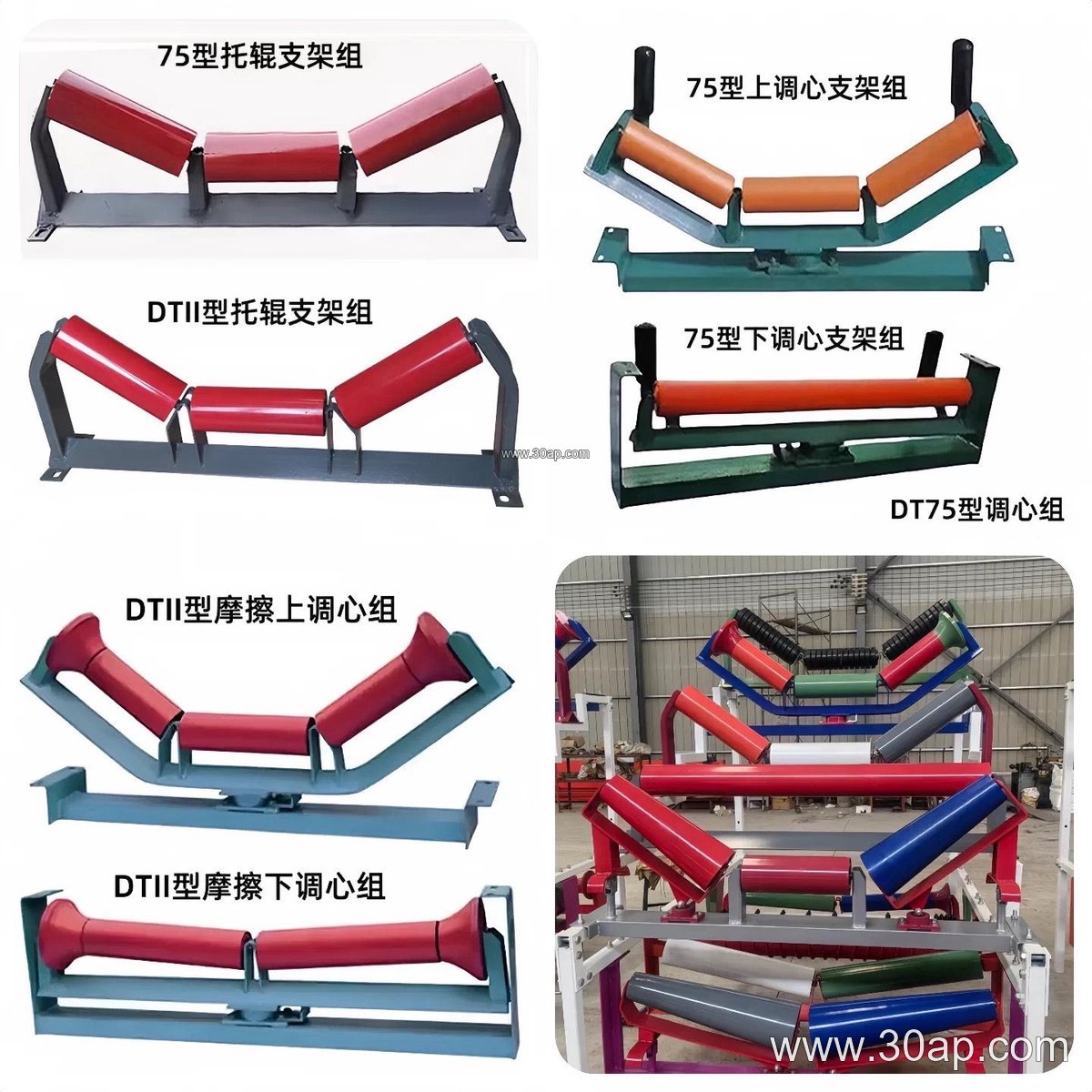
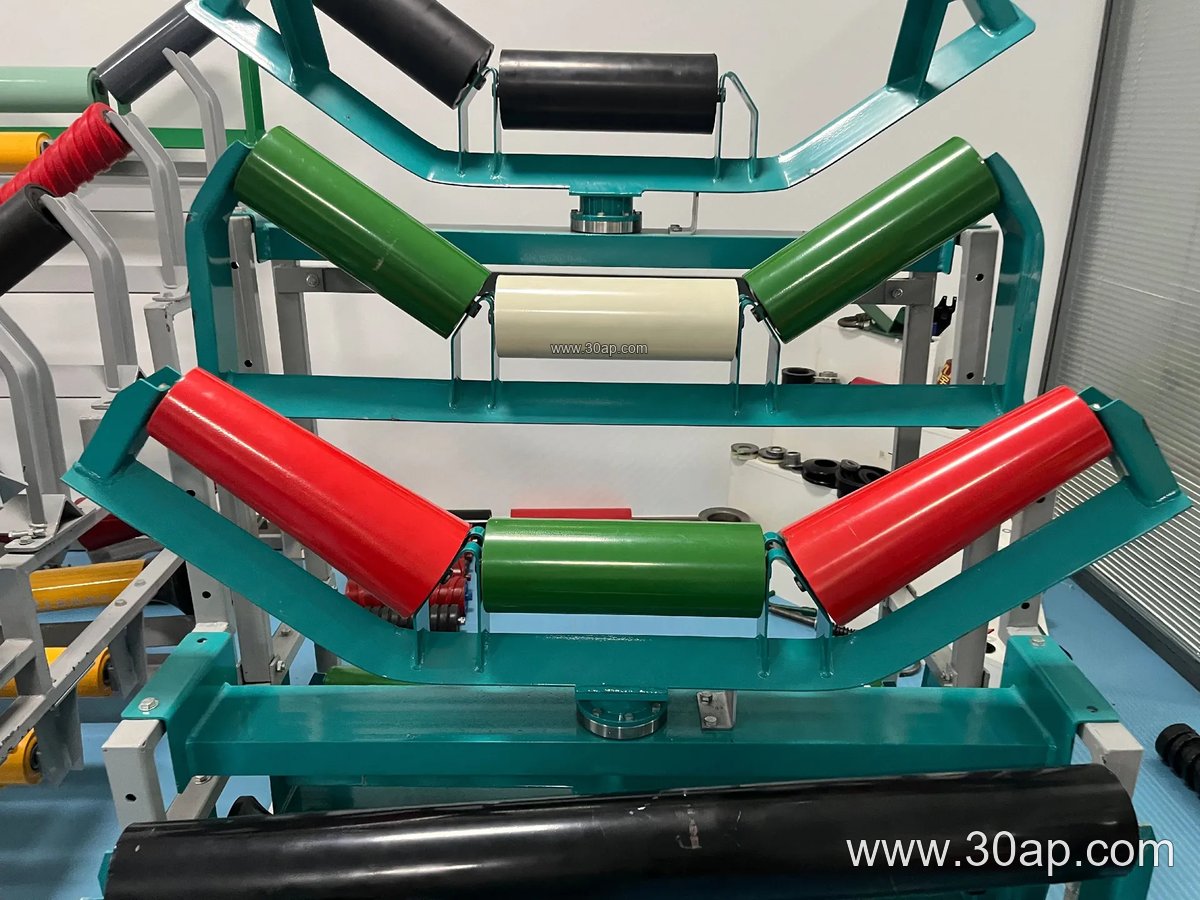
Brackets are grouped by where they sit and what they do. The troughing idler bracket supports the carrying side with three rollers set at an angle. The return bracket supports the belt on its way back, often as a flat or V-shaped arrangement. Transition brackets sit near the pulleys to ease the belt from flat to troughed. Buffer brackets carry impact rollers under a loading point. Self-aligning brackets allow a slight pivot so the belt corrects its own drift.
A relevant comparison is the troughing bracket versus the return bracket. Both hold idler rollers, but the return version is built flat or V-shaped and usually carries less material load. The two are not interchangeable on the same mounting position.
Matching Belt Width, Trough Angle, and Roller Diameter
The bracket is selected together with the conveyor belt width, the required trough angle, and the idler roller diameter. Common belt widths include B500, B650, B800, B1000, B1200, B1400, B1600, B1800, B2000, B2200. Trough angles of 20, 30, 35, and 45 degrees are standard, and adjustable brackets can be set between these angles. Forward-leaning brackets are usually set at about 1.5 to 2 degrees.
Roller diameters such as Ø89, Ø108, Ø133, Ø159, and Ø194 are matched to belt width and load, not to one another in a fixed rule. A B800 belt might run with a 35 degree trough and Ø108 rollers, and a B1200 line might use 45 degrees with Ø133 rollers, but these are examples rather than fixed combinations. The table below shows reference values, not a supply commitment:
| Reference item | Common range or value | Note |
|---|---|---|
| Belt width | B500 to B2200 | Confirm with frame drawing |
| Trough angle | 20, 30, 35, 45 degrees | Adjustable brackets vary |
| Roller diameter | Ø89 to Ø194 | Set by load and belt speed |
| Forward lean | About 1.5 to 2 degrees | Used for belt training |
Do not assume that one belt width can only match one pulley diameter or one shaft size. The bracket hole spacing and crossbeam length are determined by the design, and the buyer should provide the frame drawing before ordering.
Where It Fits in the Plant
An idler bracket appears wherever a conveyor belt needs support. In a limestone mine or a crushing and screening line, troughing brackets carry the loaded belt through transfer points. In a coal washing plant or a power station coal yard, return brackets keep the empty belt off the ground and reduce spillage. In a cement plant, buffer brackets under the clinker load protect the belt from impact. The same component also works in a fertilizer plant, a grain silo, or a tunnel mucking line, provided the frame and belt width match.
Buyer Checklist
- Confirm the bracket type: troughing, return, transition, buffer, self-aligning, or adjustable.
- State belt width, trough angle, and roller diameter together.
- Check steel grade, thickness, and surface finish for the site environment.
- Ask for the mounting hole pattern and crossbeam length rather than assuming a standard.
- Match the bracket to the conveyor frame and roller shaft, not to a catalogue number alone.
A well-chosen idler bracket keeps the conveyor idler roller seated, the conveyor belt trained, and the whole conveyor frame steady. Selection is a matter of matching geometry and material to the job, not of picking the heaviest part available.