What a Five-Roll Idler Bracket Does
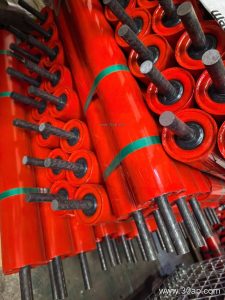
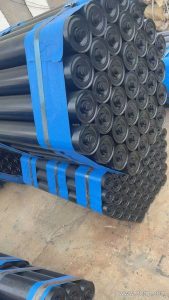
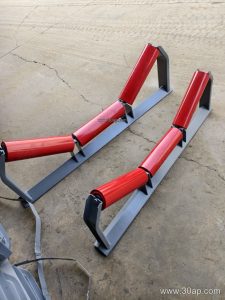
A five-roll idler bracket is a support frame that carries five idler rollers in a single station, usually arranged to form a deep trough profile. It is common in bulk material handling where the conveyor belt needs extra support across the full width, especially on high-capacity lines in mining conveyor belt service, coal preparation plants, and cement works. The bracket holds the rollers at set angles so the belt keeps its shape under load and tracks steadily along the conveyor structure.
Unlike a standard three-roll set, the five-roll design distributes the load over more contact points. This helps reduce belt sag between idlers and spreads the weight of heavy material such as iron ore, limestone, or crushed stone. It is often chosen when belt widths are large or when lump sizes put extra stress on the center of the belt.
Construction and Mounting Details
Most five-roll idler brackets are fabricated from angle steel, channel steel, or folded steel plate. The frame includes mounting slots or holes that align with the conveyor stringer, and the roll seats are positioned to hold each idler roller at the required trough angle. The bracket may be fixed or adjustable, depending on whether the operator wants to fine-tune the trough profile on site.
Typical trough angles for five-roll stations are 20, 30, 35, and 45 degrees. Adjustable versions allow the outer rolls to be set between these values, which can help when matching the bracket to a specific EP conveyor belt or steel cord conveyor belt that behaves differently across the width. Roller diameters commonly used with these brackets include Ø89, Ø108, Ø133, Ø159, and Ø194 mm, but the final choice depends on belt speed, load, and the conveyor designer’s calculation.
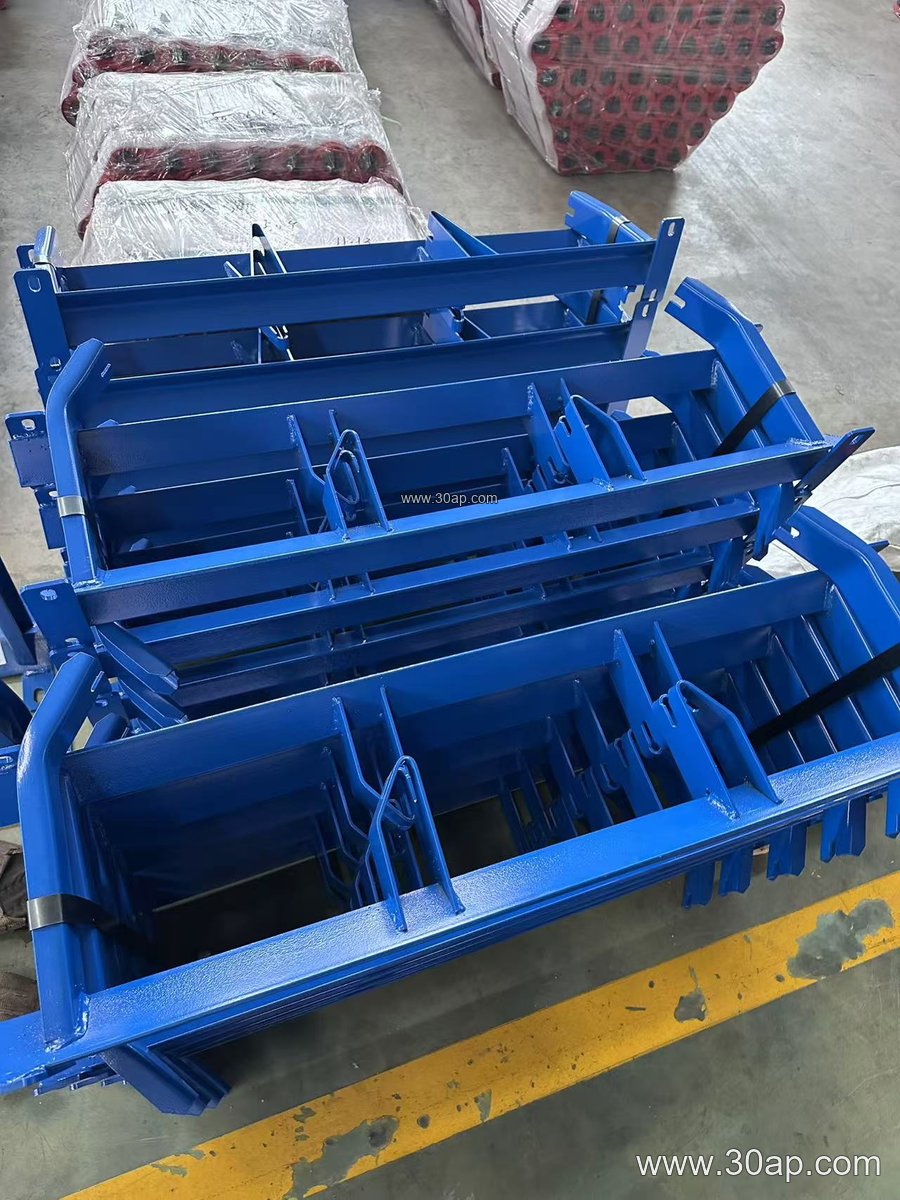
Mounting hole spacing and crossbeam length are not universal. They change with belt width and trough angle, so a bracket for a B800 line will not necessarily fit a B1200 structure without checking dimensions. Buyers should confirm the stringer spacing, bolt hole pattern, and roller seat dimensions before ordering.
Where Five-Roll Stations Fit Best
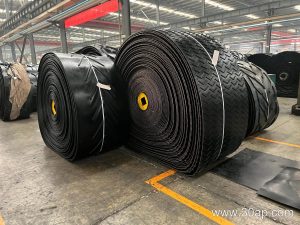
Five-roll idler brackets are often found at transfer points, loading zones, and long overland sections where the belt carries a deep bed of material. In a quarry or aggregate plant, they can support a quarry conveyor belt carrying mixed stone and fines. In a coal mining operation, they may be used with a flame retardant conveyor belt to keep the belt profile stable through uneven loading.
They are also useful on wide belts where a three-roll trough would leave too much unsupported belt between the center and outer rolls. For example, a B1400 or B1600 conveyor handling heavy ore may use a five-roll bracket to limit edge sag and improve belt training. The same bracket type can appear in power plant coal handling, steel plant sinter lines, and port ship-loading systems, provided the frame is sized for the belt and load.
Selection Points for Buyers
Choosing a five-roll idler bracket starts with the conveyor belt width and the required trough angle. The bracket must match the stringer spacing and the idler roller diameter used elsewhere on the line. It is also important to confirm whether the bracket is fixed or adjustable, and whether it is designed for a standard trough or a transition zone near a pulley.
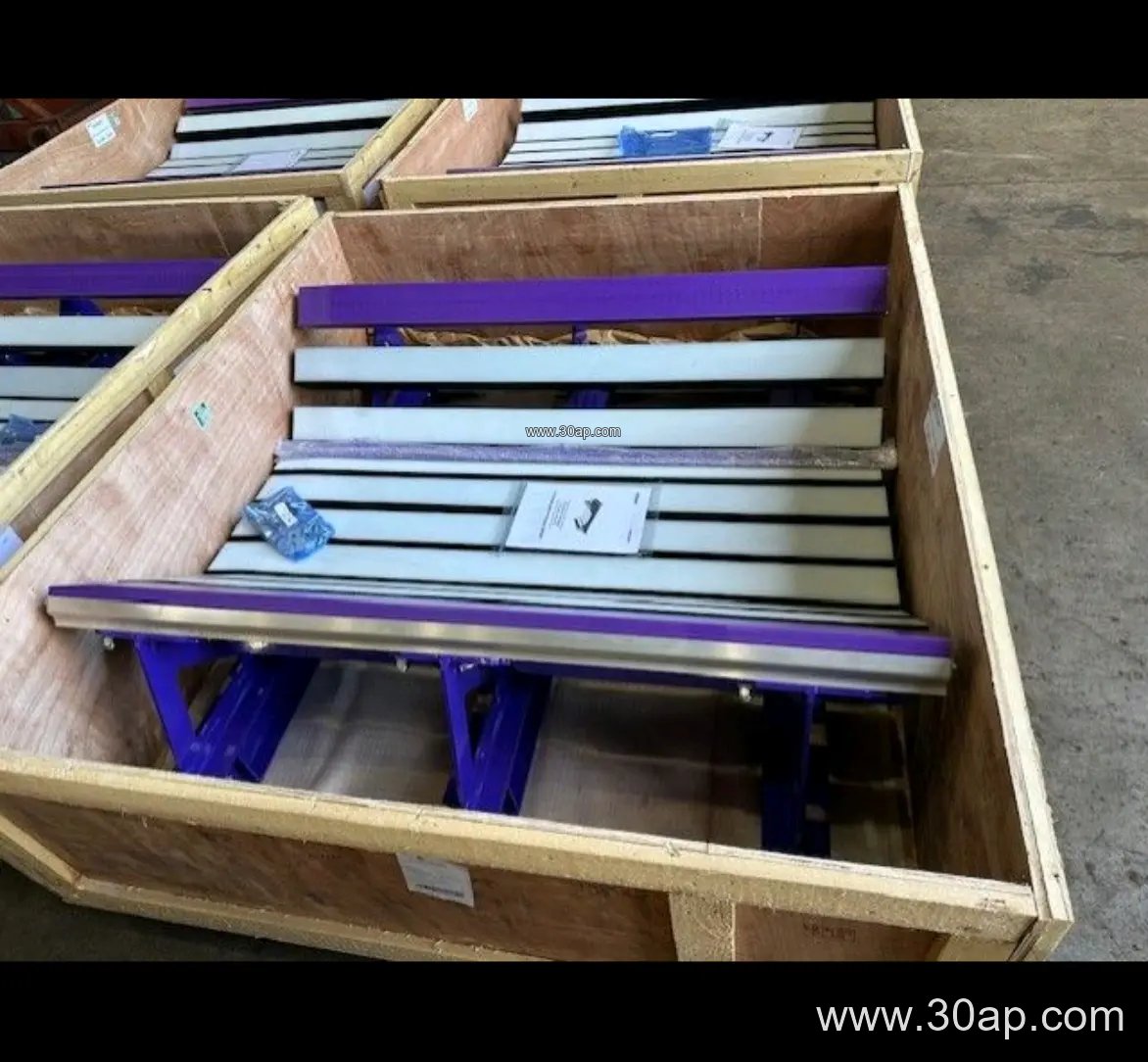
Material and surface treatment matter in dusty or wet conditions. A painted or galvanized frame may suit a cement plant, while a heavier fabricated frame is often preferred in a primary crushing circuit. The bracket should be checked for weld quality, squareness, and roller seat alignment, since a twisted frame can cause the belt to run off-center.
Finally, buyers should ask for a dimensional drawing that shows hole centers, overall width, and roll seat angles. This avoids the common mistake of ordering a bracket by belt width alone. A five-roll idler bracket is a specific component, and its fit depends on the whole conveyor layout, not just the belt size.
Common Reference Dimensions
The table below shows typical combinations seen in conveyor design. These are reference examples, not fixed rules, and actual dimensions are confirmed by the conveyor manufacturer.
| Belt Width | Trough Angle | Roller Diameter | Bracket Type |
|---|---|---|---|
| B800 | 35 degrees | Ø108 | Fixed five-roll |
| B1000 | 35 degrees | Ø133 | Adjustable five-roll |
| B1200 | 45 degrees | Ø133 | Fixed five-roll |
| B1400 | 35 degrees | Ø159 | Adjustable five-roll |
| B1600 | 45 degrees | Ø159 | Fixed five-roll |
| B1800 | 35 degrees | Ø194 | Heavy-duty five-roll |
For wider belts such as B2000 or B2200, the bracket is usually custom-fabricated to suit the stringer and load. In all cases, the bracket should be matched with the correct idler roller and conveyor pulley layout to keep the belt running smoothly.