What a Port Conveyor Pulley Does
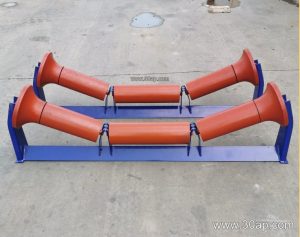
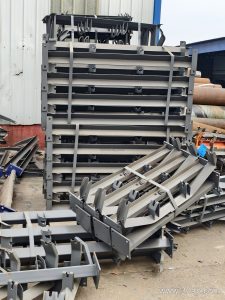
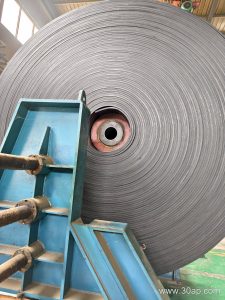
A port conveyor pulley is the rotating drum that drives, tensions, or redirects the belt in a ship loading or bulk terminal conveyor system. In a port, the conveyor runs long distances between the stockyard, the quay, and the ship loader, so every drum must handle steady tension, salt-laden air, and abrasive bulk cargo. The pulley is not a stand-alone part; it works together with the conveyor belt, the idler roller sets, and the conveyor bracket and frame structure.
In a terminal handling iron ore, coal, or fertilizer, the drive pulley transmits torque to the belt through friction, while a bend or tail drum simply guides the belt back. The three roles are different, and a drive pulley, a tail pulley, and a bend pulley are not interchangeable.
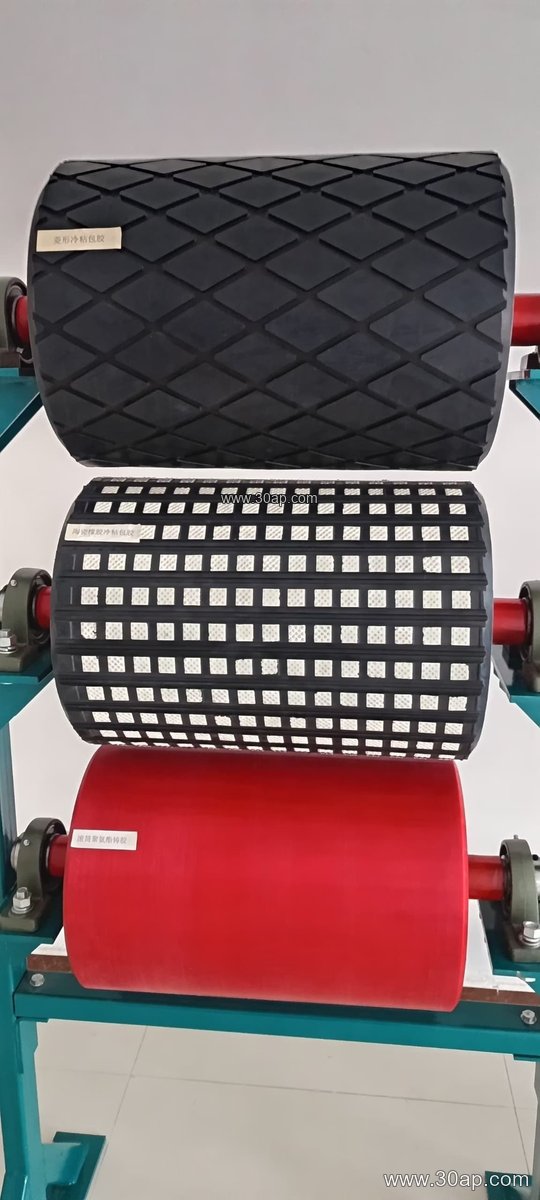
Construction and Surface Options
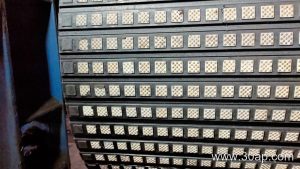
Most port conveyor pulleys use a welded steel shell with a shaft, end discs, and a hub connection. The shell surface may be plain or covered with rubber lagging. Lagging grades commonly include cold-bonded rubber, hot-vulcanized rubber, diamond grooved, herringbone grooved, and ceramic lagging. Lagging thickness is often 8, 10, 12, 15, or 20 mm, chosen by the duty and the belt contact pressure.
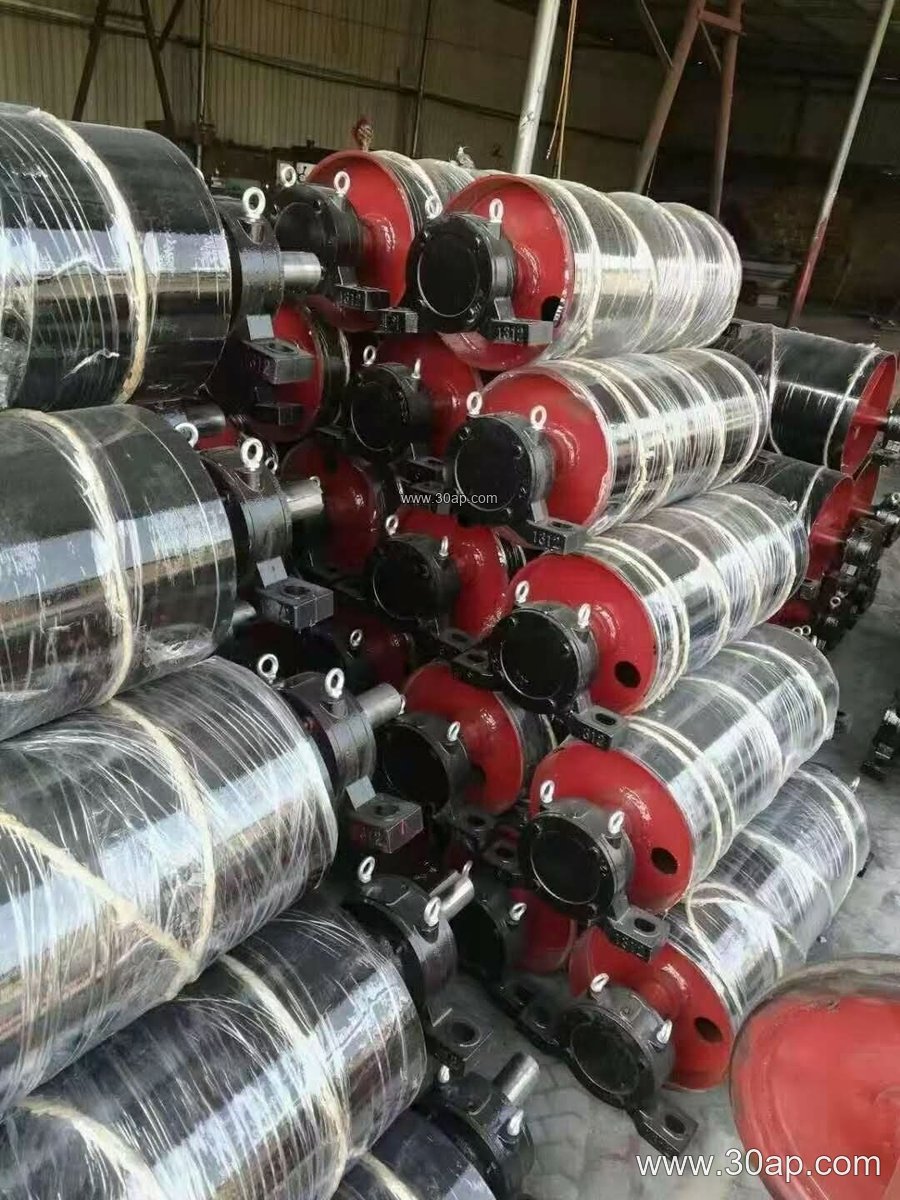
Diamond or herringbone grooving helps water drainage in wet port conditions, while ceramic lagging is used where slip and wear are severe. In dusty coal or ore terminals, the lagging also protects the shell from abrasion. Belt cleaners and the conveyor bracket layout should leave enough clearance around the drum for inspection.
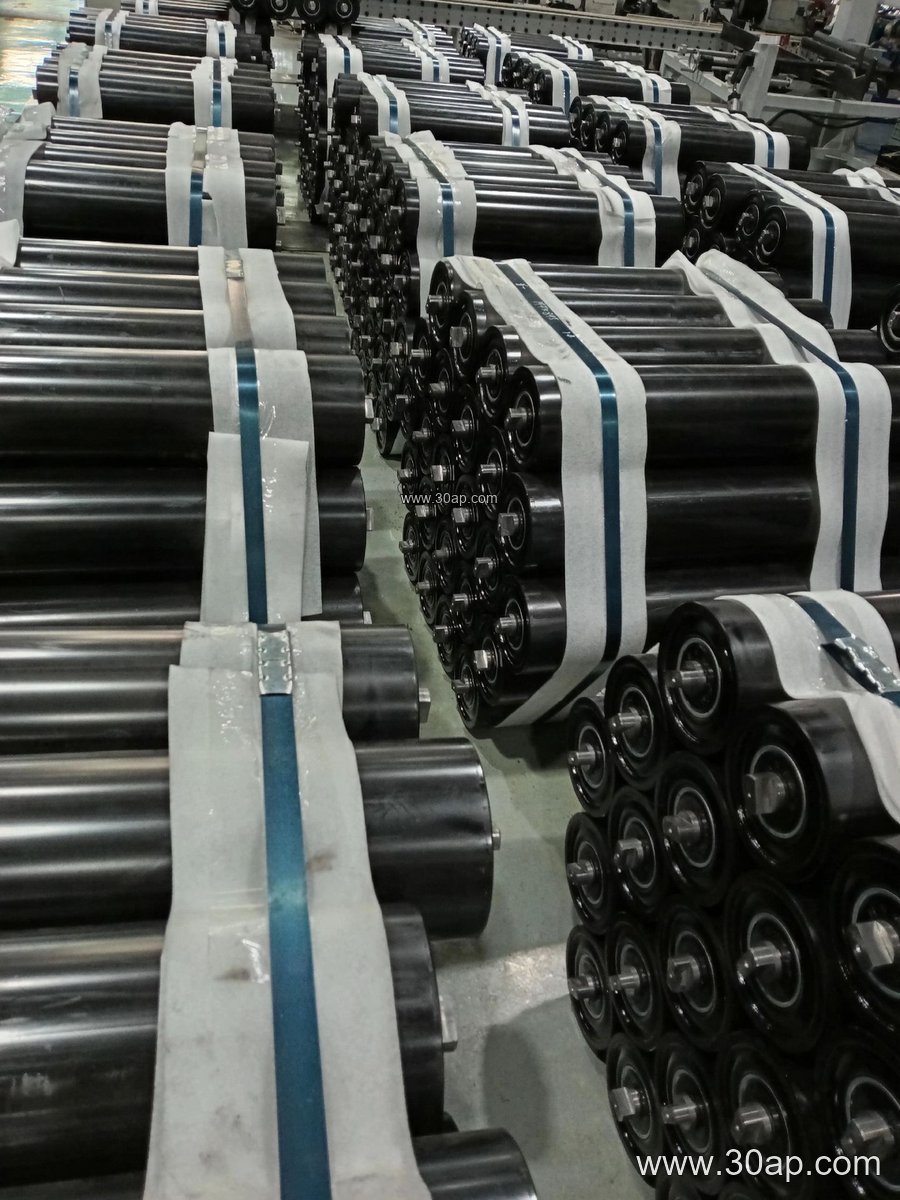
Typical Sizes and Combinations
Pulley dimensions follow the belt width and the required torque. The shell face is usually wider than the belt, for example a B800 belt with a pulley face around 950 mm, or a B1200 belt with a face around 1400 mm. Diameter is set by belt tension, wrap angle, and shaft load, not by belt width alone. The table below gives common reference combinations; final values are confirmed by design.
| Belt width (B) | Typical pulley face | Example diameter | Common shaft range |
|---|---|---|---|
| B500 | about 600 mm | Ø250 to Ø400 | Ø50 to Ø80 |
| B650 | about 750 mm | Ø315 to Ø500 | Ø60 to Ø100 |
| B800 | about 950 mm | Ø400 to Ø630 | Ø80 to Ø120 |
| B1000 | about 1150 mm | Ø500 to Ø800 | Ø90 to Ø140 |
| B1200 | about 1400 mm | Ø630 to Ø1000 | Ø100 to Ø160 |
| B1400 | about 1600 mm | Ø800 to Ø1250 | Ø120 to Ø180 |
| B1600 | about 1800 mm | Ø1000 to Ø1400 | Ø140 to Ø200 |
| B1800 | about 2000 mm | Ø1250 to Ø1600 | Ø160 to Ø200 |
| B2000 | about 2200 mm | Ø1400 to Ø1800 | Ø180 to Ø200 |
These are reference ranges. A B1200 × Ø1000 drive pulley and a B800 × Ø500 tail pulley can both exist in the same terminal, because each position has its own load case. The shaft diameter is determined by torque and bearing load, not by copying a belt width figure.
Where It Is Used
Port applications include bulk terminals handling coal, iron ore, copper ore, and aggregate, as well as ship loading systems and stockyard conveyors. The same drum family also serves cement plants, power plant coal yards, and steel plant raw material lines. In a ship loader, the head or discharge pulley sees high tension and must be aligned with the boom structure. A tension pulley keeps the belt tight as the boom moves, and a bend pulley changes belt direction on a compact frame.
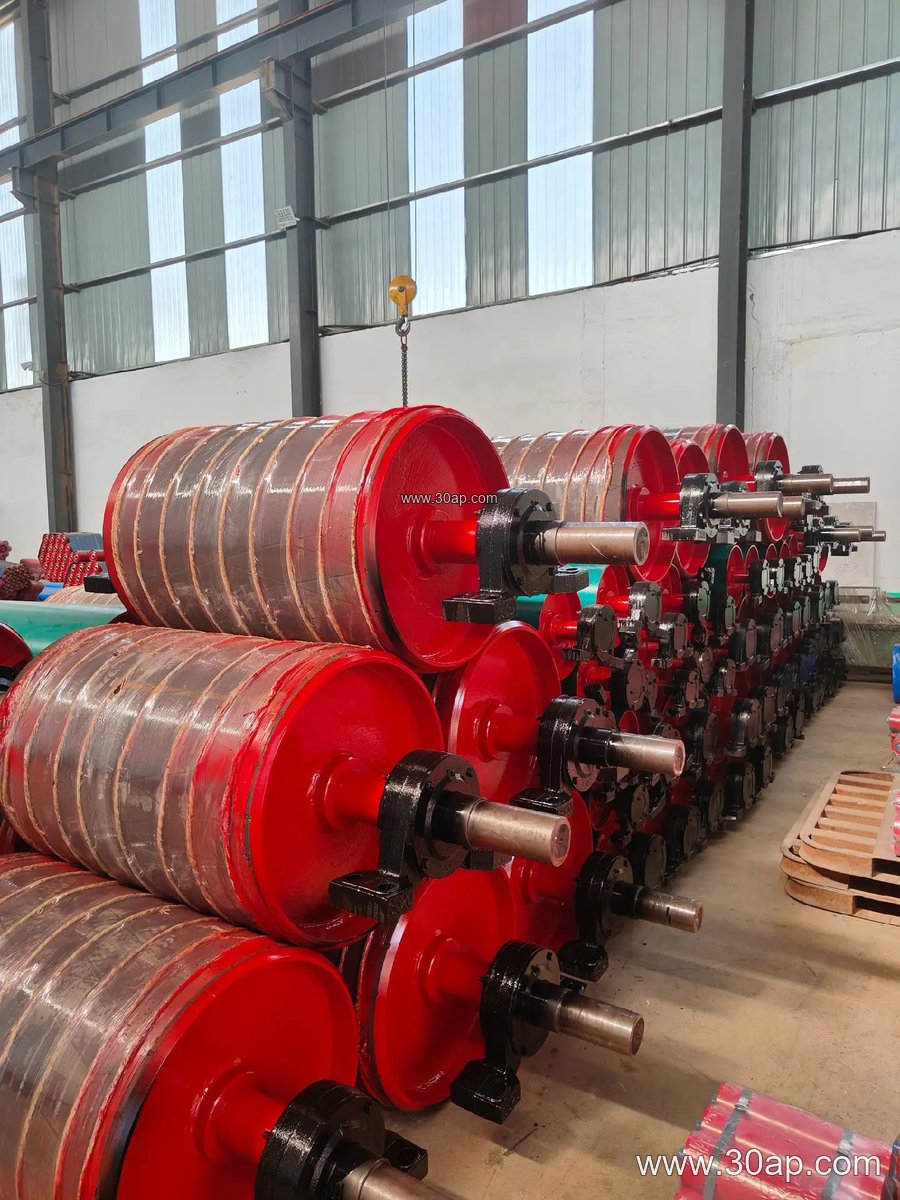
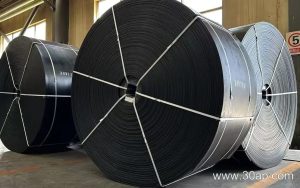
Heavy-duty mining conveyor belt and steel cord conveyor belt are common in these lines, and the pulley lagging must match the belt cover and the cargo. For abrasive ore, high abrasion resistant conveyor belt is often paired with wear-resistant lagging. For dusty coal, flame retardant conveyor belt and fire resistant conveyor belt are specified, and the pulley should be selected with the same safety intent.
Buyer Checklist
- Confirm the pulley position: drive, tail, bend, tension, or take-up. Each role has a different load and wrap angle.
- State the belt width, belt type, and belt tension so the shell face and shaft can be checked together.
- Choose the lagging surface by cargo and climate: diamond or herringbone for wet berths, ceramic for severe slip and wear.
- Check bearing type, sealing, and lubrication for salty or dusty port air.
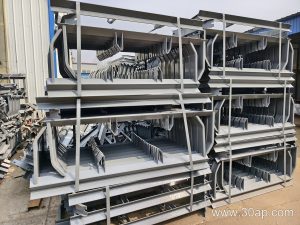
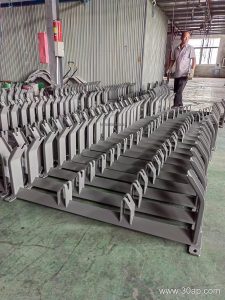
- Verify the conveyor bracket and frame interface before ordering, including bolt pattern and clearance.
- Ask for the balance grade and runout data if the drum runs at higher speed.
Ports run around the clock, so a spare drive pulley or lagged bend pulley is often kept on site. Maintenance should include checking lagging wear, shaft seal condition, and belt tracking. A worn pulley can damage the belt edge and increase the load on every idler roller in the line. For related equipment, see conveyor pulley, conveyor belt, and idler roller references in the site library.