What a Mining Trough Idler Does
A mining trough idler is the carrying-side roller assembly that shapes a flat conveyor belt into a shallow trough so that crushed ore, coal, aggregate, or clinker stays centered on the line. It is the part of the conveyor that touches the loaded belt most often, and in a quarry, coal preparation plant, or cement plant it works under constant dust, grit, and impact. The trough idler is distinct from the return idler that supports the empty belt and from the conveyor pulley at the head or tail; each has its own job, and they are not interchangeable.
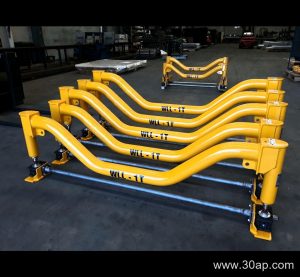
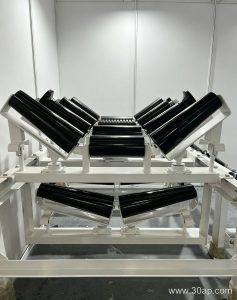
In practice, the idler roller is mounted in a frame of two or three rolls. The side rolls are inclined at a trough angle, which is why the assembly is often called a three-roll troughing set. A conveyor bracket holds the rolls at that angle, and the whole set sits on the conveyor stringer. The belt rides on the rolls, and friction is kept low by sealed bearings inside each roller.
How the Troughing Set Is Built
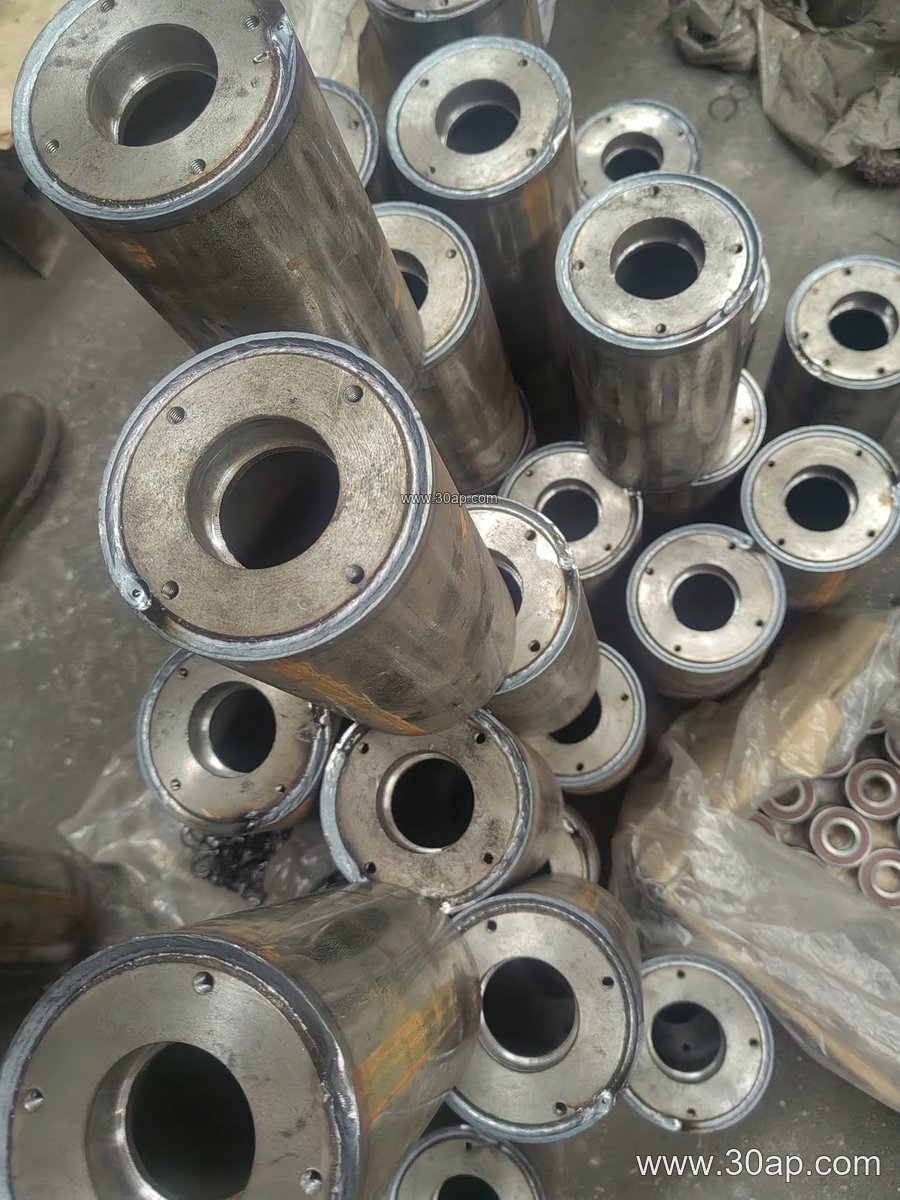
Typical construction starts with a steel tube shell, often with a machined end and a welded bearing housing. The shaft runs through the roller, and the bearing sits in a sealed housing that keeps out fine dust and water. Common bearing sizes include 6204, 6205, 6305, 6306, 6308, and 6310, but the bearing is chosen to match the load and shaft design rather than a single roller diameter.
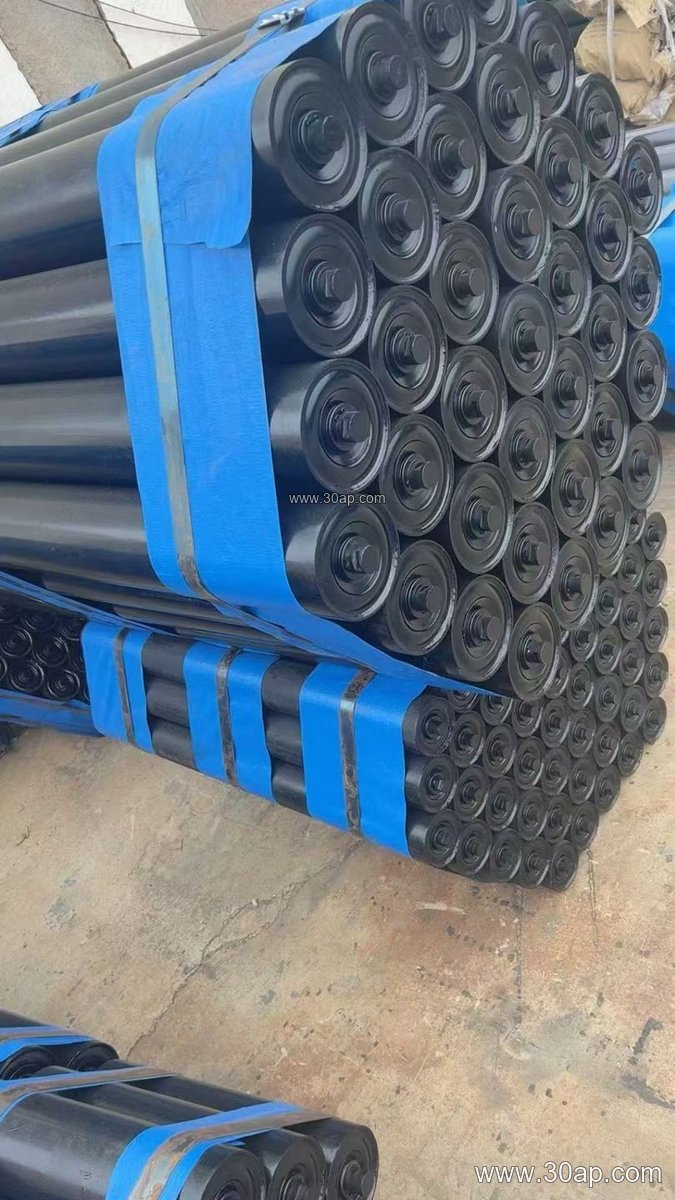
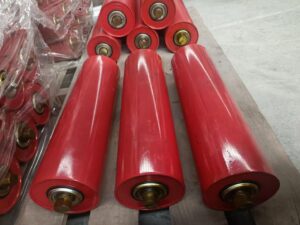
Roll diameters commonly range from Ø63 and Ø76 up to Ø159, Ø178, Ø194, and Ø219 for heavier duties. The surface may be plain steel, nylon, ceramic, or rubber rings. Rubber rings are useful on impact zones where lump size is large. The trough angle is usually 20, 30, 35, or 45 degrees, and a slight forward tilt of about 1.5 to 2 degrees is sometimes used on training idlers to help the belt stay aligned.
Where It Fits on the Conveyor
The carrying run is the main home of the trough idler. On a long overland line at a copper mine or an iron ore stockyard, sets are spaced along the belt to control sag between supports. At a transfer point below a crusher, impact idlers or rubber-ring buffer idlers may take the first shock before standard troughing sets continue the run. On the return side, a flat or V-return idler supports the empty belt, and that is a different assembly, not a substitute for the trough idler.
Belt width and trough angle together decide the roll length and the geometry of the set. Common examples are shown below; these are reference values, and the actual roll length is set by the conveyor design.
| Belt width | Typical roll length, three-roll set | Common trough angle |
|---|---|---|
| B500 | about 200 mm | 20–35 degrees |
| B650 | about 250 mm | 20–35 degrees |
| B800 | about 315 mm | 30–35 degrees |
| B1000 | about 380 mm | 30–35 degrees |
| B1200 | about 465 mm | 30–35 degrees |
| B1400 | about 530 mm | 30–35 degrees |
| B1600 | about 600 mm | 35–45 degrees |
These figures are common examples, not a fixed pairing. Side rolls and the center roll can differ, and a wider belt may use a larger roll diameter for the same trough angle.
Buyer Checklist
- Confirm the belt width and the trough angle, since both change the roll length and the frame geometry.
- Match the roll diameter to the load and belt speed; a larger diameter usually suits heavier material and higher tension.
- Check the bearing size and seal type for the dust level at the site, whether a coal wash plant or a dry aggregate line.
- Decide on the roll surface: plain steel for general service, rubber rings for impact, ceramic or nylon where wear is severe.
- Confirm the bracket and frame height suit the existing stringer so the new set lines up with the conveyor pulley centerline.
- Ask for the shaft and bearing arrangement, not just the outside diameter, because two rollers of the same size can carry very different loads.
A well-chosen trough idler keeps the conveyor belt tracking straight, reduces spillage, and protects the belt from edge damage. Buyers who compare roll diameter, trough angle, seal quality, and frame fit before ordering usually get a set that lasts through the dust and tonnage of a working mine or plant.