What a Thick Conveyor Belt Is
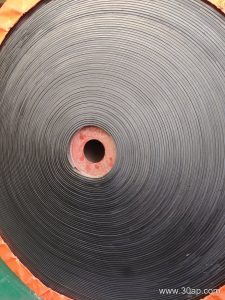
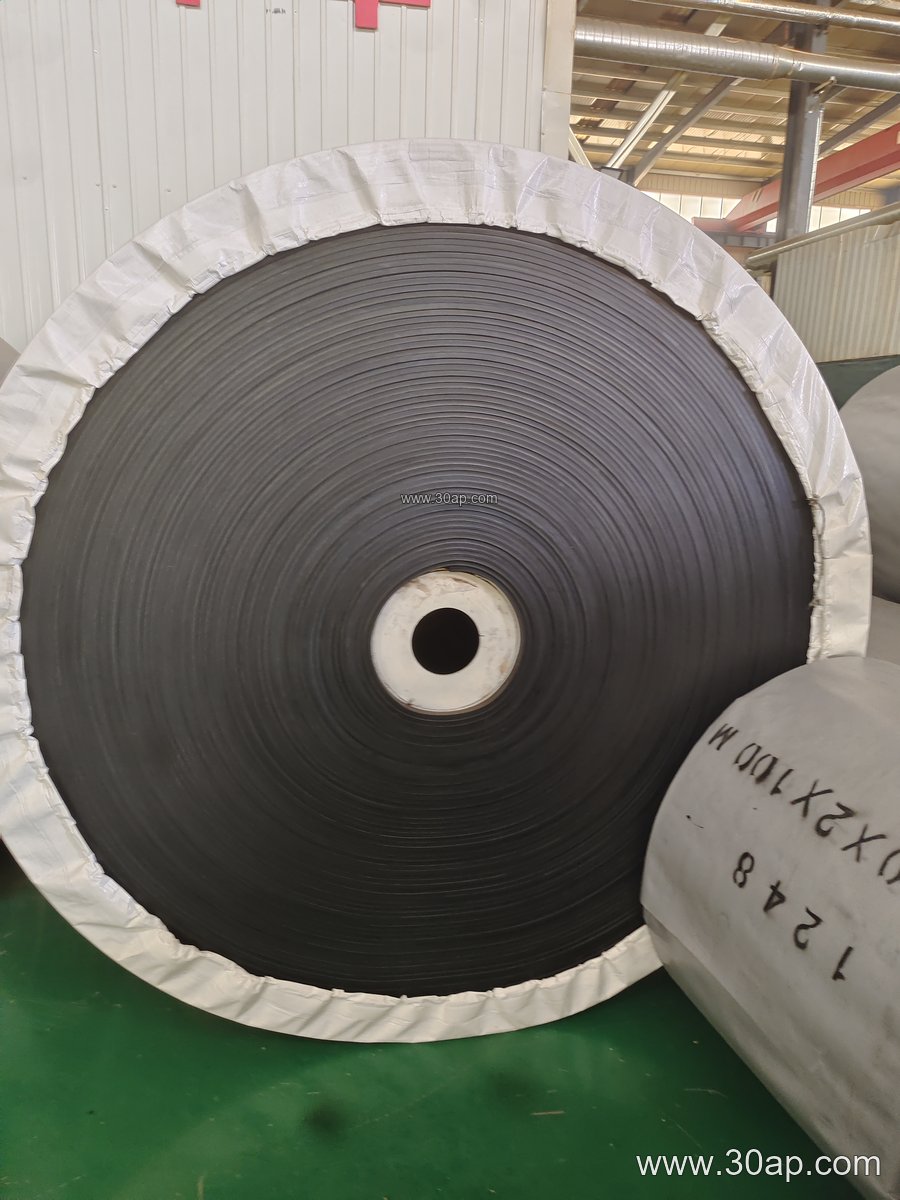
A thick conveyor belt is a heavy-duty rubber belt built with a substantial carcass and generous cover gauges so it can carry abrasive, dense, or sharp bulk materials over long conveying runs. In mining, coal preparation, cement plants, power stations, and sand and gravel yards, the belt is often the component that sets the practical limit on throughput and service life. The same product is commonly called a heavy-duty conveyor belt or a high-thickness rubber conveyor belt, and those names refer to the same article rather than to a separate family.
Thickness is not a single number. It comes from the sum of the top cover, the carcass, and the bottom cover, and each part is selected for a different job.
How the Belt Is Built
Most thick belts use a fabric carcass such as EP (polyester-cotton) or NN nylon, or a steel cord core where tensile demand is very high. The carcass carries the tension, while the covers protect it from cutting, impact, and wear. Cover compounds can be formulated for abrasion resistance, heat, oil, flame retardancy, antistatic behavior, cold climates, or acid and alkali exposure. Surface forms include plain, patterned, herringbone, and corrugated sidewall designs, and the choice follows the incline and the material being handled.
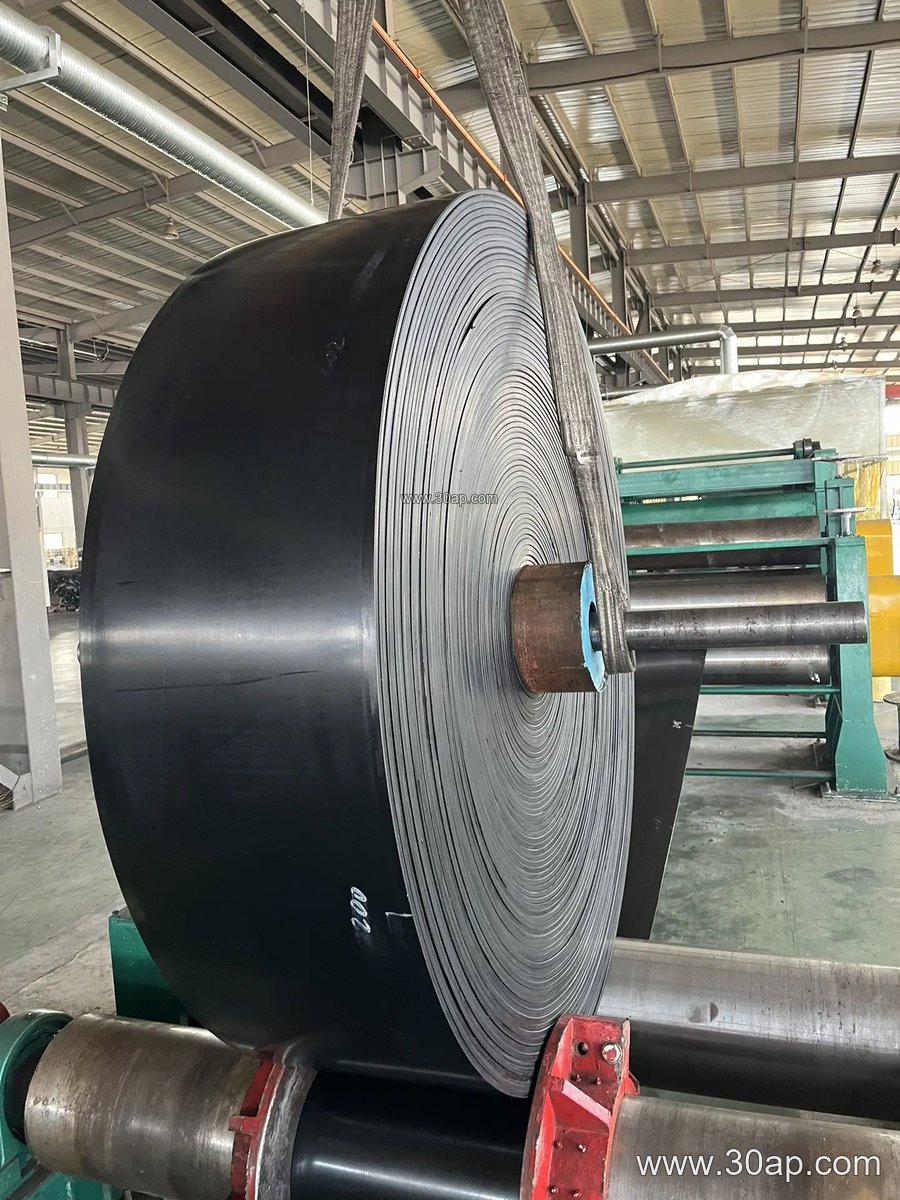
A typical build sequence is simple to describe. Fabric plies are calendered and assembled, the covers are applied, and the whole slab is vulcanized under heat and pressure. Edge construction matters on thick belts because a poorly finished edge becomes the starting point for ply separation.
Common Specifications
The table below shows reference values that appear in supplier catalogues. They are starting points for a technical discussion, not fixed combinations, and each project should be confirmed by design.
| Parameter | Common Reference Values |
|---|---|
| Belt type | EP, NN nylon, steel cord, PVC, PVG, abrasion-resistant, heat-resistant, oil-resistant, flame-retardant, antistatic, cold-resistant, acid and alkali resistant |
| Tensile strength (EP) | EP200, EP315, EP400, EP500, EP630, EP800, EP1000, EP1250, EP1600, EP2000 |
| Belt width | B500, B650, B800, B1000, B1200, B1400, B1600, B1800, B2000 |
| Cover gauge (top + bottom) | 3+1.5, 4+2, 5+2, 6+2, 8+3 mm |
| Carcass plies | Usually 2 to 6 layers in fabric constructions |
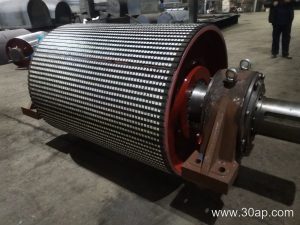
Width and pulley diameter are separate decisions. A given belt width is not tied to one pulley size, and the shaft diameter of a conveyor pulley follows the load calculation rather than the belt width alone.
Where Thick Belts Are Used
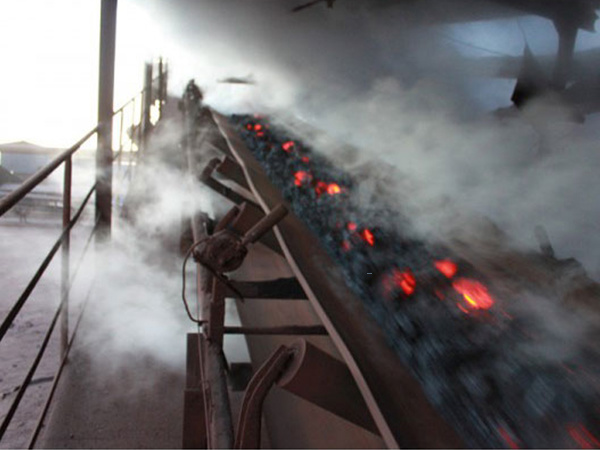
Primary crushing stations in mines and quarries often discharge run-of-mine rock with sharp edges, so a thick top cover absorbs impact that would quickly destroy a thin belt. Cement plants use them on clinker and limestone lines where surface temperature and abrasion act together. Coal handling systems in power plants and coal preparation plants favor flame-retardant and antistatic grades, while sand and gravel plants accept thick abrasion-resistant belts on short, steep inclines.
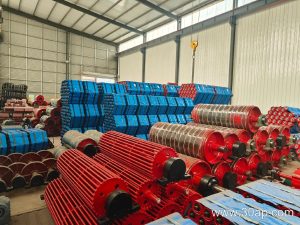
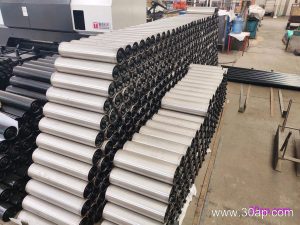
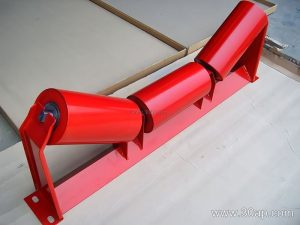
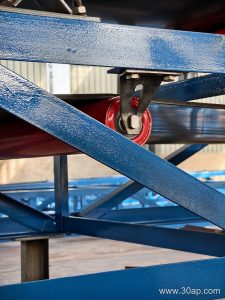
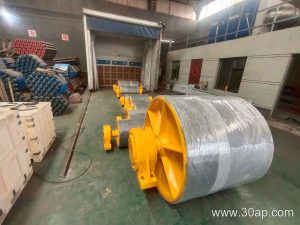
The rest of the conveyor matters too. A well-aligned idler roller set keeps the belt tracking, a properly sized conveyor pulley at the drive and tail positions controls tension and slip, and a rigid conveyor bracket keeps the frame square so the belt does not train to one side. Drive, tail, and bend pulleys each do a different job and should be specified separately.
Selection Notes for Buyers
- State the material, lump size, moisture, and temperature rather than only the belt width.
- Match cover grade to the dominant wear mode; impact, abrasion, heat, and oil call for different compounds.
- Check the minimum pulley diameter recommended for the carcass, since a thick belt bent around a small pulley fatigues faster.
- Confirm the splice method, because a thick belt with a weak joint loses much of its advantage.
- Ask for the actual measured thickness and cover gauge on the data sheet, not a nominal figure only.
Handling and Maintenance
Thick belts are heavy, so lifting points, storage flatness, and splice access need planning before installation. During operation, watch the loading point for cover gouging, check edge wear after every shutdown, and keep the conveyor belt cleaner and skirt rubber in good condition to reduce trapped material. Re-tensioning after the first weeks of running is normal. A belt that is thick enough for the duty, correctly spliced, and supported by sound pulleys and rollers will usually deliver a long, predictable service interval.