What a Return Self-Aligning Idler Does
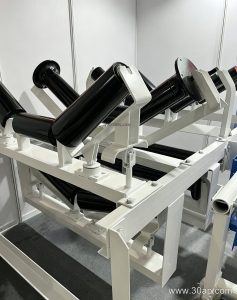
A return self-aligning idler is a training idler mounted on the carrying side of the return strand, where the empty belt travels back toward the tail. Its job is to catch a belt that has started to wander and steer it back toward the center line before the misalignment reaches a conveyor pulley or rubs against the structure. Unlike a plain flat return roller, this idler pivots on a vertical axis, so when the belt edge presses against a roller, the whole frame swings and the roller axis skews slightly. That skew generates a small sideways force that nudges the belt back on track.
Plants handling abrasive bulk materials often pair these units with a rugged Abrasion Resistant Conveyor Belt and heavy frames, because a return training idler works hardest exactly where fines and spillage collect.
How the Assembly Is Built
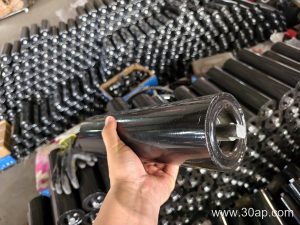
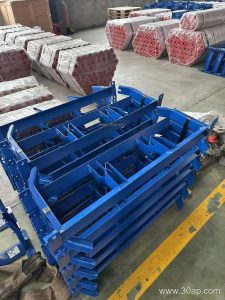
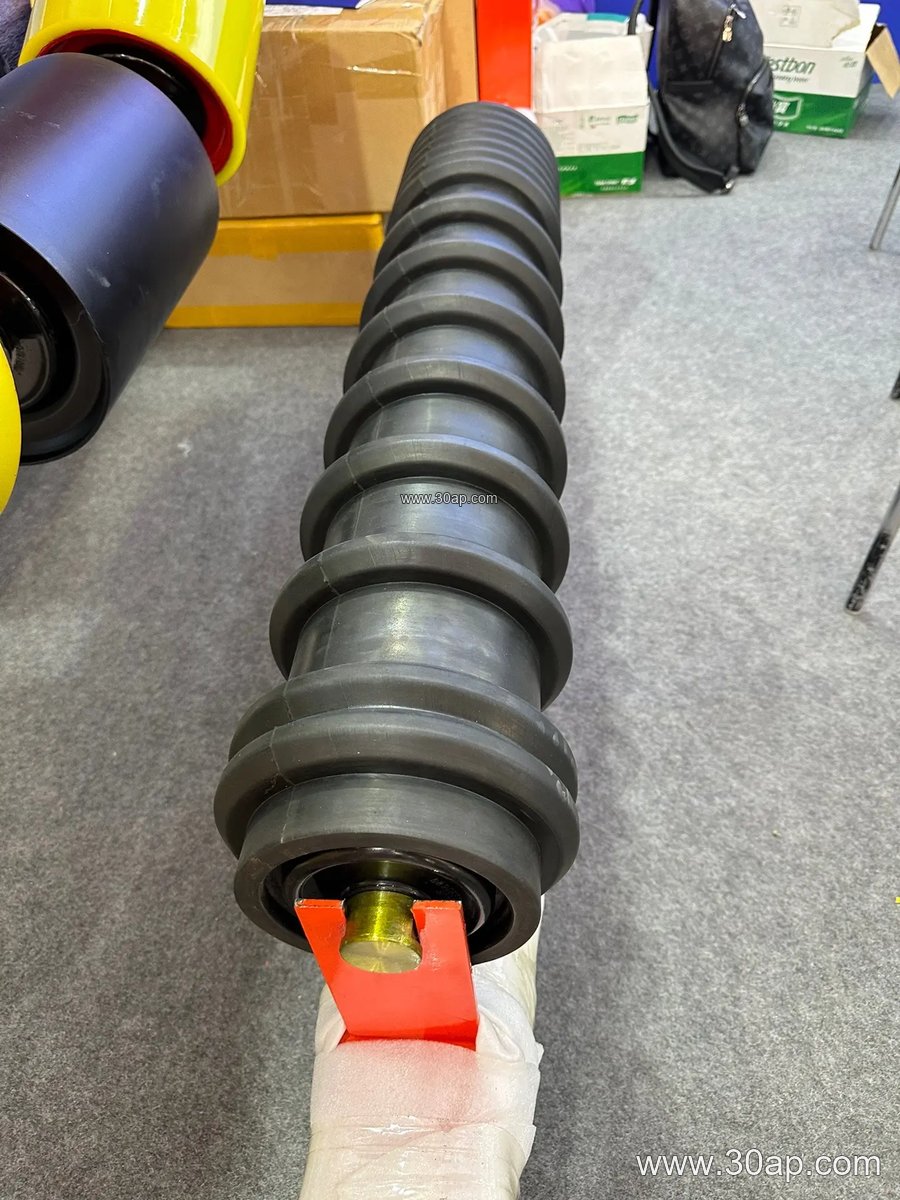
The typical unit combines two or more rollers on a pivoting frame, a vertical shaft, and a base that bolts to the stringer. The rollers are usually set in a V shape, which helps the belt sit centered and also sheds carried-back material. Common roll diameters for return training units include Ø89, Ø108, Ø127 and Ø133 mm, with larger sizes used on wide, heavy belts. Rollers may be plain steel tube, nylon, or rubber-disc types; rubber rings add grip and reduce build-up in sticky service.
Bearings are commonly 6204, 6205, 6305, 6306 or 6308, selected by load and shaft design rather than by belt width alone. Sealing matters as much as bearing size: a labyrinth or multi-stage seal keeps grit out of the bearing cavity, which is often what decides how long the idler lasts in a quarry or a coal handling plant. The pivot should move freely but without slop, and the frame should be stiff enough that it does not flex under a wandering belt.
Where It Fits on the Conveyor
Return training idlers are normally spaced along the return strand, often a few belt widths ahead of the tail pulley and at intervals where alignment problems tend to appear. They are not a substitute for correct pulley alignment, proper belt splicing, or evenly loaded edges. In a limestone quarry or a cement plant, a single well-placed unit can prevent the belt from climbing the tail pulley and spilling material along the return run.
On long overland lines carrying ore, a Steel Cord Conveyor Belt may need several training stations, while shorter aggregate lines often need only one or two. The same principle applies on a coal mining conveyor belt or an underground mining conveyor belt, though flame retardant and anti-static properties of the belt, not the idler, govern the underground approval question.
Common Sizes and Matching to the Belt
Roll length follows belt width, trough form and frame design; it is not a fixed pairing. The table below gives typical reference values for return training units, not a supply promise.
- B500: roll length about 200 mm, roll diameter often Ø89 or Ø108
- B650: roll length about 250 mm, diameter Ø89 to Ø127
- B800: roll length about 315 mm, diameter Ø108 to Ø133
- B1000: roll length about 380 mm, diameter Ø108 to Ø133
- B1200: roll length about 465 mm, diameter Ø127 to Ø159
- B1400: roll length about 530 mm, diameter Ø133 to Ø159
- B1600: roll length about 600 mm, diameter Ø133 to Ø178
- B1800: roll length about 670 mm, diameter Ø159 to Ø194
- B2000: roll length about 750 mm, diameter Ø159 to Ø219
These are common examples. A 1200 mm wide conveyor belt does not automatically require one particular roll diameter, and shaft size is set by the frame and load calculation, not by width alone. Buyers should confirm mounting hole spacing, stringer height and available clearance with the supplier.
Buyer Checklist
Before ordering, note the belt width, the return strand height, the material carried, and whether wash-down or dust is severe. Ask for the pivot design, seal type, bearing number, roller surface and paint or coating. On a port conveyor belt or a power plant coal line, salt air or fine dust may call for better sealing rather than a bigger roller. Check that the unit can be serviced without cutting the belt, and that the conveyor bracket pattern matches the existing stringers.
Finally, remember that a return self-aligning idler is a correction device, not a cure for a badly aligned conveyor pulley or a damaged splice. Install it where it can act early, keep the pivot clean, and inspect it together with the rest of the idler roller set during routine walks.