What a Fixed Conveyor Bracket Does
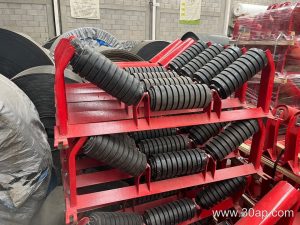
A fixed conveyor bracket is the rigid support that holds idler rollers in a set position along a conveyor frame. Unlike adjustable designs, it locks the trough angle and roller spacing at the values chosen during engineering, so the belt profile stays consistent from the head pulley to the tail pulley. In a quarry or a cement plant, this stability is what keeps material centered on the belt and reduces spillage at transfer points.
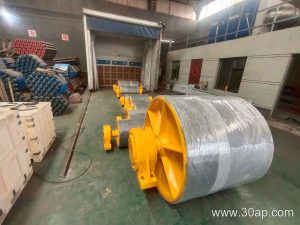
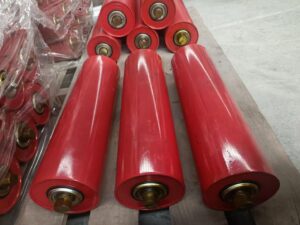
The bracket is often called a fixed idler bracket or a stationary roller support. It is not a pulley component: drive pulleys, tail pulleys and bend pulleys are separate items with their own mountings. A fixed bracket belongs to the idler side of the conveyor, working together with the conveyor belt and the idler roller it carries.
Construction and Materials
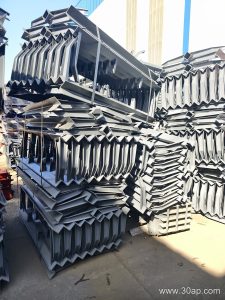
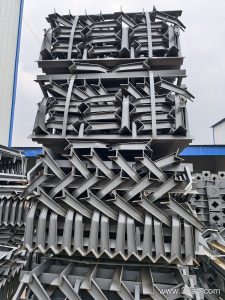
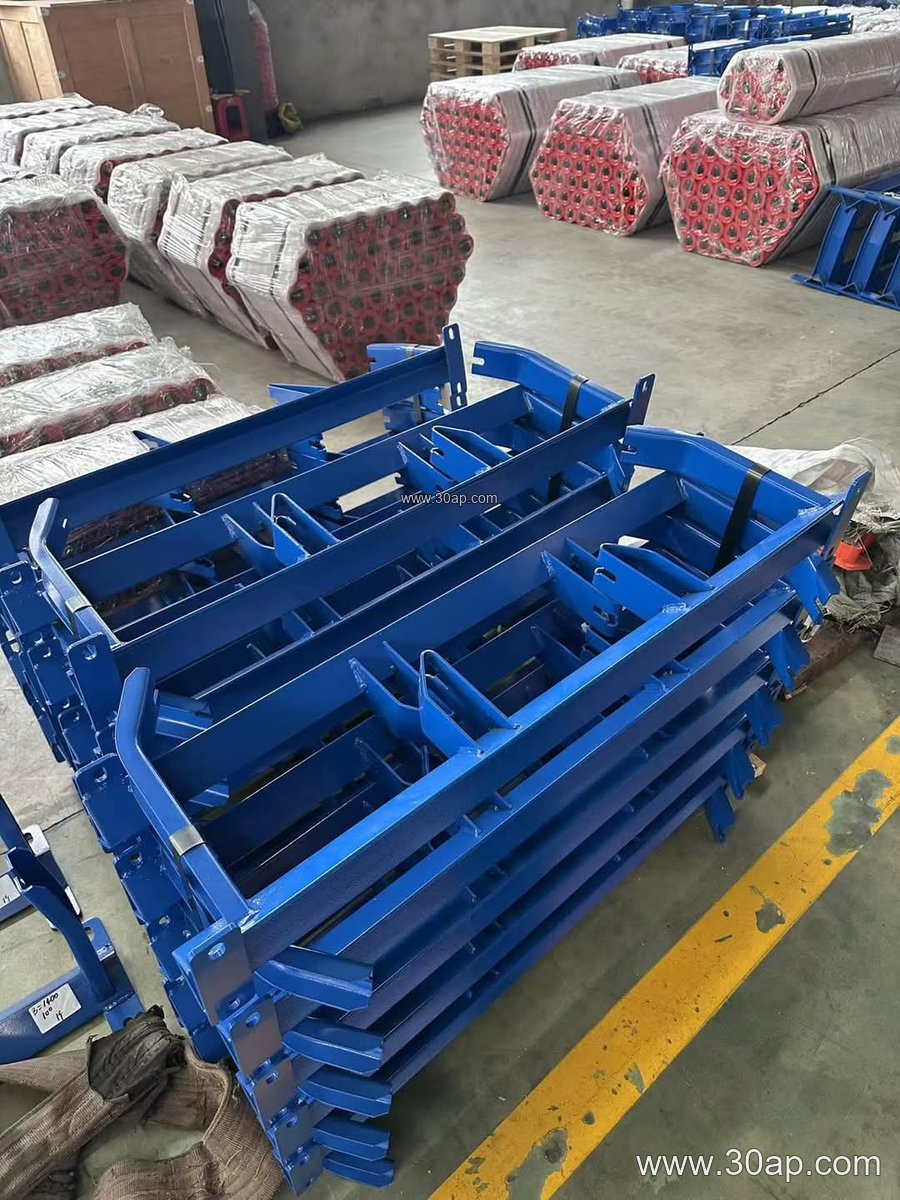
Most fixed brackets are fabricated from angle steel, channel steel or folded steel plate. The fabrication should keep the mounting faces square so that all rollers in a station sit at the same height. Common features include slotted bolt holes for frame alignment, a crossbeam sized to the belt width, and welded or bolted roller seats.
- Angle steel frame for light and medium duty stations
- Channel steel for wider belts and heavier loads
- Folded plate for compact, clean profiles
- Galvanized or painted finish for humid or outdoor service
Because the bracket is fixed, the trough angle is built in. A plant that later wants to change from 30 degrees to 45 degrees normally replaces the bracket rather than adjusting it.
Common Configurations and Reference Sizes
Fixed brackets appear in troughing, transition, return and impact positions. The table below shows typical reference combinations; actual mounting hole spacing and crossbeam length are determined by the conveyor design, not by belt width alone.
| Position | Belt width | Trough angle | Roller diameter |
|---|---|---|---|
| Troughing station | B650 | 30 degrees | Ø89 |
| Troughing station | B800 | 35 degrees | Ø108 |
| Troughing station | B1200 | 45 degrees | Ø133 |
| Transition station | B1000 | 20 to 35 degrees | Ø108 or Ø133 |
| Return station | B1400 | Flat or V return | Ø159 |
These are common examples, not fixed pairings. A B800 frame may use 30 or 35 degrees depending on the material and loading conditions, and roller diameter follows load and speed calculations.
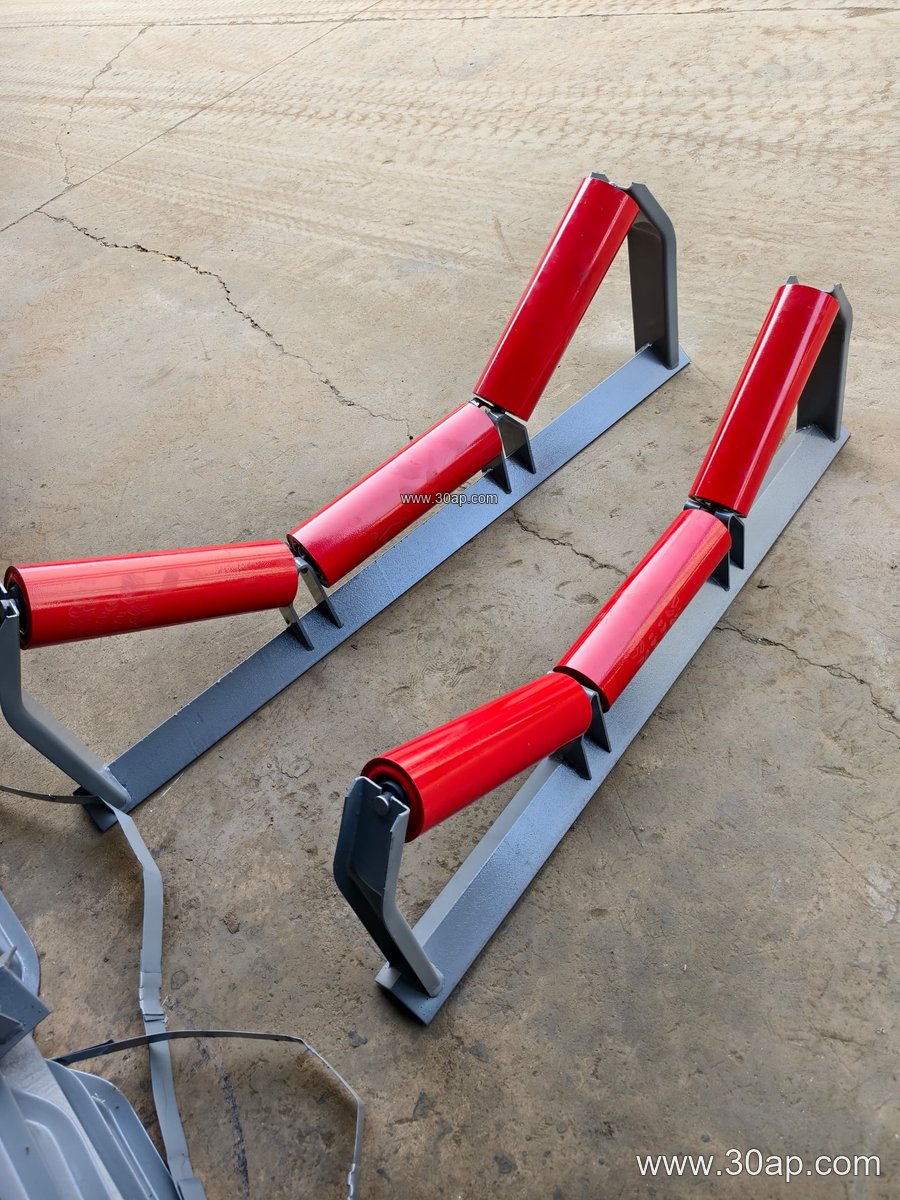
Where Fixed Brackets Are Used
Fixed brackets suit long, steady runs where the belt line should not drift. In a coal washing plant or a power plant coal yard, they support troughing idlers under a flame retardant conveyor belt and help hold a constant profile through long galleries. In crushing and screening circuits, impact brackets with rubber cushions absorb lumps falling from the crusher.
They also appear in sand and gravel lines, fertilizer handling, grain silos and tunnel spoil removal. A heavy-duty mining conveyor belt running at high tonnage benefits from brackets that do not loosen or shift angle over years of vibration.
Fixed or Adjustable
Adjustable brackets let maintenance staff fine-tune the trough angle to train the belt or match a new material. Fixed brackets trade that flexibility for rigidity, fewer moving parts and lower maintenance attention. On a new installation, engineers usually specify fixed brackets once the belt line is proven; adjustable types are more often used at transitions or where belt training problems are expected.
Buyer Checklist
- Confirm belt width, trough angle and roller diameter as a set, not separately.
- Ask for the frame bolt pattern and crossbeam length, which vary with conveyor design.
- Match material thickness to the load: heavier channel steel for ore and rock, lighter angle for sand.
- Check finish for the environment, especially in ports and wash plants.
- Verify that the bracket suits the idler type, such as a return V bracket or a cushion bracket.
- Confirm compatibility with the pulley layout so the belt path from drive to tail stays aligned.
A well-chosen fixed conveyor bracket is a small part of the total system, but it decides how evenly the belt sits and how long the rollers last. Buyers who treat belt width, trough angle and roller diameter as one design decision get a steadier conveyor and fewer stoppages.