What a Turning Pulley Does
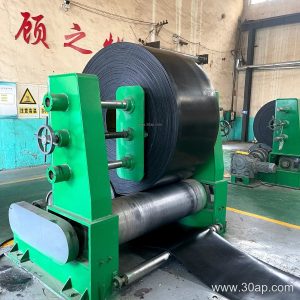
A turning pulley is the drum that changes the direction of a conveyor belt, guiding it from one run to the next without driving the belt itself. In many plants it is called a bend pulley, and that is the accurate equivalent name for this same component. It should not be confused with the drive pulley at the head, the tail pulley at the loading end, or a tension pulley that takes up slack. Each of those has a different job, and swapping names leads to the wrong selection.
The turning pulley usually sits where the belt must wrap around a corner, return under the structure, or approach a take-up device. In a quarry or a sand and aggregate line, you may find several of them routing a wide belt through a tight frame. The same is true in a coal handling plant or a cement mill, where space is limited and the belt path has to fold back on itself.
Construction and Surface Options
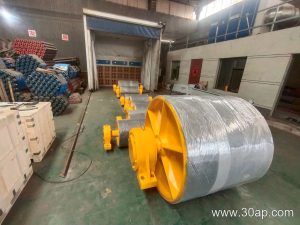
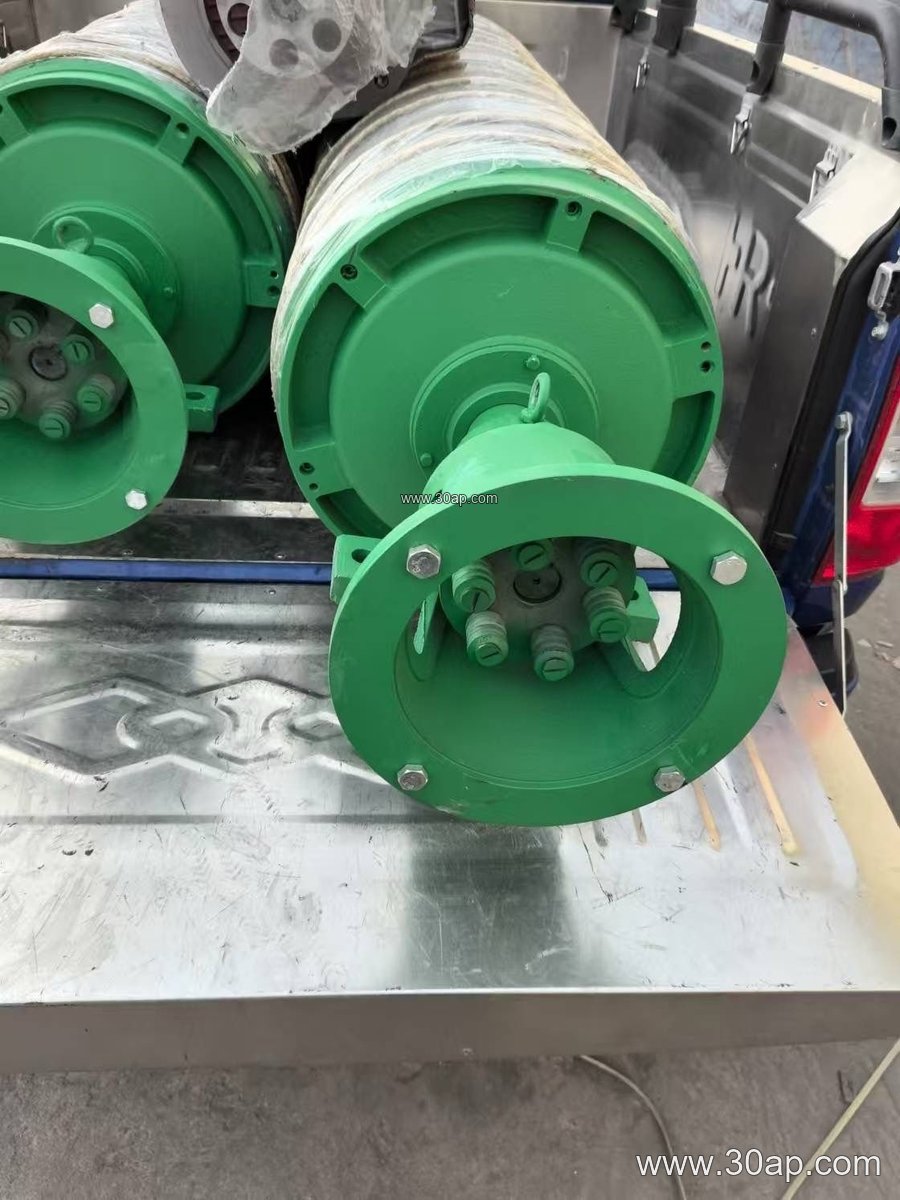
The body is normally a steel cylinder with welded end discs and a shaft running through the center. Common shaft diameters include Ø80, Ø100, Ø120, Ø140, and Ø160, but the final size follows torque and load rather than belt width alone. The shell may be plain, or it may carry lagging to protect the belt and improve grip on the non-drive side.
- Plain finish for light contact and easy cleaning
- Cold-bonded or hot-vulcanized rubber lagging
- Diamond or herringbone grooving for water shedding
- Ceramic lagging for severe slip and wear
- Lagging thickness commonly 8, 10, 12, 15, or 20 mm
Face width is usually a little wider than the belt it guides. For example, a B800 belt often runs on a drum with about 950 mm face, and a B1200 belt on roughly 1400 mm face. These are typical references, not fixed rules. A B1000 turning pulley with a Ø630 shell is a common combination, while a smaller B650 unit may use Ø400 or Ø500.
Matching the Pulley to the Belt Path
Angle of wrap, belt tension, and the space available at the bend all shape the choice. A bend with a sharp wrap needs a larger diameter to keep flexing stress low, especially when the belt is a heavy-duty mining conveyor belt carrying ore or rock. Where the belt is a steel cord conveyor belt, the drum diameter generally runs larger than for a fabric core belt of the same width, because the cable layers resist bending.
Surface condition matters too. In a wash plant or a port handling damp bulk material, grooved lagging helps shed water. In a power plant coal yard, a flame retardant conveyor belt may run alongside a plain turning pulley to reduce the risk of built-up material. For a food or grain facility, a smooth, easy-to-clean shell is often preferred.
Installation Points to Check
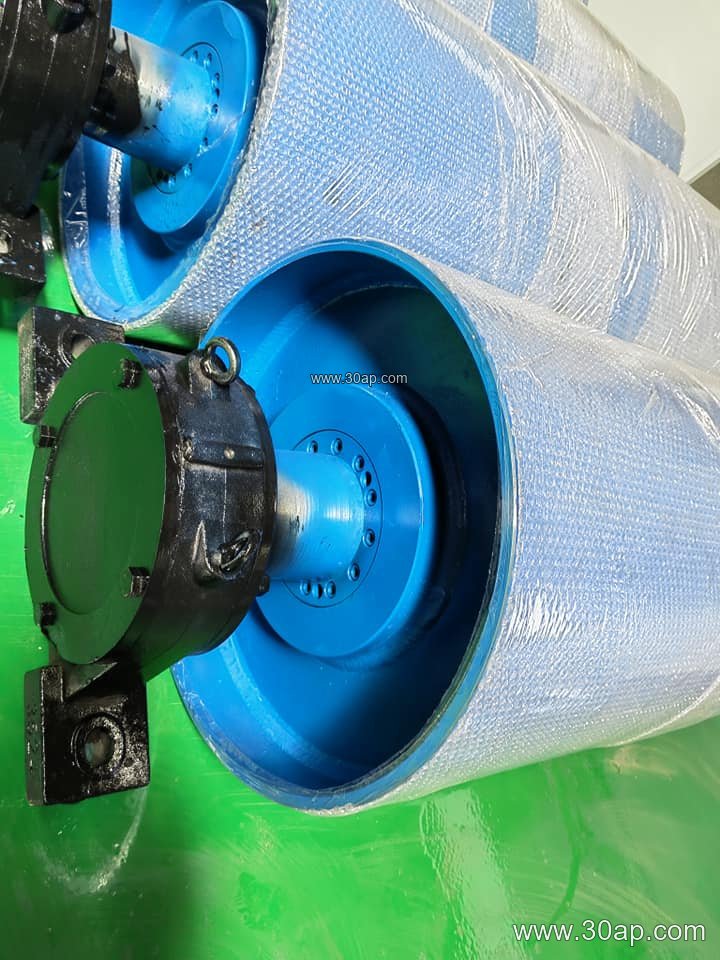
Alignment is the first thing to verify. A turning pulley that sits slightly out of square will pull the belt to one side and wear the edges. Check that the shaft is level, the bearings sit square in the conveyor bracket, and the idler roller frames nearby are not pushing the belt off track.
Second, confirm the lagging condition. Worn or glazed rubber reduces grip and can let the belt wander. Third, look at the bearings and seals; dust from a crusher or a stone crushing line finds its way into everything. Fourth, keep the drum face clear of stuck material, which can act like a crown and steer the belt unpredictably.
Buyer Checklist
When ordering, give the belt width, the required drum diameter, the shaft size, the lagging type and thickness, and the mounting arrangement. State the material being carried and the environment, since a cold resistant conveyor belt in a northern yard and a heat resistant conveyor belt near a sinter line place different demands on the same drum. Ask for the bearing type and the face width, and confirm whether the unit is a bend pulley or a tension pulley, because the two are not interchangeable. A clear drawing of the belt path helps the supplier place the turning pulley correctly and avoids a costly rework on site.