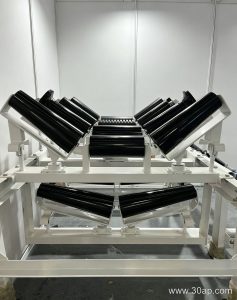
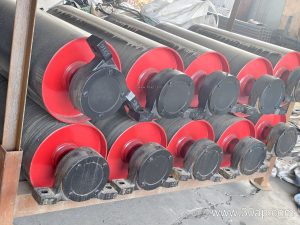
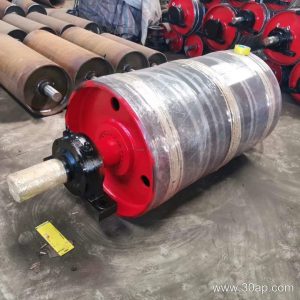
What a Conveyor Pulley Assembly Does
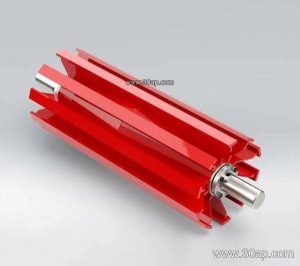
A conveyor pulley assembly is the rotating package that turns a conveyor belt and keeps it tracking through a bulk handling line. It usually combines the shell, shaft, end discs, bearing housings, locking elements and a surface covering such as rubber or ceramic lagging. In a quarry, a cement plant or a coal preparation facility, this assembly is what transfers drive torque into belt motion and what holds belt tension at the return end.
The term covers several positions on one conveyor. A drive pulley pulls the belt; a tail pulley returns it; a bend pulley changes direction without driving. These roles are not interchangeable, so the assembly is selected for the duty at each station rather than treated as a generic roller.
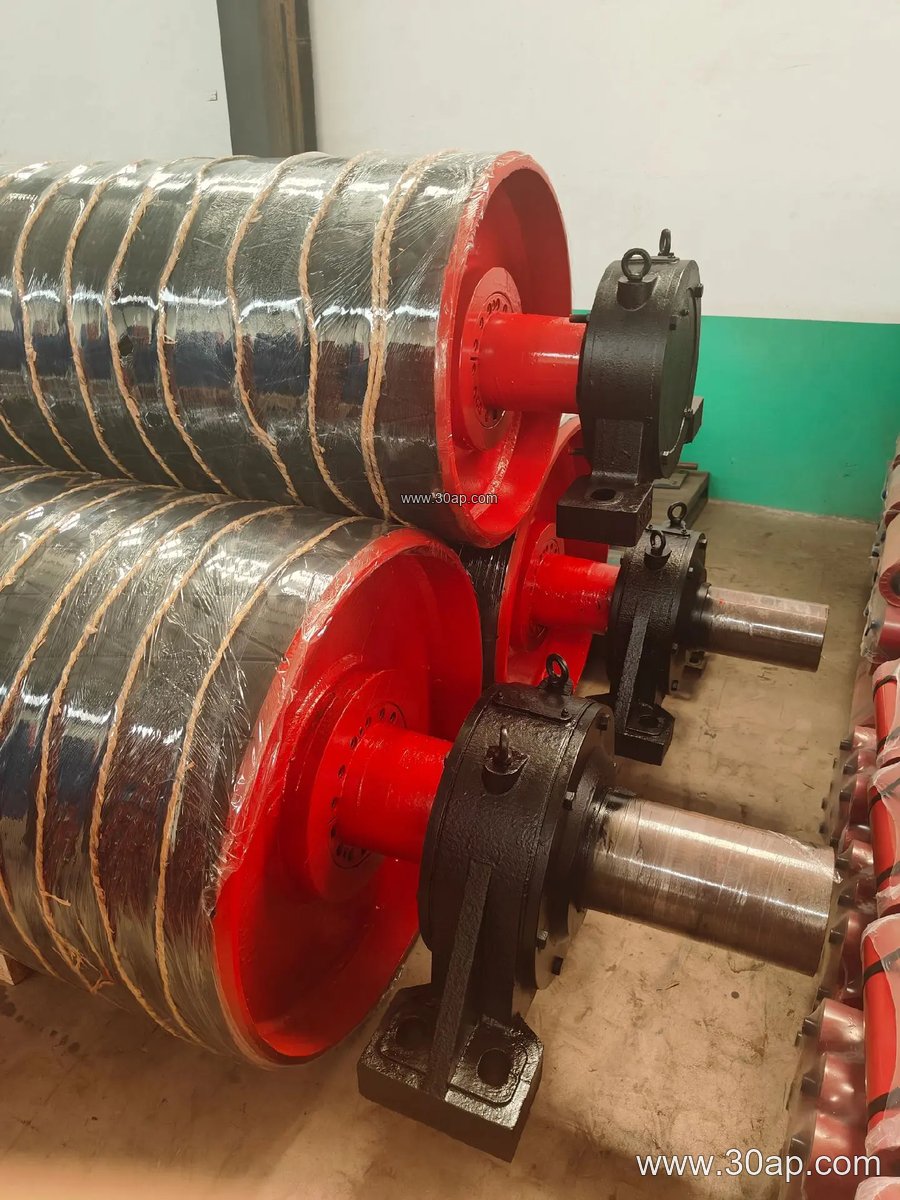
How the Assembly Is Built
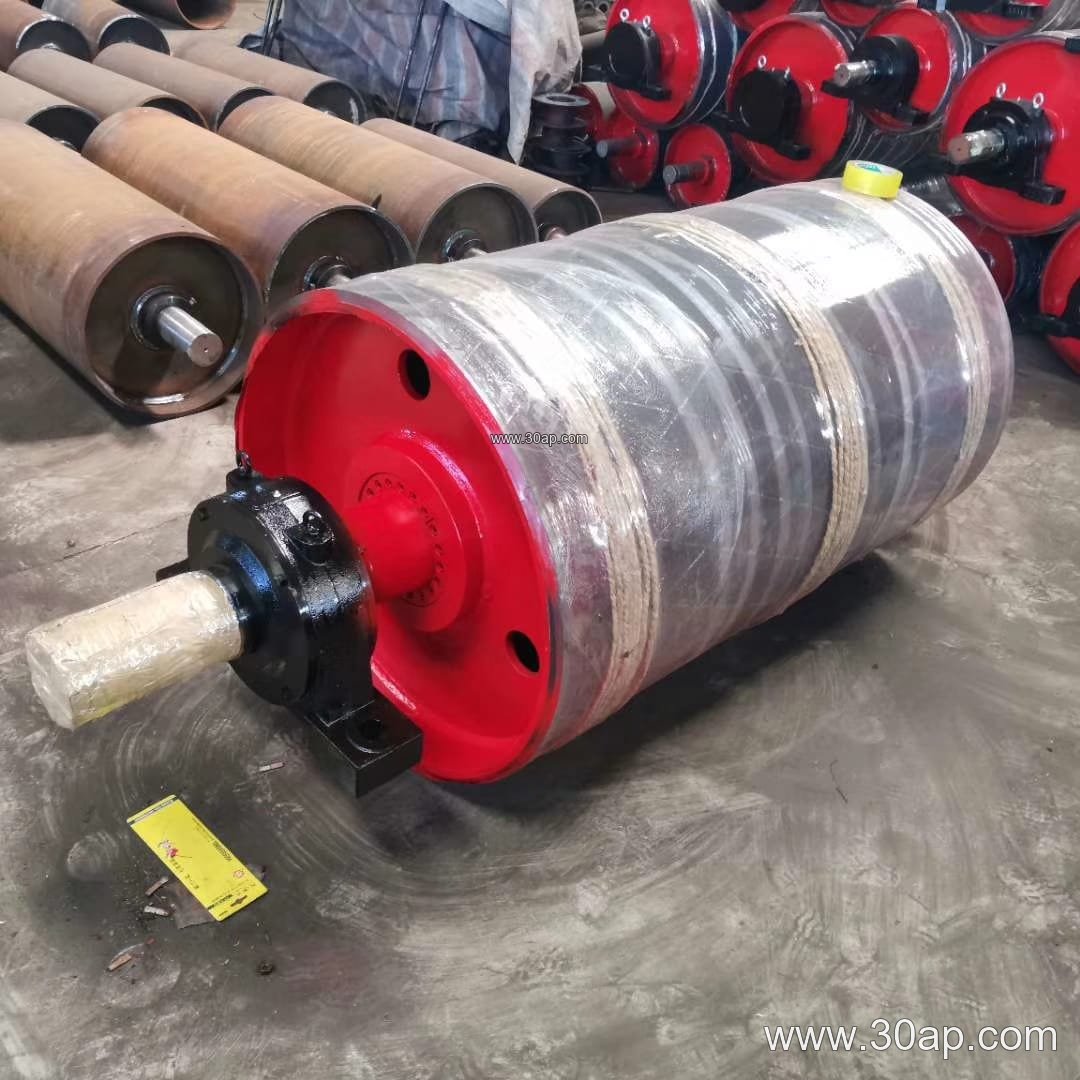
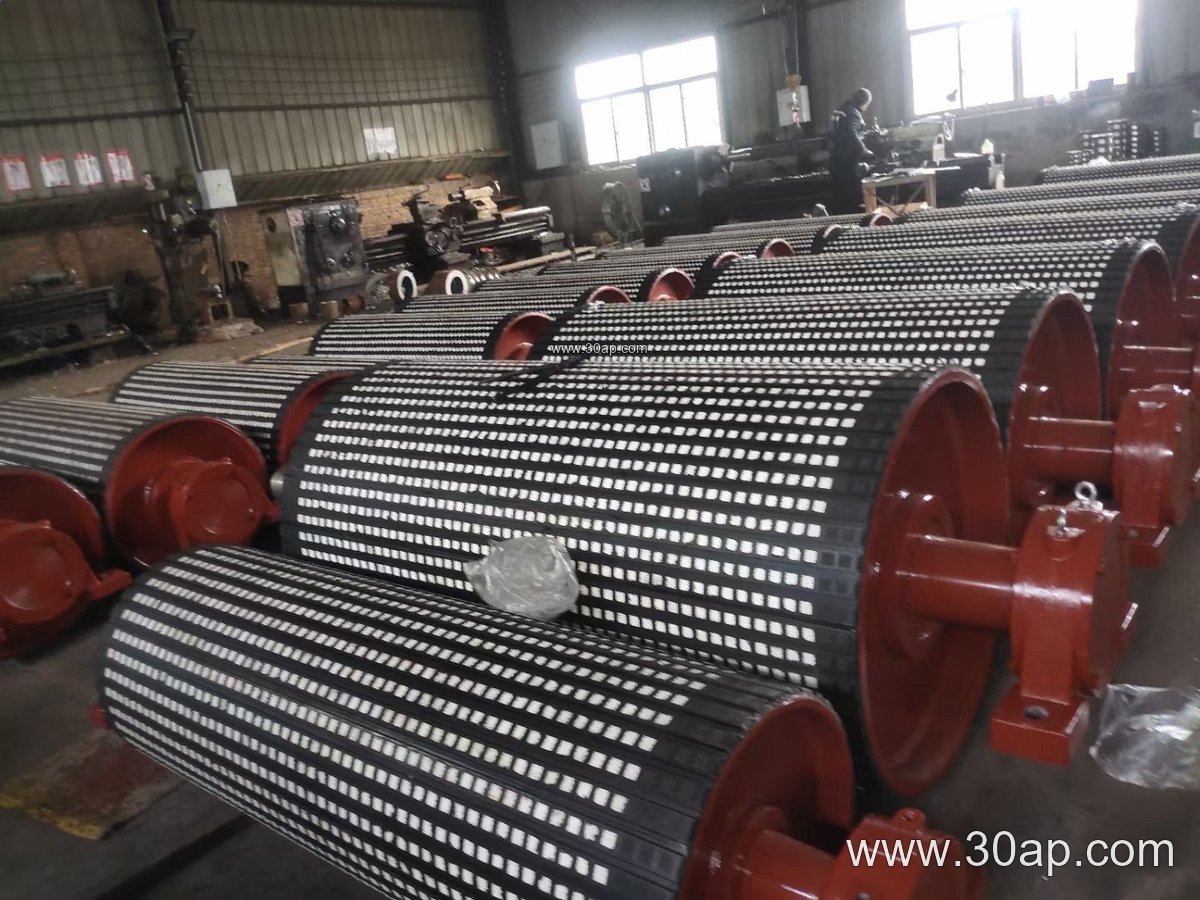
Most assemblies use a welded steel shell with machined end discs pressed or welded onto a through shaft. Bearings sit in pillow block housings or in a split bearing housing bolted to the conveyor bracket. Keyless locking assemblies or keyed hubs connect the shaft to the shell. Lagging is applied by vulcanizing, cold bonding or casting, and the pattern is chosen for grip and cleaning.
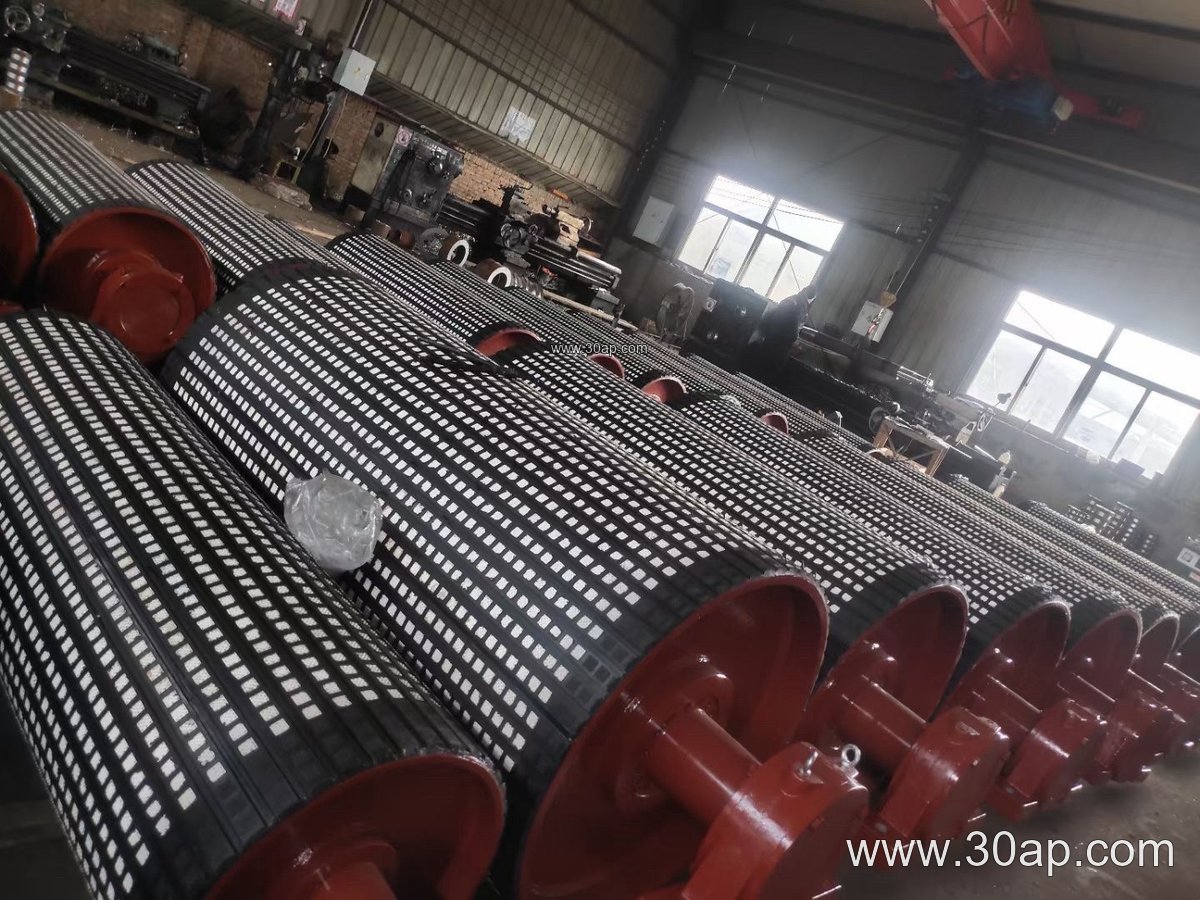
Balance matters. An unbalanced shell wears bearings quickly and can cause belt wander. Good workshops check runout and dynamic balance before dispatch.
Common Sizes and Surface Options
The table below shows reference ranges, not fixed pairings. A given belt width can be served by more than one diameter, and shaft size is set by torque and load rather than by width alone.
| Item | Common reference values |
|---|---|
| Belt width | B400, B500, B650, B800, B1000, B1200, B1400, B1600, B1800, B2000 |
| Pulley diameter | Ø200, Ø250, Ø315, Ø400, Ø500, Ø630, Ø800, Ø1000, Ø1250, Ø1400 |
| Face width | Usually wider than the belt, e.g. B800 about 950 mm, B1200 about 1400 mm |
| Shaft diameter | Ø50, Ø60, Ø70, Ø80, Ø90, Ø100, Ø120, Ø140, Ø160 |
| Lagging thickness | 8, 10, 12, 15, 20 mm |
| Surface form | Plain, cast rubber, cold-bonded rubber, hot vulcanized rubber, diamond, herringbone, ceramic |
Typical combinations such as B800 × Ø500 or B1200 × Ø1000 appear in design drawings, but they are examples of practice, not rules.
Where It Fits in the Plant
In a stone crushing line, the head pulley on the discharge conveyor often carries diamond lagging to shed grit. In a coal washing plant, flame retardant belt runs over assemblies with anti-static lagging, and the tail pulley is protected by a robust bearing seal against fines and water. Power plant coal yards and port ship loaders use larger diameters to reduce belt bending stress on high-tension runs.
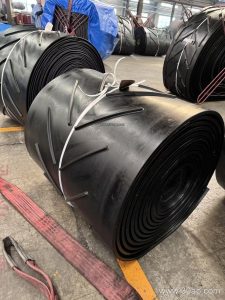
The assembly must suit the belt it carries. A heavy-duty mining conveyor belt with a steel cord carcass needs a larger diameter and stiffer shaft than a light fabric core belt. Matching the pulley to the belt carcass, the belt tension and the material is more important than copying a catalogue number.
Buyer Checklist
- Confirm the duty position and whether the unit is driven or free-running.
- State belt width, belt type and operating tension so the shaft and bearings can be sized.
- Choose lagging by material: abrasive ore, sticky clay, hot clinker or oily scrap each needs a different surface.
- Check bearing housing style against the existing conveyor bracket and foundation bolts.
- Ask for runout, balance and lagging adhesion records where available.
- Plan lifting points and access for bearing replacement during maintenance windows.
Maintenance crews should watch for lagging wear, loose locking elements and grease leakage. Replacing a worn lagging sleeve early protects the belt and extends assembly life. A well specified conveyor pulley assembly, paired with the right conveyor belt and idler roller set, keeps a bulk line running with fewer stoppages.