What a Return Self-Aligning Idler Does
A return self-aligning idler is a training roller mounted on the carry-back side of a conveyor, where the empty belt runs after it has discharged its load. Its job is not to support material but to correct belt drift. When the belt edges begin to wander toward one side, the angled rollers of the idler steer it back toward the center line. In a quarry, a cement plant, or a coal handling system, that small correction protects the conveyor belt from rubbing the frame and spilling material along the whole return run.
The same product is also described as a self-aligning return roller or a training idler for the return strand. These are accurate equivalents for the same item, and they should not be confused with a drive pulley, a tail pulley, or a bend pulley, which are completely different components of the conveyor.
How the Roller Is Built
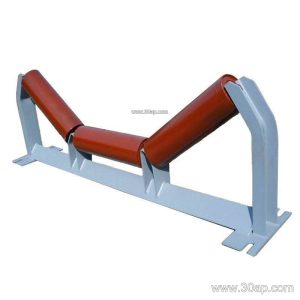
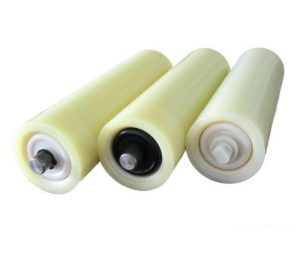
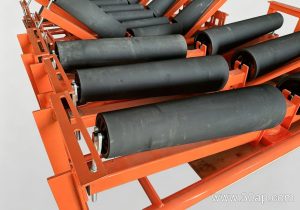
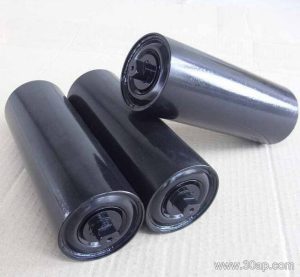
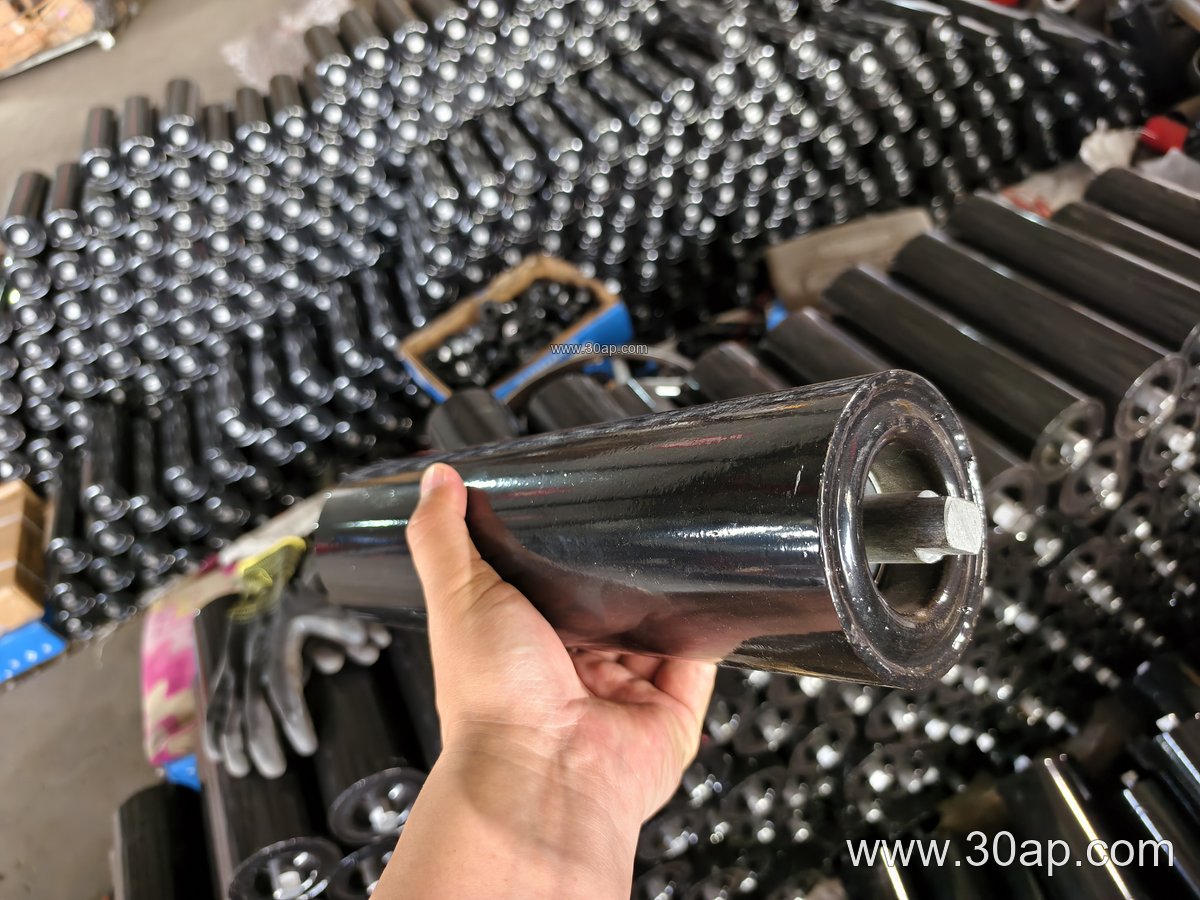
The assembly usually consists of two angled roller sections fixed to a pivoting frame. Because the frame can rotate slightly about a vertical axis, any side load from a drifting belt swings the rollers into a position that pushes the belt back. The rollers themselves may have a steel shell, a nylon surface, or a rubber-covered face for grip and wear resistance. Bearings are normally sealed for dusty conditions, with common sizes such as 6205, 6305, or 6308 chosen to suit the load and shaft design rather than tied to one roller diameter.
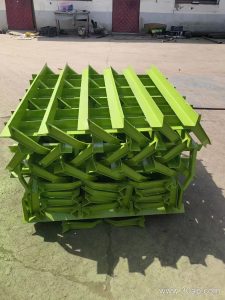
The pivot, the bracket, and the shaft are the parts that decide service life. A sturdy conveyor bracket and a well-protected bearing housing matter more than a decorative finish, because the idler sits in dust, moisture, and constant vibration.
Where It Fits on the Conveyor
This training roller belongs to the return strand, so it is not a substitute for the troughing idlers that carry the loaded belt. It is also different from a plain flat return roller or a V-type return roller, which support the belt but do not actively steer it. Some plants pair a self-aligning return roller with a friction self-aligning idler on the carry side, but each type keeps its own position and function.
Typical installations include:
- Aggregate and gravel lines in a quarry or crushing and screening plant
- Coal handling and wash plants
- Cement clinker and raw material conveyors
- Power station coal feed systems
- Port stockyard and bulk terminal conveyors
In these places, long return runs and uneven loading make belt tracking a daily concern, and a small number of training idlers placed at the right intervals often does more than repeated manual adjustment.
Common Sizes and Selection Points
Buyers usually match the idler to the belt width and the existing roller diameter. The table below gives common reference values, not fixed combinations; the final choice depends on the conveyor design, belt speed, and load.
| Belt width | Common roller diameter | Typical bearing |
|---|---|---|
| B500 | Ø63 to Ø89 mm | 6204, 6205 |
| B650 | Ø76 to Ø108 mm | 6205, 6305 |
| B800 | Ø89 to Ø127 mm | 6305, 6306 |
| B1000 | Ø108 to Ø133 mm | 6306, 6308 |
| B1200 | Ø108 to Ø159 mm | 6308, 6310 |
| B1400 | Ø127 to Ø178 mm | 6308, 6310 |
| B1600 | Ø133 to Ø194 mm | 6310 |
| B1800 | Ø159 to Ø219 mm | 6310 |
Roller length also changes with belt width and frame design. For a three-roller troughing set, common roller lengths are about 200 mm at B500, 250 mm at B650, 315 mm at B800, 380 mm at B1000, 465 mm at B1200, 530 mm at B1400, and 600 mm at B1600, with side and center rollers often differing. The return self-aligning idler follows its own frame dimensions, so these figures should be treated as examples only.
What to Check Before Ordering
Confirm the belt width, the return strand roller diameter, the shaft and bearing arrangement, and the mounting bracket pattern. Ask how the pivot is sealed and how the roller ends are protected, since dust ingress is the usual cause of early failure. Check that the training angle suits the belt speed and that the frame does not foul the conveyor structure. A buyer who supplies the belt width alone is likely to receive a roller that fits the belt but not the frame.
Regular inspection of the pivot and the roller surface keeps the idler effective. A worn or seized training roller stops correcting drift and can itself become a source of belt damage, so spare units are worth keeping on hand in any busy bulk handling plant.