What Is a Discharge-End Pulley?
In a belt conveyor system, the discharge-end pulley—also called the head pulley or delivery pulley—is the component that drives the belt and discharges material at the terminal point. It is typically the largest and most heavily loaded pulley, positioned at the head of the conveyor where the belt unloads into a chute, stockpile, or another conveyor. Unlike tail pulleys, which redirect the empty belt, or bend pulleys, which change belt direction in the return run, the discharge-end pulley performs both drive and discharge functions, making it central to reliable operation in mining, coal preparation, cement plants, power stations, and quarrying.
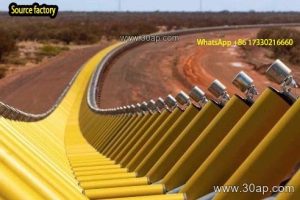
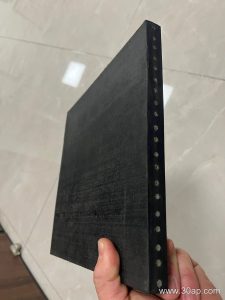
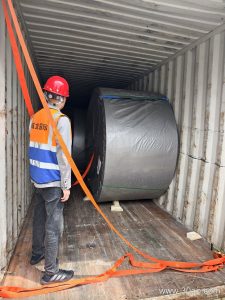
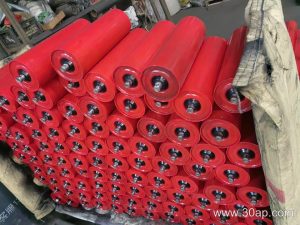
Because it handles the full tension of the carrying side and often the entire drive torque, this pulley must be robustly built and carefully matched to the conveyor duty. In many bulk material handling circuits, the discharge-end pulley works in tandem with a heavy-duty conveyor belt and a series of idler rollers to keep production flowing without interruption.
Construction and Key Components
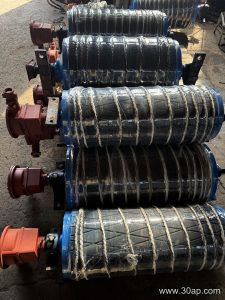
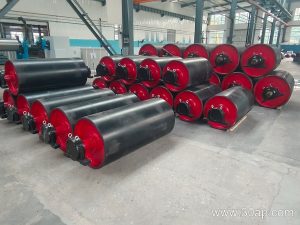
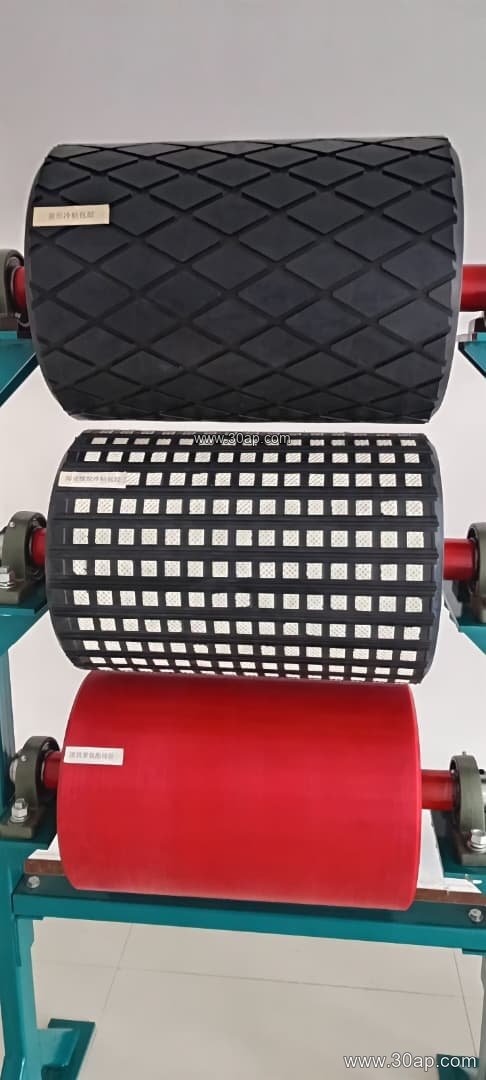
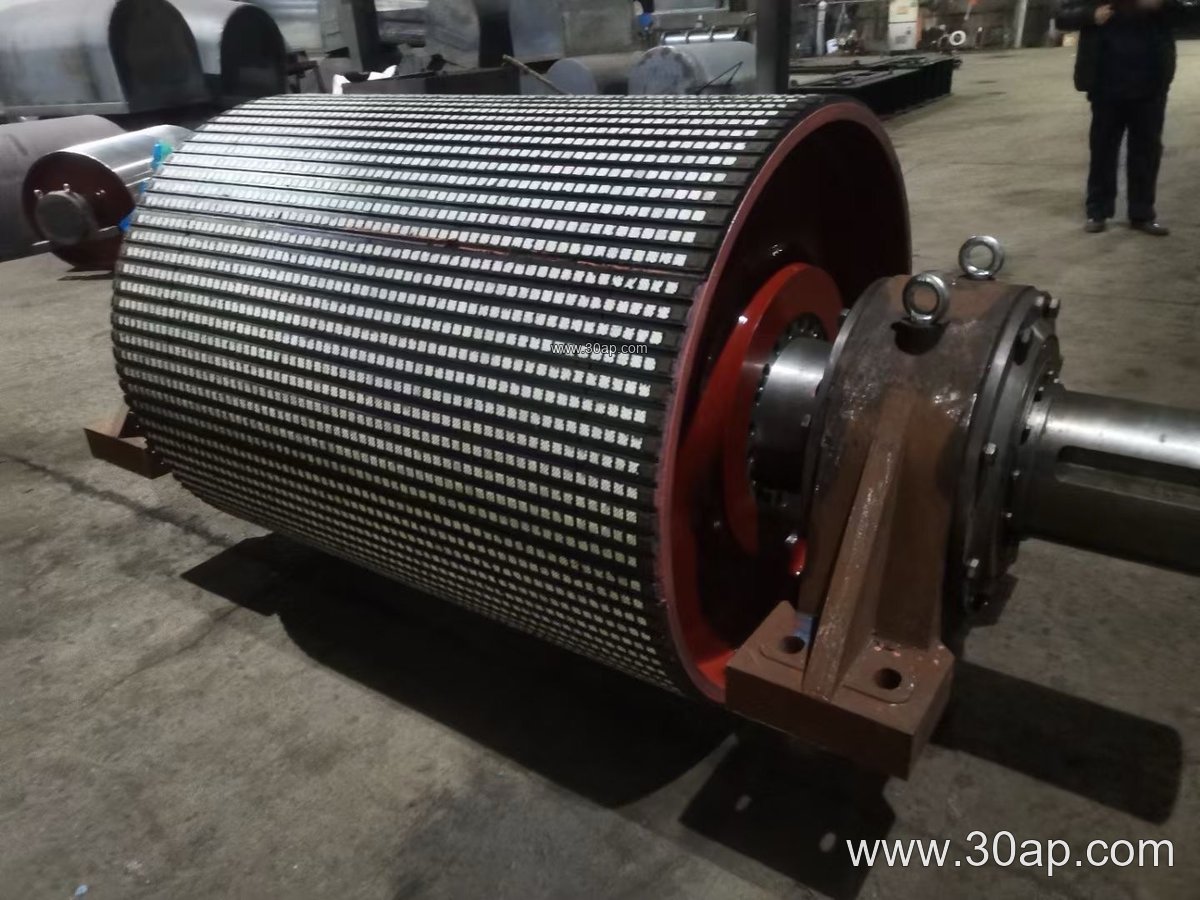
A discharge-end pulley is more than a simple drum. Its core is a cylindrical shell, usually made from rolled steel, fitted with end discs and a shaft that transmits torque from the drive. The shell may be machined smooth or covered with a rubber lagging to improve grip and protect the belt. Common surface options include plain finish, hot-vulcanized rubber, cold-bonded rubber, diamond pattern lagging, and ceramic lagging, with lagging thickness often ranging from 8 mm to 20 mm. The shaft is supported by heavy-duty bearings housed in bearing blocks, which are mounted on a sturdy conveyor bracket or frame.
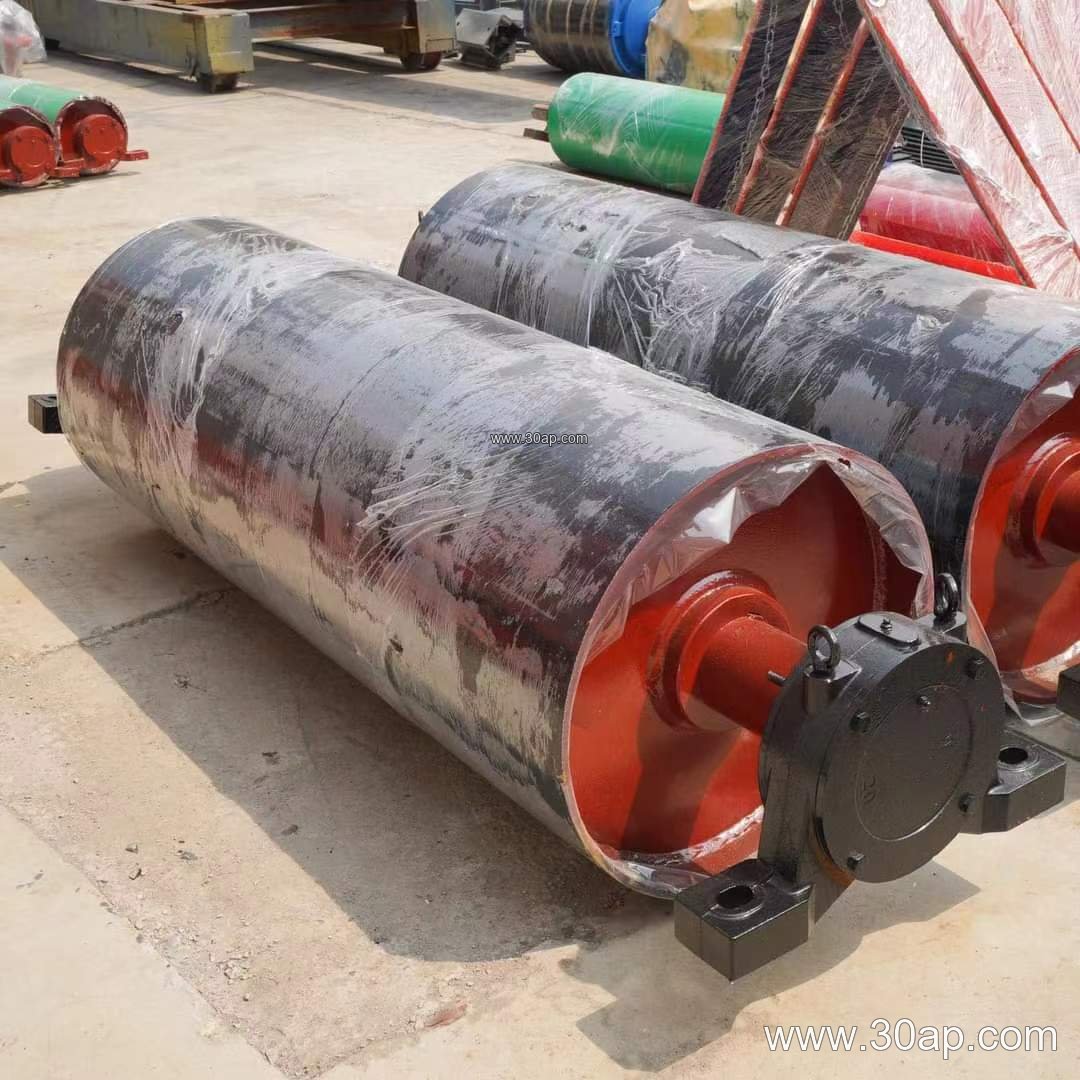
Modern designs may incorporate a keyless locking assembly, welded hub, or shrink-fit connection between shaft and shell. For high-torque applications, the pulley is often directly coupled to a gearbox or driven through a chain or belt drive. The pulley face width is normally wider than the belt to allow for misalignment; for example, a B1200 belt typically runs on a pulley face of about 1400 mm, while a B800 belt uses roughly 950 mm. The table below shows common combinations of belt width and pulley face width, along with typical diameter ranges—though final dimensions are always determined by the conveyor design, load, and torque.
| Belt Width (mm) | Typical Pulley Face Width (mm) | Common Diameter Range (mm) |
|---|---|---|
| B400 | 500 | Ø200–Ø315 |
| B500 | 600 | Ø250–Ø400 |
| B650 | 750 | Ø315–Ø500 |
| B800 | 950 | Ø400–Ø630 |
| B1000 | 1150 | Ø500–Ø800 |
| B1200 | 1400 | Ø630–Ø1000 |
| B1400 | 1600 | Ø800–Ø1250 |
| B1600 | 1800 | Ø1000–Ø1400 |
| B1800 | 2000 | Ø1250–Ø1600 |
| B2000 | 2200 | Ø1400–Ø1800 |
Note that these are reference values; a B1200 belt can be paired with a Ø800 or Ø1250 pulley depending on the required belt wrap and tension. Shaft diameters typically range from Ø50 to Ø200, selected by torque and load rather than belt width alone.
Where It Is Used
The discharge-end pulley is indispensable in any conveyor that transfers bulk solids. In a coal preparation plant, it delivers raw coal onto a screening deck; in a cement plant, it discharges clinker or limestone into a storage silo; in a power station, it feeds coal to the boiler bunker. Quarries and aggregate lines rely on it to drop crushed stone onto stockpiles, while port facilities use it for ship loading. The pulley must withstand abrasive dust, moisture, and often high temperatures, so the choice of lagging and belt type—such as an abrasion-resistant conveyor belt or a heat-resistant belt—directly affects service life.
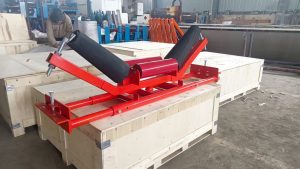
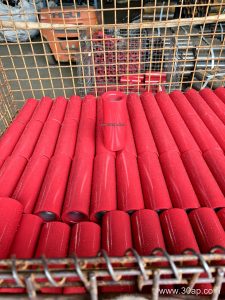
In underground mining, a flame-retardant conveyor belt is often mandatory, and the discharge-end pulley may be fitted with anti-static lagging. For steep inclines, a chevron or corrugated sidewall belt runs over the pulley, requiring a smooth or specially profiled surface to avoid belt damage. The pulley also works closely with the conveyor bracket and idler rollers to maintain belt tracking and minimize spillage.
Buyer’s Checklist
When specifying a discharge-end pulley, buyers should consider the following:
- Belt width and speed: Determine the pulley face width and diameter to ensure adequate belt wrap and low belt stress. For example, a B1400 × Ø800 configuration may suit a medium-duty application, while a B1800 × Ø1250 pulley is more typical for high-capacity ore handling.
- Lagging type: Choose plain, rubber, diamond, or ceramic lagging based on grip requirements and material abrasiveness. Hot-vulcanized rubber is common for heavy-duty mining conveyor belts, while ceramic lagging offers superior wear resistance in high-tension drives.
- Shaft and bearing: Verify that the shaft diameter (e.g., Ø120, Ø160, Ø200) and bearing size match the calculated torque and radial loads. Do not assume a fixed shaft size from belt width alone.
- Environmental factors: In coal mining, select flame-retardant and anti-static properties; in cement plants, consider heat resistance; in cold climates, cold-resistant belts and pulleys with appropriate lubrication are essential.
- Compatibility: Ensure the pulley interfaces correctly with the conveyor belt, idler roller spacing, and conveyor bracket. Misalignment can cause belt edge damage and premature pulley failure.
Regular inspection of lagging wear, bearing condition, and shaft alignment helps prevent unplanned downtime. By understanding the discharge-end pulley’s role and selecting it as part of the complete conveyor system—alongside quality conveyor belts and rollers—operators can achieve efficient, long-lasting material transfer.