What a Heavy-Load Idler Does on a Conveyor
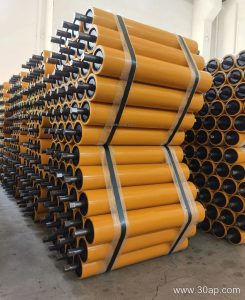
A heavy-load idler is the load-bearing roller that carries the belt and the material on the most punishing sections of a conveyor. In a quarry, a limestone mine, or a crusher discharge line, the belt may be wide, the lumps may be sharp, and the tonnage may run all shift. The idler roller in these positions has to keep its shape, keep turning, and keep the belt supported without excessive sag or spillage.
The same duty appears in a power plant coal yard, a cement plant clinker line, and a steel plant sinter plant. The common thread is not the industry name but the load case: high belt tension, heavy material, and often abrasive dust. A standard light-duty roller may physically fit, yet it will not last where impact and abrasion are constant.
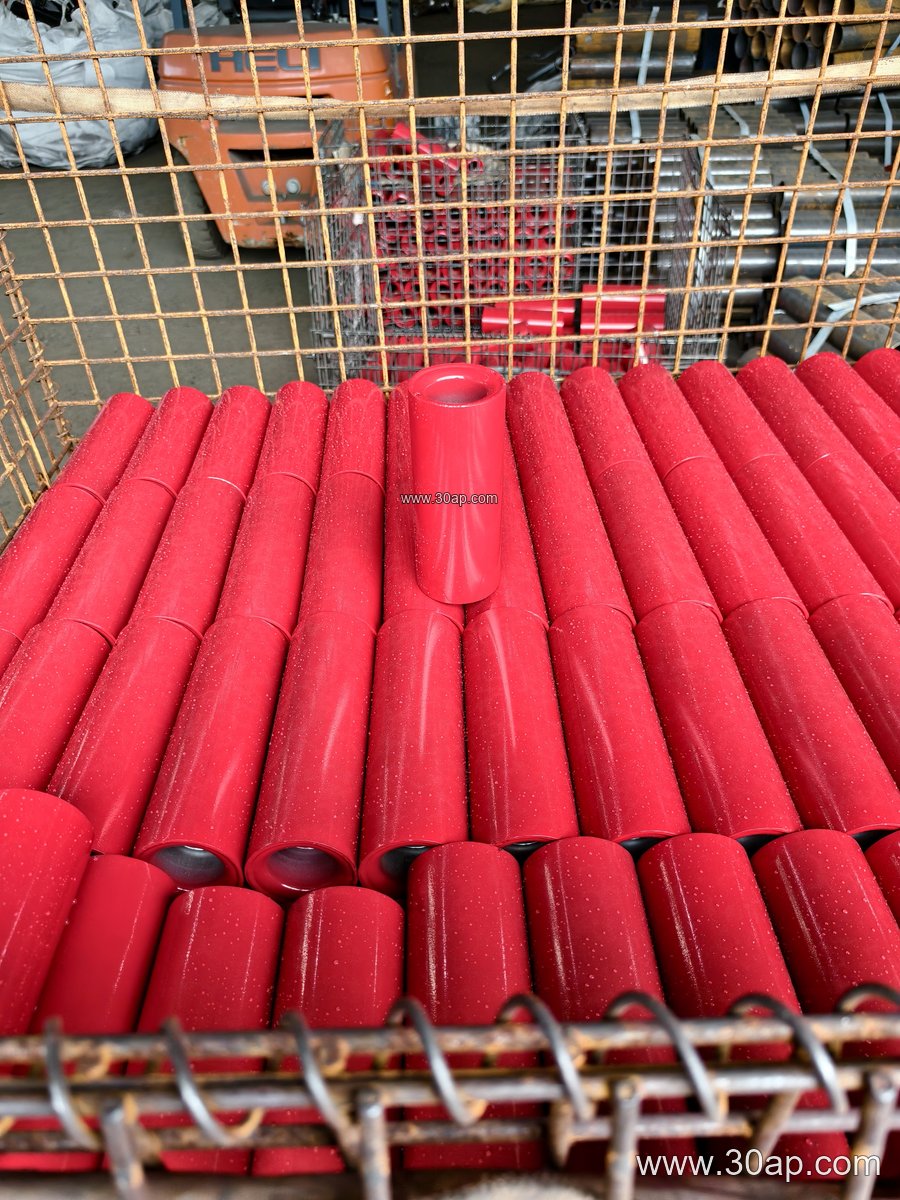
How the Roller Is Built
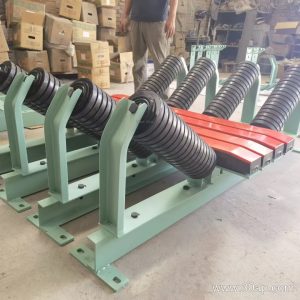
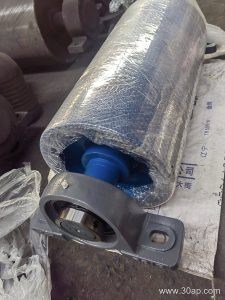
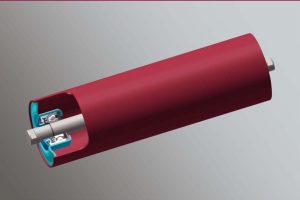
Most heavy-load idlers use a thick-walled steel tube as the shell, with welded end caps and a shaft that runs through sealed bearing housings. The bearing size is chosen for the radial load and the shaft, not for the belt width alone. Common bearing numbers in this class include 6205, 6305, 6306, 6308, and 6310, and the same bearing may appear on more than one roller diameter.
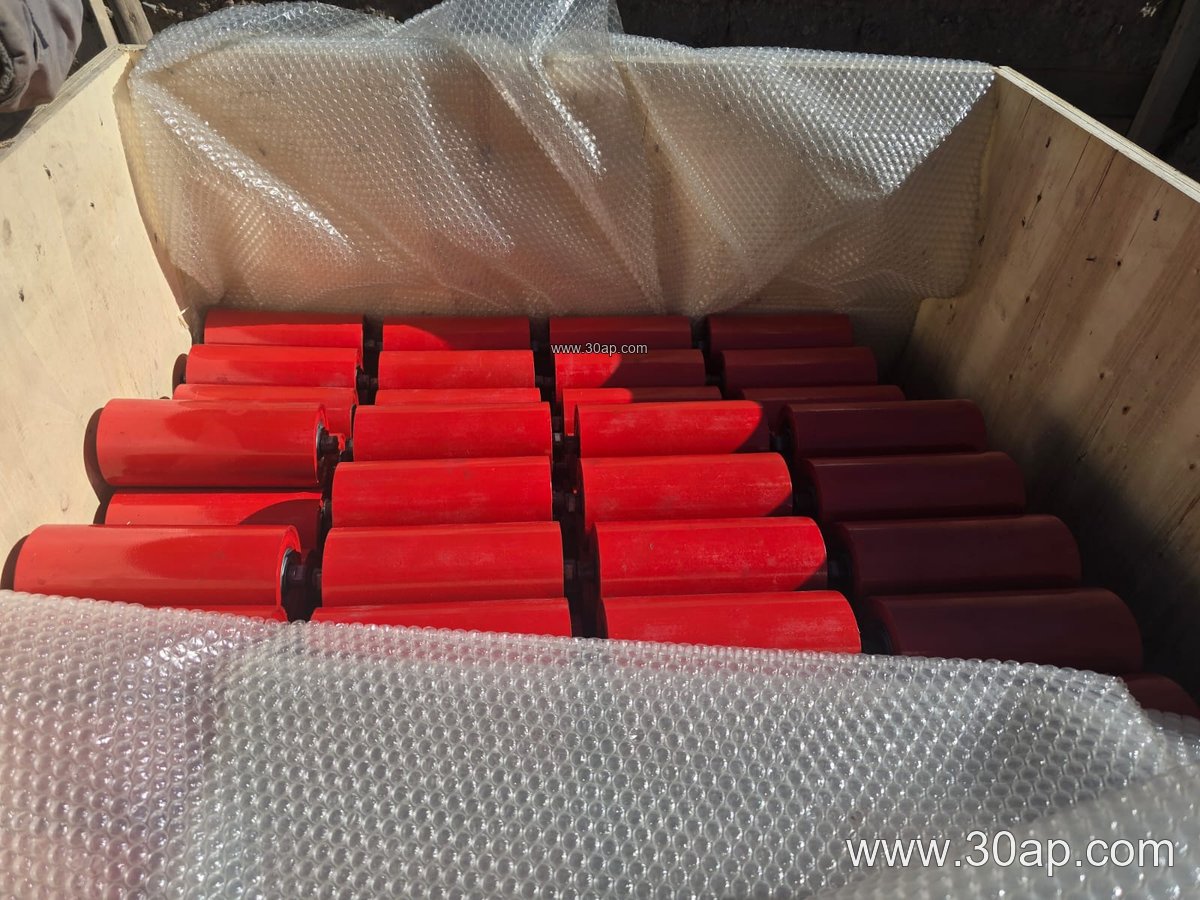
Sealing matters as much as the tube. Dust, water, and fine grit destroy bearings faster than load does. Labyrinth seals, contact seals, and grease retention features are the usual defenses. Roller surface options include plain steel, nylon, ceramic, and rubber rings; rubber rings are often used on impact idlers at transfer points, where the belt meets falling material.
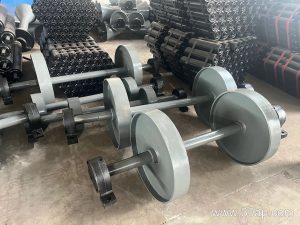
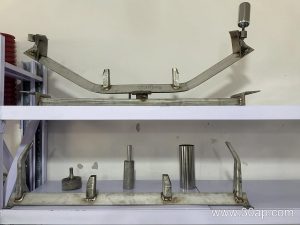
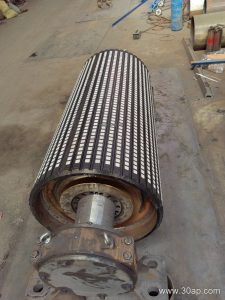
The idler sits in a conveyor bracket or frame, and the frame geometry determines the trough shape. A three-roll troughing set at 30 or 35 degrees is common on bulk lines, while 20 degrees suits some narrower belts and 45 degrees is used where a deeper trough is needed. Transition idlers are placed near pulleys to ease the belt from flat to troughed. These are not the same as a conveyor pulley, which drives or redirects the belt; a drive pulley, tail pulley, and bend pulley each have their own role and are not interchangeable with rollers.
Common Sizes and Configurations
Roller diameter and belt width are selected together with the load and the frame design. The table below shows typical reference values, not fixed matches.
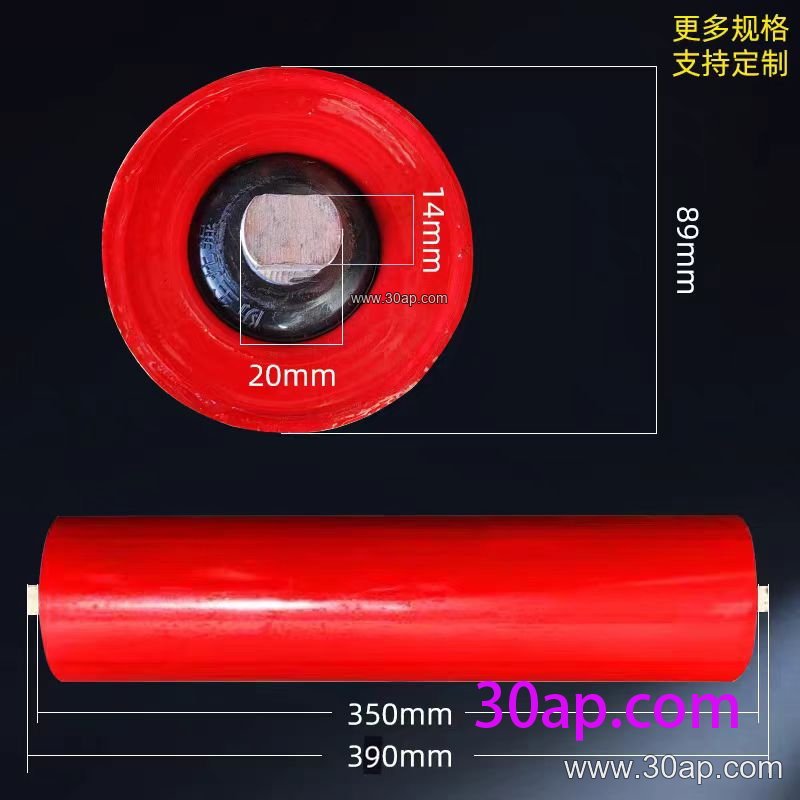
| Item | Typical reference values |
|---|---|
| Roller diameter | Ø89, Ø102, Ø108, Ø127, Ø133, Ø159, Ø178, Ø194, Ø219 mm |
| Belt width | B650, B800, B1000, B1200, B1400, B1600, B1800, B2000 mm |
| Trough angle | 20°, 30°, 35°, 45° |
| Roller length, three-roll set | About 250 mm at B650, 315 mm at B800, 380 mm at B1000, 465 mm at B1200, 530 mm at B1400, 600 mm at B1600, 670 mm at B1800 |
| Bearing examples | 6204, 6205, 6305, 6306, 6308, 6310 |
Side rollers and center rollers can differ in length within the same set. A forward tilt of about 1.5 to 2 degrees is sometimes used on training idlers to help keep the belt centered, but this is a design choice, not a universal rule.
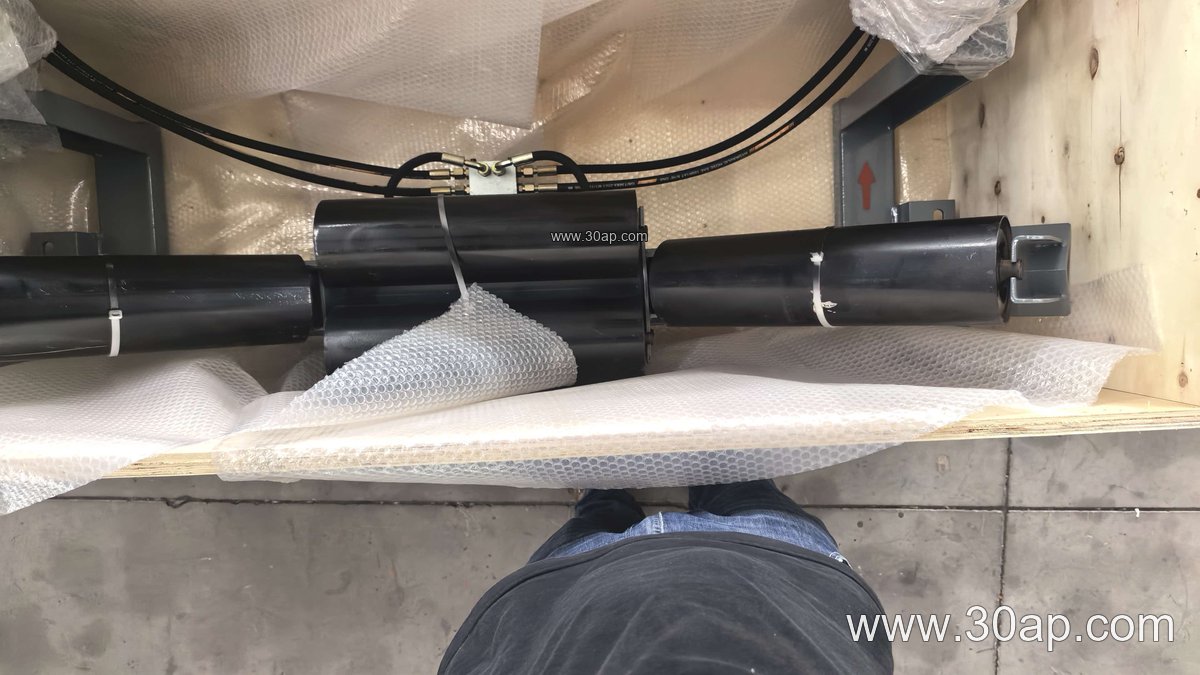
Where Heavy-Load Idlers Are Used
On a primary crusher discharge, the belt receives large lumps and the impact zone needs cushioning. On a long overland line in an iron ore or copper ore operation, the carrying idlers must run smoothly for long distances. In a coal washing plant or a port ship loader, dust and moisture test the seals. Each of these places may use a different roller surface and seal arrangement, but the heavy-load idler remains the carrying element under the belt.
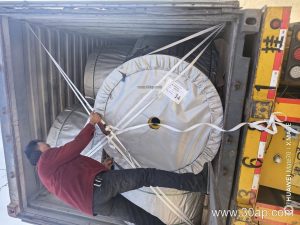
The belt itself also shapes the choice. A steel cord conveyor belt or a high-strength EP conveyor belt can run at higher tension and needs rollers that hold alignment. An abrasion resistant conveyor belt or a heat resistant conveyor belt may be paired with rollers selected for the same environment. The roller does not replace the belt, and the belt does not replace the roller; they work as a system with the conveyor pulley and frame.
Buyer Checklist
- Confirm the actual belt width, trough angle, and frame hole spacing before ordering.
- State the material, lump size, and whether the location is an impact zone.
- Ask about seal type and bearing number, not only roller diameter.
- Check that the shaft and end cap design suit the bracket and the load.
- For replacement, match the existing set geometry rather than forcing a different trough angle.
For related conveyor components, see the conveyor belt, idler roller, and conveyor pulley pages, or browse our conveyor bracket options. A well-matched heavy-load idler keeps the belt tracking, reduces downtime, and protects the structure around it.