What a 400mm Diameter Conveyor Pulley Actually Is
A 400mm diameter conveyor pulley is a drum-shaped rotating component used to support and drive a conveyor belt. The “400mm” refers to the outside diameter of the cylindrical shell, often written as Ø400. It is one of the common mid-range sizes, sitting between smaller pulleys around Ø315 and larger units such as Ø500 or Ø630. This size is frequently chosen for medium-duty belt conveyors where a balance between wrap angle, belt stress and structural weight matters.
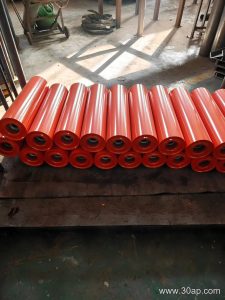
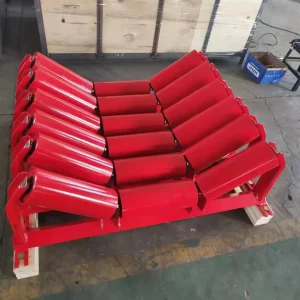
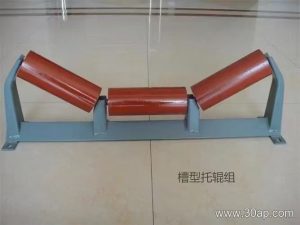
It is important to distinguish the pulley from an idler roller. An idler roller supports the belt along the carrying side, while a conveyor pulley is installed at the ends or at bend points and transmits motion or changes belt direction. The 400mm diameter unit is usually a drive pulley, a tail pulley or a bend pulley, depending on where it is placed. Drive, tail and bend pulleys are not interchangeable names; each has a different job in the conveyor layout.
Construction Details
The typical 400mm diameter conveyor pulley is built from a steel shell, two end discs, a shaft and a hub connection. The shell is usually machined or rolled to size, and the shaft is sized by torque and load rather than by belt width alone. Common shaft diameters in this size range include Ø80, Ø90, Ø100, Ø120 and Ø140, but the final value depends on the drive power, belt tension and bearing arrangement. A common mistake is to assume a fixed shaft diameter for a given belt width; that is not how pulley design works.
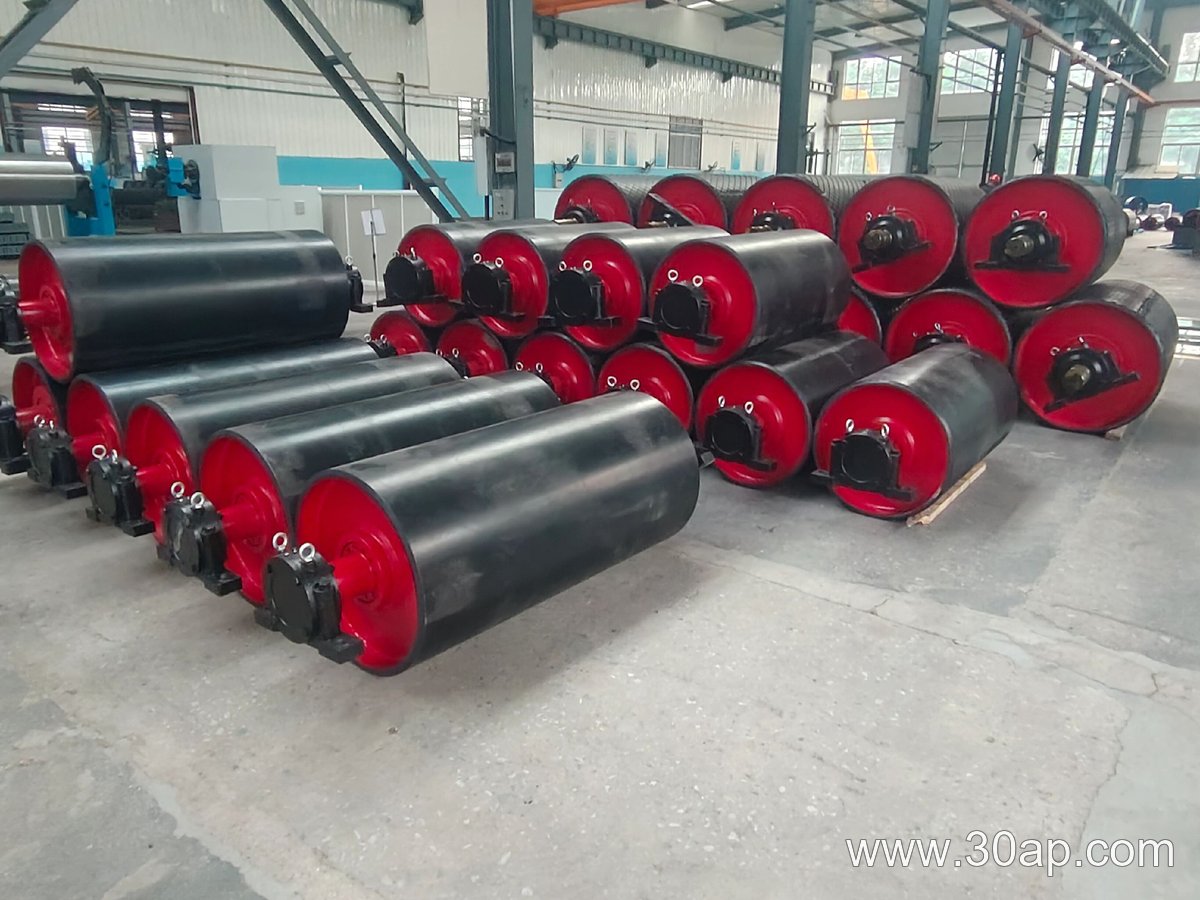
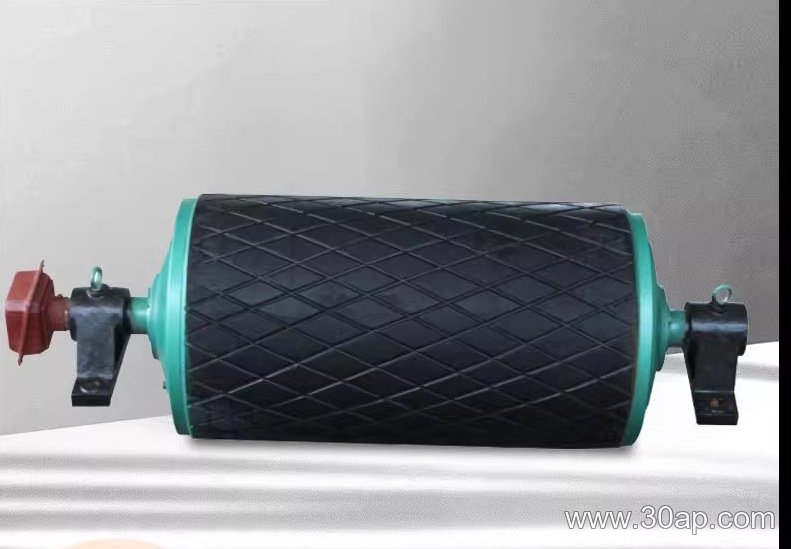
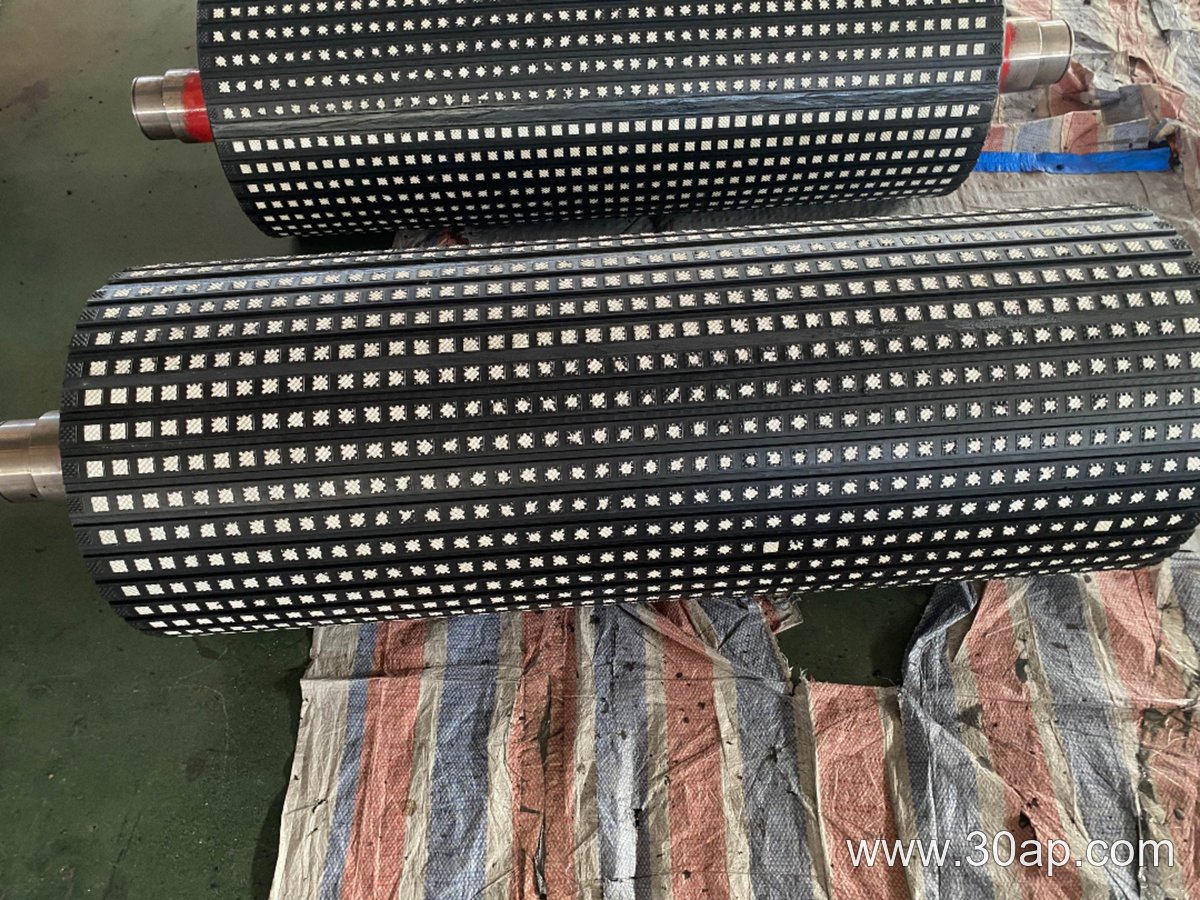
Surface finish is a key choice. A plain steel shell may be used for light duty, while rubber lagging is common for drive pulleys to improve grip. Lagging options include cold-bonded rubber, hot vulcanized rubber, diamond pattern, herringbone pattern and ceramic lagging. Lagging thickness is often 8, 10, 12, 15 or 20 mm. The right surface depends on whether the pulley is driving, whether the belt is wet or oily, and how much slip is acceptable.
Where a 400mm Diameter Pulley Fits
This diameter is widely used in aggregate plants, coal handling systems, cement plants, power plant coal conveyors and crushing and screening lines. It can serve as a head pulley at the discharge end, a tail pulley at the loading end, or a bend pulley that redirects the belt around a curve. In a typical aggregate line, a 400mm pulley may run with a B800 or B1000 belt, though the pairing is not fixed. A B650 belt could also use a Ø400 pulley if the belt tension and wrap requirements allow it.
For comparison, a smaller bend pulley might be Ø250 or Ø315, while a large drive pulley on a high-tension conveyor could be Ø800 or more. The 400mm size is often a practical middle ground. It also works with a range of conveyor brackets and bearing housings, so it can be retrofitted into existing structures when the shaft and center height match.
Belt Width and Pulley Diameter Are Not a Fixed Pair
One of the most common questions from buyers is which belt width matches a 400mm diameter pulley. The honest answer is that belt width alone does not determine pulley diameter. The pulley face width usually exceeds the belt width to allow for belt tracking. For example, a B800 belt commonly runs on a pulley face around 950 mm, and a B1000 belt on a face around 1150 mm. But the diameter is selected from belt tension, wrap angle, drive torque and the allowable belt bending stress.
The table below shows common reference combinations, not mandatory matches.
- B650 belt with Ø400 pulley and face width about 750 mm
- B800 belt with Ø400 pulley and face width about 950 mm
- B1000 belt with Ø400 pulley and face width about 1150 mm
- B1200 belt with Ø500 or Ø630 pulley and face width about 1400 mm
These values are reference data only. A conveyor designer may choose a different diameter for the same belt width after calculating the actual load.
What Buyers Should Check Before Ordering
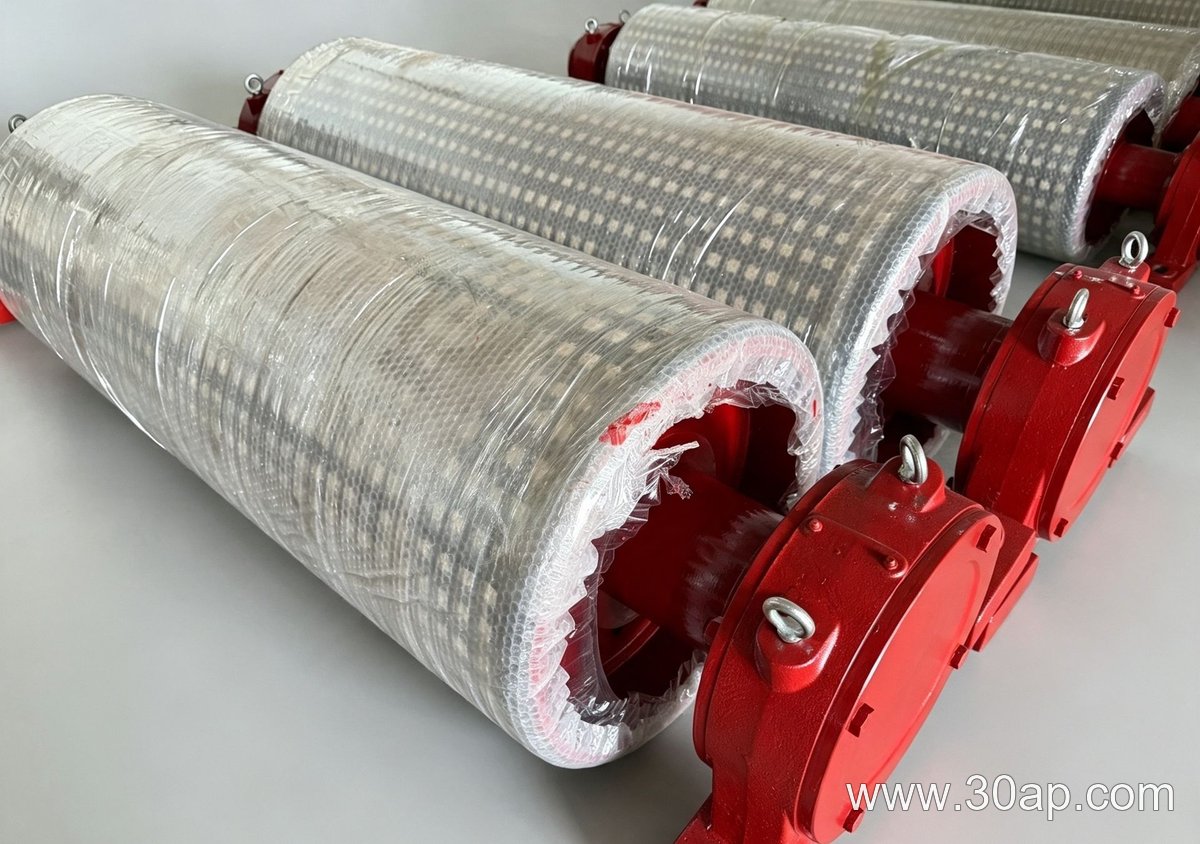
Before purchasing a 400mm diameter conveyor pulley, confirm the shaft diameter, the face width, the lagging type and thickness, the bearing type and the balance between the pulley and the conveyor bracket. Also check whether the pulley is a drive, tail or bend unit, because the hub and shaft design differ. A drive pulley usually has a larger shaft and a keyed connection for the gearbox, while a bend pulley may use a simpler bearing arrangement.
Ask for the shell thickness, the welding standard and the surface runout. For rubber lagging, confirm whether it is cold-bonded or hot vulcanized, since the bonding method affects service life. If the conveyor runs in a wet or dusty environment, diamond or herringbone lagging can help with water drainage and grip. Ceramic lagging may be considered for high-slip drives, but it is not automatically better for every application.
Finally, remember that a 400mm diameter pulley is only one part of the conveyor system. The conveyor belt, idler rollers and conveyor brackets all interact with it. A pulley that is correctly sized for the belt and load will run smoothly; one chosen by belt width alone may wear the belt edge or slip under load. Use the design torque and belt tension as the starting point, not a fixed size chart.