What a Self-Aligning Idler Bracket Does
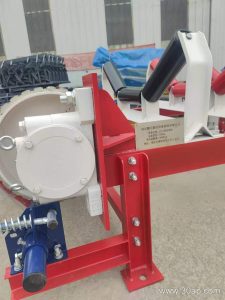
On a conveyor, the belt can drift sideways for many reasons: uneven loading, off-center material, a slight frame misalignment, or a buildup of fines on a roller. A self-aligning idler bracket is the mounting that lets a set of idlers pivot slightly and steer the belt back toward the center line. The bracket holds the idler roller shafts in a frame that rotates about a vertical pivot, so when the belt touches a training roller, the bracket swings and the idler axis angles against the belt direction. That small angle produces a lateral force that corrects the drift. It is a simple mechanical correction that works continuously without an operator.
Construction and Mounting Position
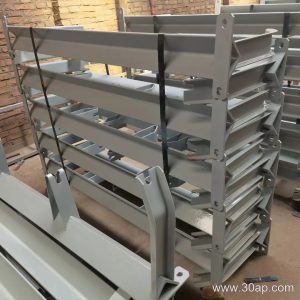
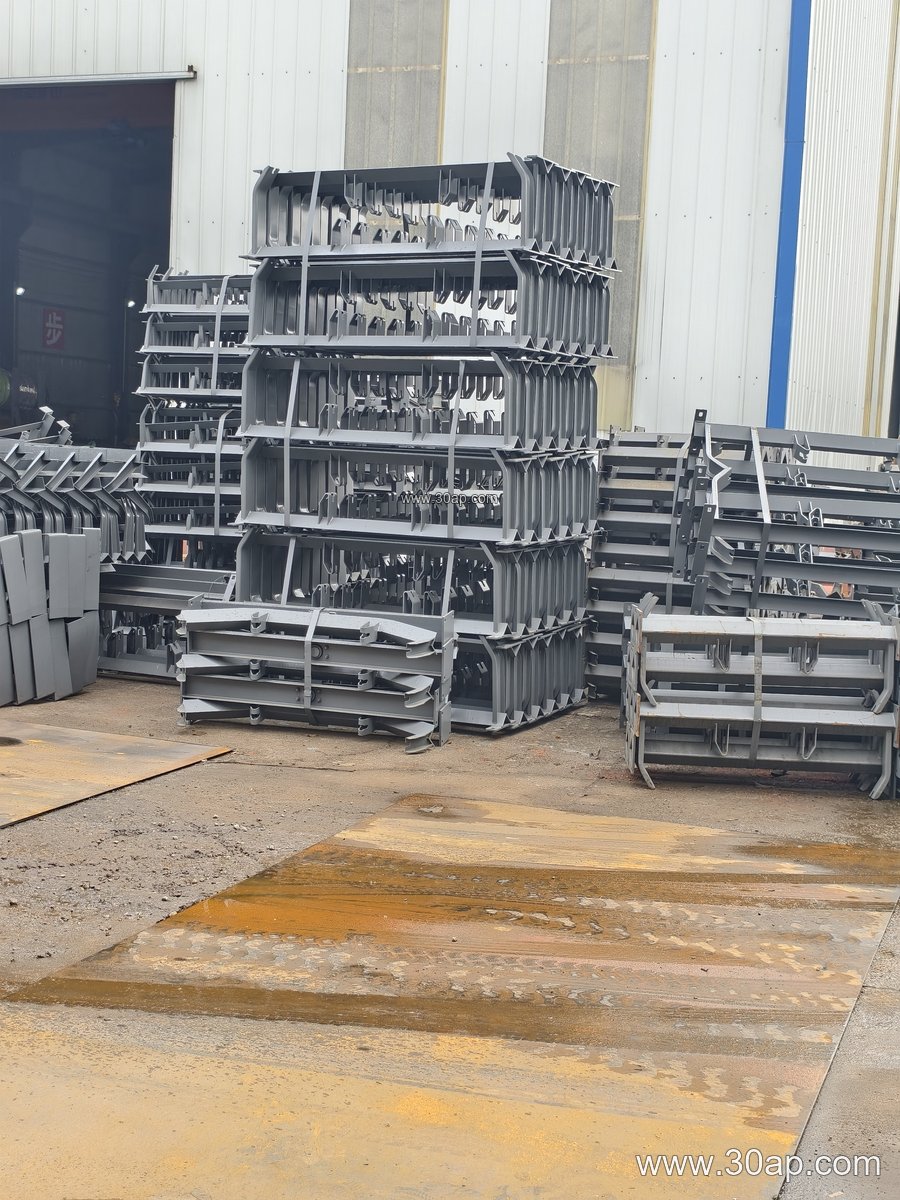
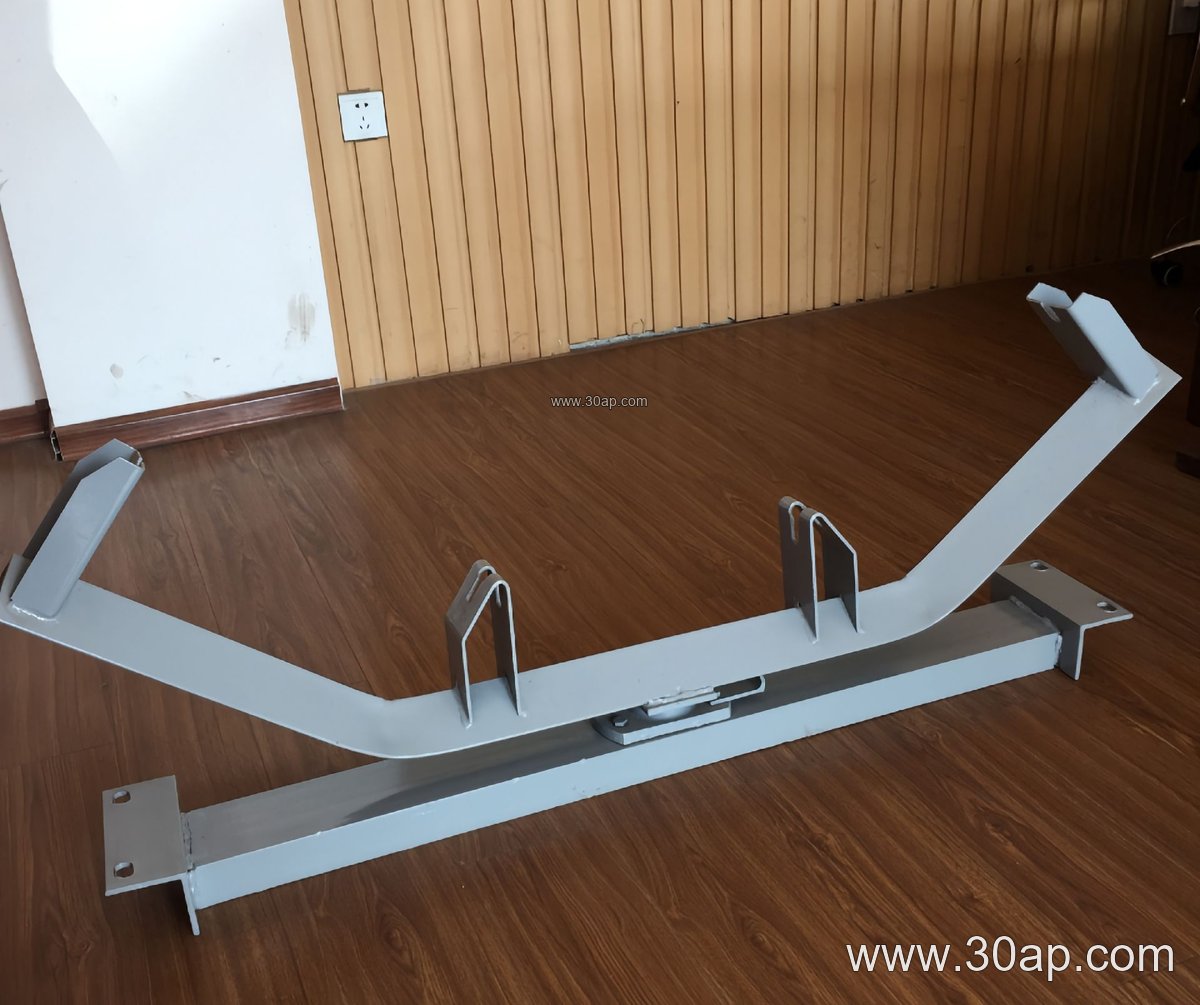
Most self-aligning idler brackets are fabricated from angle steel, channel steel, or folded steel plate. The pivot assembly is the key part: a vertical shaft or pin with a bearing or bushing that allows the carriage to rotate. The bracket carries two or three idlers, often with a small forward tilt of about 1.5 to 2 degrees to help centering. The mounting feet bolt to the conveyor stringer or cross beam. Because the bracket must swing freely, the installer leaves clearance around the moving frame and keeps the pivot area clean.
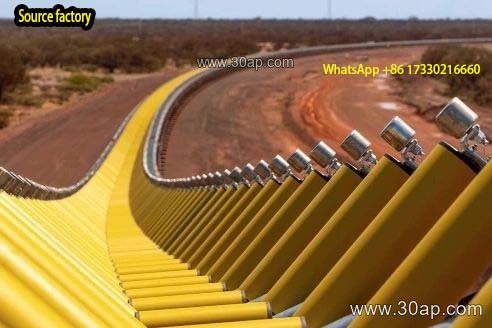
These brackets are commonly placed on the carrying side, usually after the loading point, and on the return side where belt wander is a problem. They are not a replacement for a bend pulley or a tail pulley; those are different components with different jobs. A self-aligning bracket works together with the conveyor belt and the idler rollers to maintain tracking along the run.
Common Configurations and Reference Dimensions
Self-aligning brackets are available for standard belt widths and trough angles. The table below gives typical reference ranges; actual mounting hole spacing and beam length are determined by the belt width, trough angle, and idler diameter.
| Belt width | Trough angle | Idler diameter | Typical use |
|---|---|---|---|
| B500, B650 | 20°, 30° | Ø89 | Light-duty aggregate and sand lines |
| B800, B1000 | 30°, 35° | Ø108, Ø133 | Crushing and screening plants, cement |
| B1200, B1400 | 35°, 45° | Ø133, Ø159 | Coal washing, power plant coal handling |
| B1600, B1800 | 35°, 45° | Ø159, Ø194 | Iron ore, port bulk terminals |
| B2000, B2200 | 35°, 45° | Ø194 | Heavy-duty mining and stockyard conveyors |
Adjustable versions allow the trough angle to be set within a range, for example between 20 and 45 degrees. Fixed versions are welded at a single angle. The idler diameter should be matched to the belt speed and load, not chosen by belt width alone. A B800 conveyor may use Ø108 or Ø133 depending on the duty.
Where It Is Used
Self-aligning idler brackets appear in quarries, limestone mines, coal preparation plants, cement works, power station coal yards, and sand and gravel lines. They are also found in fertilizer plants, grain silos, and tunnel muck handling. In each case the goal is the same: keep the conveyor belt centered so it does not rub the frame or spill material. A single self-aligning bracket is often enough at a problem zone, but longer conveyors may use several in series.
Buyer Checklist
- Confirm the belt width and the required trough angle. Check whether a fixed or adjustable bracket is needed.
- Match the idler diameter to the existing idler rollers on the conveyor.
- Ask for the mounting hole dimensions and the overall beam length; these vary with belt width and angle.
- Check the pivot design: bushing or bearing, and whether it can be greased or is sealed.
- Consider material build-up. In dusty plants, a bracket that sheds fines easily reduces maintenance.
- Remember that a self-aligning bracket is a tracking aid, not a substitute for proper belt splicing, alignment, or loading control.
When specifying, give the conveyor duty, belt width, trough angle, idler diameter, and mounting position. That information lets the supplier select a self-aligning idler bracket that fits the conveyor bracket layout and works with the existing idler rollers and conveyor belt.