What a Dual Drive Pulley Actually Does
A dual drive pulley is a conveyor pulley that receives torque from two drive units, either one motor at each end of the shaft or two motors coupled through a common gearbox arrangement. Instead of relying on a single input, the pulley shares the driving effort across two points, which reduces the load carried by each gearbox and each shaft end. In a long overland conveyor, a plant feed line, or a high-capacity conveyor pulley station, this arrangement is often chosen when a single drive would become too large or too heavy to handle comfortably.
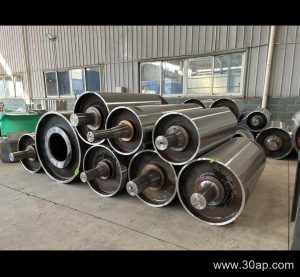
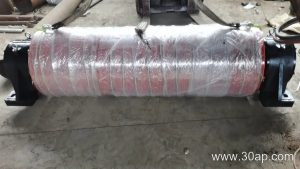
The pulley itself remains a drum with a shell, end discs, a shaft, and bearing housings, but its design is shaped by the twin input. Shaft extensions may appear at both ends, and the lagging, locking assemblies, and bearing selection all follow the higher combined torque.
How the Pulley Is Built
Most dual drive pulleys use a welded steel shell machined to a true diameter, with end discs keyed or shrink-fitted to the shaft. The shaft is sized by torque and bending load, not by belt width alone, so a B1200 conveyor may use a shaft anywhere from roughly Ø120 to Ø180 depending on the drive layout and wrap angle. Common shaft diameters in this class include Ø100, Ø120, Ø140, Ø160, Ø180, and Ø200.
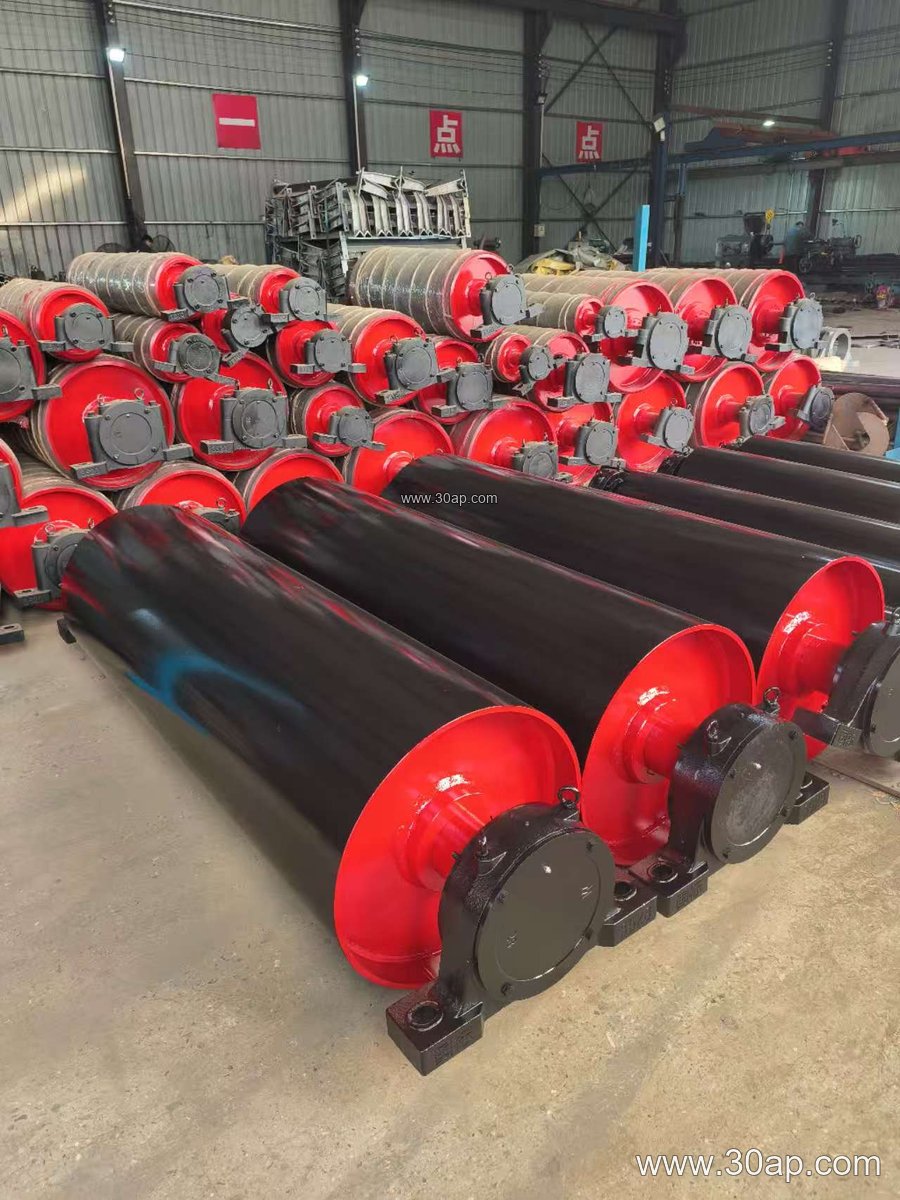
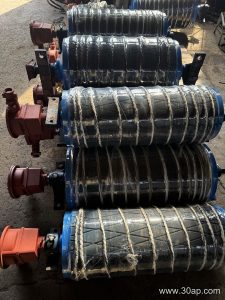
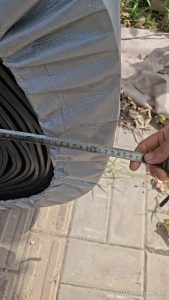
Surface treatment matters as much as the drum body. Plain finish suits light duty, while hot vulcanized rubber, cold-bonded rubber, diamond grooving, herringbone lagging, or ceramic tiles improve grip on wet or dusty belts. Lagging thickness commonly runs 8, 10, 12, 15, or 20 mm. The right choice depends on the conveyor belt surface, the material being carried, and the amount of slip the designer wants to eliminate.
Typical dimensional references for a dual drive pulley look like this:
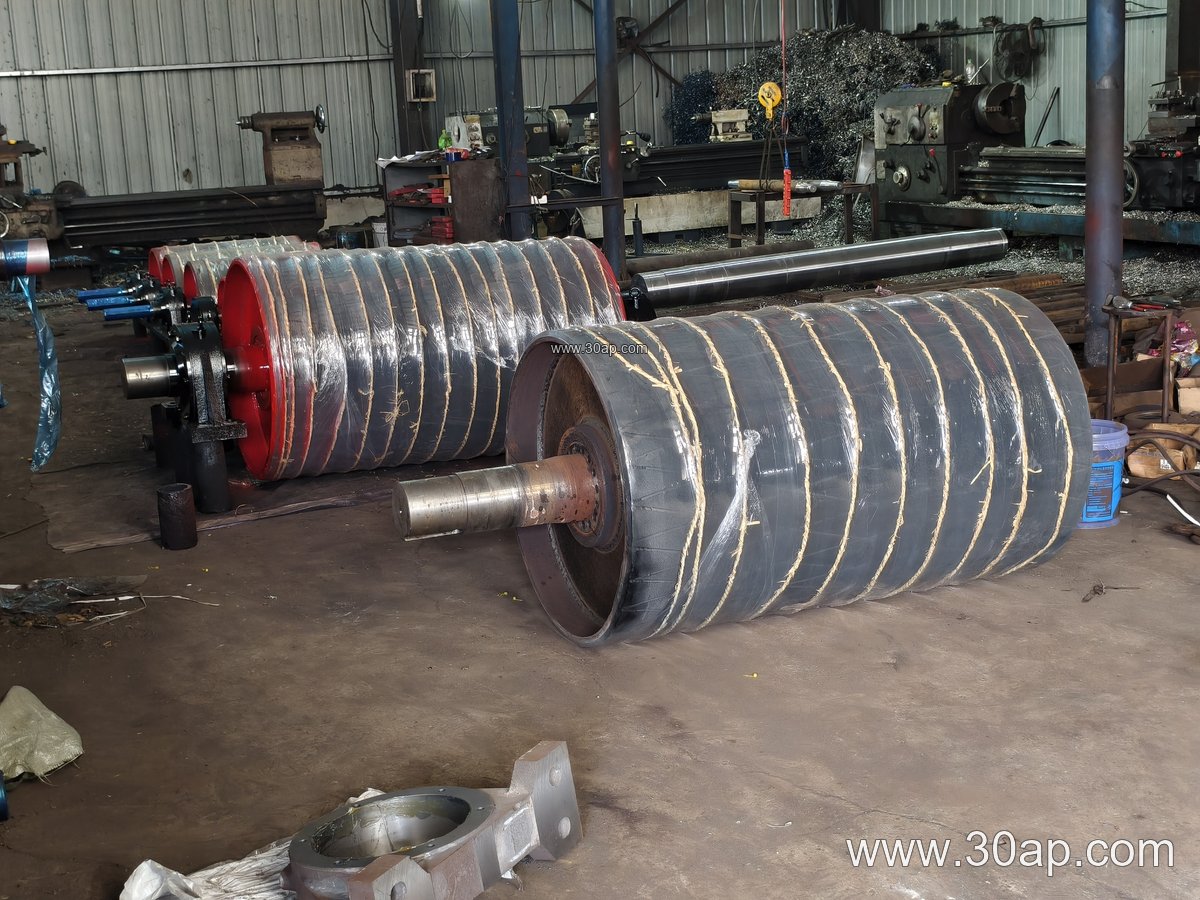
- Belt width B800 with pulley diameter Ø500 and face width around 950 mm
- Belt width B1000 with pulley diameter Ø630 and face width around 1150 mm
- Belt width B1200 with pulley diameter Ø1000 and face width around 1400 mm
- Belt width B1400 with pulley diameter Ø800 and face width around 1600 mm
- Belt width B1600 with pulley diameter Ø1250 and face width around 1800 mm
These are common combinations, not fixed rules. Diameter, face width, shaft size, and lagging are all confirmed by the conveyor design, and a wider belt does not automatically dictate one diameter.
Where It Fits on the Conveyor
The dual drive pulley is normally the head or drive pulley at the discharge end, where the belt wraps the drum and returns. In a coal preparation plant, a cement clinker line, or a power plant coal yard, it pulls the loaded belt and sets the line speed. It is not a tail pulley, a bend pulley, or a take-up pulley, and it should not be swapped for those parts. A tail pulley redirects the belt at the loading end, a bend pulley changes direction along the route, and a take-up pulley maintains tension. Only the drive position carries motor torque.
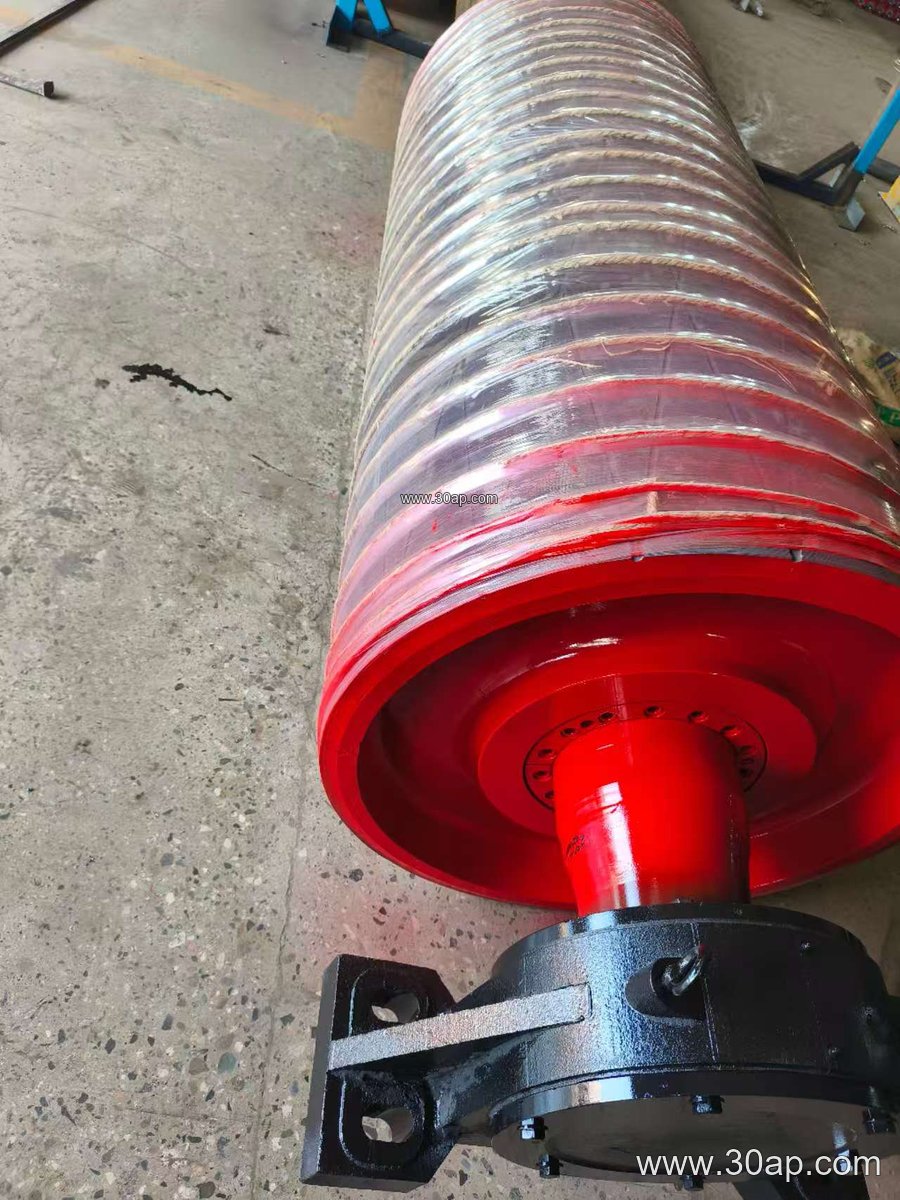
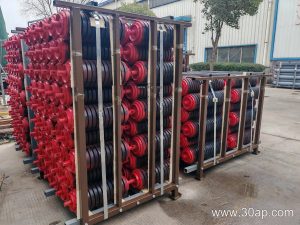
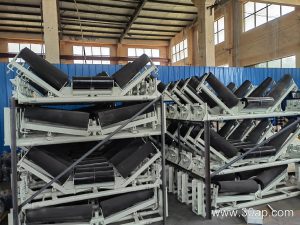
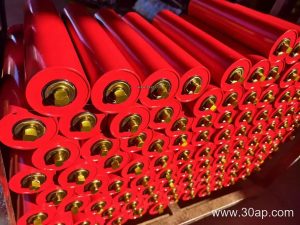
In some layouts the twin drive also appears on a secondary drive station, working with an idler roller train and a set of conveyor bracket frames to keep the belt aligned under high tension. This is common in quarry and aggregate lines where the belt is long and the starting load is heavy.
Matching the Belt and the Duty
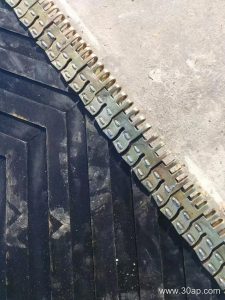
Heavy-duty service usually calls for a robust belt, such as an EP conveyor belt or a steel cord belt, and the pulley lagging should be selected to match. Abrasive rock and ore favor high-friction rubber; wet coal and slurry favor grooved or ceramic surfaces; hot clinker needs heat-resistant lagging and careful bearing protection. A flame retardant belt in an underground coal mine also affects the pulley specification, because the whole drive station must suit the same safety class.
Buyers should confirm the belt width, belt type, motor power per drive, shaft diameter, lagging type and thickness, bearing size, and the mounting position before ordering. It also helps to state the environment: dust, moisture, temperature, and whether the station is indoors or exposed. A dual drive pulley is a long-life component, and getting the interface dimensions right the first time avoids costly rework.
Buyer Checklist
- Confirm drive arrangement: two motors at opposite shaft ends or a split gearbox
- State belt width and belt type, for example EP or steel cord construction
- Provide required diameter and face width from the conveyor design
- Specify lagging form and thickness, such as diamond rubber at 12 mm
- Confirm shaft diameter and bearing housing fit
- Describe the site: coal handling, cement plant, quarry, port, or power station
When these details are clear, the pulley can be built to suit the conveyor rather than forcing the conveyor to suit an off-the-shelf drum.