What a Belt Conveyor Drive Pulley Does
The belt conveyor drive pulley, often called the head pulley or drive drum, is the rotating component that transfers power from the gearbox or motor to the conveyor belt. Friction between the pulley surface and the belt moves the loaded belt forward, so this pulley carries the highest torque in the system. In a quarry or crushed stone plant, the drive pulley sits at the discharge end and must handle constant abrasive material without slipping. It is not the same as a tail, bend, or take-up pulley, which serve different positions and duties.
Construction and Key Parts
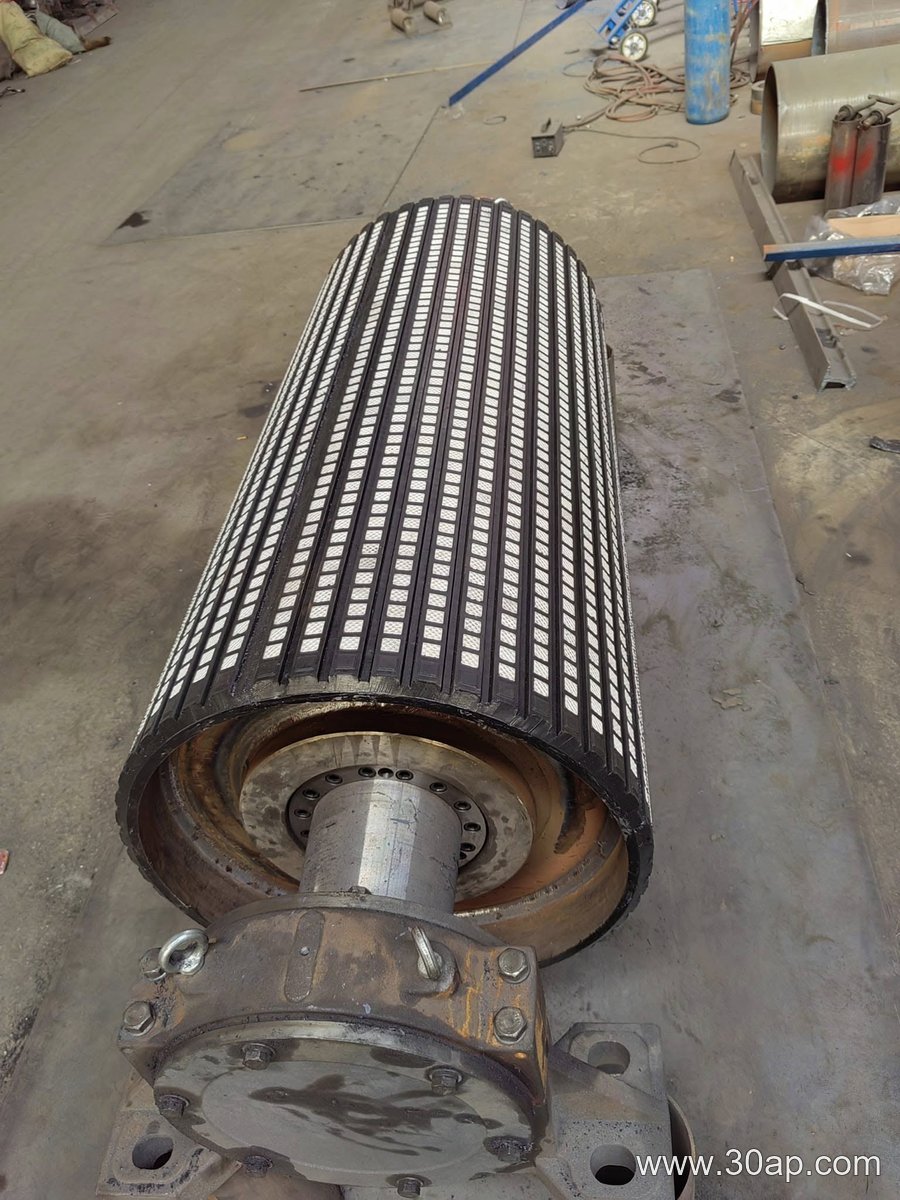
A typical drive pulley is built around a steel shell, two end discs, a shaft, and a locking assembly or keyed hub. The shell may be machined for balance and then covered with rubber, ceramic, or a plain finish. The shaft transmits torque to the shell and is supported by pillow block bearings mounted on a conveyor bracket or frame. The lagging on the shell increases friction and protects the metal from wear. Common surface forms include plain, hot vulcanized rubber, cold bonded rubber, diamond grooved, herringbone, and ceramic lagging. Lagging thickness often ranges from 8 mm to 20 mm depending on belt tension and material conditions.
Where It Is Used
Drive pulleys appear in many bulk material systems. In a coal preparation plant, they move raw coal from crushing to washing. In a cement plant, they feed clinker and additives to grinding mills. Power stations use them on coal handling lines, while sand and gravel operations rely on them for continuous aggregate transport. The same pulley type also works in port bulk terminals, fertilizer plants, and tunnel muck removal. Each location puts different demands on the pulley, so the drive pulley must match the belt width, speed, and load.
Common Sizes and Configurations
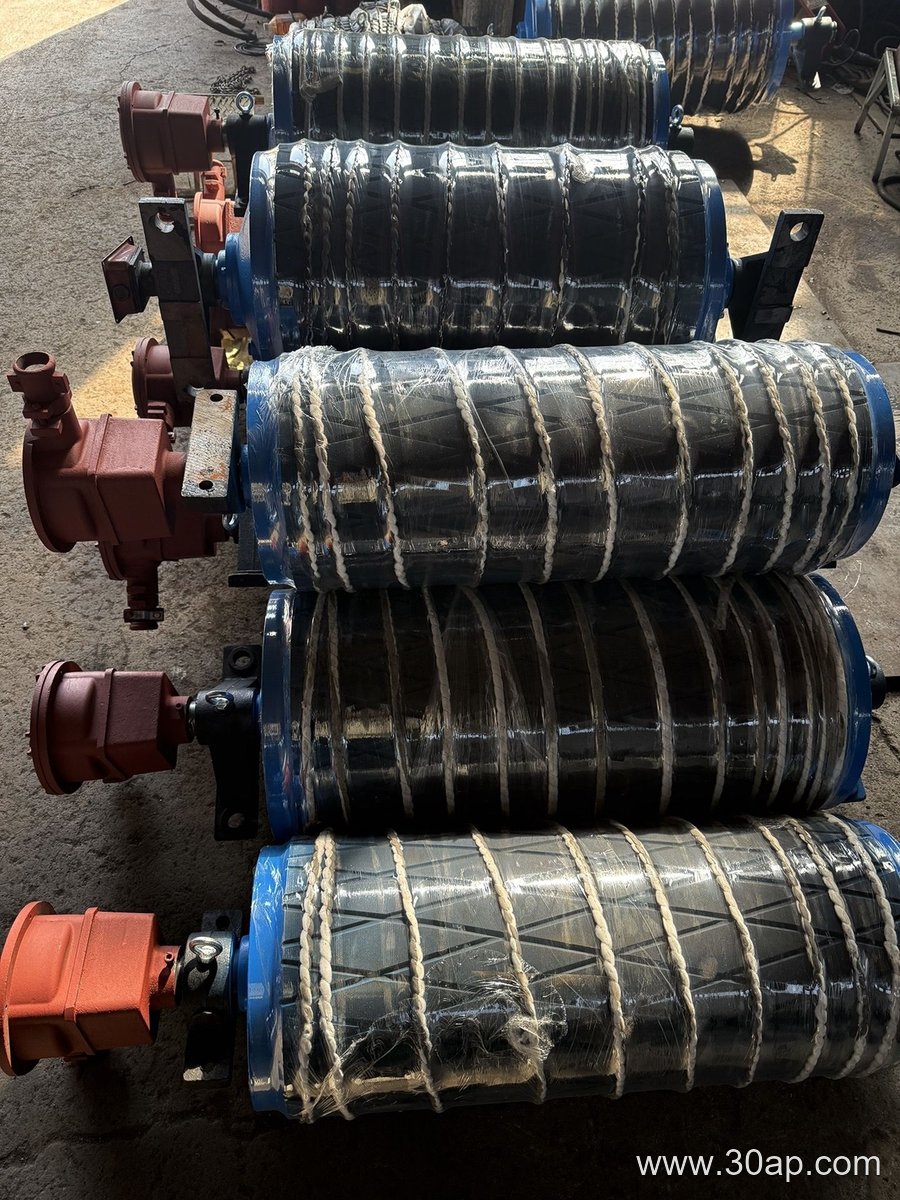
Drive pulleys are selected by belt width, required torque, and shaft load. Belt widths are often B400, B500, B650, B800, B1000, B1200, B1400, B1600, B1800, B2000, and larger. Diameter choices include Ø200, Ø250, Ø315, Ø400, Ø500, Ø630, Ø800, Ø1000, Ø1250, and Ø1400. A wider belt does not automatically require one fixed diameter; the correct combination depends on belt tension, wrap angle, and drive power. The pulley face width is usually greater than the belt width, for example B800 may have a face width near 950 mm, and B1200 may have a face width near 1400 mm. Shaft diameters are commonly Ø50, Ø60, Ø70, Ø80, Ø90, Ø100, Ø120, Ø140, Ø160, Ø180, and Ø200, but the final shaft size is determined by torque and bearing load, not by belt width alone.
| Belt width | Typical pulley face width | Common diameter range |
|---|---|---|
| B500 | about 600 mm | Ø200 to Ø400 |
| B800 | about 950 mm | Ø315 to Ø630 |
| B1200 | about 1400 mm | Ø500 to Ø1000 |
| B1600 | about 1800 mm | Ø630 to Ø1250 |
The table above is a reference guide, not a fixed rule. A B1200 drive pulley may use Ø800 or Ø1000 depending on the conveyor design.
Surface Lagging and Grip
Lagging is a major choice for a drive pulley because it affects friction and belt life. Plain steel works in light, clean duties. Rubber lagging is common in dusty or wet conditions. Diamond or herringbone grooves help channel water and fines away from the contact area. Ceramic lagging offers high wear resistance in abrasive mining and quarry service. The right lagging depends on material moisture, particle size, and whether the belt runs outdoors or in a covered gallery. A poorly chosen surface can cause belt slip, while an overly aggressive surface may increase belt wear.
Selection and Maintenance Notes
Buyers should confirm the belt width, belt speed, motor power, wrap angle, and environmental conditions before ordering a belt conveyor drive pulley. The pulley must be balanced for the intended speed, and the shaft and bearings must be sized for the actual load. During operation, check lagging wear, bearing temperature, and alignment. A misaligned drive pulley can damage the conveyor belt and shorten the life of the idler roller and other components. In a sand and gravel line, regular inspection of the drive pulley helps avoid unplanned downtime. If the pulley is part of a head station, the conveyor bracket and take-up system should also be checked to keep proper belt tension.
Buyer Checklist
- Confirm the exact position: drive, not tail or bend, unless a different function is required.
- Provide belt width, speed, and maximum tension to the supplier.
- Choose lagging based on material abrasiveness and moisture.
- Check shaft diameter against torque and bearing load, not just belt width.
- Verify face width and pulley diameter fit the existing frame and belt path.
- Plan for periodic inspection of lagging, bearings, and alignment.
A well matched drive pulley keeps the conveyor belt moving efficiently in mines, cement works, power plants, and aggregate yards. The product name may appear as a drive drum or head pulley, but its job is the same: transmit power through friction and keep bulk material flowing.