What a Rubber Disc Idler Is
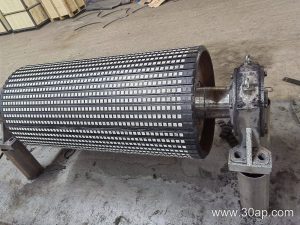
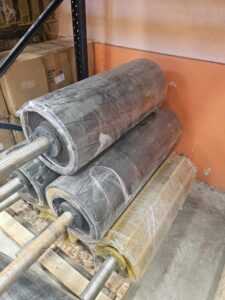
A rubber disc idler is a type of idler roller used on belt conveyors where impact, noise, or material buildup would quickly damage a standard steel roller. Instead of a plain steel shell, the roller carries a series of rubber discs mounted along its shaft. These discs form a flexible, shock-absorbing surface that supports the conveyor belt and cushions falling material at transfer points. The rubber disc idler is often chosen for the carry side where material drops onto the belt, and it can also be used as a return roller in dusty or sticky conditions.
Although the product is sometimes called a rubber ring buffer roller or rubber disc return roller, those names describe the same basic design: a steel core shaft fitted with a stack of rubber discs. It is not a replacement for a drive pulley, tail pulley, or bend pulley — those are conveyor pulleys that transmit power or change belt direction. A rubber disc idler is a supporting component that rotates freely under the belt.
How the Rubber Disc Idler Is Built
The construction is straightforward but important for service life. A typical unit includes:
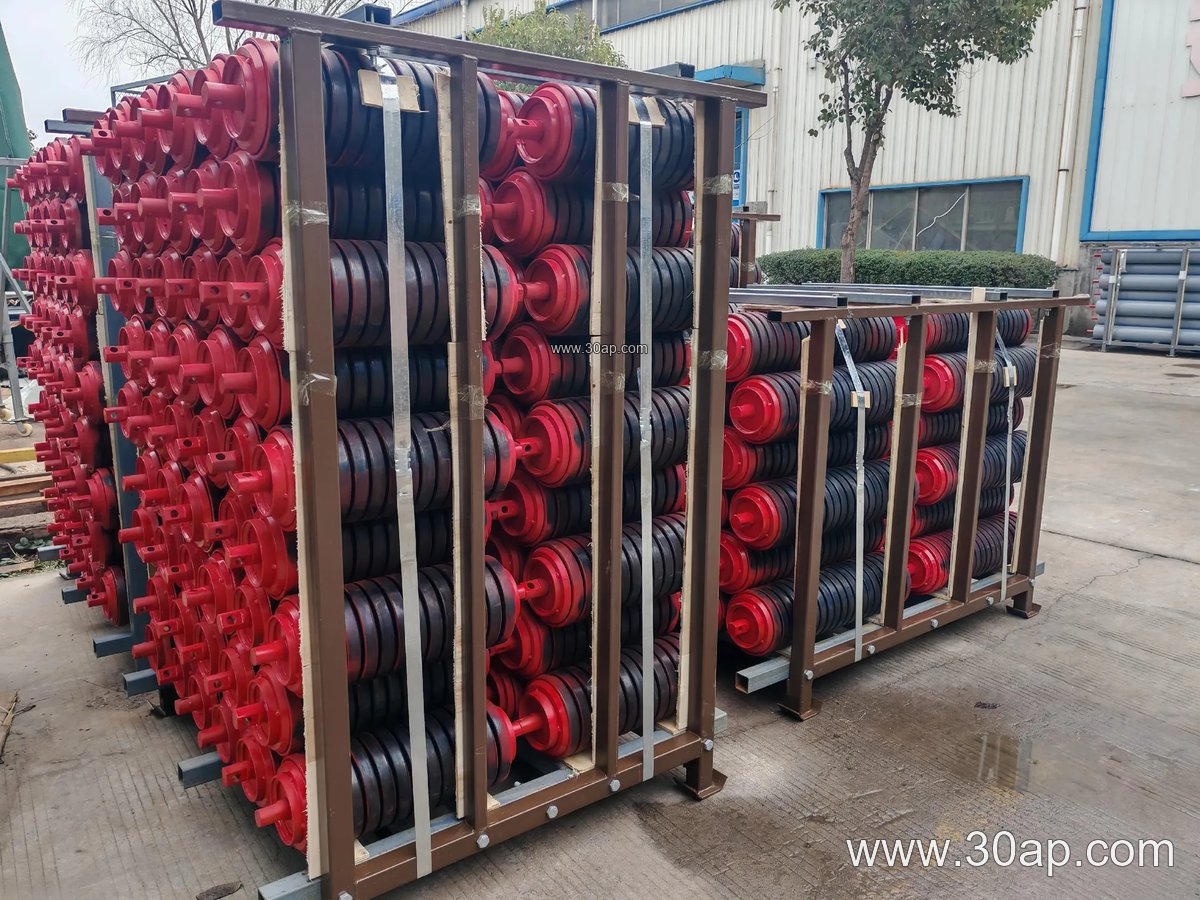
- Shaft — usually a cold-drawn steel shaft with machined ends for bearing housings.
- Bearings — sealed deep-groove ball bearings. Common sizes in idler service include 6204, 6205, 6305, 6306, 6308, and 6310, selected according to load and roller diameter rather than belt width alone.
- Discs — rubber discs, often with fabric or steel reinforcement, pressed or bonded onto the shaft. Disc diameter, thickness, and spacing vary by design.
- Seals — labyrinth or contact seals to keep out dust and water, which is especially important in coal mining, cement plants, and aggregate operations.
The rubber discs are the defining feature. They flex under load, absorbing impact energy from lumpy material and reducing vibration transmitted to the conveyor frame and conveyor bracket. Because the discs are spaced apart, fines and moisture tend to fall through rather than build up on the roller surface.
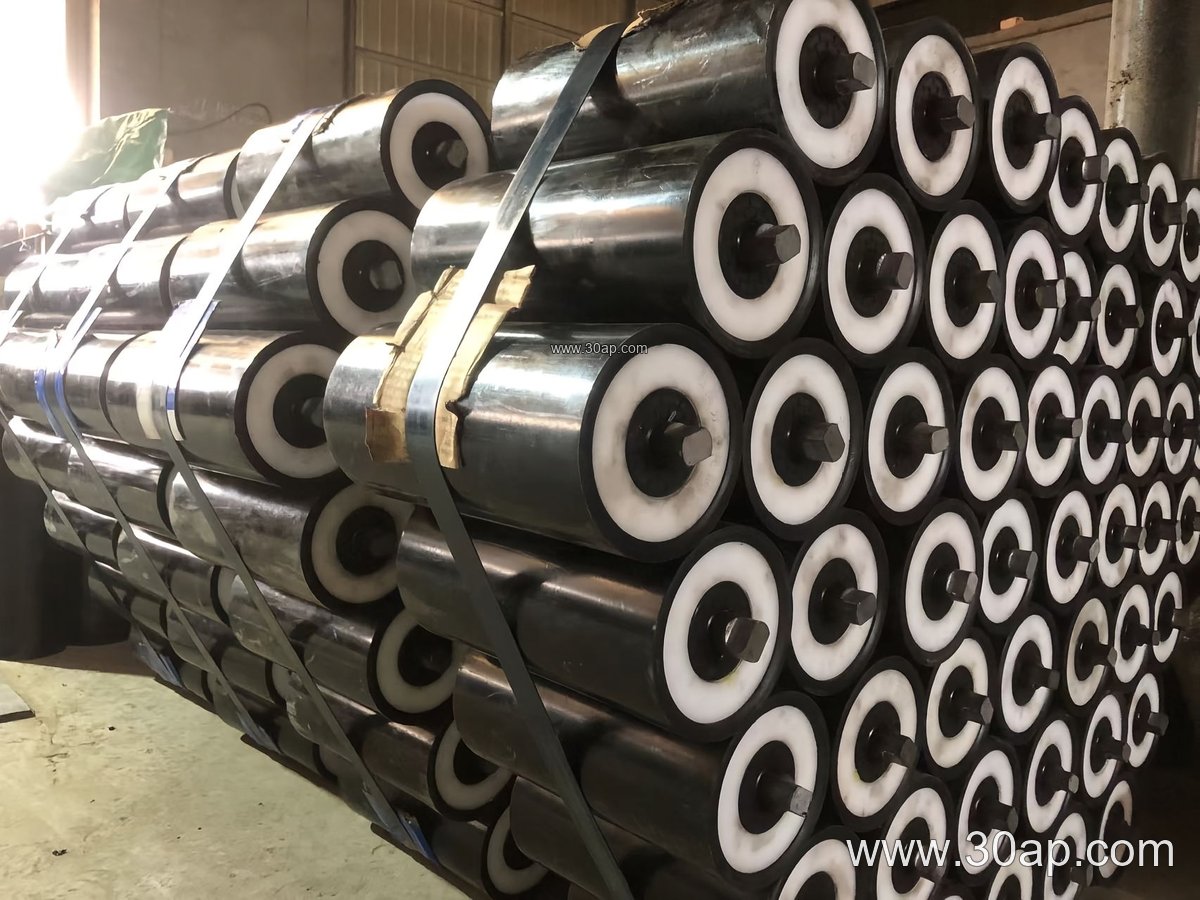
Where Rubber Disc Idlers Are Used
These idlers appear most often at loading points and transfer stations. In a quarry or stone crushing line, run-of-mine rock drops onto the belt from a chute; a rubber disc idler helps protect the belt carcass from impact and extends the life of the support system. In a coal handling plant or underground coal mining conveyor, the disc design also resists sticky coal dust and reduces the risk of material wrapping around the roller.
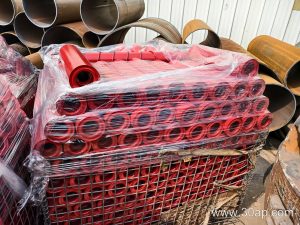
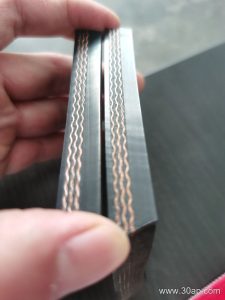
Other common locations include cement plant clinker conveyors, power plant coal yards, and fertilizer or grain handling lines where gentle support is preferred. The idler works alongside other components such as the conveyor belt, conveyor pulley, and frame. It is not a substitute for a troughing idler set in the middle of a long carry section, but it can be combined with standard troughing, impact, or return idlers where conditions justify it.
Typical Sizes and Selection Notes
Rubber disc idlers follow the same general diameter and belt width ranges as other idlers, though exact dimensions are set by the manufacturer and conveyor design. The table below shows common reference values; they are not fixed combinations and should be confirmed with the supplier for each project.
| Parameter | Common reference values |
|---|---|
| Roller diameter | Ø63, Ø76, Ø89, Ø102, Ø108, Ø127, Ø133, Ø159, Ø178, Ø194, Ø219 mm |
| Belt width | B400, B500, B650, B800, B1000, B1200, B1400, B1600, B1800, B2000, B2200, B2400 |
| Disc material | Rubber, rubber with fabric reinforcement, anti-static or flame-retardant rubber compounds |
| Bearing sizes | 6204, 6205, 6305, 6306, 6308, 6310 (selected by load and diameter) |
When selecting a rubber disc idler, consider the belt width, the lump size and drop height at the loading point, the ambient conditions, and the required bearing life. A wider belt does not automatically dictate one shaft diameter; the shaft and bearing are chosen from the actual load and roller span. For high-abrasion service, such as iron ore or copper ore conveyors, check that the rubber compound suits the duty. In underground coal mining, flame-retardant and anti-static properties may be required for the belt and components.
Maintenance and Buyer Checklist
Rubber disc idlers are relatively low-maintenance, but regular inspection pays off. Check for loose discs, cracked rubber, worn bearing seals, and any sign of material buildup between discs. A seized bearing will cause the belt to drag and can damage the rubber conveyor belt edge. Keep the frame clean and confirm that the idler rotates freely by hand during shutdowns.
Buyers should ask for the disc hardness, rubber grade, bearing brand or specification, shaft material, and sealing method. If the conveyor operates in a coal mine, cement plant, or port, state the environment clearly so the supplier can recommend the right compound. Remember that a rubber disc idler is a support component; it works with the belt, pulleys, and brackets as a system. Matching it to the actual conveyor duty — rather than choosing by belt width alone — gives the best result.