Tail Bend Pulley Basics
A tail bend pulley is a direction-changing roller positioned near the tail end of a belt conveyor. Unlike the drive pulley that transmits power or the tail pulley that serves as the terminal return point, the tail bend pulley redirects the conveyor belt to maintain proper wrap angle and belt tension. In quarry, cement, and power plant coal handling lines, this component helps route the belt around structural constraints without altering the fundamental layout of the conveyor.
Construction and Key Components
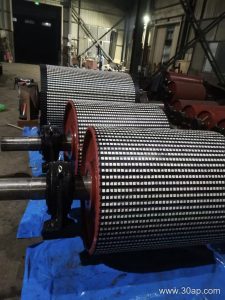
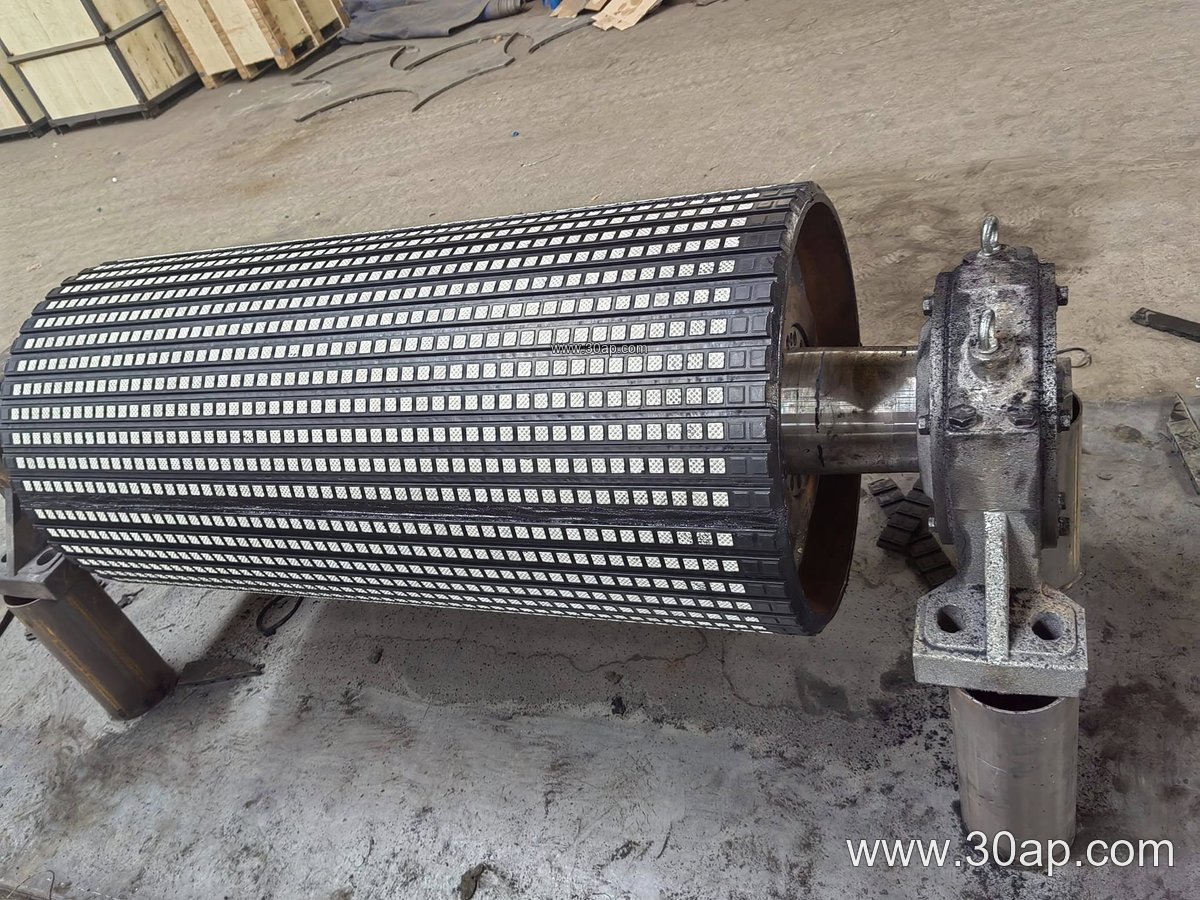
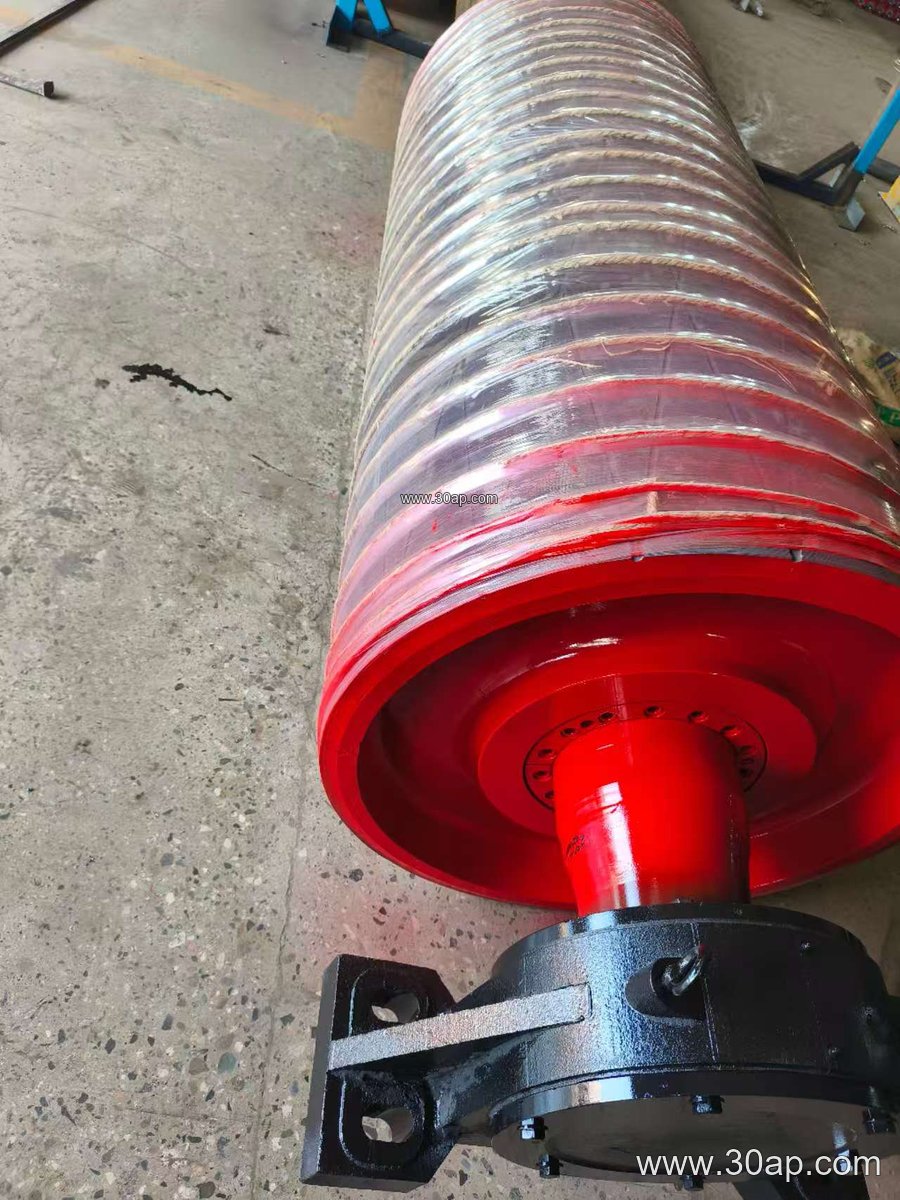
This pulley typically consists of a cylindrical shell, shaft, bearing housings, and a lagging surface. The shell is often fabricated from steel pipe or rolled plate, with welded end discs for strength. Shafts are sized according to torque and load—common diameters include Ø50, Ø60, Ø70, Ø80, and up to Ø200 mm—but the exact shaft diameter should be determined by the conveyor designer, not by belt width alone. Bearing selection follows the radial and axial loads expected in the application. Surface options range from plain steel to rubber lagging applied by cold bonding, hot vulcanization, or ceramic tiles. Lagging thicknesses of 8, 10, 12, 15, or 20 mm are frequently specified to improve traction or protect the shell.
Role in the Conveyor Layout
In a typical conveyor profile, the tail bend pulley is mounted near the tail pulley to guide the returning belt. It creates an S-shaped path that increases the contact angle on the tail pulley or redirects the belt toward a tensioning device. This arrangement is common in aggregate crushing plants and coal mines where space is limited and the belt must change direction without using a separate snub pulley. The tail bend pulley does not drive the belt; it only changes its direction, so it is not interchangeable with a drive pulley or a head pulley.
Common Specifications
Tail bend pulleys are available in a range of belt widths and diameters. The table below shows typical combinations, but these are reference values—each project requires its own engineering check.
| Belt Width (mm) | Common Pulley Diameter (mm) | Typical Face Width (mm) |
|---|---|---|
| B500 | Ø250, Ø315 | 600 |
| B650 | Ø315, Ø400 | 750 |
| B800 | Ø400, Ø500 | 950 |
| B1000 | Ø500, Ø630 | 1150 |
| B1200 | Ø630, Ø800 | 1400 |
| B1400 | Ø800, Ø1000 | 1600 |
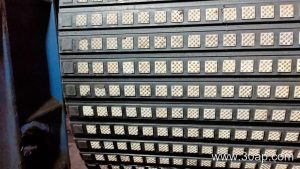
Surface options for tail bend pulleys often include plain finish, diamond pattern rubber, or ceramic lagging. The choice depends on whether the pulley needs extra grip or wear protection in dusty, wet, or abrasive conditions. For example, a cement plant handling clinker might prefer ceramic lagging to resist wear, while a sand and gravel operation may use diamond rubber for better tracking.
Where It Fits in Different Industries
In a limestone quarry, a tail bend pulley can help route the conveyor belt around a transfer tower, keeping the belt aligned before it enters the next crushing stage. In a coal-fired power plant, it may be used to guide the return belt toward a gravity take-up system. The same component appears in fertilizer granulation lines and grain silos, where gentle belt routing is needed to avoid spillage. Because the tail bend pulley works with the conveyor belt and idler rollers, its design must consider the belt’s stiffness and the overall tension distribution.
Buyer Checklist
- Confirm the belt width and the required pulley diameter with your conveyor designer; do not assume a fixed ratio.
- Specify the shaft diameter based on torque and load calculations, not on belt width alone.
- Choose the lagging type and thickness that match the environment—abrasive, wet, or oily.
- Check that the bearing housings and conveyor bracket dimensions fit the available mounting space.
- Ask for the pulley’s dynamic balance grade if the conveyor runs at high speed.
When selecting a tail bend pulley, remember that it is a directional component, not a drive or tail pulley. Its proper function depends on correct integration with the conveyor belt, idler rollers, and support structure. A well-matched pulley improves belt tracking and reduces wear, while a mismatched one can cause misalignment and premature failure.