What a Flame Retardant Conveyor Belt Is
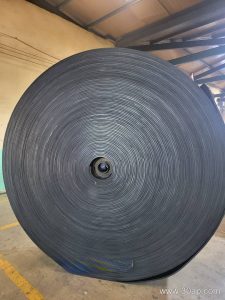
A flame retardant conveyor belt is a rubber or PVC conveyor belt engineered so that it resists ignition, limits flame spread, and self-extinguishes once the ignition source is removed. It is often called a fire-resistant conveyor belt, and both names describe the same product: a belt whose cover compound and carcass are formulated for fire-sensitive duty. The belt still carries material like any other conveyor belt, but its formulation is chosen for environments where sparks, friction heat, or smoldering material are real risks.
Flame resistance is not a single property. It combines resistance to ignition, limited propagation of flame along the belt, and controlled afterglow. For this reason, buyers should treat the flame retardant conveyor belt as a system product rather than as a rubber sheet with an additive.
How the Belt Is Built
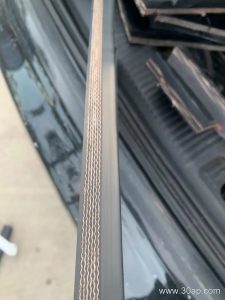
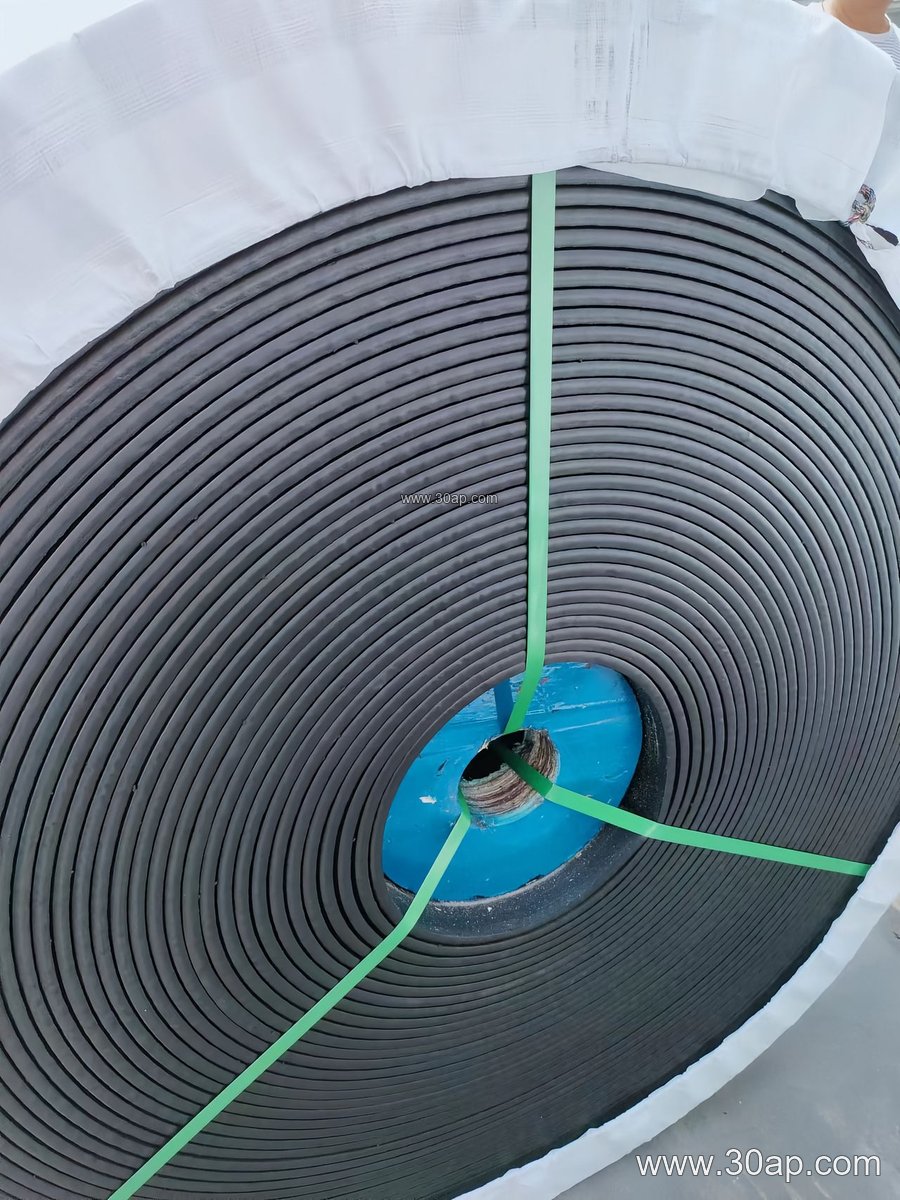
Construction follows the usual layered logic. A top cover and bottom cover protect the carcass, while the carcass provides tensile strength and troughability. In flame retardant grades, the cover compound, the skim rubber, and often the carcass treatment are all selected for fire performance.
- Cover compounds are commonly based on PVC, chloroprene, or specially formulated rubber, with flame retardant fillers and antimony or halogen-free systems depending on the design.
- Carcass options include EP fabric, NN nylon fabric, and steel cord, with 2 to 6 fabric plies being common in general industrial use.
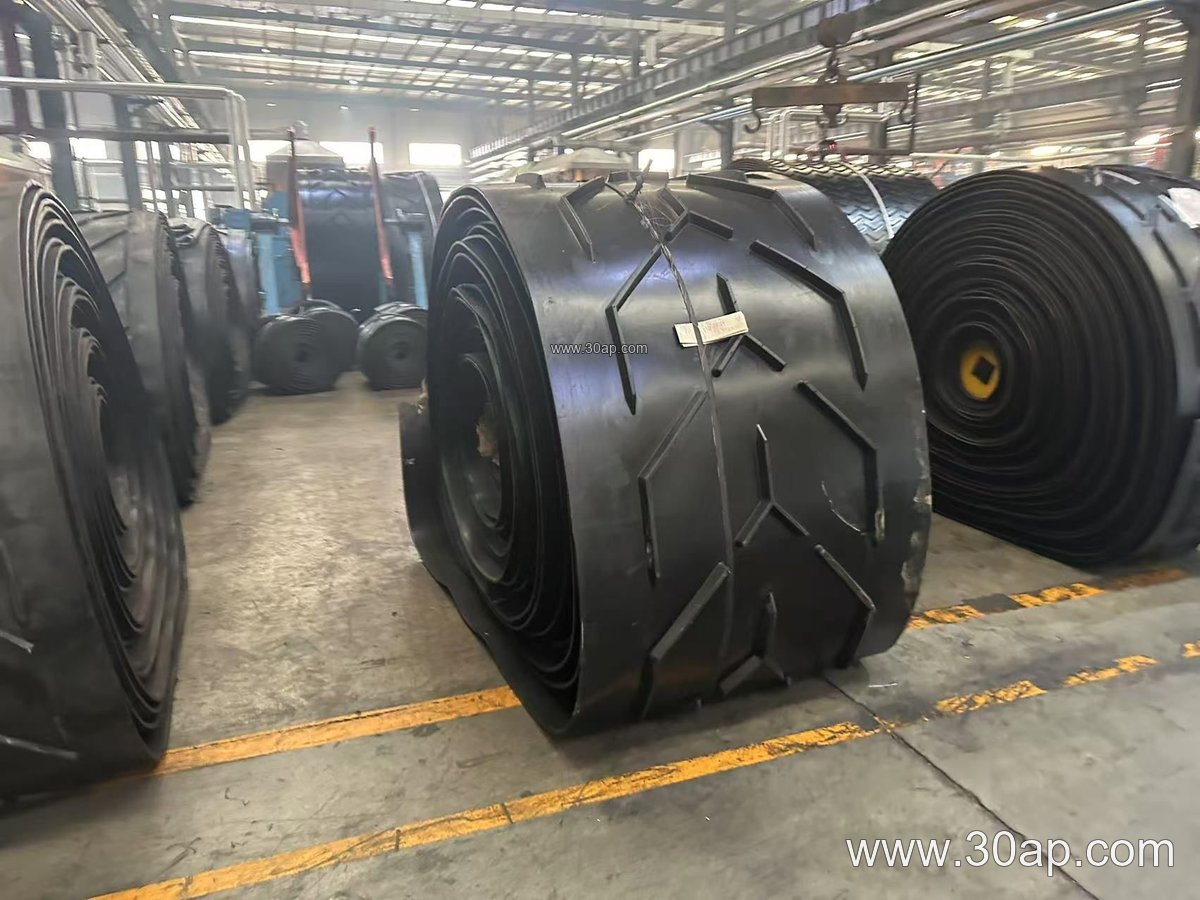
- Surface forms may be smooth, patterned, chevron, or with corrugated sidewalls when the route needs material retention.
- Antistatic behavior is frequently requested together with flame resistance, because static discharge can be an ignition source on a moving conveyor belt.
Cover thickness is usually stated as top plus bottom, for example 3+1.5 mm, 4+2 mm, 5+2 mm, 6+2 mm, or 8+3 mm. These are common combinations, not universal requirements, and the final build should follow the design and the supplier’s data sheet.
Common Strength and Width Ranges
Flame retardant belts are produced in the same strength families as general-purpose fabric belts. Typical EP grades include EP200, EP315, EP400, EP500, EP630, EP800, EP1000, EP1250, EP1600, and EP2000. Widths are commonly quoted as B500, B650, B800, B1000, B1200, B1400, B1600, B1800, and B2000.
| Parameter | Common reference values |
|---|---|
| Strength series | EP200 to EP2000, or NN equivalents |
| Belt width | B500, B650, B800, B1000, B1200, B1400, B1600, B1800, B2000 |
| Cover thickness | 3+1.5, 4+2, 5+2, 6+2, 8+3 mm |
| Carcass plies | Usually 2 to 6 fabric layers |
| Surface form | Smooth, patterned, chevron, corrugated sidewall |
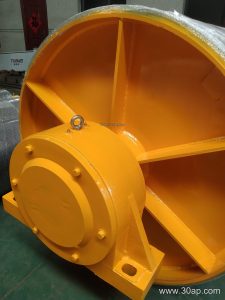
Belt width and pulley diameter are matched through conveyor design, not by a fixed rule. A wider belt does not automatically require one specific pulley size, and shaft diameter must be calculated from belt tension, load, and pulley geometry rather than guessed from width alone.
Where Fire-Resistant Belts Are Used
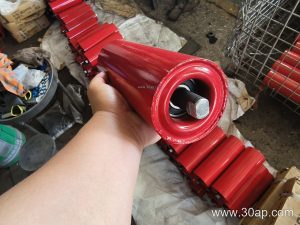
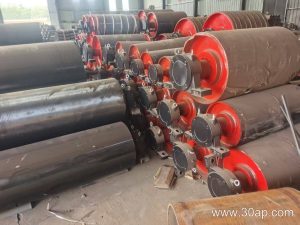
These belts suit plants where a spark or a hot spot could start a fire that travels along the belt path. Typical settings include coal handling in mines and coal preparation plants, cement kilns and clinker conveyors, power plant fuel yards, sand and gravel plants handling dusty material, and fertilizer or chemical lines where the product itself may burn. In such plants the belt works alongside conveyor pulleys, idler rollers, and conveyor brackets, and fire safety depends on the whole conveyor, not only on the belt.
In coal mines and power plants, the belt may run in enclosed galleries where smoke and flame spread are especially serious. In cement and sand plants, hot clinker or friction from a seized idler roller can be the ignition source. In all cases, the flame retardant conveyor belt should be combined with proper belt alignment, free-turning rollers, and prompt removal of spillage.
What Buyers Should Confirm
A buyer should confirm the requested flame performance, the antistatic requirement, the strength grade, the belt width, cover thickness, and the number of plies. Ask how the belt behaves after flame removal, how covers and splices are made, and whether the belt is intended for a drive pulley, tail pulley, or bend pulley layout. A splice is often the weakest point in fire performance, so splicing materials should match the belt’s flame retardant grade.
- Check that the quoted strength and cover thickness suit the actual load and material abrasion.
- Confirm the belt width and pulley dimensions as a matched conveyor design.
- Keep idler rollers turning freely and clean material buildup from pulleys and brackets.
- Store belts away from heat and oil, and inspect covers for cuts that expose the carcass.
Maintenance matters as much as the initial grade. A worn cover or a damaged splice can reduce fire performance, so scheduled inspection of the belt, conveyor pulley lagging, and idler roller condition keeps a flame retardant conveyor belt doing the job it was selected for.