What a Heavy-Load Belt Conveyor Idler Does
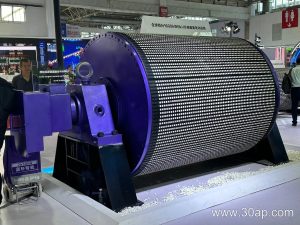
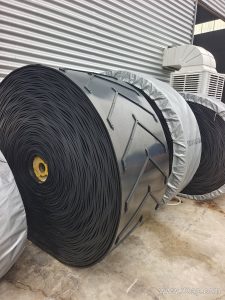
A heavy-load belt conveyor idler is the rotating support that carries a loaded conveyor belt between the head and tail ends of a bulk handling system. In everyday plant language it is often called a heavy-duty conveyor roller or a heavy-load carrying idler. It is not a drive pulley, a tail pulley, or a bend pulley; those are separate components that transmit power or change belt direction. The idler simply supports the belt and the material on it, while allowing the belt to move with low resistance.
Because the load can be substantial, the idler must handle continuous radial force, dust, moisture, and occasional impact. A well-built heavy-load belt conveyor idler therefore combines a strong shell, a sealed bearing housing, and a shaft that fits the conveyor bracket without play.
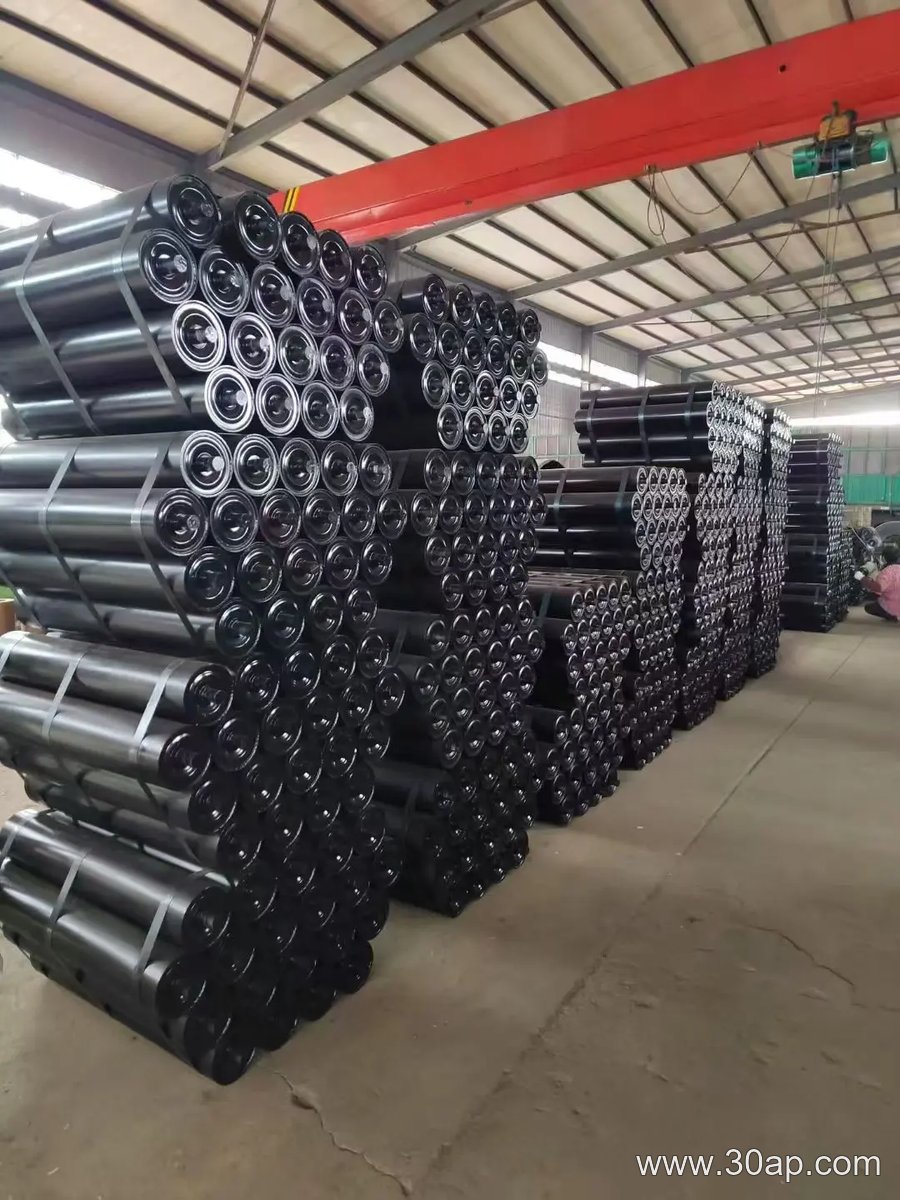
How a Heavy-Load Idler Is Built
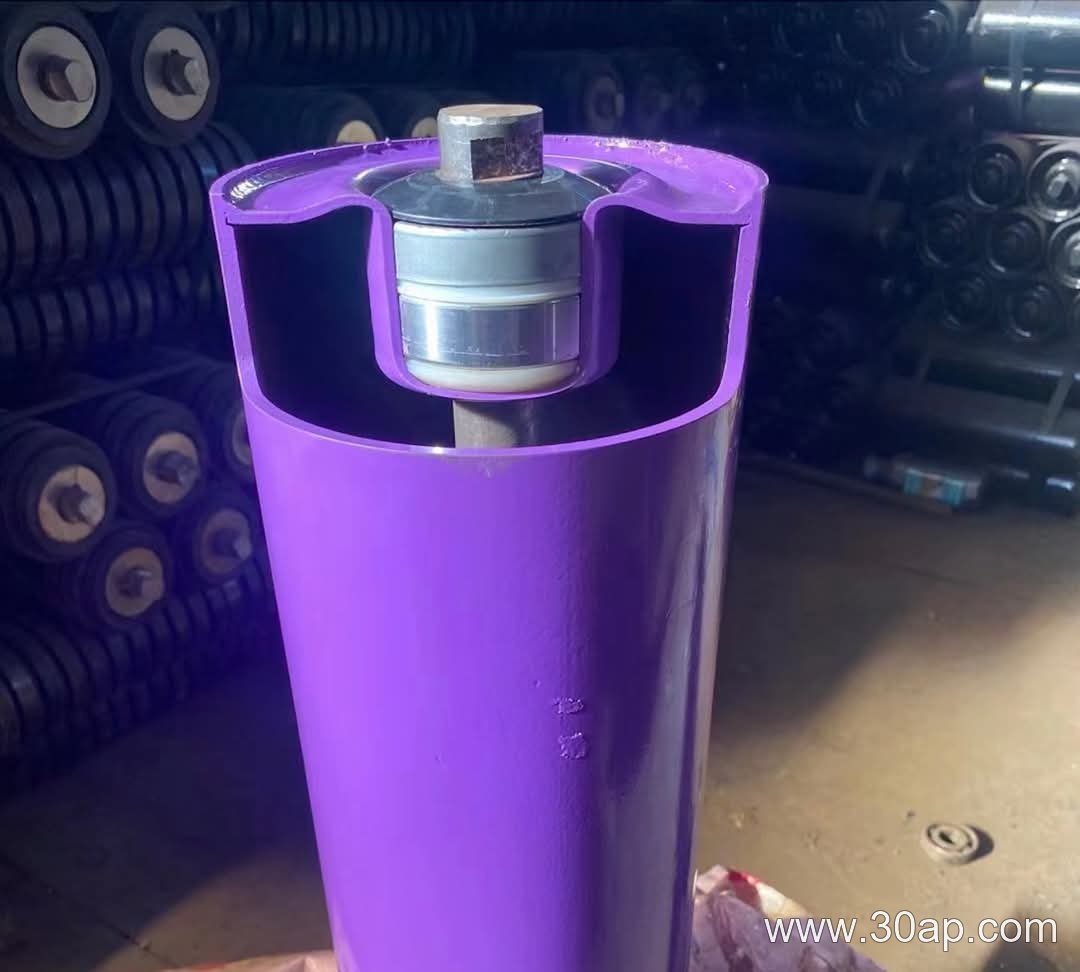
The main parts are the roller shell, the bearing seats, the shaft, and the sealing arrangement. The shell is usually steel tube, but nylon, ceramic, or rubber-covered surfaces appear where abrasion or material build-up is a concern. The bearing size is selected from the load and speed, not from belt width alone. Common bearing numbers include 6204, 6205, 6305, 6306, 6308, and 6310, but a given roller diameter may accept more than one bearing depending on the design.
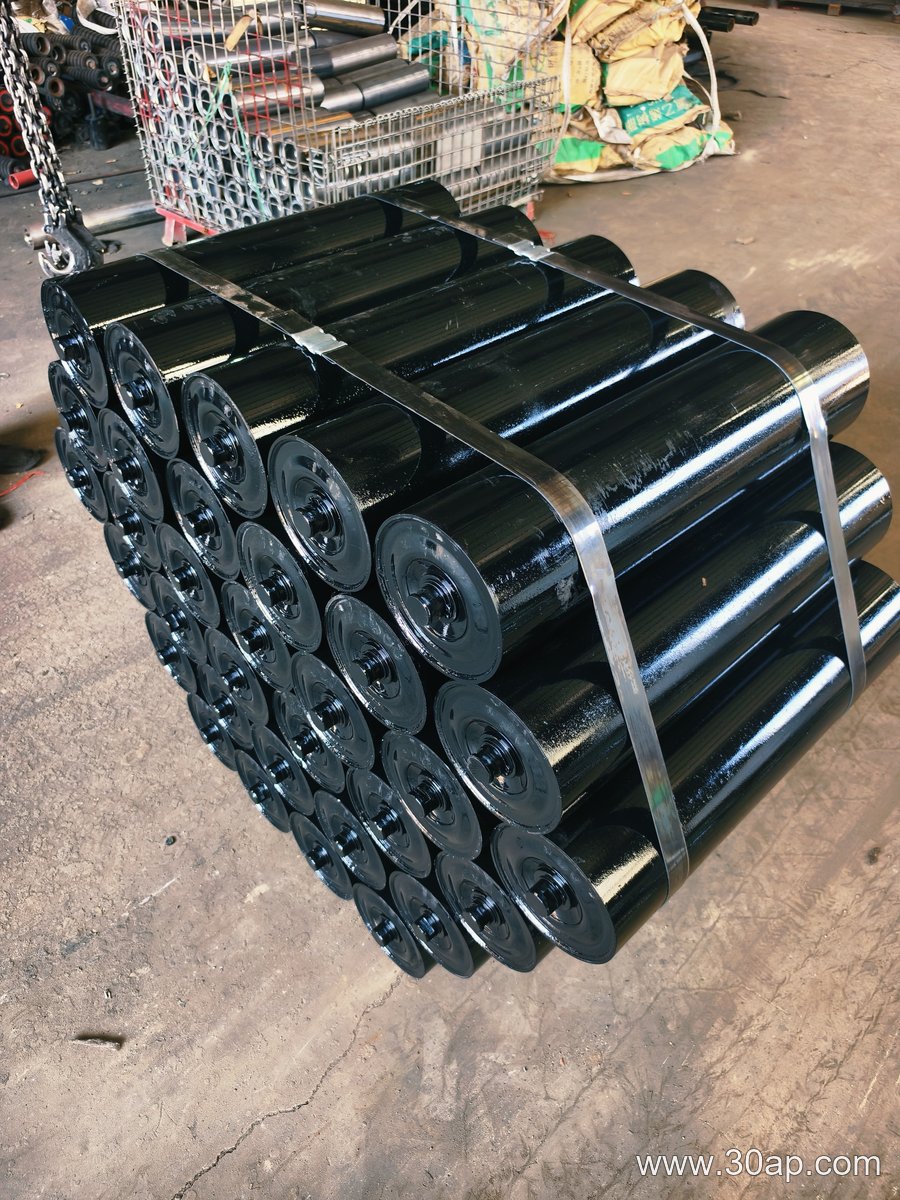
Sealing is critical in dusty conditions. Labyrinth seals, contact seals, and grease-filled cavities are used to keep fine particles away from the bearing. The shaft ends are machined to sit in a conveyor bracket, and the overall roller length must match the belt width, trough angle, and idler arrangement.
Common Types and Where They Fit
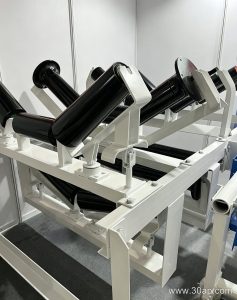
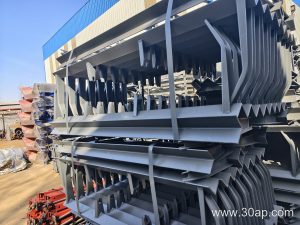
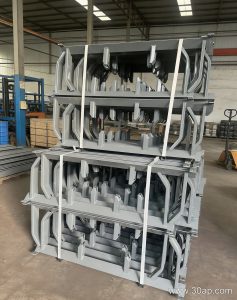
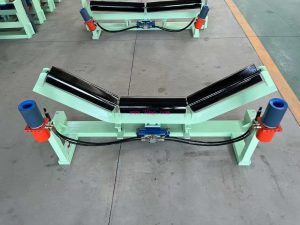
On the carrying side, a three-roll troughing set is the most common arrangement. The trough angle may be 20, 30, 35, or 45 degrees. A transitional idler is sometimes placed near a pulley to help the belt change from flat to troughed. On the return side, a flat return idler or a V-return idler supports the empty belt. Impact idlers with rubber rings are used under a loading chute, while self-aligning idlers help correct belt tracking. Spiral idlers are chosen where sticky material tends to build up on the roller surface.
These are different idler types, not replacements for one another. A heavy-load belt conveyor idler for the carrying side is not the same as a return idler, and neither should be confused with a conveyor pulley.
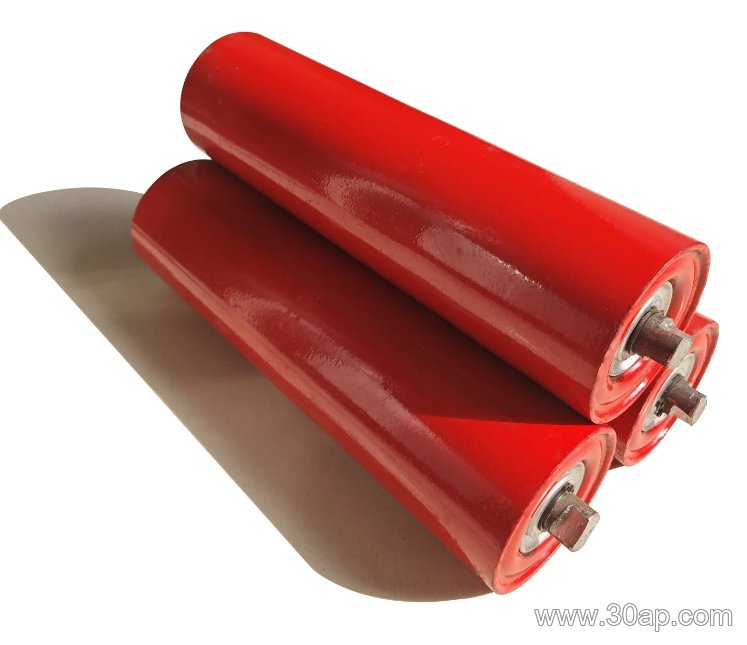
Sizes and Reference Data
The table below gives common reference values. They are examples, not fixed rules, and final dimensions should follow the conveyor design.
| Item | Common reference values |
|---|---|
| Roller diameter | Ø63, Ø76, Ø89, Ø102, Ø108, Ø127, Ø133, Ø159, Ø178, Ø194, Ø219 mm |
| Belt width | B400, B500, B650, B800, B1000, B1200, B1400, B1600, B1800, B2000, B2200, B2400 |
| Trough angle | 20°, 30°, 35°, 45° |
| Roller surface | Steel tube, nylon, ceramic, rubber rings |
| Bearing | 6204, 6205, 6305, 6306, 6308, 6310 |
Roller length changes with belt width, trough angle, and the number of rolls in the set. For a three-roll troughing set, typical roller lengths are about 200 mm for B500, 250 mm for B650, 315 mm for B800, 380 mm for B1000, 465 mm for B1200, 530 mm for B1400, 600 mm for B1600, 670 mm for B1800, and 750 mm for B2000. The side rollers and center roller can differ, so these figures are only a starting point.
Where Heavy-Load Idlers Are Used
These idlers are common in a quarry or a limestone mine where large lumps and abrasive rock put constant stress on the belt line. They also appear in a coal preparation plant, where dust and moisture demand good sealing. In each case, the idler must match the conveyor belt, the conveyor bracket, and the surrounding structure.
What a Buyer Should Check
- Confirm the roller diameter and shaft end fit the existing bracket.
- Match the bearing and seal to the actual dust and moisture level.
- Check the trough angle and roller length against the belt width and idler set.
- Decide whether a standard steel roller is enough or whether a rubber-covered impact idler is needed at the load point.
- Ask for the roller runout and rotating resistance if the belt speed is high.
A heavy-load belt conveyor idler is a wear part, so consistency matters more than a single impressive number. When the roller, bearing, and seal work together, the belt runs straighter, the motor draws less power, and maintenance intervals become more predictable.