What a Rubber Disc Return Idler Does
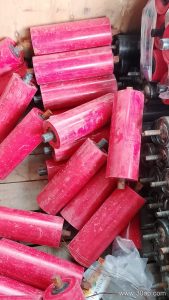
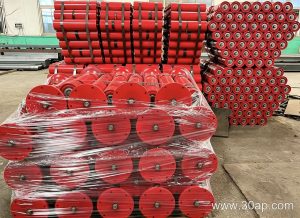
A rubber disc return idler is a lower-run idler roller built with a series of rubber discs mounted along a steel shaft or tube. It supports the returning conveyor belt and, because the rubber rings are spaced apart, lets loose material fall away instead of packing around a smooth shell. In a sand and gravel line, a cement plant, or a coal handling system, this behavior keeps the return side of the conveyor belt cleaner and reduces build-up that can misalign the belt or wear the idler.
This article refers to the same product by its common shop-floor name, the rubber ring return roller. Both terms describe the lower idler with rubber discs, not a grooved training idler or a cushion idler used under a loading point.
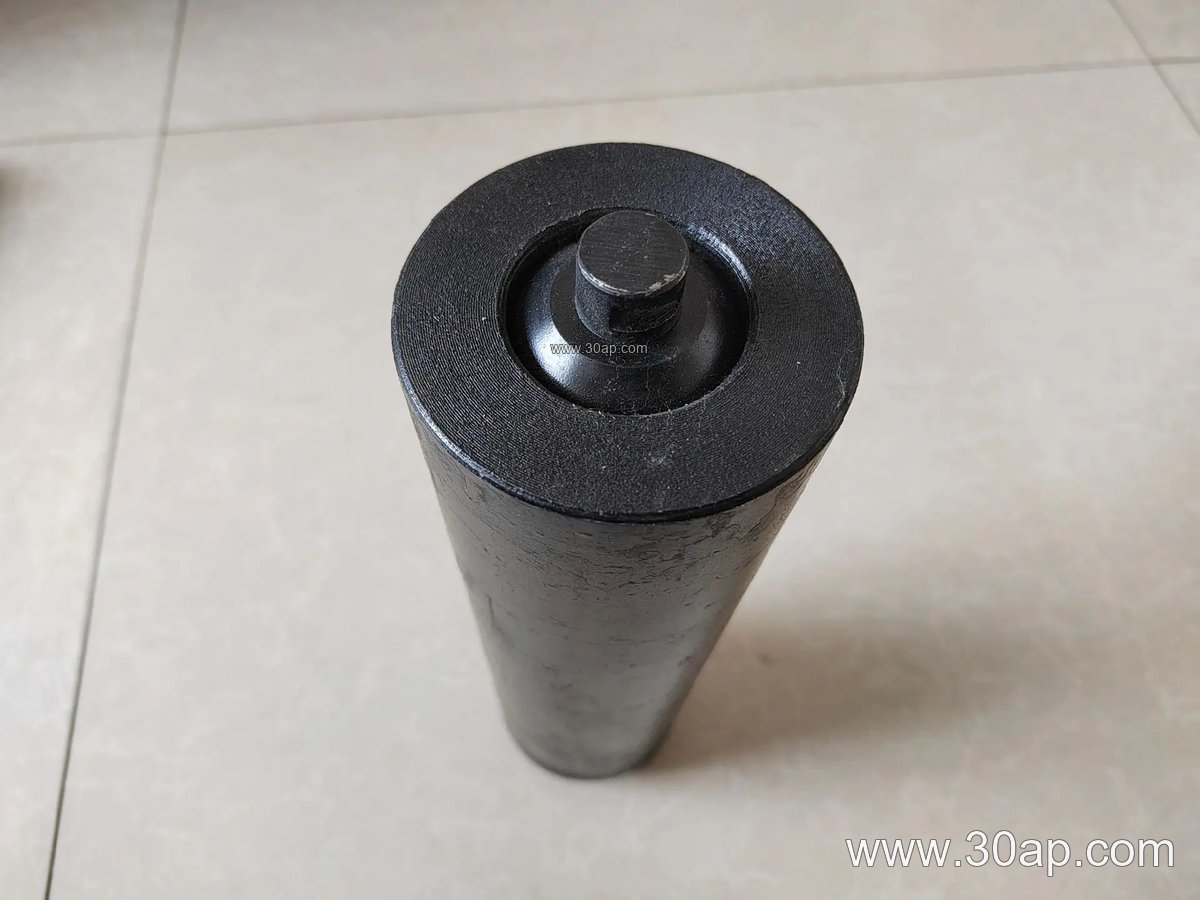
How the Rubber Disc Return Idler Is Built
The usual construction starts with a steel tube or shaft, sealed bearing housings at each end, and a stack of rubber discs pressed between retaining rings. Disc spacing, disc thickness, and rubber hardness are selected by the manufacturer for the belt width and the material being carried.
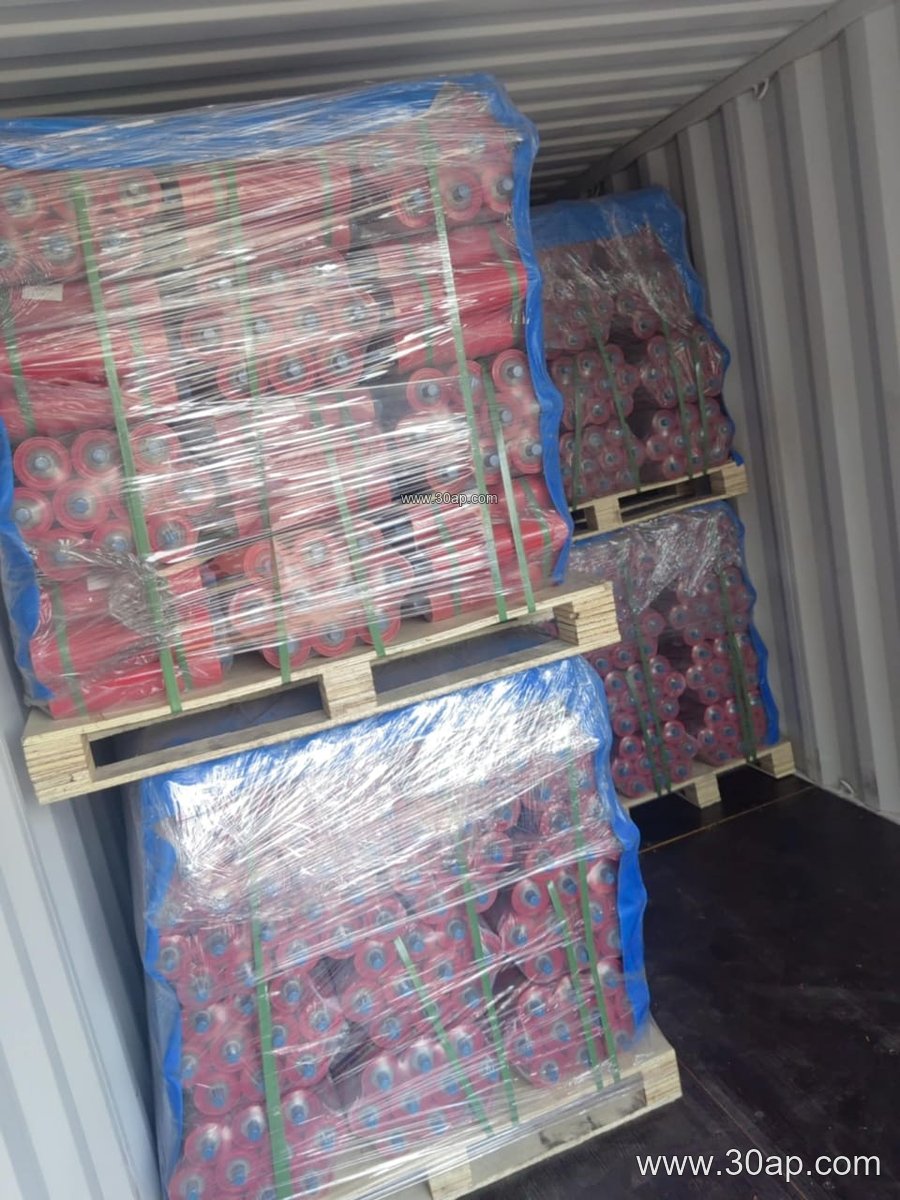
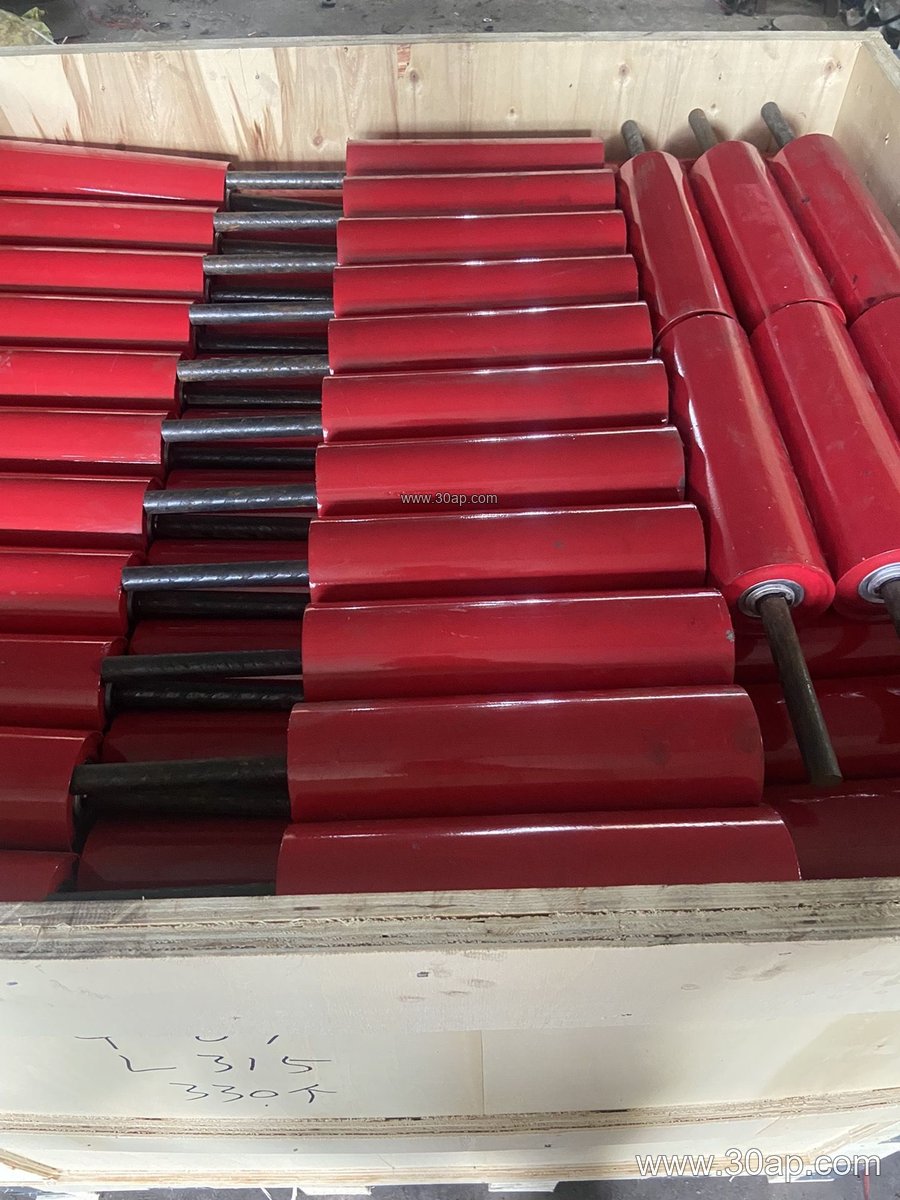
- Roller shell: steel tube with rubber discs, sometimes called a rubber ring surface.
- Bearing arrangement: common sizes include 6204, 6205, 6305, 6306, 6308, and 6310, matched to load and shaft design.
- Sealing: labyrinth or contact seals help keep dust out in crushing and screening areas.
- Mounting: the idler sits in a conveyor bracket on the return strand, often as a single roller.
Because the discs are flexible, they can absorb some impact and help shed sticky fines. That is a practical difference from a plain flat return idler, which may collect material on a continuous steel surface.
Common Sizes and Configuration Reference
The table below gives common reference values for return idlers in this family. These are examples, not fixed combinations; final dimensions follow the conveyor design.
| Parameter | Common reference values |
|---|---|
| Roller diameter | Ø63, Ø76, Ø89, Ø102, Ø108, Ø127, Ø133, Ø159, Ø178, Ø194, Ø219 mm |
| Belt width | B400, B500, B650, B800, B1000, B1200, B1400, B1600, B1800, B2000, B2200, B2400 |
| Surface form | Rubber disc / rubber ring |
| Bearing | 6204, 6205, 6305, 6306, 6308, 6310 |
| Mounting group | Single-roller return set in a conveyor bracket |
Roller length follows belt width and the return idler arrangement. For a three-roll troughing set, common roll lengths are roughly 200 mm at B500, 250 mm at B650, 315 mm at B800, 380 mm at B1000, 465 mm at B1200, 530 mm at B1400, 600 mm at B1600, 670 mm at B1800, and 750 mm at B2000. A return idler is usually a single roller across the belt, so its length is set by the belt width and bracket spacing rather than by troughing side-roll values.
Where It Fits on the Conveyor
The rubber disc return idler belongs on the return strand, after the material has been discharged. It is common in a quarry, a limestone mine, an iron ore plant, a power station coal yard, and a concrete batching plant where fine dust and spillage are present. It should not be confused with a bend pulley or a tail pulley; those are conveyor pulleys that change belt direction, while the return idler only supports the belt.
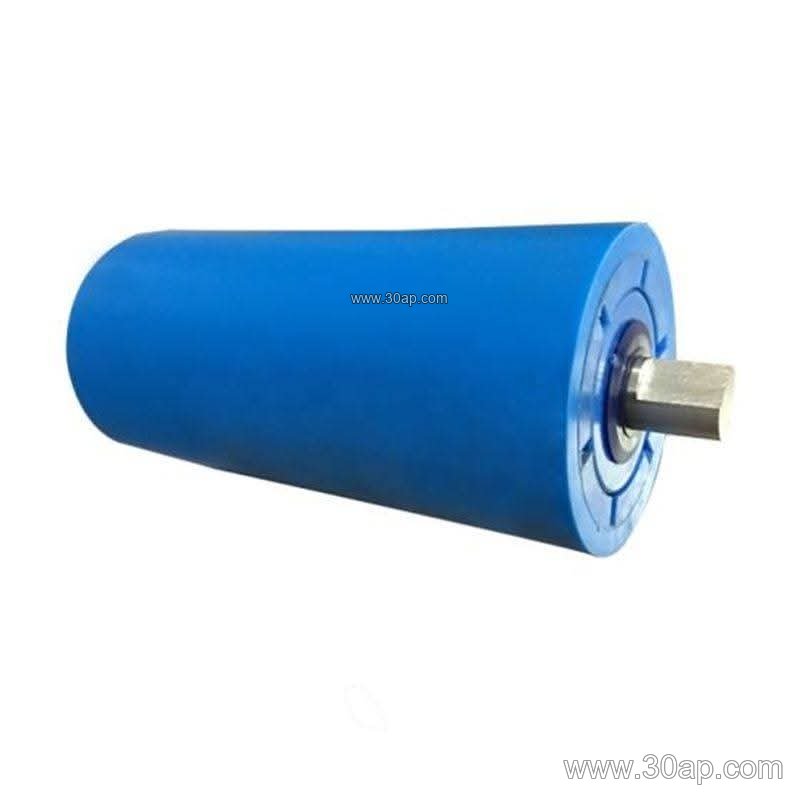
In a crushing and screening circuit, the return roller is often one of the first components to show wear from grit. Rubber discs tend to release that grit rather than hold it, which is why operators choose this surface form on the dirty side of the conveyor.
Buyer Checklist
- Confirm the roller diameter and shaft end style that fit the existing conveyor bracket.
- Match the bearing size to the load and sealing requirement, not to belt width alone.
- State the belt width and whether the return run needs a single roller or a different return arrangement.
- Check disc hardness and spacing if the material is sticky or abrasive.
- Ask how the discs are retained, since a loose disc stack can damage the conveyor belt.
- Verify that replacement dimensions match the mounting centers before ordering.
A rubber disc return idler is a simple part, but the right disc spacing, bearing seal, and roller length keep the return strand running quietly in dusty, high-tonnage operations.