What a Trough Idler Bracket Set Does
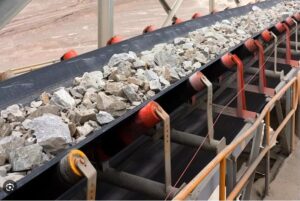
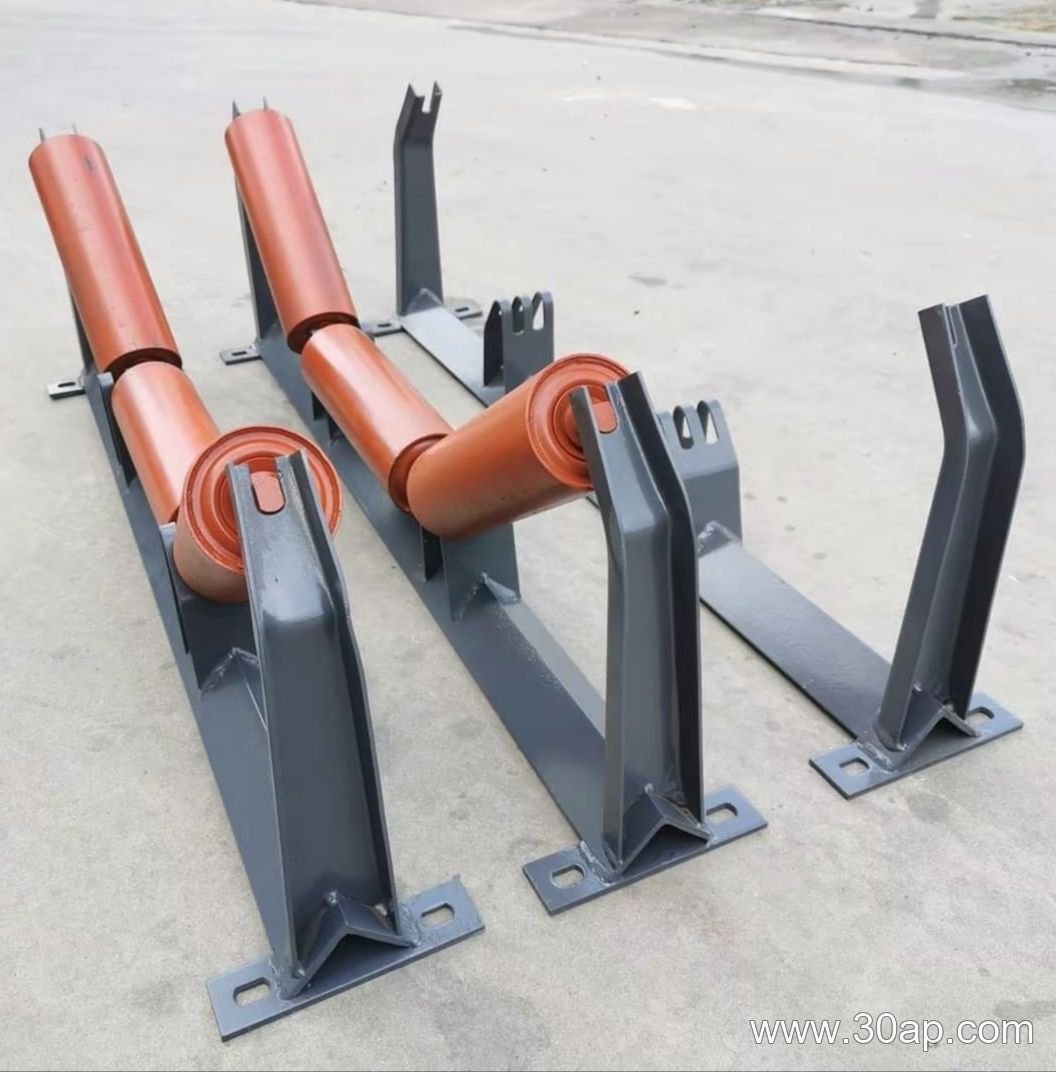
A trough idler bracket set is the structural group that holds the carrying-side idler rollers in a troughed profile. It is also called a troughing idler bracket assembly or troughing roller support set. The set usually includes the base beam, the side arms, and the mounting points that position each idler at the required trough angle. In a quarry, coal washing plant, or cement plant, this bracket set is what keeps the conveyor belt formed into a stable trough so bulk material stays on the belt instead of spilling over the edges.
The bracket set works together with the idler roller, the conveyor belt, and the conveyor pulley. Drive pulleys, tail pulleys, and bend pulleys each have their own separate roles and are not interchangeable with a troughing bracket set. The bracket set only supports the idlers on the carrying side.
How the Set Is Built
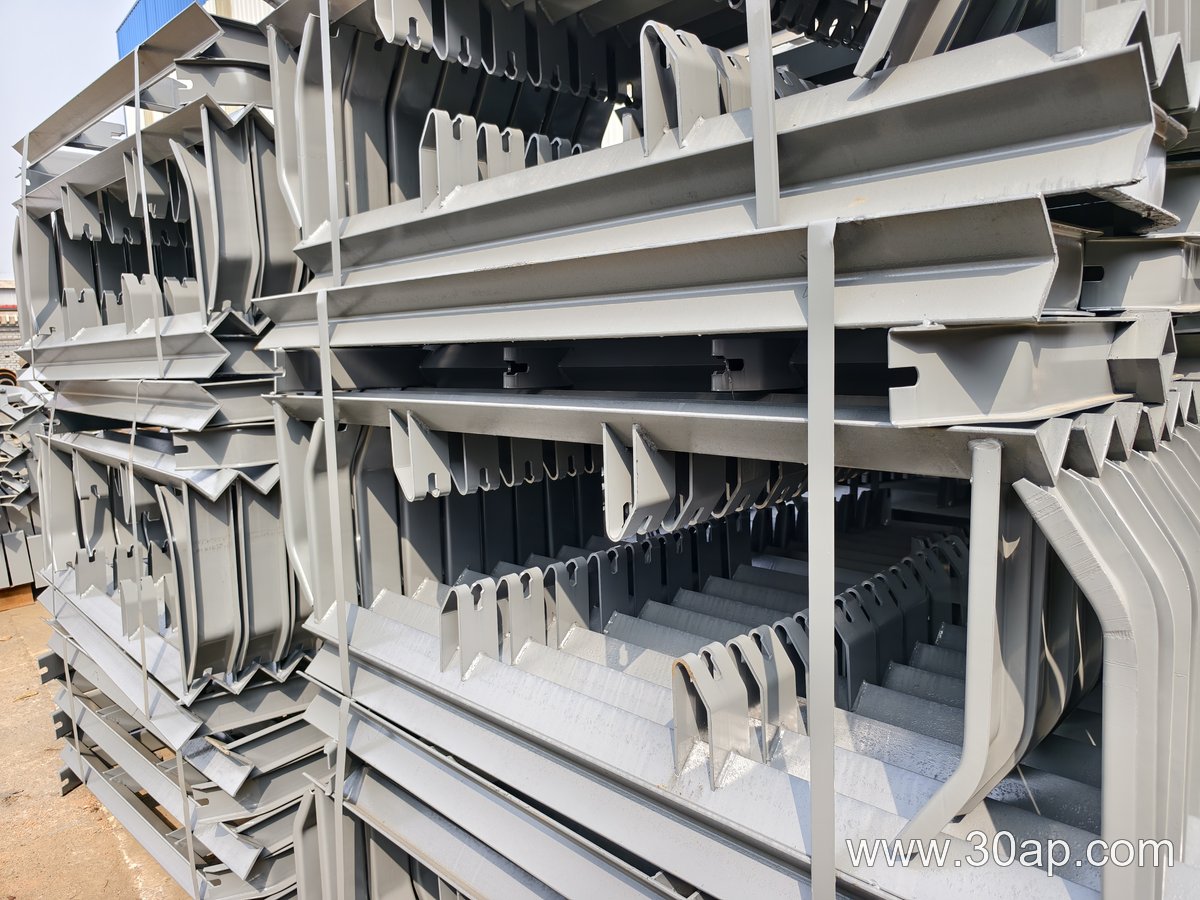
Common materials are angle steel, channel steel, and folded steel plate. A typical set has a horizontal base that bolts to the conveyor frame, plus two or three inclined arms. The arms carry the idler shafts and set the trough angle. On adjustable versions, the side arms can be moved between positions so the same bracket set can run at different trough angles. Fixed brackets keep one preset angle.
Main parts of a trough idler bracket set
- Base beam or cross beam
- Side arms at the trough angle
- Mounting holes for idler shafts
- Bolting points to the conveyor frame
- Optional adjustment slots for angle change
Common Sizes and Configurations
Bracket sets are selected by belt width, trough angle, and idler diameter. These values are design references, not fixed universal pairs. A B800 belt, for example, may run with a 35 degree trough and Ø108 idlers in one plant, while a B1200 line may use 45 degrees with Ø133 idlers. Always confirm the actual mounting hole spacing and beam length with the conveyor design.
| Belt width | Typical trough angle | Common idler diameter |
|---|---|---|
| B500 | 20 to 30 degrees | Ø89 |
| B650 | 20 to 35 degrees | Ø89, Ø108 |
| B800 | 30 to 35 degrees | Ø108, Ø133 |
| B1000 | 35 to 45 degrees | Ø108, Ø133 |
| B1200 | 35 to 45 degrees | Ø133, Ø159 |
| B1400 | 35 to 45 degrees | Ø133, Ø159 |
| B1600 | 35 to 45 degrees | Ø159, Ø194 |
| B1800 to B2200 | 35 to 45 degrees | Ø159, Ø194 |
Other bracket types exist for different positions on the same conveyor. A return bracket supports the belt on the return side, and a V-return bracket helps center the belt. A transition bracket sits near the pulley where the belt changes from flat to troughed. These are separate parts and do not replace the trough idler bracket set.
Where It Is Used
You will find trough idler bracket sets in many bulk handling sites. In a sand and gravel line, they carry the belt through the crushing and screening section. In a coal handling system at a power plant, they support the belt on the way to the bunker. The same bracket set design appears in iron ore mines, limestone quarries, fertilizer plants, and grain silos.
In all these places, the bracket set must match the idler roller, the conveyor belt width, and the frame. A mismatched bracket can cause the belt to run off center or wear the idler edges too quickly.
What a Buyer Should Check
- Belt width: B500 to B2200 are common, but confirm your actual belt.
- Trough angle: 20, 30, 35, or 45 degrees; adjustable brackets cover a range.
- Idler diameter: Ø89, Ø108, Ø133, Ø159, or Ø194 depending on load and speed.
- Mounting hole spacing and beam length: these change with belt width and trough angle, so they are not a fixed number.
- Material and finish: angle steel, channel steel, or folded plate, with a coating suited to the site.
- Forward tilt: some designs use about 1.5 to 2 degrees of tilt to help belt tracking.
Ask for a dimensional drawing that shows the hole pattern and the arm angle. That drawing is the best way to confirm the bracket set will fit your conveyor frame and your existing idler rollers.