What Is a 2200mm Conveyor Belt
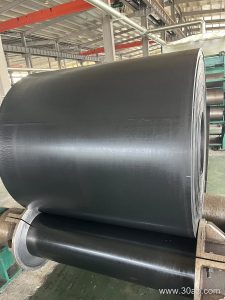
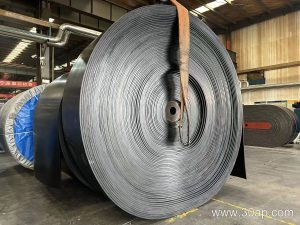
A 2200mm conveyor belt is a wide-format rubber belt designed for high-capacity conveying systems. The 2200mm figure refers to the belt width, which is the full measured width of the carcass and covers. This is a wide belt, typically used where large volumes of bulk material must move continuously over long distances. It is common in mining, coal preparation, cement plants, power stations, and large sand and gravel yards. The belt works together with idler rollers, conveyor pulleys, and conveyor brackets to form a complete conveyor line.
In practice, a 2200mm conveyor belt is often an EP (polyester-nylon) belt, an NN nylon belt, or a steel cord belt, depending on the duty. The accurate equivalent name is simply a 2200mm wide conveyor belt. The width does not change the basic construction, but it does affect load support, tracking, and the required pulley face width.
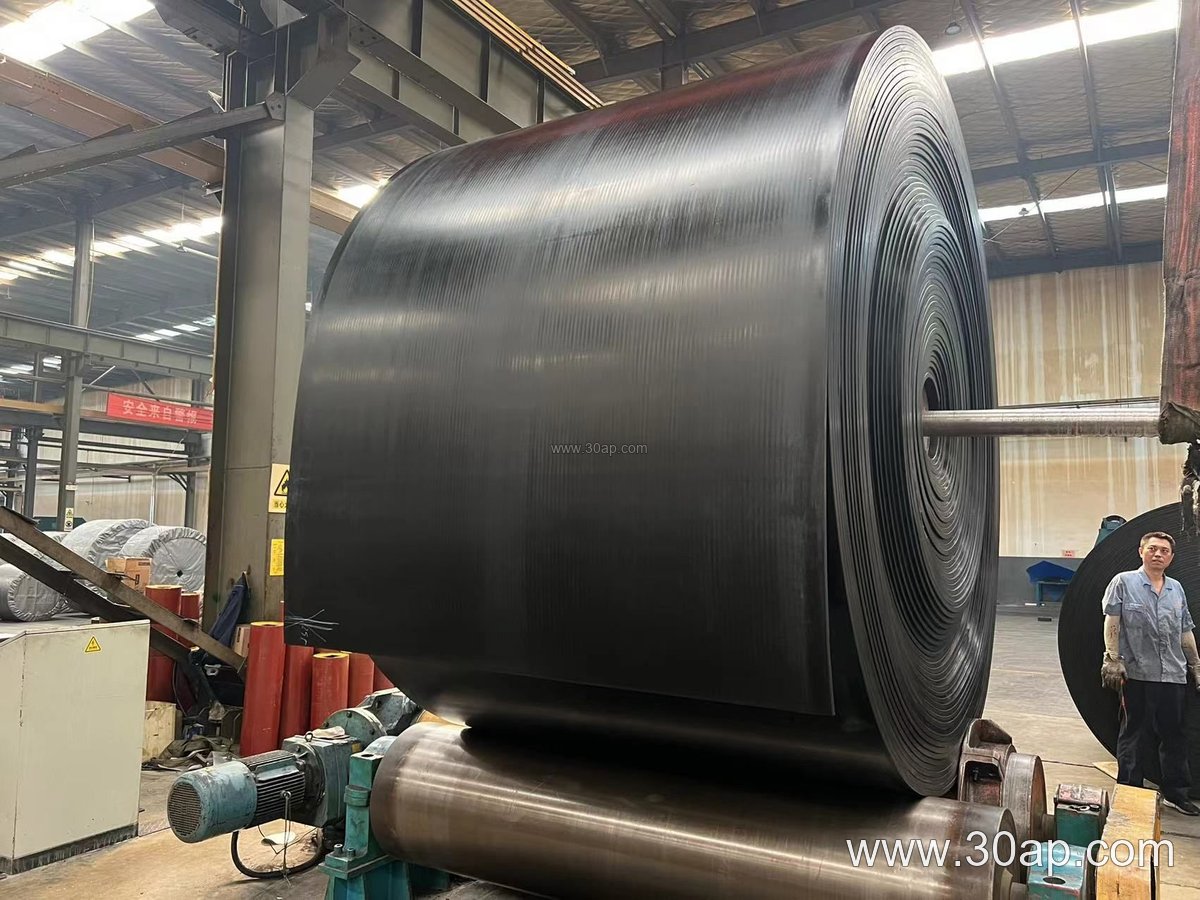
Construction and Common Specifications
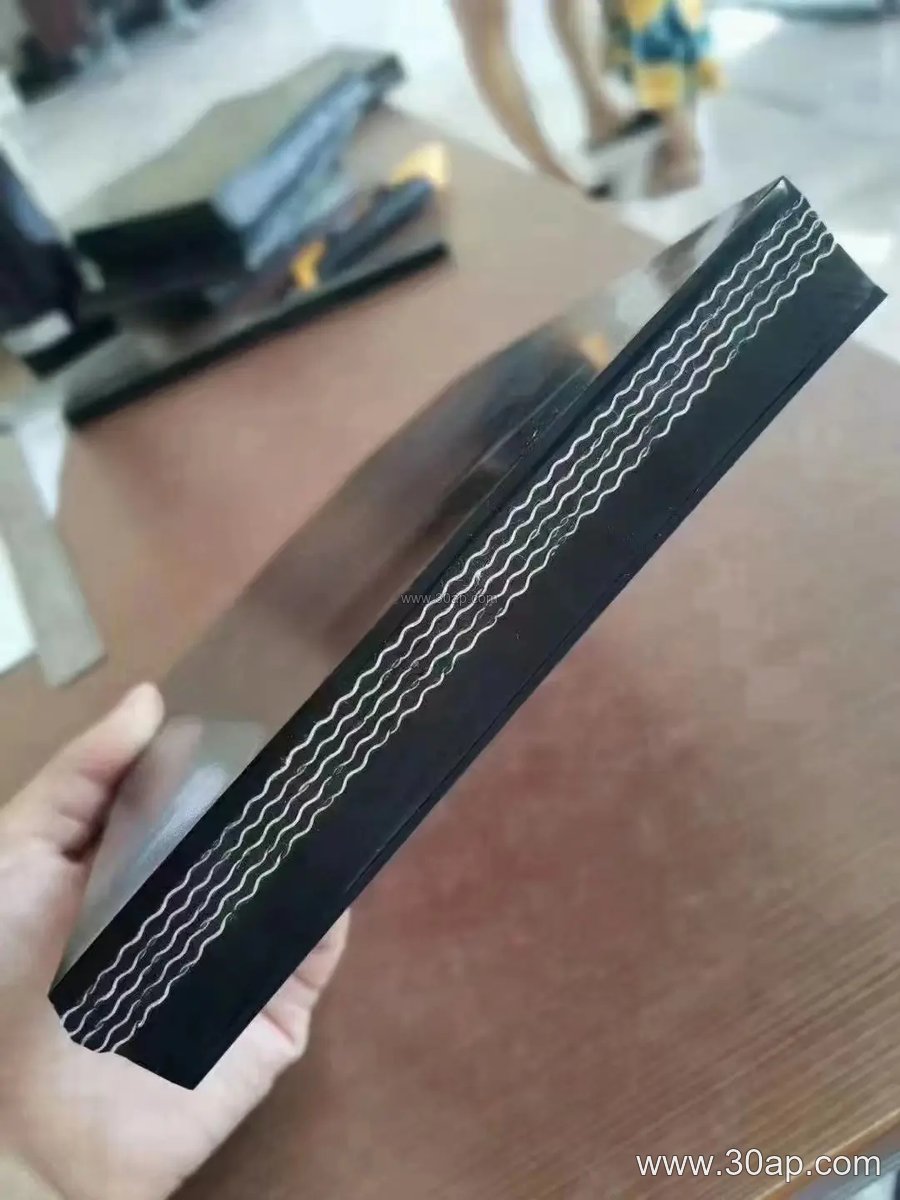
The belt is built from a carcass, which provides strength and elongation resistance, and rubber covers on the top and bottom. The carcass may have multiple fabric plies or steel cords. Cover compounds are selected for abrasion, heat, oil, flame resistance, or cold conditions. A 2200mm wide belt is usually supplied with cut edges or molded edges, and the cover thickness is chosen by the application.
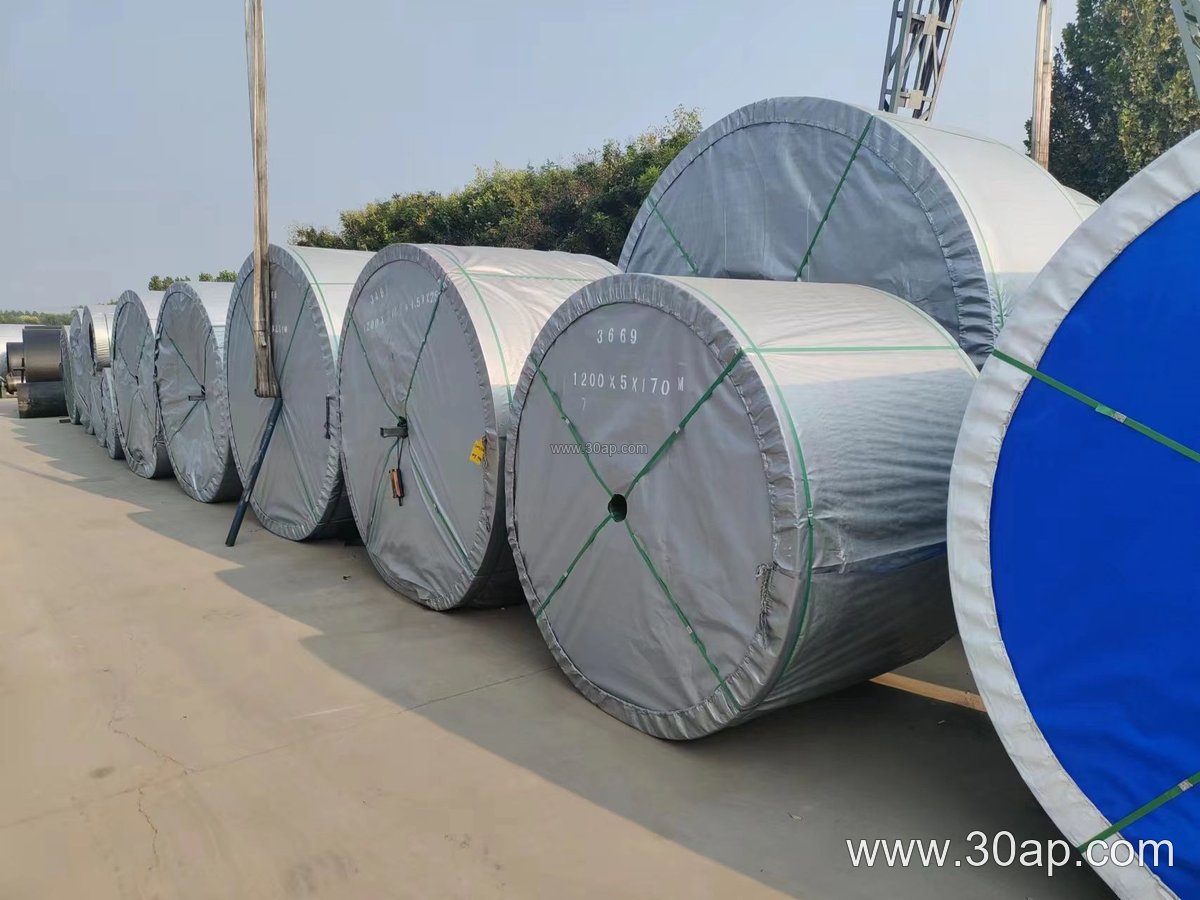
Table 1 shows common reference data. These values are typical examples; actual supply depends on the manufacturer and the design of the conveyor.
| Property | Common range or example |
|---|---|
| Belt width | 2200 mm |
| Belt type | EP, NN, steel cord, PVC, PVG |
| Strength grade | EP200, EP315, EP400, EP500, EP630, EP800, EP1000, EP1250, EP1600, EP2000 |
| Number of plies | 2 to 6 (fabric belts) |
| Top cover thickness | 3 mm, 4 mm, 5 mm, 6 mm, 8 mm |
| Bottom cover thickness | 1.5 mm, 2 mm, 3 mm |
| Cover combinations | 3+1.5, 4+2, 5+2, 6+2, 8+3 mm |
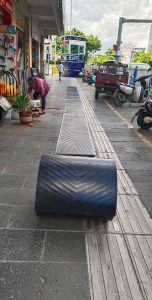
| Surface form | smooth, patterned, chevron, wave-sidewall |
Other widths, such as B500, B650, B800, B1000, B1200, B1400, B1600, B1800, and B2000, are available for smaller systems. A 2200mm belt is not mandatory for every conveyor; it is selected when the tonnage and lump size justify the extra width.
Where It Is Used
Wide belts are found in heavy industries where a single stream carries a large tonnage. In an open-pit mine, a 2200mm conveyor belt may transport crushed ore from the primary crusher to the stockpile. In a coal mine or coal preparation plant, it can handle raw coal with a high percentage of fines. Cement plants use them for clinker, limestone, and additives. Power stations use them for coal feeding. Sand and gravel yards use them for aggregate transport.
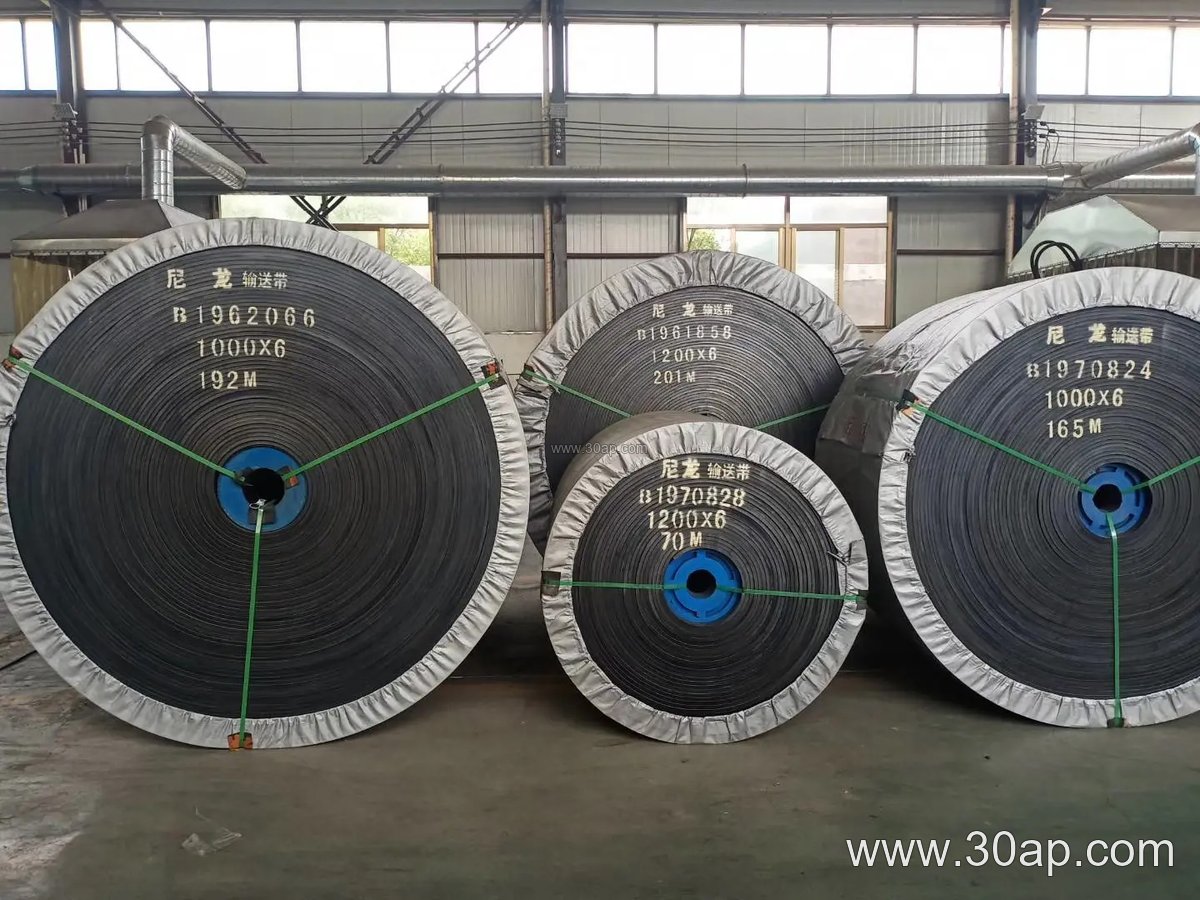
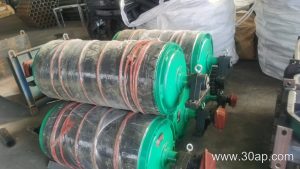
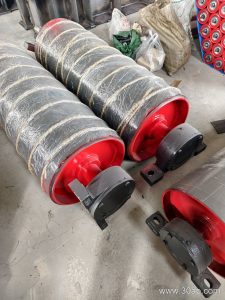
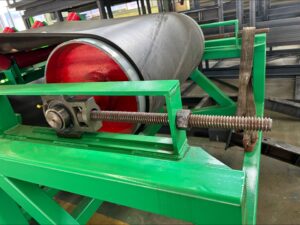
The belt runs over idler rollers that support the load and maintain the trough shape. At the head, a drive pulley transmits power; at the tail, a tail pulley returns the belt; and bend pulleys change direction or provide tension. Conveyor brackets hold the idlers and pulleys in alignment. These parts are not interchangeable names: a drive pulley, a tail pulley, and a bend pulley each have a distinct role.
Selection and Use Notes
Choosing a 2200mm conveyor belt starts with the material, the capacity, the lump size, and the conveyor geometry. The belt strength grade must match the tension calculated for the system. A common formula for approximate belt tension is P = (qb + qm) x g x L / 2, where qb and qm are belt and material mass per unit length, g is gravity, and L is length. The result guides the choice of EP or steel cord construction.
Cover thickness and compound should match the environment. Abrasive rock calls for a wear-resistant cover. Hot clinker needs a heat-resistant grade. Coal mines often require flame-retardant and antistatic properties. Cold regions may need a cold-resistant compound. For inclined conveying, a patterned or chevron surface can reduce slip, while a wave-sidewall belt contains material on steep slopes.
During installation, check that the pulley face width is sufficient for the 2200mm belt and that the idler rollers are aligned. Tracking is more sensitive on wide belts, so the conveyor frame and brackets should be square. After startup, inspect edge wear, cover condition, and splice integrity. A properly matched belt, pulley, and idler set will give reliable service in mining, cement, power, and aggregate operations.
Buyers should ask for the carcass type, strength grade, cover thickness, and surface form in writing. They should also confirm the pulley and idler dimensions, because belt width alone does not determine shaft diameter or pulley diameter. A 2200mm conveyor belt is one part of a system, and its performance depends on the whole conveyor design.