What a Bend Rubber Lagged Pulley Does
In a conveyor system, not every pulley transmits drive power. A bend rubber lagged pulley—often called a rubber lagged bend pulley—is a direction-changing pulley that guides the conveyor belt along a new path, typically increasing belt wrap or routing material through a transfer point. Unlike drive pulleys that transmit torque or tail pulleys that serve as the return end, the bend pulley works purely as a routing and tension-control component. Its rubber lagging serves two main purposes: protecting the belt from abrasion and improving traction between the pulley shell and the belt surface when slight slip occurs.
Construction and Surface Options
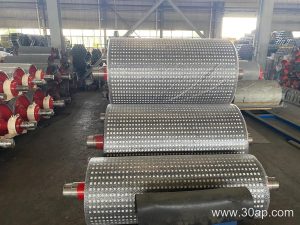
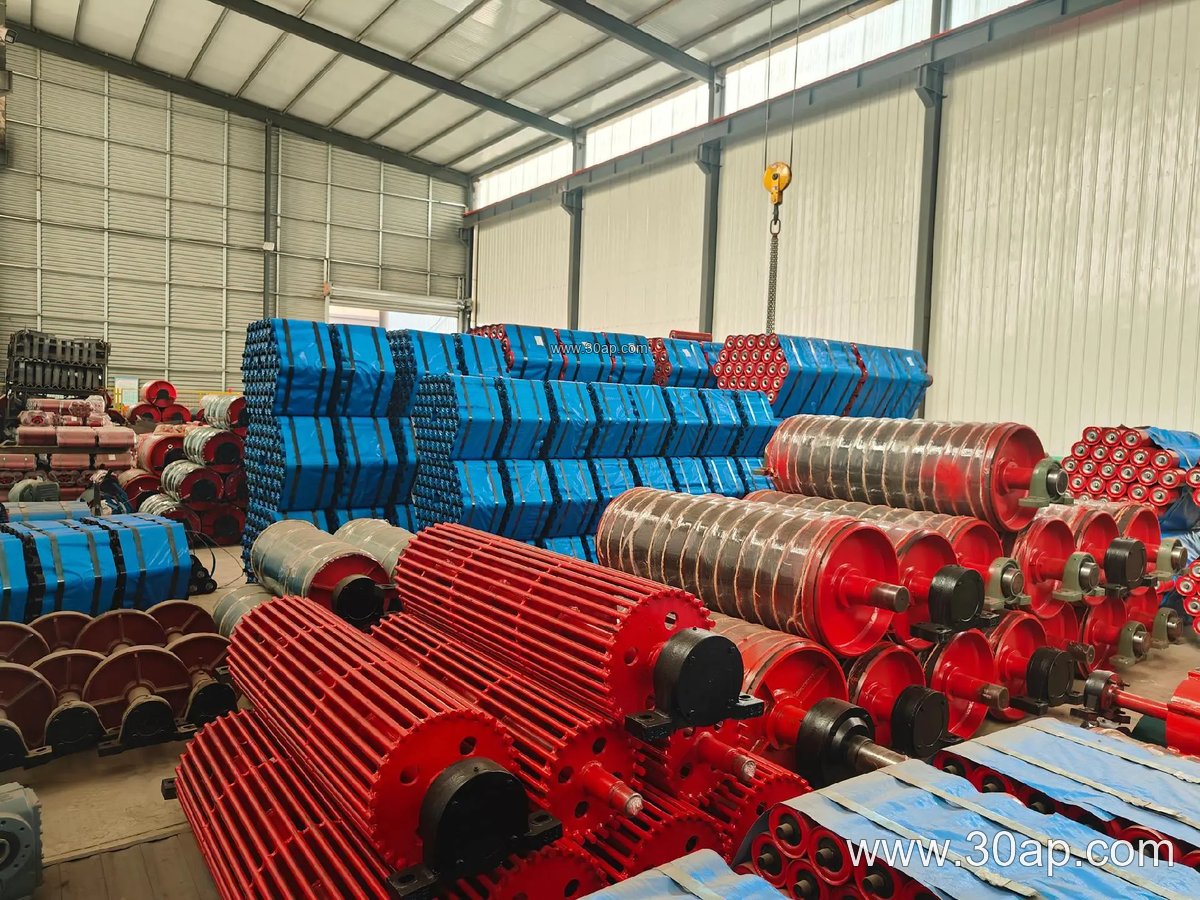
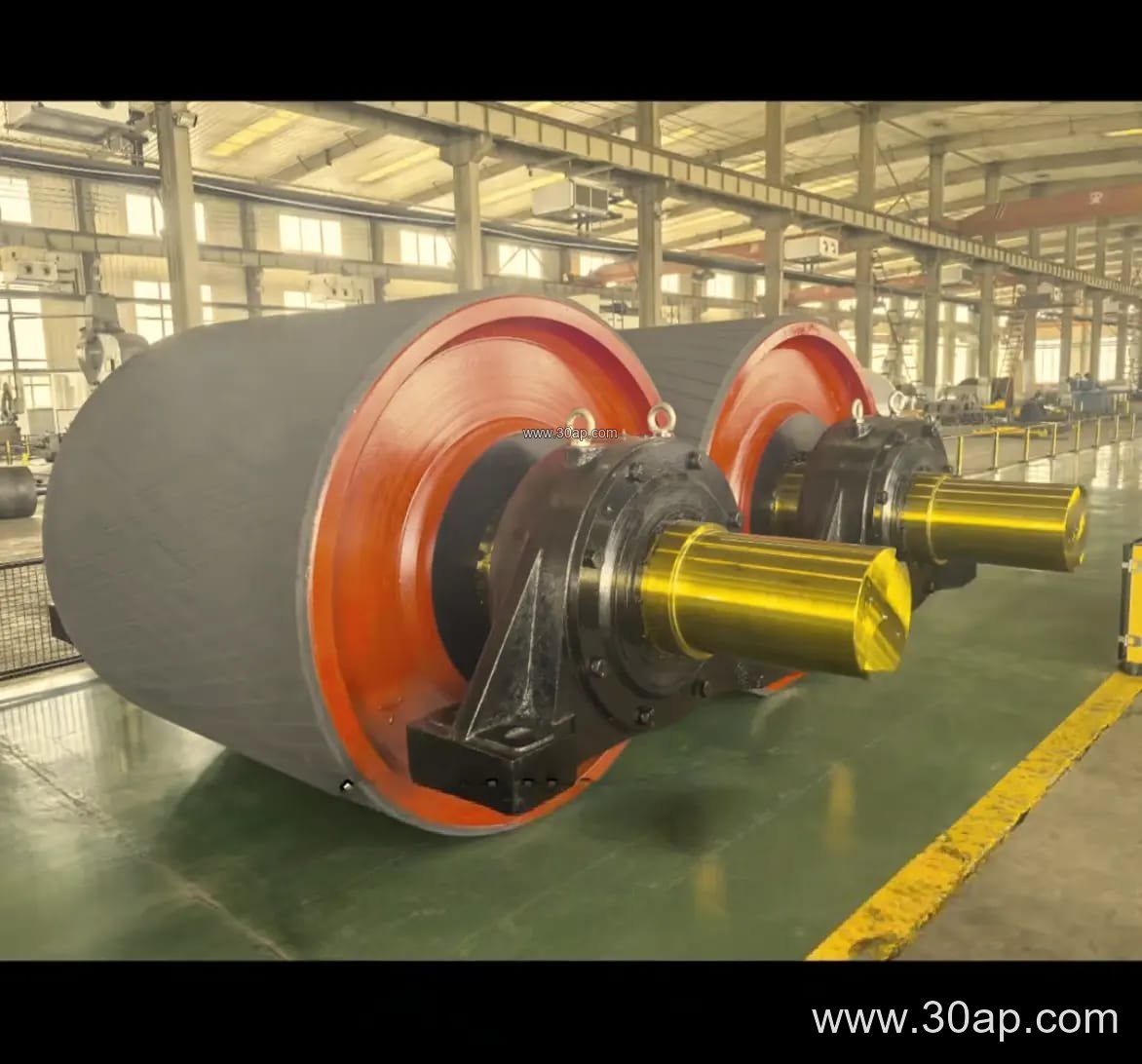
The bend rubber lagged pulley consists of a cylindrical steel shell, a shaft, bearing housings, and a lagged outer surface. The rubber lagging can be applied in several ways, each suited to different operating conditions:
- Cold-bonded rubber – applied at room temperature, suitable for general material handling.
- Hot vulcanized rubber – stronger bond, preferred in dusty or wet environments such as coal preparation plants.
- Diamond pattern lagging – improves water drainage and grip on wet belts.
- Plain rubber lagging – a smooth surface for clean, dry applications.
Common lagging thicknesses are 8 mm, 10 mm, 12 mm, 15 mm, and 20 mm. The shell width is usually slightly wider than the belt width; for example, a B800 belt typically runs on a pulley face around 950 mm, while a B1200 belt might use a 1400 mm face. These are reference proportions, not fixed rules.
Typical Applications in Bulk Handling
Bend pulleys are found wherever the belt must change direction without power transmission. In a limestone quarry, a bend pulley may route the belt around an obstruction before the discharge point. In a coal washing plant, a rubber lagged bend pulley helps maintain belt tracking on the return side, where fines and moisture are present. Cement plants use them to increase wrap angle at the head or to guide the belt through a dedusting enclosure. The rubber lagging is especially useful when the conveyor belt carries abrasive sand, clinker dust, or wet aggregate, as it cushions the belt edge and reduces shell wear.
While a bend pulley is not interchangeable with a drive pulley or a tail pulley, it often works alongside them. A drive pulley provides the motive force; a tail pulley sets the belt path at the loading end; the bend pulley simply redirects. In some layouts, a bend pulley also serves as a snub pulley to increase contact area on the drive pulley, but its primary role remains directional.
Key Parameters for Buyers
When specifying a bend rubber lagged pulley, several parameters should be confirmed with the conveyor design. The table below lists common reference values; actual selection depends on belt tension, shaft load, and available space.
| Parameter | Common reference values |
|---|---|
| Belt width (B) | B400, B500, B650, B800, B1000, B1200, B1400, B1600, B1800, B2000 |
| Pulley diameter (Ø) | Ø200, Ø250, Ø315, Ø400, Ø500, Ø630, Ø800, Ø1000, Ø1250 |
| Lagging thickness | 8, 10, 12, 15, 20 mm |
| Shaft diameter | Ø50, Ø60, Ø70, Ø80, Ø90, Ø100, Ø120, Ø140, Ø160, Ø180, Ø200 |
| Surface pattern | Plain, diamond, ceramic (for special wear), hot vulcanized rubber |
Shaft diameter is determined by torque and load calculations, not by belt width alone. For instance, a B800 belt might use a Ø500 bend pulley with a Ø80 shaft in one conveyor and a Ø100 shaft in another, depending on tension and bearing span. Buyers should provide the belt speed, material type, and ambient conditions so the supplier can recommend a suitable lagging compound and thickness.
Installation and Maintenance Notes
Proper alignment is critical. A misaligned bend pulley can cause belt edge wear and tracking problems, especially in dusty gravel or aggregate lines. Check that the pulley face is parallel to the adjacent idler roller and that the conveyor bracket supports are level. Rubber lagging should be inspected for cuts, glazing, or separation from the shell. In a tunnel boring or crushing circuit, where sharp rock fragments may lodge between belt and pulley, periodic cleaning prevents lagging damage. Re-lagging is possible when wear reaches the shell, but it should be done with the correct vulcanization method to restore grip and belt protection.
Because bend pulleys do not transmit drive torque, they are often overlooked during maintenance. However, a worn or slipping bend pulley can affect belt tension distribution and cause mistracking. Keeping the lagging clean and replacing worn rubber in time helps extend conveyor belt life and reduces downtime in continuous operations such as power plant coal handling or port bulk terminals.