What a Ø159 impact idler does at the load point
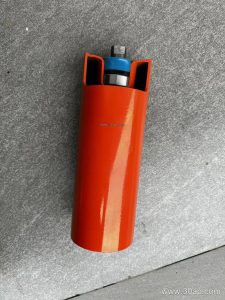
In a quarry, a coal washing plant, or a cement plant, the conveyor belt often takes its hardest hits right where material drops onto it. A Ø159 impact idler is a buffer roller built with a 159 mm roller diameter, positioned under the loading zone to absorb that falling energy. It is not a drive pulley or a tail pulley; it is a carrying idler with a resilient surface, and its job is to protect the belt, the frame, and the downstream idler rollers from repeated shock.
When the material stream contains large lumps or comes from a crusher discharge, ordinary steel carrying idlers can dent, flatten, or wear quickly. The impact idler uses rubber rings or a rubber-covered shell to soften the drop. The 159 mm diameter gives a larger contact area and more structural room inside the roller, which suits heavy-duty loading stations on wider belts.
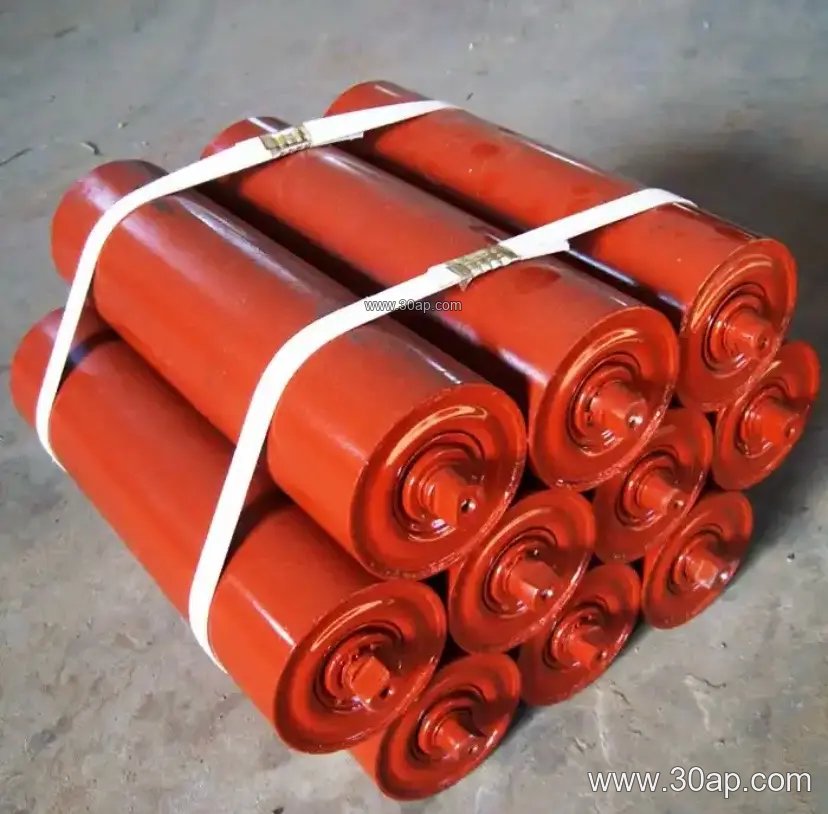
How the roller is put together
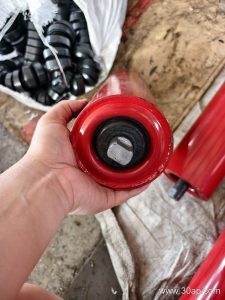
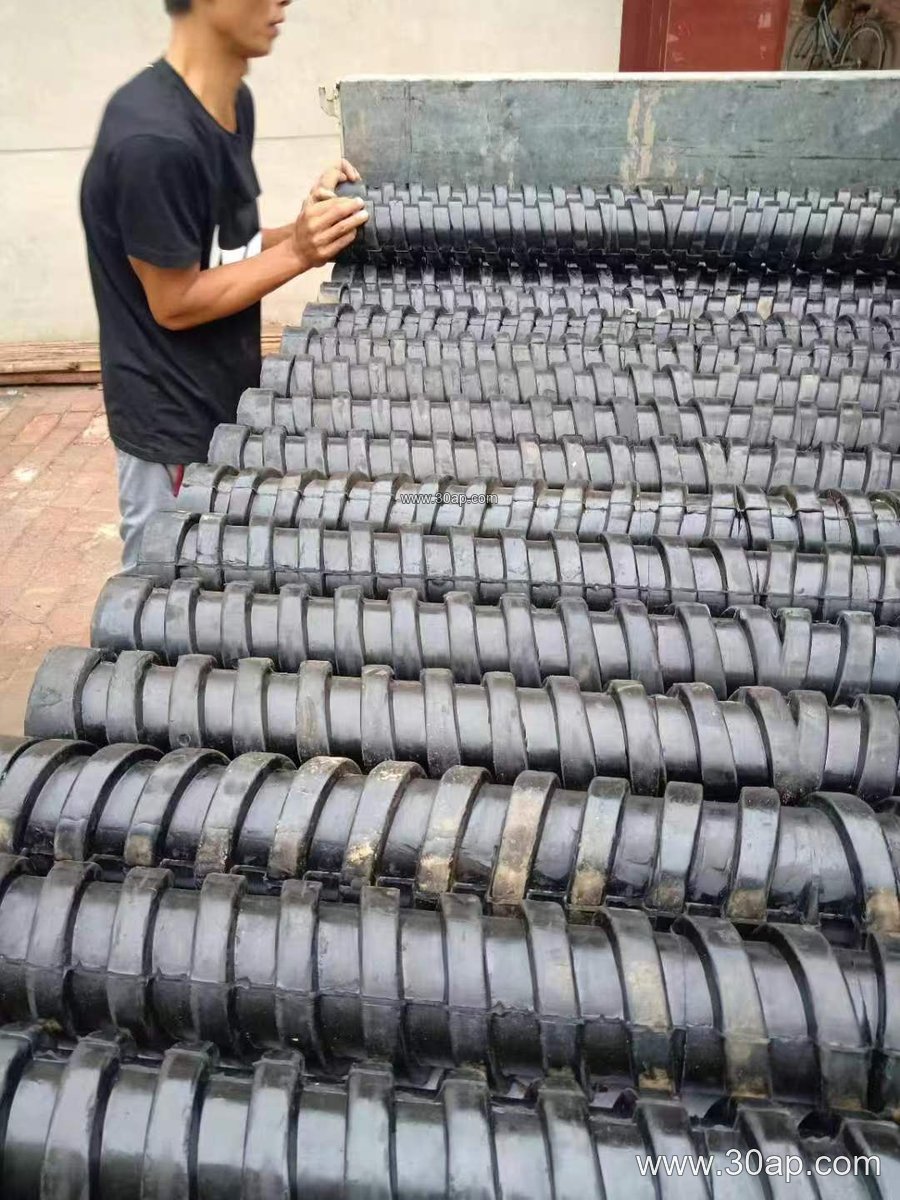
The body is usually a steel tube with a shaft running through sealed bearing housings. Rubber rings are fitted over the shell in a spaced pattern, so the belt rests on flexible contact points rather than a single hard surface. Common bearing sizes for this class of roller include 6308 and 6310, though the final choice depends on load and shaft design. The seal arrangement matters in dusty conditions: a good labyrinth or multi-stage seal keeps fine grit away from the bearing grease.
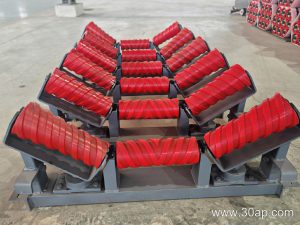
A Ø159 impact idler is often arranged in a three-roll trough set, with two side rollers and a center roller. The trough angle may be 20, 30, 35, or 45 degrees depending on the belt and material. Roller length is not fixed by belt width alone; it is selected with the trough angle and the idler group form. For reference, a three-roll trough set commonly uses center roll lengths around 380 mm for B1000 and 465 mm for B1200, but side rolls and center rolls can differ, and the final dimensions should follow the conveyor design.
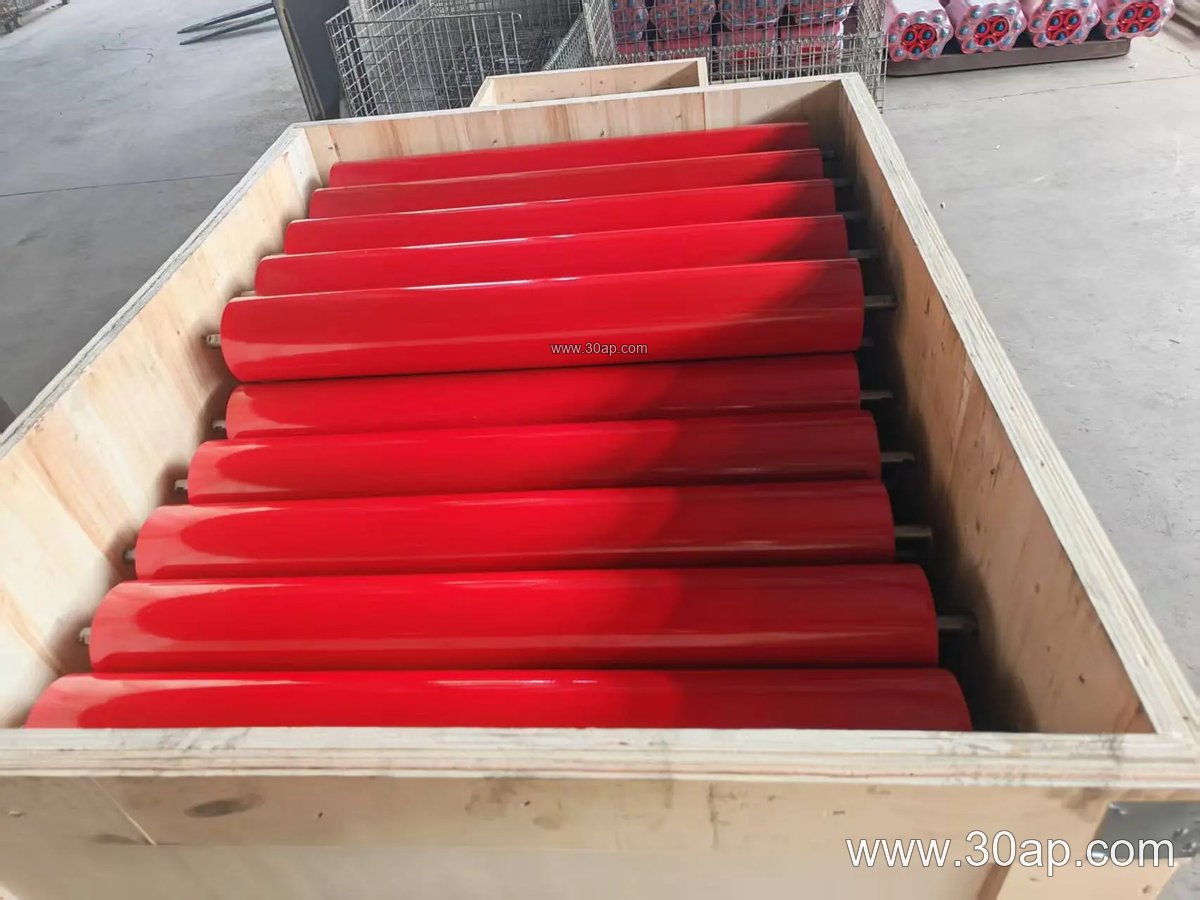
Where it fits in the conveyor line
This buffer roller is normally installed in the impact cradle or impact idler group directly below the chute. In a limestone mine or a sand and gravel line, that means the first few idler positions after the feed point. In a power plant coal handling system, it sits under the transfer house where coal drops from one conveyor to the next. It is not a substitute for a bend pulley or a return idler; it belongs to the carrying side at the load zone.
For comparison, a standard trough idler uses a plain steel shell and handles the steady carrying load. A spiral idler is used for cleaning the belt return side, and a training idler corrects belt misalignment. The impact idler is selected for shock absorption, so it is usually placed only where the drop energy is significant. Too many impact idlers along the whole line add cost without benefit.
Specifications a buyer should check
Several parameters shape the selection. The table below lists common reference values for this roller family; they are examples, not a fixed supply promise.
| Parameter | Common reference |
|---|---|
| Roller diameter | Ø159 mm |
| Belt width examples | B800, B1000, B1200, B1400, B1600 |
| Trough angle | 20°, 30°, 35°, 45° |
| Roller surface | Rubber rings, rubber-covered steel shell |
| Bearing examples | 6308, 6310 |
| Idler group form | Three-roll trough, two-roll, single roll |
| Roll length example | About 380 mm for B1000 three-roll center roll |
Confirm the shaft diameter and bearing housing with the idler manufacturer rather than assuming a value from belt width. The conveyor bracket spacing and frame dimensions also need to match the selected idler group. A 159 mm roller is larger and heavier than a 108 mm or 133 mm roller, so the frame and mounting points should be rated for it.
Selection and maintenance notes
- Check the drop height and lump size before choosing rubber ring thickness or ring spacing.
- Use the impact idler only in the loading zone; standard carrying idlers are sufficient elsewhere.
- Inspect rubber rings for cuts and flattening during scheduled shutdowns.
- Keep the seal area clean and verify that the roller turns freely by hand.
- Replace a worn impact roller before the belt surface or the idler frame suffers damage.
For a coal mine, a cement plant, or a port transfer station, the Ø159 impact idler is a practical buffer component when the loading point is harsh. Match it to the belt width, trough angle, and bracket layout, and treat the dimensions above as starting points for the conveyor design rather than universal rules.