What a Conveyor Belt Tracking Idler Does
A conveyor belt tracking idler is a roller or roller set installed to keep the belt centred on its path. In a quarry, a cement plant or a coal handling line, a belt that drifts sideways will rub the frame, spill material and wear the edges. The tracking idler, often called a self-aligning idler or training idler, corrects that drift by steering the belt back toward the centre line.
It is not the same part as a drive pulley, tail pulley or bend pulley. Those are the large drums that transmit power and change belt direction. The tracking idler belongs to the roller family and works on the carrying or return side of the conveyor belt.
How the Tracking Idler Is Built
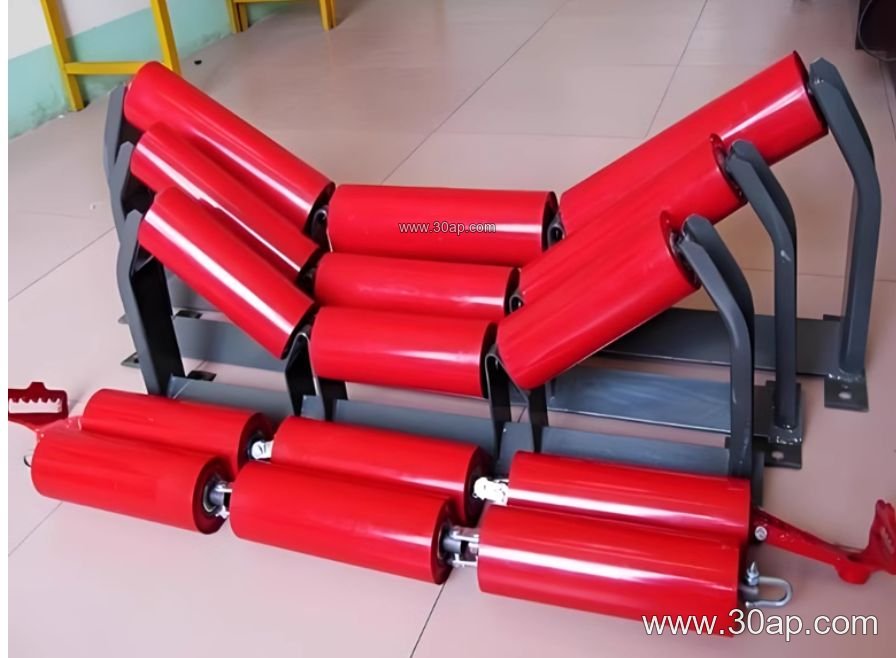
Most tracking idlers are assembled as a set: two or three rollers mounted on a pivoting frame or bracket. When the belt moves off centre, the angled rollers create a small sideways force that pushes the belt back. Common designs include friction tracking idlers, which react to belt contact, and conical tracking idlers, where tapered roller ends help guide the belt.
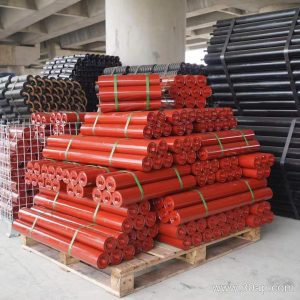
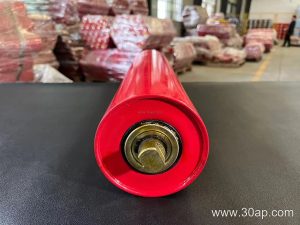
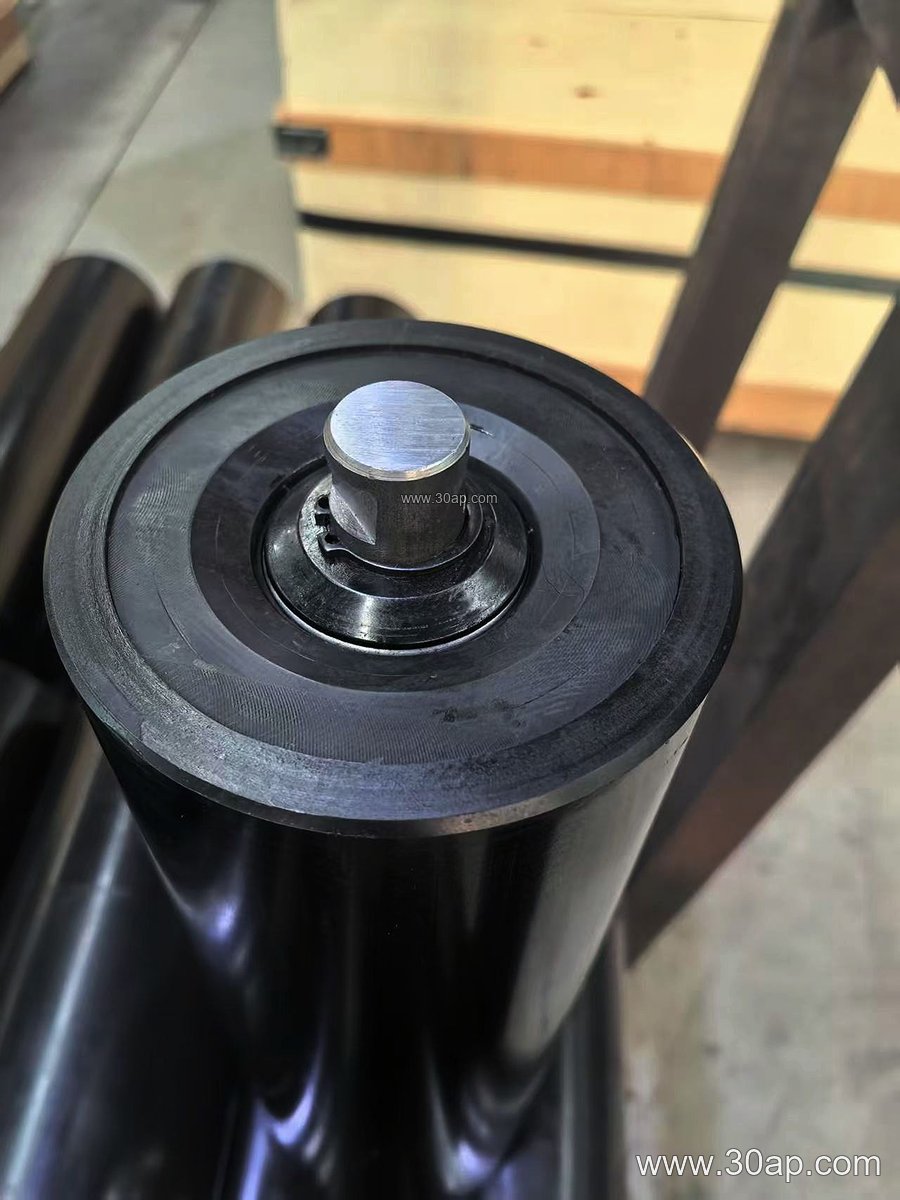
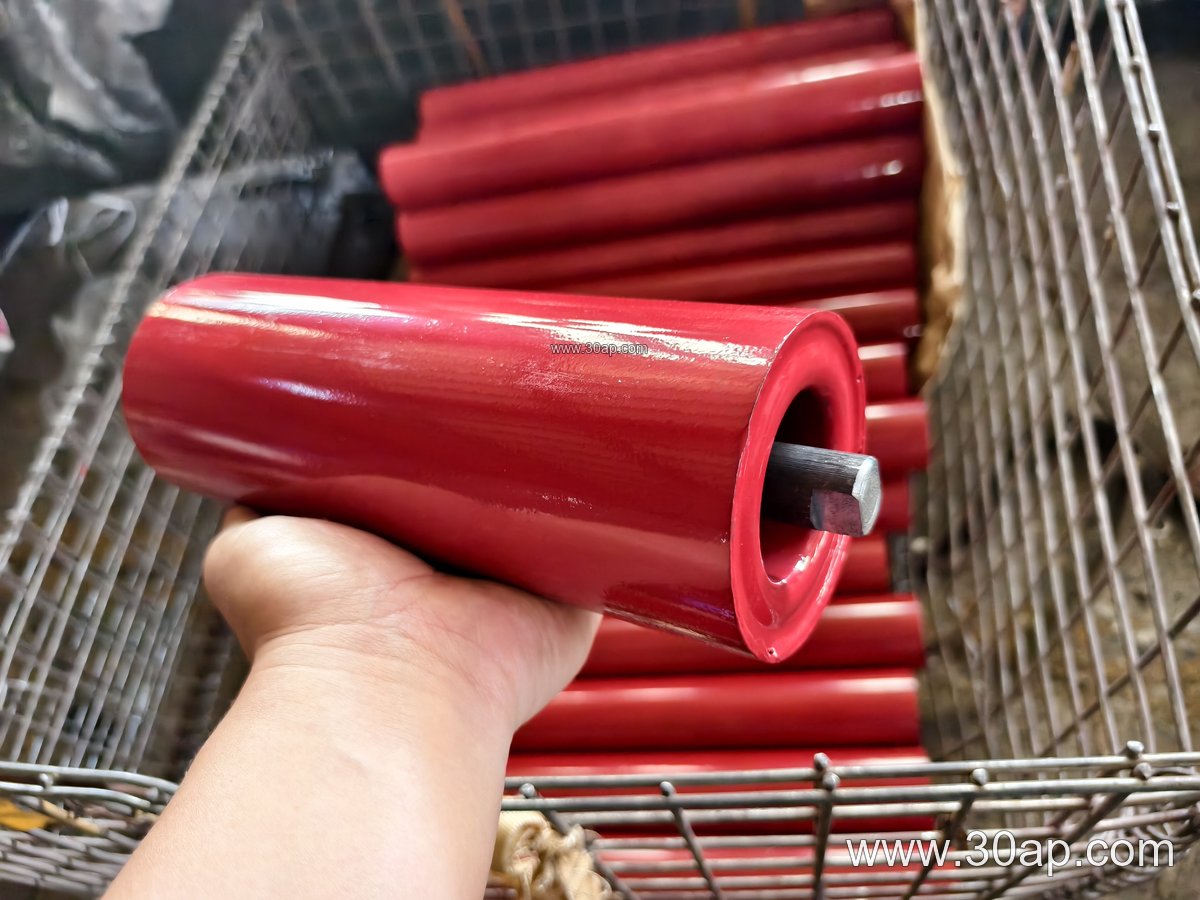
The roller body itself usually has a steel tube shell. In dusty or wet service, nylon, ceramic or rubber-covered surfaces may be chosen for grip or wear resistance. Bearings are typically sealed deep-groove types such as 6204, 6205, 6305, 6306, 6308 or 6310, matched to the load and shaft design rather than to one fixed roller size.
Typical reference data
| Item | Common range (reference only) |
|---|---|
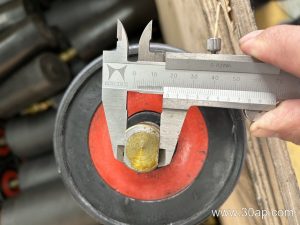
| Roller diameter | Ø63, Ø76, Ø89, Ø102, Ø108, Ø127, Ø133, Ø159, Ø178, Ø194, Ø219 mm |
| Belt width | B400 to B2400 |
| Trough angle | 20°, 30°, 35°, 45° |
| Roller surface | Steel tube, nylon, ceramic, rubber ring |
| Bearing | 6204, 6205, 6305, 6306, 6308, 6310 |
Roller length follows belt width, trough angle and roller set arrangement. As a rough example for a three-roll trough set, B500 may use about 200 mm rollers, B800 about 315 mm, B1000 about 380 mm, B1200 about 465 mm, B1400 about 530 mm, B1600 about 600 mm and B2000 about 750 mm. Side rollers and centre rollers can differ, so these are design examples, not fixed matches.
Where Tracking Idlers Are Used
These idlers appear wherever belt misalignment causes trouble. In a sand and gravel plant, a self-aligning idler set after the crusher discharge keeps the belt steady under uneven loading. In a power plant coal yard, friction tracking idlers on the return side reduce edge wear on long runs. They are also common in iron ore and copper concentrators, limestone handling, fertiliser plants and tunnel spoil conveyors.
A tracking idler is often placed near the tail end, ahead of the drive, or at points where the belt is lightly loaded. It works together with the conveyor pulley, conveyor bracket and frame alignment. If the structure is twisted or a pulley is out of square, no tracking idler will fully correct the belt.
What Buyers Should Check
- Belt width and roller set: confirm B width, trough angle and whether the idler is a two-roll or three-roll arrangement.
- Roller diameter and shaft: match Ø size and bearing to the actual load and shaft design; do not assume a shaft diameter from belt width alone.
- Surface choice: rubber rings suit impact and grip needs, ceramic suits abrasive fines, and plain steel is common in general service.
- Mounting: check pivot clearance, bracket height and space for the self-aligning frame.
- Maintenance: inspect seal condition, roller rotation and frame squareness during routine belt checks.
A well-chosen conveyor belt tracking idler is a small part of the conveyor, but it protects the belt edge, reduces spillage and extends the life of the idler roller and conveyor pulley set. Buyers should treat catalogue sizes as reference and confirm the final arrangement against the conveyor design.