What a V-Type Return Idler Does
A V-type return idler is a two-roll idler assembly mounted under the carrying run of a conveyor belt. The two rollers sit at an angle to each other, forming a shallow V that cradles the belt and keeps it centred as it travels back toward the tail. In many plants the same unit is simply called a V-return idler or V-shaped return roller set. It is not a drive pulley, a tail pulley or a bend pulley; those are drums that transmit motion or change belt direction, while this unit only supports and guides the belt.
The V shape matters. Because each roller is tilted upward toward the belt edges, gravity and belt tension work together to push a drifting belt back toward the middle. That makes this design useful on long conveyors where a flat return roller might let the belt wander.
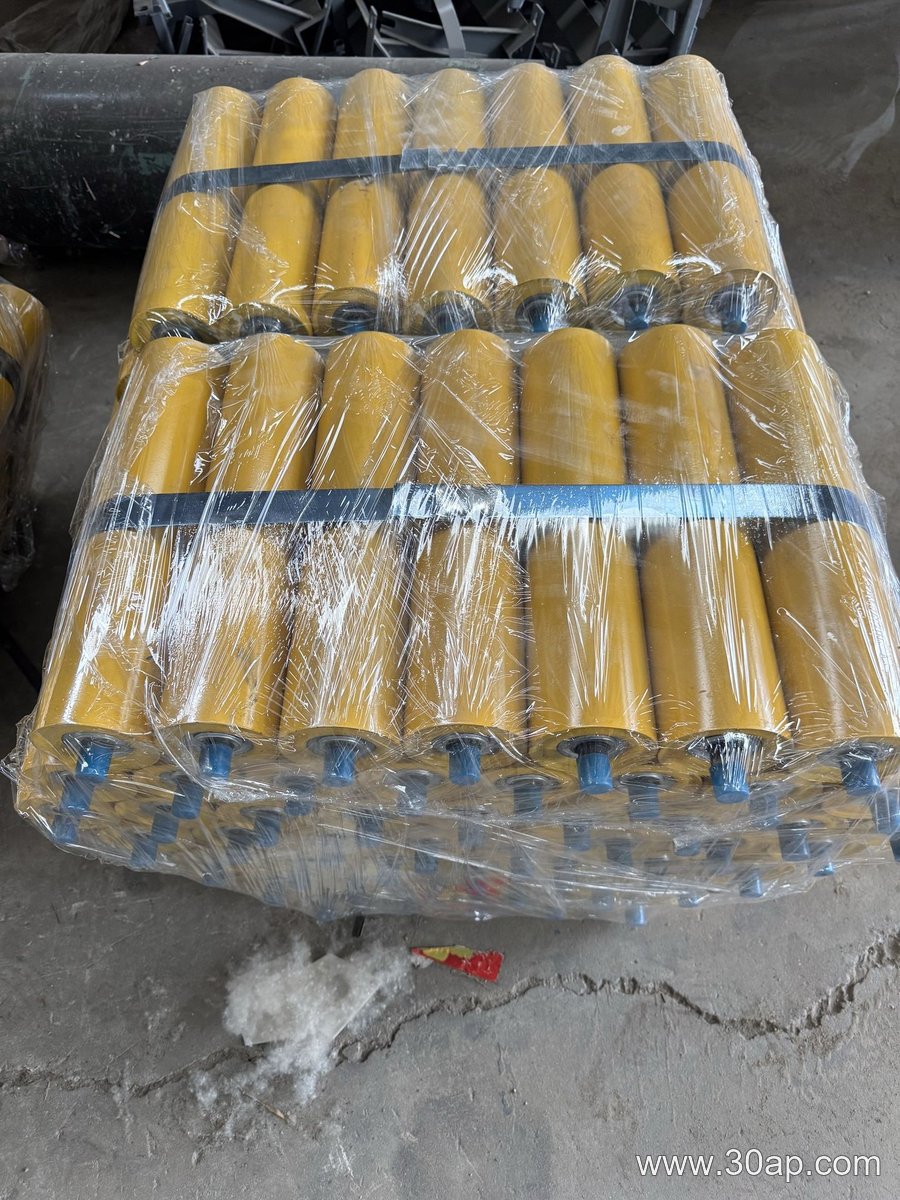
How the Assembly Is Built
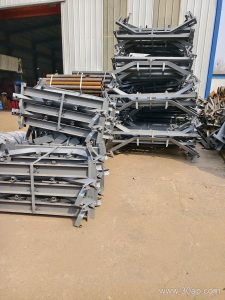
A typical unit combines two idler rollers, a common frame or cross member, and two mounting brackets. Each roller usually has a steel tube shell, a shaft, sealed bearings and a bearing housing. Common roller diameters for this family include Ø89, Ø102, Ø108, Ø127, Ø133 and Ø159, with larger sizes used on wider, heavier belts. Bearing sizes such as 6204, 6205, 6305, 6306 and 6308 appear across the range, but a given bearing is not tied to one roller diameter; the final match depends on load, speed and housing design.
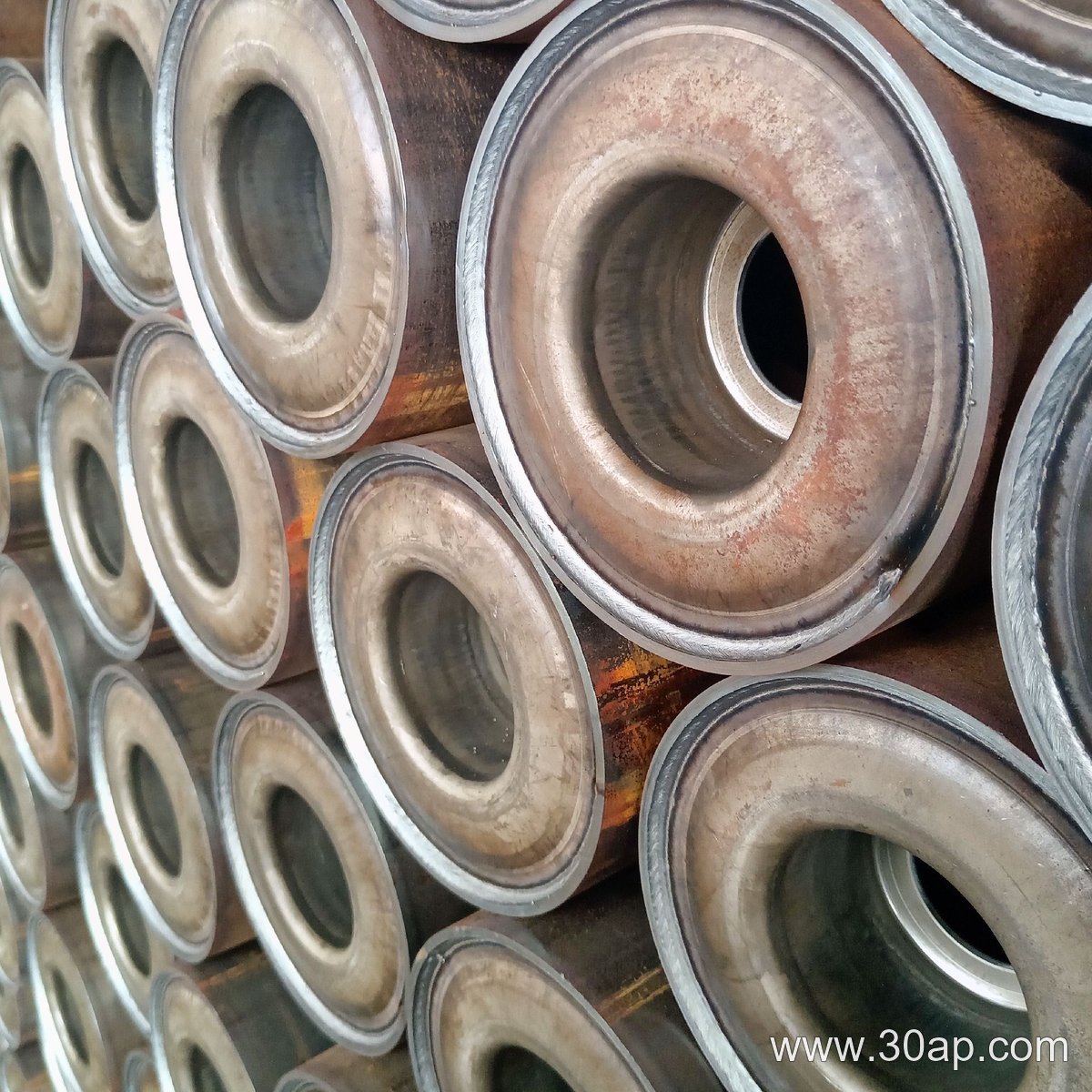
Surface options also vary. Plain steel is the usual choice, while rubber rings can be added to reduce noise and protect the belt in dusty or abrasive service. The included angle between the two rollers is normally modest, enough to guide the belt without pinching it.
Where It Fits on the Conveyor
You will find this return idler in quarries, sand and gravel lines, coal washing plants, cement works, power station coal handling and port bulk terminals. In a crushing and screening circuit, for example, it sits on the return strand beneath the belt, between the tail pulley and the first transition idler. A related but different component is the troughing idler on the carrying side, which uses three rolls and a 20, 30, 35 or 45 degree trough angle to shape the belt around the material. The V-return unit does not carry the load; its job is belt support and alignment on the empty side.
Common Reference Dimensions
The table below gives typical reference values, not fixed supply rules. Roller length changes with belt width, trough angle and frame design, and the two rollers in a set may differ.
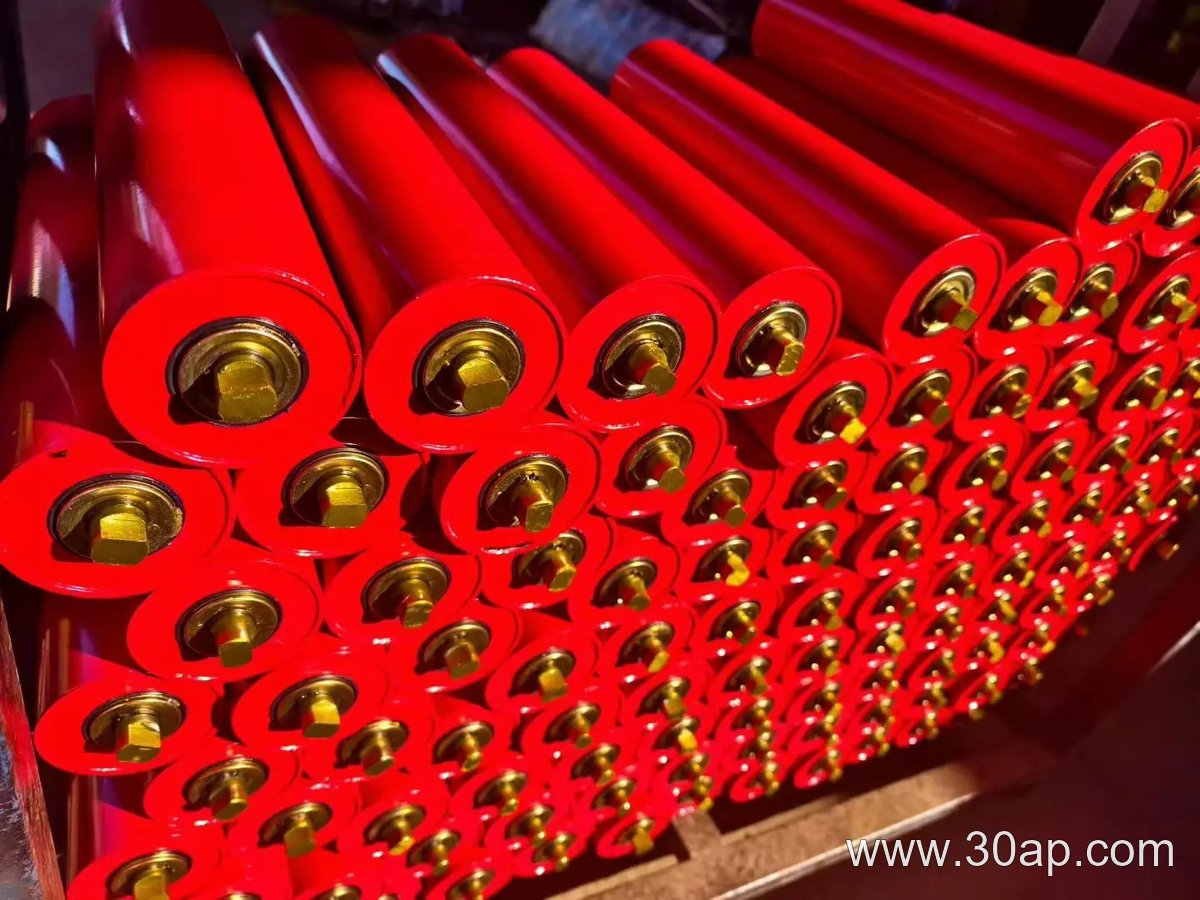
- B500 belt width, three-roll troughing example roll length about 200 mm
- B650, about 250 mm
- B800, about 315 mm
- B1000, about 380 mm
- B1200, about 465 mm
- B1400, about 530 mm
- B1600, about 600 mm
- B1800, about 670 mm
- B2000, about 750 mm
These figures come from troughing idler practice, so treat them as orientation only. A V-return set is built to its own drawing, and the roller length is confirmed by the frame and belt width rather than by a single universal number.
What a Buyer Should Check
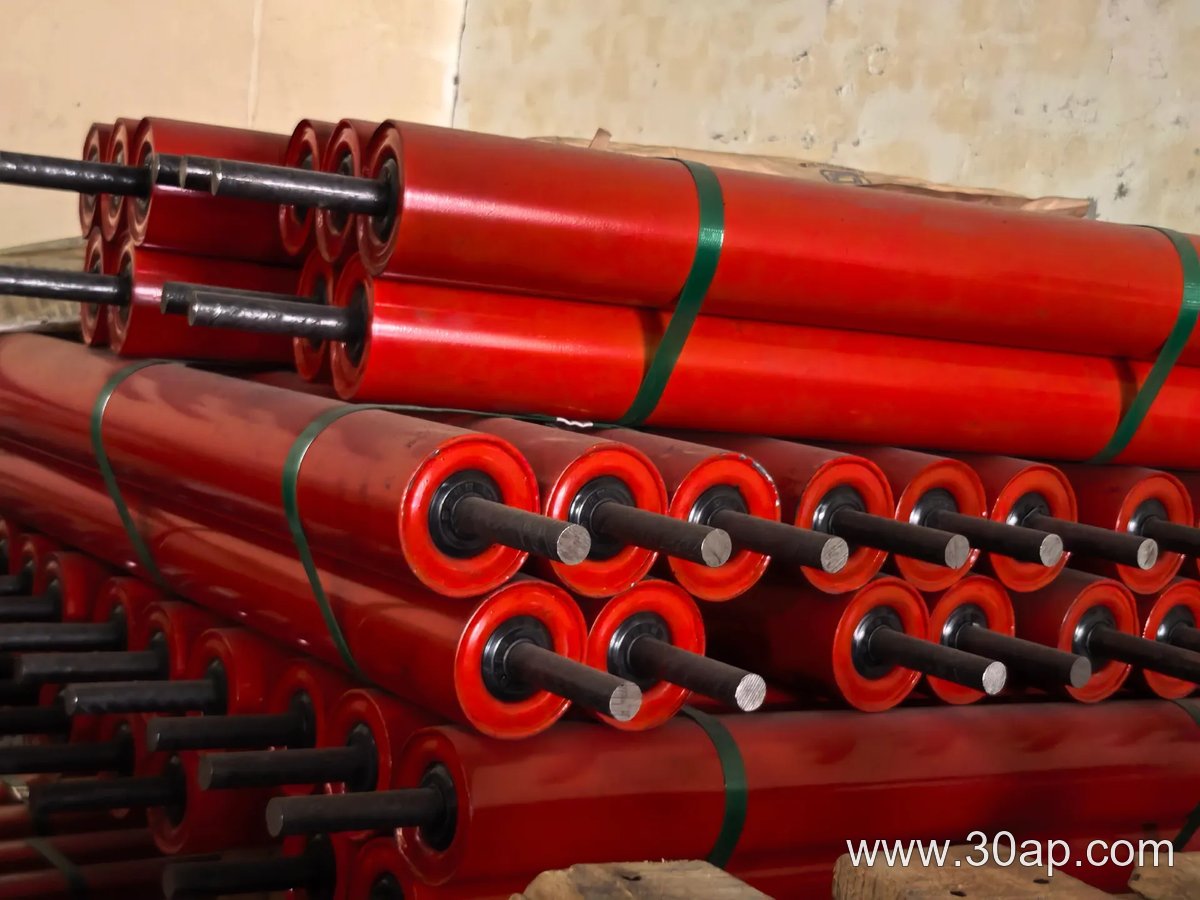
Before ordering, confirm the belt width, the roller diameter, the shaft end type and the bracket hole spacing. Ask how the frame attaches to the conveyor stringer and whether the brackets match the existing bolt pattern. Check the sealing arrangement if the site is dusty or wet, and confirm the bearing size and lubrication plan. For abrasive material, a rubber-covered roller may last longer, while a plain steel roller may suit a cleaner installation.
Maintenance is straightforward. Inspect for seized rollers, worn shells and loose brackets. A roller that stops turning can flat-spot the belt, and a bent frame will spoil the self-aligning effect. Replacing the two rollers as a pair usually keeps the V angle correct.
Used correctly, this return idler is a simple, low-cost way to keep a conveyor belt tracking on the return strand without adding a full training idler station.