What a Rubber Lagged Pulley Does on a Conveyor
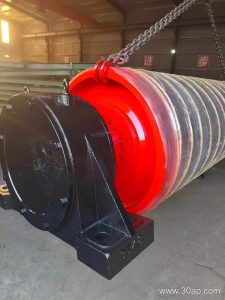
A belt conveyor rubber lagged pulley is a drum-shaped rotating component whose outer surface carries a bonded rubber layer. It transfers motion to the conveyor belt or changes the belt’s direction. The rubber lagging is the defining feature: it raises friction between the drum shell and the belt, protects the steel shell from abrasion, and helps shed moisture and fine dust that would otherwise reduce grip.
In a sand and gravel line or a limestone quarry, the difference between a bare steel drum and a properly lagged one is often measured in belt slip, spillage and downtime. The rubber surface is not a cosmetic add-on; it is a wear part and a traction part at the same time.
How the Lagged Pulley Is Built
The core is a welded steel drum with a machined face, end discs and a shaft that runs through hubs or is keyed to the shell. Lagging is applied in one of several ways, and the choice affects both grip and service life.
- Hot vulcanized rubber – cured onto the shell under heat and pressure, forming a strong bond for high-torque drives.
- Cold bonded rubber – adhesive-fixed sheet, practical for field replacement and moderate duty.
- Cast rubber – molded directly with the surface pattern, common on smaller or special drums.
- Ceramic lagging – ceramic tiles set in rubber, used where abrasion is severe.
Surface patterns matter too. Plain or flat rubber gives uniform contact; diamond lagging improves water drainage; herringbone grooving pushes debris toward the edges. Grooved surfaces are generally preferred on the drive side where wet or dirty conditions exist.
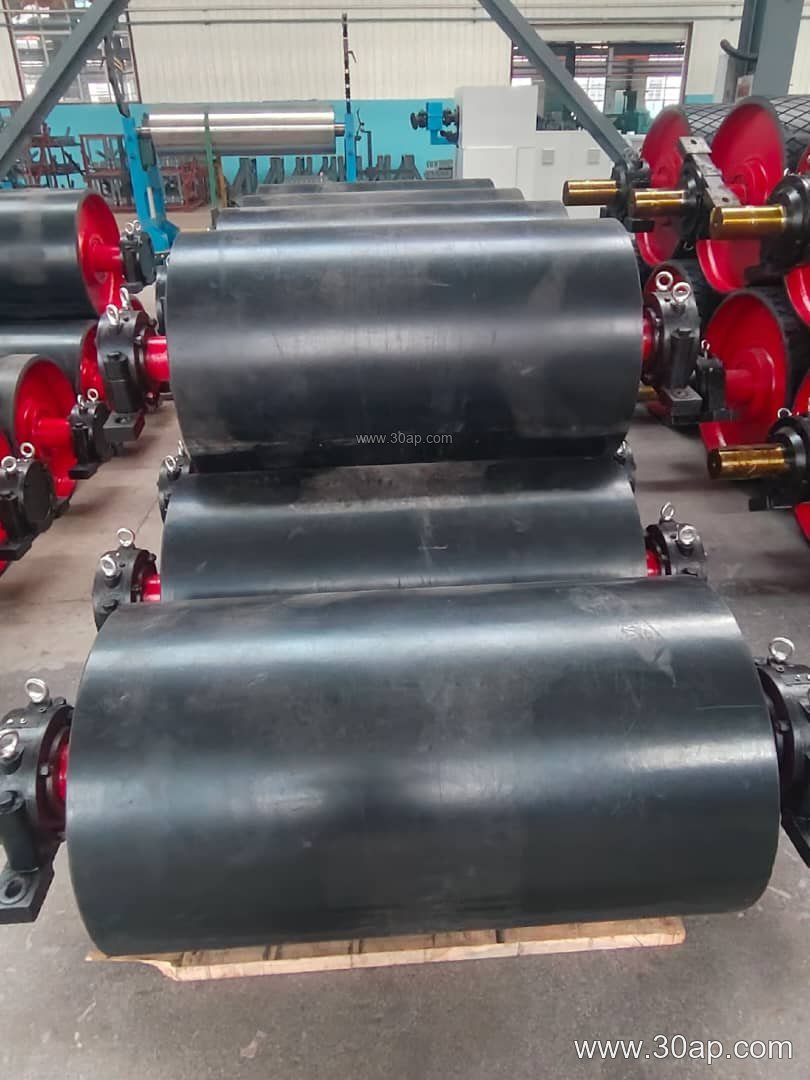
Common Dimensions and Surface Forms
Rubber lagging is normally supplied in thicknesses of 8, 10, 12, 15 or 20 mm, selected according to belt tension and abrasion level. The drum face width is usually slightly wider than the belt it carries. Typical reference combinations are shown below; actual sizes are determined by conveyor design, not by belt width alone.
| Belt width | Typical pulley face width | Common drum diameter range | Lagging thickness |
|---|---|---|---|
| B500 | about 600 mm | Ø250 – Ø400 | 8 – 12 mm |
| B650 | about 750 mm | Ø315 – Ø500 | 8 – 12 mm |
| B800 | about 950 mm | Ø400 – Ø630 | 10 – 15 mm |
| B1000 | about 1150 mm | Ø500 – Ø800 | 10 – 15 mm |
| B1200 | about 1400 mm | Ø630 – Ø1000 | 12 – 20 mm |
| B1400 | about 1600 mm | Ø800 – Ø1250 | 12 – 20 mm |
These are reference figures. A B800 belt, for example, may run on a Ø500 drum in one plant and a Ø630 drum in another, depending on wrap angle, belt speed and load. Shaft diameter is a separate decision: common shaft sizes run from Ø50 up to Ø200, chosen from torque and radial load rather than from belt width.
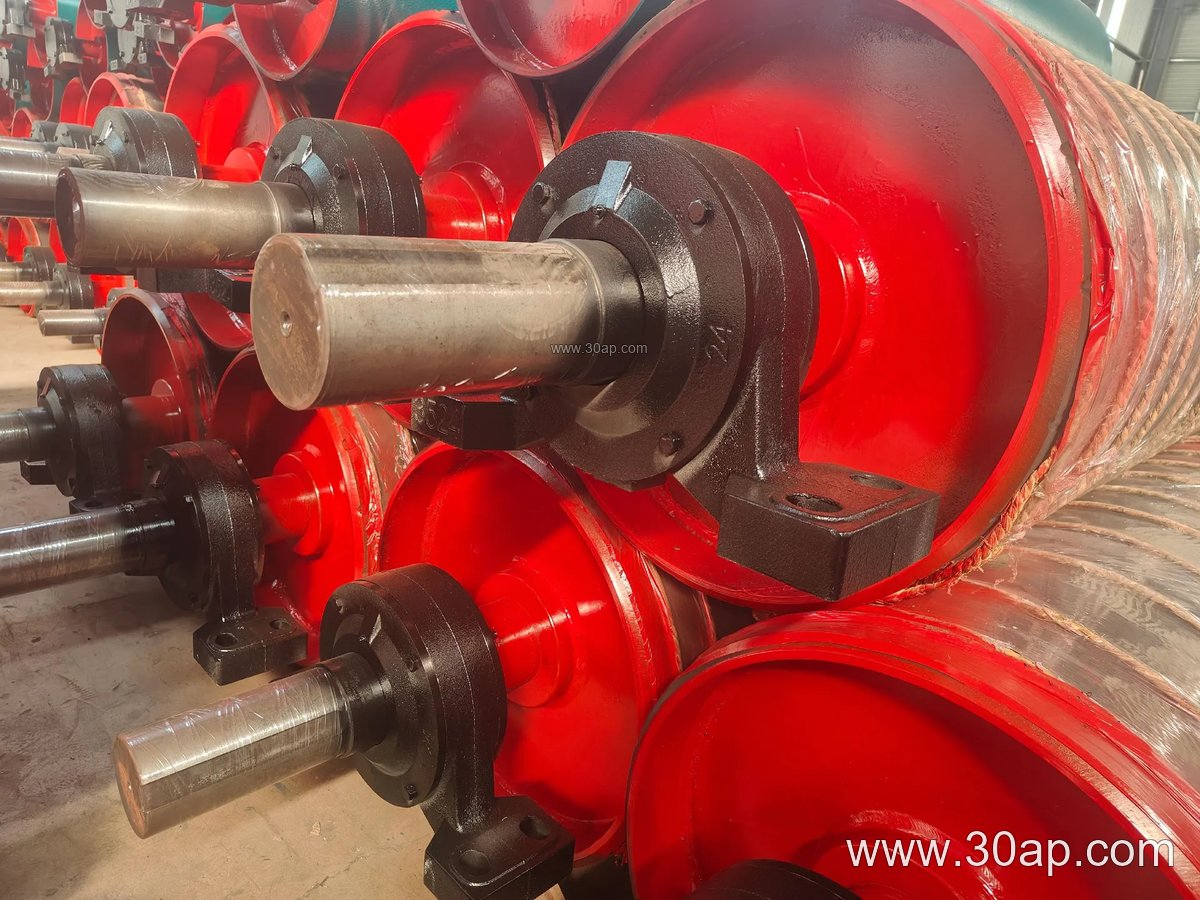
Where the Rubber Lagged Drum Fits
The same product appears in several positions on a conveyor, and each position has its own demands. At the head or drive end, a lagged drum must deliver enough grip to move the loaded belt without slipping. At the tail, a lagged pulley helps center the belt as it returns. Tension and bend positions benefit from lagging mainly as wear protection, since wrap angles there are often low.
It is worth noting that a drive pulley, a tail pulley and a bend pulley are not interchangeable. They differ in load, wrap angle and sometimes in surface treatment. A drive pulley with herringbone lagging is not simply a tail pulley turned around; the design intent is different.
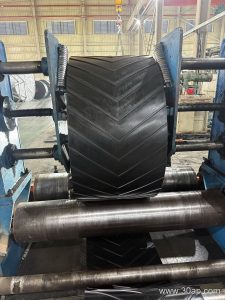
Typical installations include coal handling in power plants, clinker transport in cement works, iron and copper ore conveying, crushing and screening circuits, port bulk terminals and concrete batching plants. In all of them, the lagged pulley works alongside the conveyor belt, idler rollers, conveyor brackets and other conveyor pulleys, so alignment and belt tracking deserve as much attention as the drum itself.
What Buyers Should Check Before Ordering
- Position and duty – confirm whether the pulley is a drive, tail, tension or bend unit, and state the belt speed and starting torque.
- Lagging type and thickness – plain, diamond or herringbone; hot vulcanized or cold bonded; 8 to 20 mm according to abrasion.
- Drum dimensions – shell diameter, face width and shaft size, all confirmed against the conveyor drawing.
- Balance and runout – a lagged drum with uneven rubber can cause vibration and belt wander.
- Environmental conditions – wet, dusty or oily service changes the recommended surface pattern.
During maintenance, inspect the lagging for glazing, cuts and loose edges. Worn lagging reduces friction quietly, and the first sign is often belt slip under peak load. Re-lagging a sound drum is usually more economical than replacing the whole assembly, provided the shell and shaft are still within tolerance.