What a Welded Pulley Is
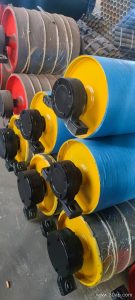
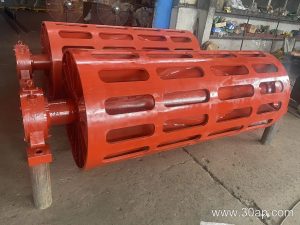
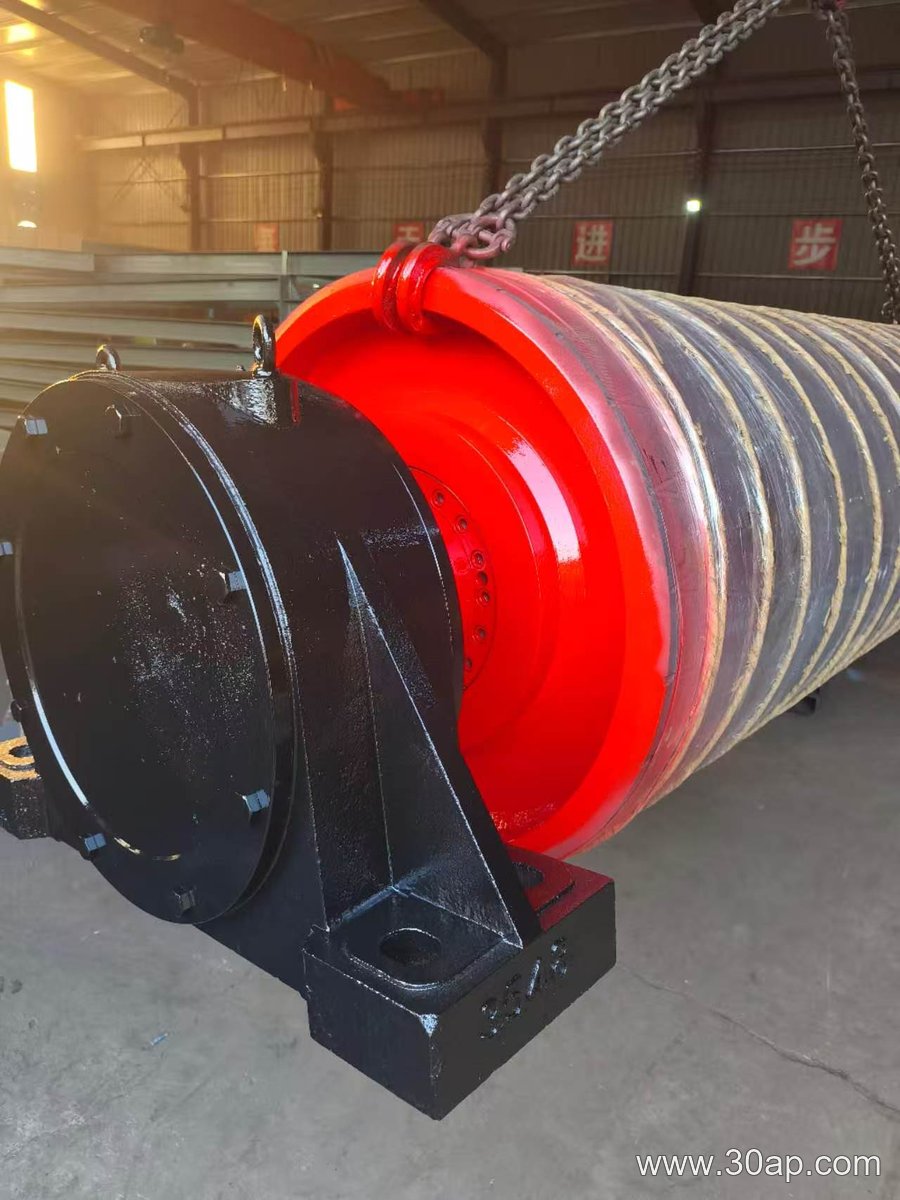
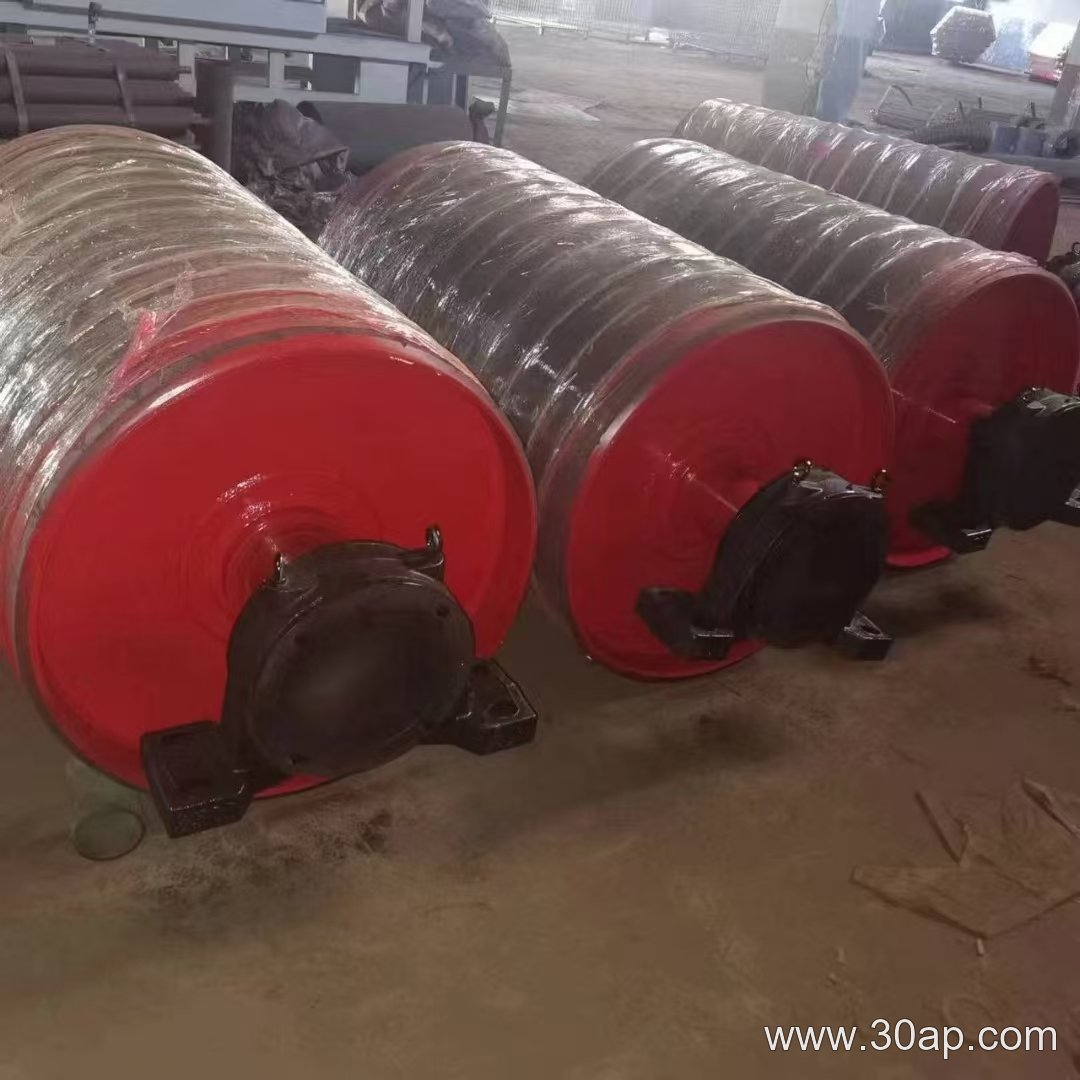
A welded pulley is a conveyor pulley whose cylindrical shell is joined to its end discs and hub assembly by welding rather than by casting or bolting. In everyday plant language it is often simply called a conveyor pulley, and engineers may also refer to it as a welded drum or a fabricated pulley. The welded construction is what gives this component its character: the shell, discs and shaft are produced separately and then assembled into one rigid rotating body.
Because the joints are welded, the finished pulley can be built in a wide range of diameters and face widths without new casting patterns. That flexibility is one reason welded pulleys dominate modern bulk handling conveyors, from small aggregate lines to large port installations.
How It Is Built
Production usually starts with a rolled steel shell. The ends are machined, then dished or flat end discs are fitted and welded to the shell. A hub is welded or keyed to the shaft, and the discs are connected to that hub. After welding, the assembly is stress relieved where required, machined on the journals, dynamically balanced, and finally coated or lagged.
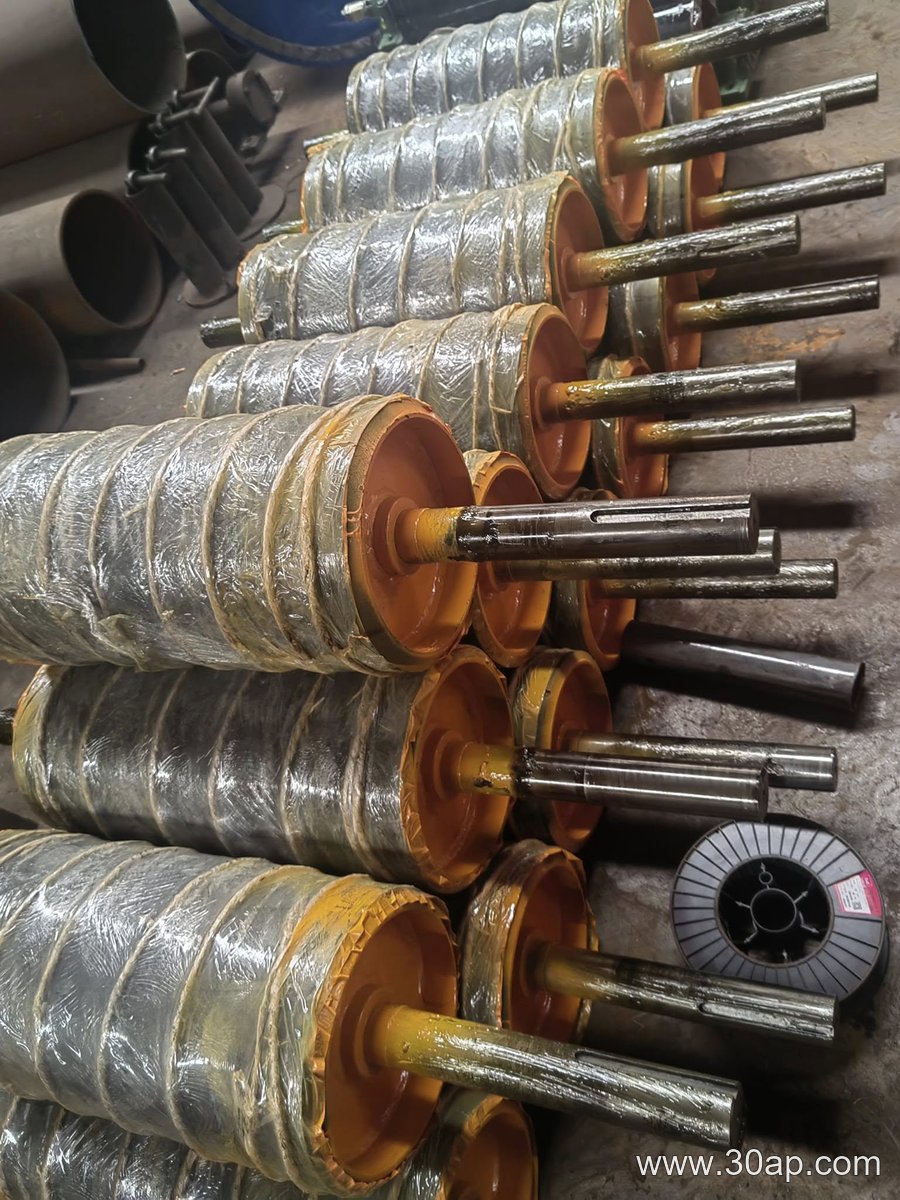
Key quality points for a buyer to check include weld penetration, runout of the shell, concentricity between shaft and shell, and the balance grade. A poorly balanced welded pulley will vibrate, load the bearings and shorten belt life. The shaft diameter is determined by torque and load, not by belt width alone, so two pulleys for the same belt can have quite different shafts.
Where It Fits in a Conveyor
Pulleys perform different duties depending on position. A drive pulley transmits power to the belt, a tail pulley supports the belt at the loading end, and a bend pulley changes belt direction. These are separate functions and are not interchangeable terms. A welded pulley may be supplied for any of these roles, but the duty class, lagging and shaft size will differ.
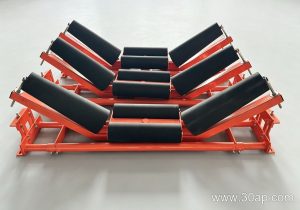
Typical locations include sand and gravel plants, crushed stone operations, coal preparation plants and cement clinker lines. In these settings the pulley works together with the conveyor belt, idler rollers and conveyor brackets to keep the belt tracking and tensioned.
Common Sizes and Surface Forms
The table below lists reference data that appears in general conveyor practice. It is not a supply promise and not every combination is standard. Diameter should always be confirmed against belt tension, wrap angle and shaft load.
- Belt widths: B400, B500, B650, B800, B1000, B1200, B1400, B1600, B1800, B2000
- Diameters: Ø200, Ø250, Ø315, Ø400, Ø500, Ø630, Ø800, Ø1000, Ø1250, Ø1400
- Shaft diameters: Ø50, Ø60, Ø70, Ø80, Ø90, Ø100, Ø120, Ø140, Ø160, Ø180, Ø200
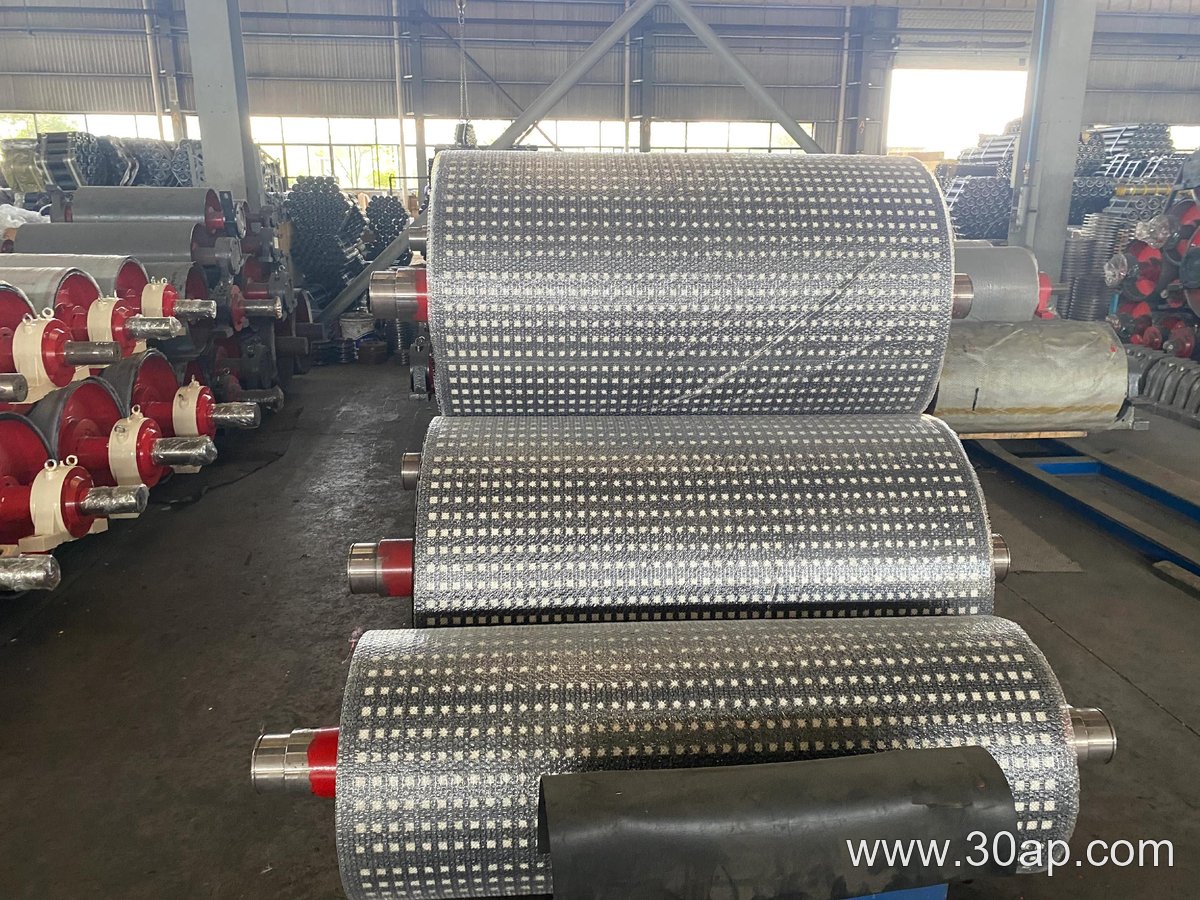
- Lagging: plain, cold bonded rubber, hot vulcanized rubber, diamond grooved, herringbone, ceramic, flat rubber
- Lagging thickness: 8, 10, 12, 15, 20 mm
Face width is normally a little wider than the belt. As a rough reference, B400 may use about 500 mm face, B800 about 950 mm, and B1200 about 1400 mm. A welded pulley might be ordered as B800 × Ø500 or B1200 × Ø1000, but no single belt width locks the design to one diameter. For example, a light-duty line and a heavy-duty line can both run B1000 belts with different pulley diameters.
What to Confirm Before Ordering
Buyers should provide the belt width, the required diameter, the shaft diameter, the face width, the position in the conveyor, and the lagging preference. It also helps to state the belt speed, the calculated tension and the environment, because abrasive dust, moisture and temperature affect the choice of lagging and coating.
If the pulley replaces an existing unit, measure the shaft, keyway, bearing centres and bolt pattern on the conveyor bracket before ordering. A welded pulley that matches the original mounting dimensions will avoid downtime during installation. Finally, ask for the balance report, runout record and weld inspection documents so the delivered pulley can be checked against the specification.