What a Conveyor Frame Does on a Belt System
A conveyor frame is the structural backbone that holds the idlers, pulleys, and belt in correct alignment along a conveyor route. In a limestone quarry, a cement plant, or a coal handling system, the frame carries the dead weight of the belt and the live load of the material, then transfers those forces to the ground or to a supporting steel structure. Without a rigid and properly squared frame, a conveyor belt tends to wander, spillage increases, and idler life drops.
The frame is not a single part. It is a set of sections, each with a specific job: carrying the belt on the loaded side, supporting the empty return strand, absorbing impact at the loading point, and keeping the belt centered. A complete installation usually combines several frame types along one conveyor.
How a Conveyor Frame Is Built
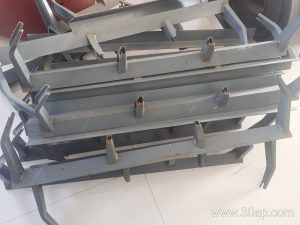
Most frames are fabricated from angle steel, channel steel, or folded steel plate. The choice depends on belt width, load, and span between supports. A typical section includes a cross member, mounting pads for idler rollers, and bolt holes that match the bracket spacing. For wider belts, the cross member becomes longer and may need additional bracing to resist bending.
Common frame types include:
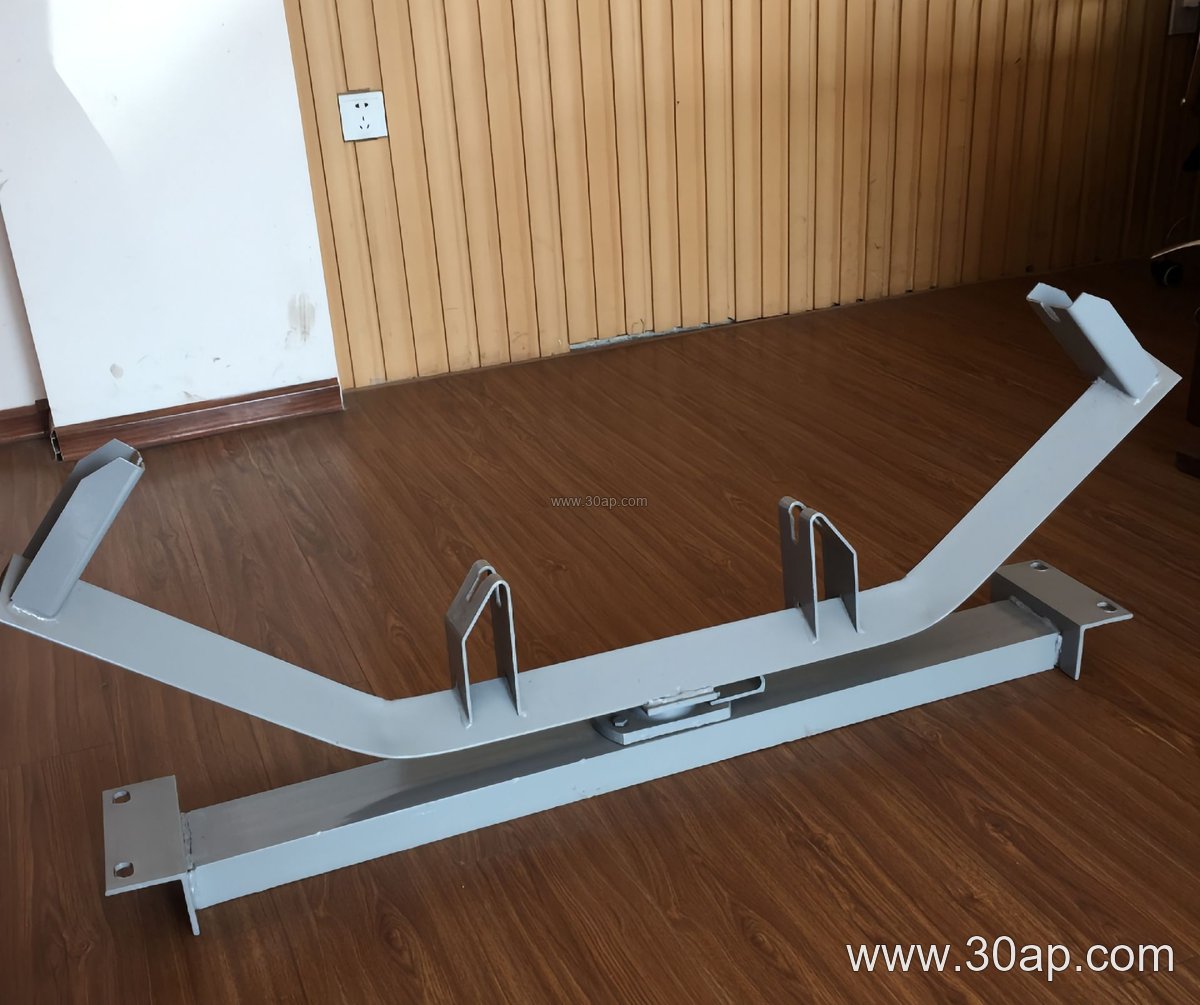
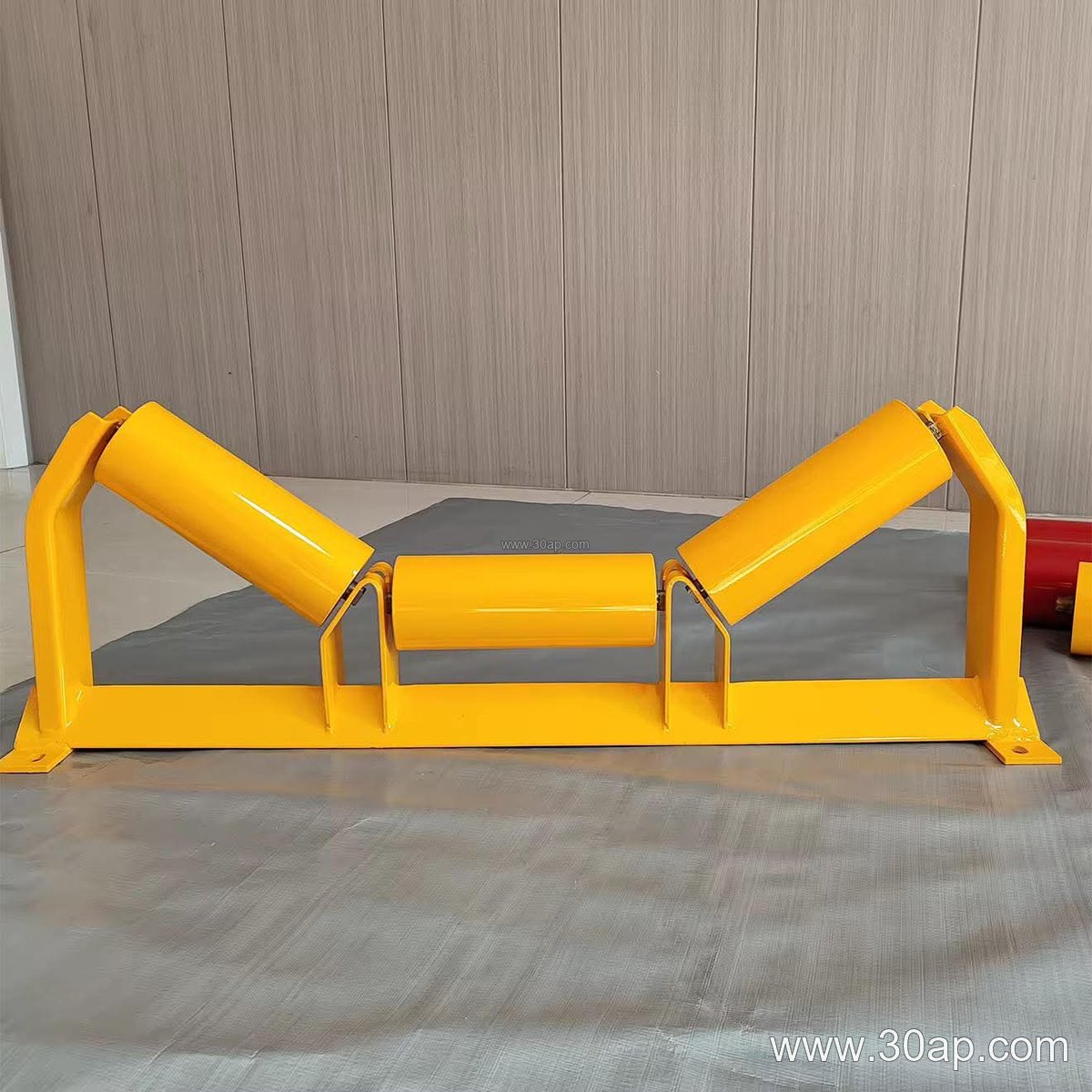
- Troughing frame for the carrying side, which sets the trough angle of the idlers
- Transition frame placed near a pulley to guide the belt from flat to troughed profile
- Return frame, including flat return and V-return designs, for the empty strand
- Impact frame under the loading chute, often fitted with cushion idlers
- Self-aligning frame that corrects minor belt tracking errors
- Adjustable frame that allows the trough angle to be changed on site
Material grade matters in dusty or wet conditions. A frame in a coal preparation plant may need extra corrosion protection, while a frame in a dry sand and gravel line can use a simpler finish.
Matching Frame to Belt Width, Trough Angle, and Roller Diameter
Frame selection is a design decision, not a fixed formula. Belt width, trough angle, and idler diameter work together, but one belt width does not lock the user into one roller size or one trough angle. A B800 frame might run with 30 degree or 35 degree troughs and Ø108 rollers, while a B1200 frame could use 35 degree or 45 degree troughs with Ø133 rollers. Heavier duty lines, such as an iron ore transfer point, may move toward Ø159 or Ø194 rollers on a reinforced frame.
The table below shows common reference combinations. These are examples, not mandatory pairings.
Reference Frame and Idler Combinations
| Belt width | Trough angle | Roller diameter | Typical frame note |
|---|---|---|---|
| B500 | 20 degree | Ø89 | Light duty, short spans |
| B650 | 30 degree | Ø89 | Small to medium transfer |
| B800 | 35 degree | Ø108 | General bulk handling |
| B1000 | 35 degree | Ø108 or Ø133 | Medium duty, cement or aggregate |
| B1200 | 45 degree | Ø133 | High capacity, deeper trough |
| B1400 | 45 degree | Ø159 | Heavy duty, power plant coal |
| B1600 | 35 degree or 45 degree | Ø159 or Ø194 | Mine and port service |
Installation hole spacing and cross beam length change with belt width and trough angle, so they are confirmed at the design stage rather than taken as universal values.
Where Conveyor Frames Are Used
Any industry that moves bulk material on a belt relies on frames. In a stone crushing and screening plant, troughing frames carry crushed rock at high tonnage. In a coal-fired power station, frames support the belt through coal bunkers and transfer towers. In a fertilizer or grain silo facility, lighter frames with smooth surfaces help prevent material buildup. The same principle applies in tunnel muck removal, where impact frames take the first hit from falling rock.
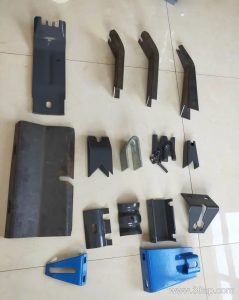
A conveyor pulley at the head or tail works with the frame but is a separate component. Drive, tail, and bend pulleys are not interchangeable, and none of them replaces the frame. Likewise, a conveyor bracket is a small mounting piece, while the frame is the larger structural section that carries the idlers.
What Buyers Should Check Before Ordering
- Confirm belt width and the intended trough angle, since these set the frame geometry
- Check the roller diameter and shaft size that the frame must accept
- Ask whether the frame is fixed or adjustable if the operation may change trough angle later
- Review the loading zone; an impact frame with cushion idlers can reduce belt damage
- Match the material finish to the environment, especially in wet or corrosive plants
- Verify hole spacing and cross member length against the actual conveyor layout
A well-chosen conveyor frame keeps the belt, idler roller, and pulley working as a system. It is a simple steel structure, but it decides how smoothly the whole conveyor runs.