What Conveyor Bracket Fabrication Covers
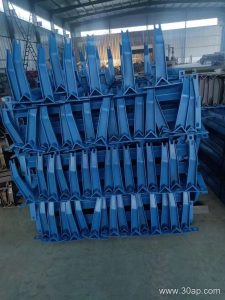
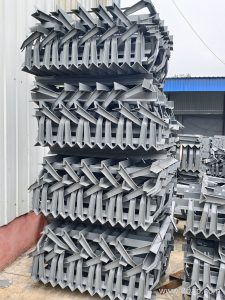
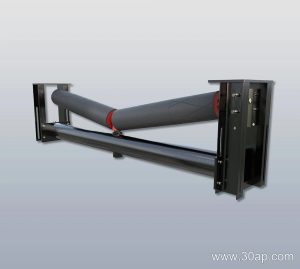
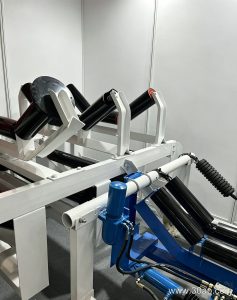
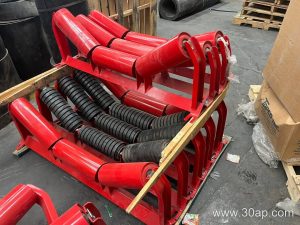
Conveyor bracket fabrication is the process of cutting, forming, drilling, and welding the structural supports that hold idler rollers and shape the conveyor belt into its carrying profile. A fabricated bracket, often called a conveyor bracket or idler support bracket, is not a single universal part. It includes troughing brackets, return brackets, transition brackets, impact brackets, and self-aligning brackets, each built to match a specific duty on the conveyor line.
Fabrication starts with raw steel. Angle iron, channel steel, and folded steel plate are common starting materials. The fabricator cuts them to length, punches or drills mounting holes, bends them to the required trough angle, and welds gussets or end plates where extra stiffness is needed. After welding, the bracket is cleaned, painted or galvanized, and checked for hole alignment and overall squareness.
How the Bracket Fits the Conveyor Structure
The bracket connects the idler roller to the main conveyor frame. On the carrying side, a troughing bracket holds three or more rollers at a set angle so the conveyor belt forms a trough. On the return side, a flat or V-return bracket supports the empty belt. The bracket must resist belt load, material impact, and vibration without twisting or loosening.
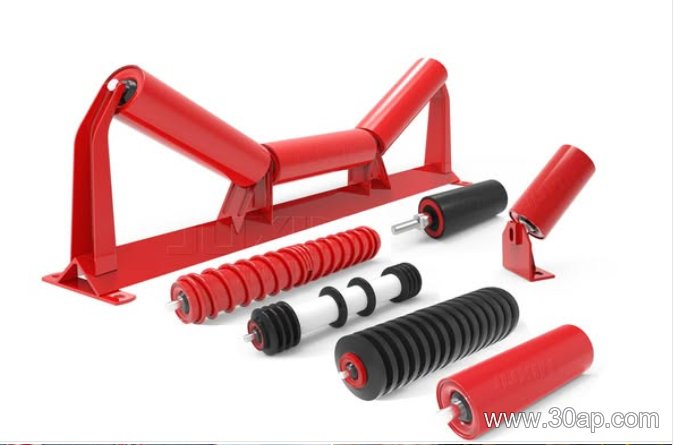
Mounting hole spacing and crossbeam length are not fixed. They are determined by belt width, trough angle, roller diameter, and frame design. A bracket made for one conveyor structure will not automatically fit another, even when the belt width is the same.
Common Types and Their Working Positions
- Troughing bracket: carries the loaded belt at 20°, 30°, 35°, or 45° trough angles.
- Transition bracket: supports the belt where it changes from flat to troughed, reducing stress at the transition zone.
- Return bracket: supports the empty belt on the return run, often as a flat or V-shaped support.
- Impact bracket: placed under the loading point to absorb falling material energy.
- Self-aligning bracket: allows small lateral movement to help keep the belt centered.
- Adjustable bracket: lets maintenance staff change the trough angle within a range instead of replacing the whole support.
These types are not interchangeable. A return bracket does not replace a troughing bracket, and a transition bracket serves a different purpose than an impact bracket. The correct choice depends on the belt line position and the load condition.
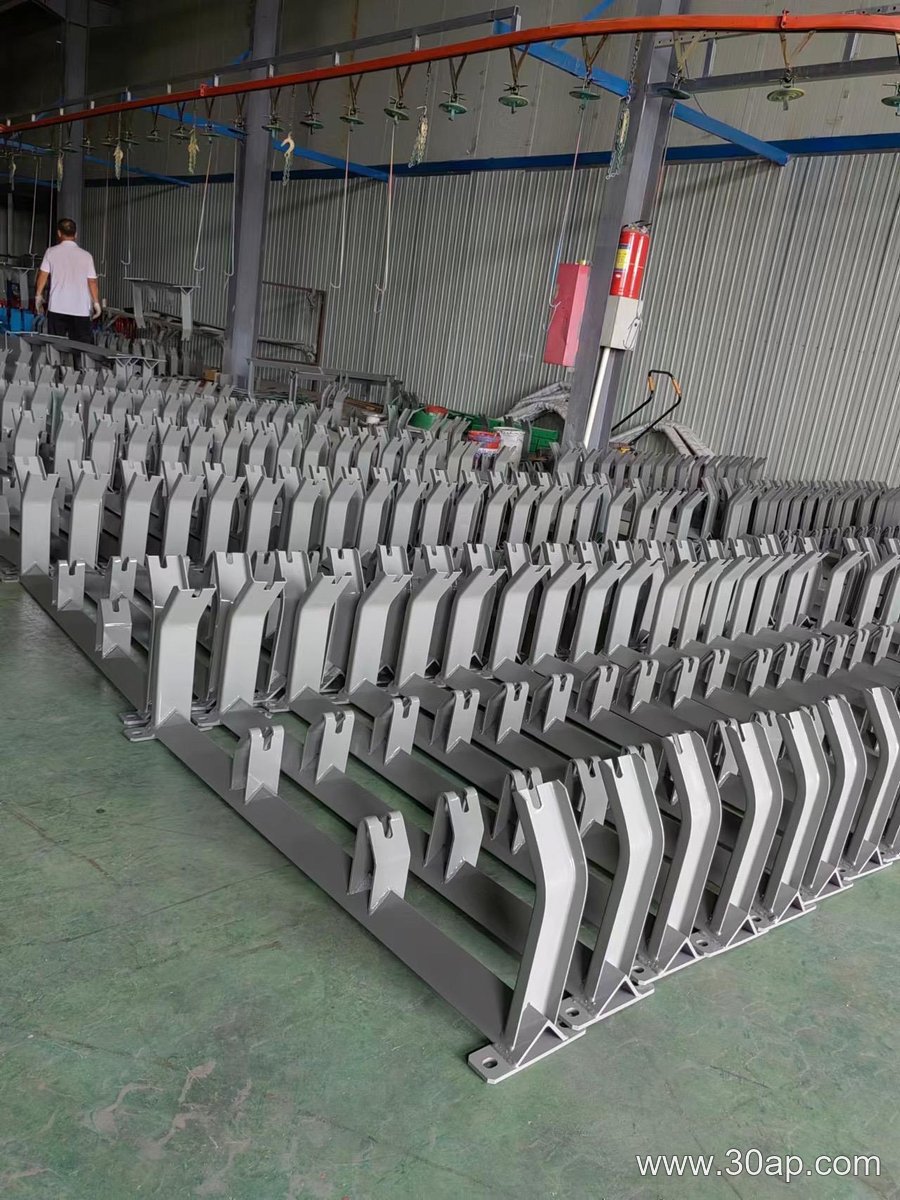
Materials and Fabrication Details
Material selection affects strength and service life. Angle steel and channel steel are common for general support frames. Folded steel plate can reduce weight while keeping stiffness. In dusty or wet locations, such as a coal preparation plant or a cement plant, a painted or galvanized finish helps slow corrosion.
Welding quality matters more than appearance. Poor welds can crack under repeated vibration. Bolt holes should line up with the frame and the idler roller mounting points. If a bracket is twisted, the roller will sit at the wrong angle and the belt may drift or wear unevenly.
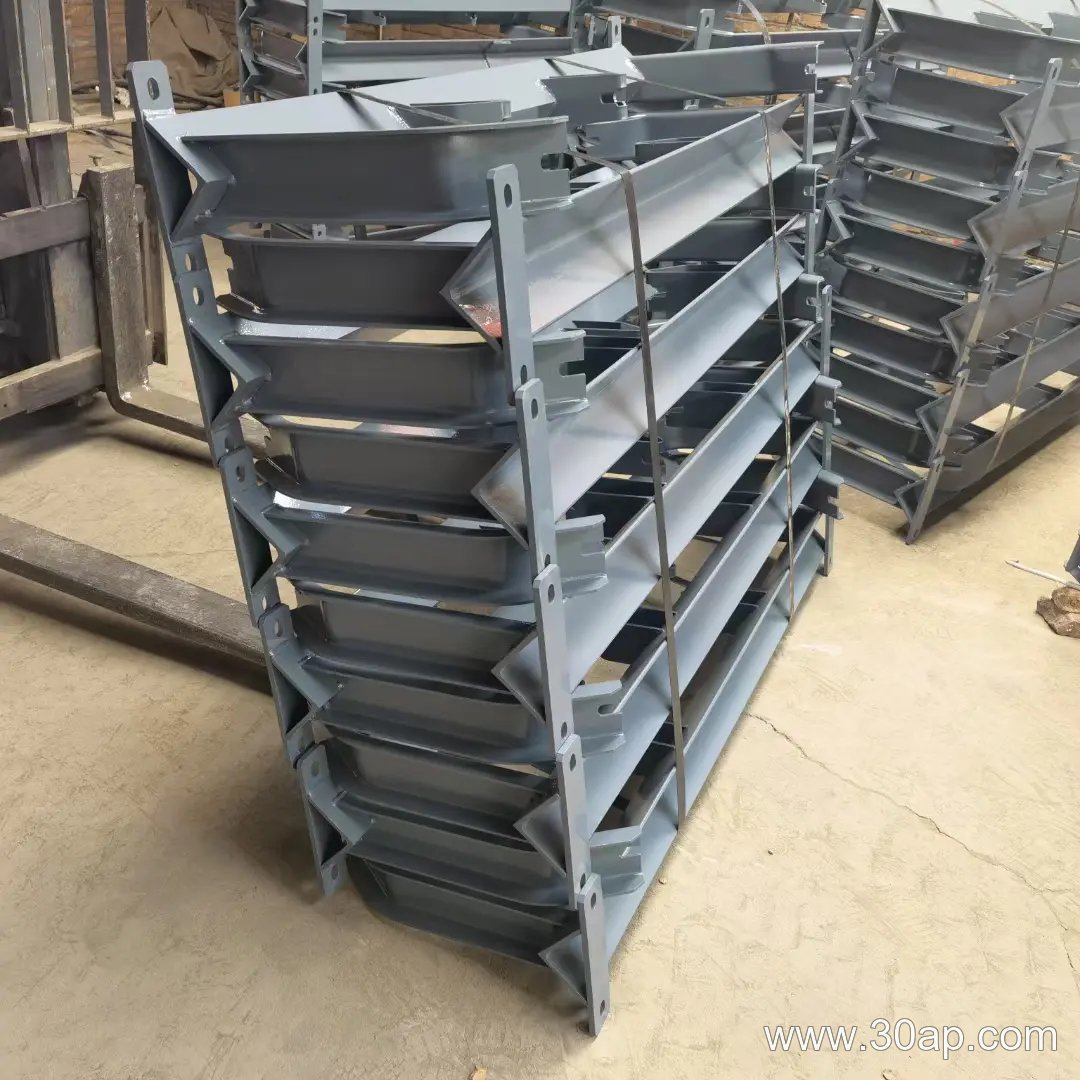
Typical Working Conditions
Fabricated brackets appear in many bulk material handling sites. A quarry or sand and gravel line uses them on long inclined conveyors. A power plant coal handling system uses them on both the carrying and return runs. A fertilizer or grain silo facility may need a different surface finish because of dust and moisture. In each case, the bracket is selected for the belt width, roller diameter, and trough angle of that specific conveyor.
Specification Reference for Buyers
The table below lists common reference values. These are examples, not fixed matches. A B800 belt can be used with more than one roller diameter and more than one trough angle, depending on the design.
| Item | Common Reference Values |
|---|---|
| Belt width | B500, B650, B800, B1000, B1200, B1400 |
| Trough angle | 20°, 30°, 35°, 45° |
| Idler roller diameter | Ø89, Ø108, Ø133, Ø159 |
| Bracket material | Angle steel, channel steel, folded steel plate |
| Mounting hole spacing | By design, based on belt width and frame |
What to Check Before Ordering
A buyer should confirm the conveyor frame drawing, belt width, roller diameter, trough angle, and mounting hole pattern. It also helps to state the working environment, because a bracket for a dry sand and gravel line may need a different finish than one for a wet coal handling area. If the bracket is adjustable, confirm the angle range and the locking method.
Fabrication tolerances should be discussed before production. Small differences in hole position or bend angle can cause installation problems on site. A well-fabricated conveyor bracket keeps the idler roller aligned, protects the conveyor belt, and reduces maintenance work over the life of the conveyor.