What a Q355 Conveyor Bracket Does on a Belt Conveyor
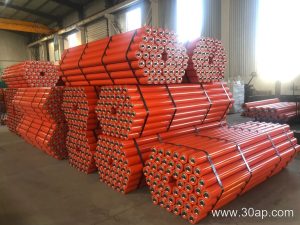
A Q355 conveyor bracket is the structural support that holds idler rollers in the correct position along a conveyor frame. In practice, it is often called a Q355 conveyor idler bracket or a Q355 roller support bracket, and these names describe the same component. The bracket carries the weight of the conveyor belt, the material load, and the rollers themselves, so its job is both simple and demanding. It must keep the rollers aligned, hold the chosen trough angle, and resist vibration and impact without deforming.
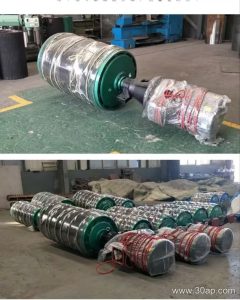
Unlike a drive pulley, a tail pulley, or a bend pulley, which transmit power or change belt direction at the ends and bends of a conveyor, a bracket works along the carrying and return runs. It is a stationary support, not a rotating drum. That distinction matters when selecting replacement parts, because each item has a different role in the belt system.
How the Bracket Is Built
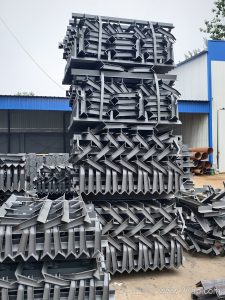
Most Q355 conveyor brackets are fabricated from angle steel, channel steel, or folded steel plate. The material grade Q355 refers to a low-alloy structural steel with a yield strength around 355 MPa, which gives the bracket good load-bearing capacity without excessive weight. The exact thickness and profile are chosen by the conveyor designer according to belt width, load, and spacing.
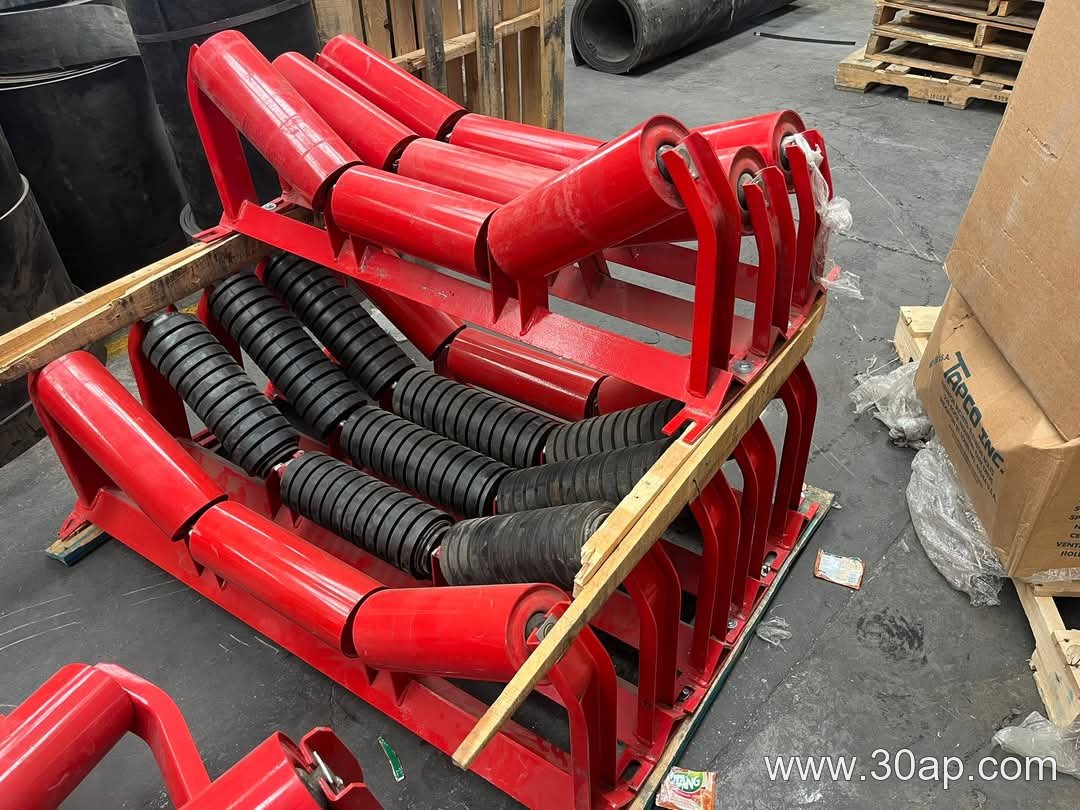
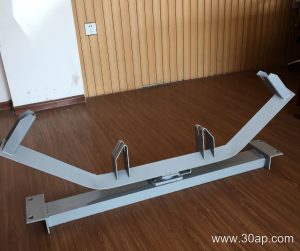
A typical bracket assembly includes a crossbeam, mounting plates or slots, and roller seats. The seats may be fixed or adjustable. Adjustable brackets allow the trough angle to be set between common values such as 20, 30, 35, or 45 degrees, which helps when a conveyor needs fine tuning for material characteristics. Fixed brackets are simpler and are used where the trough angle is already decided.
Common Types and Where They Sit
The Q355 conveyor bracket family covers several positions on a conveyor:
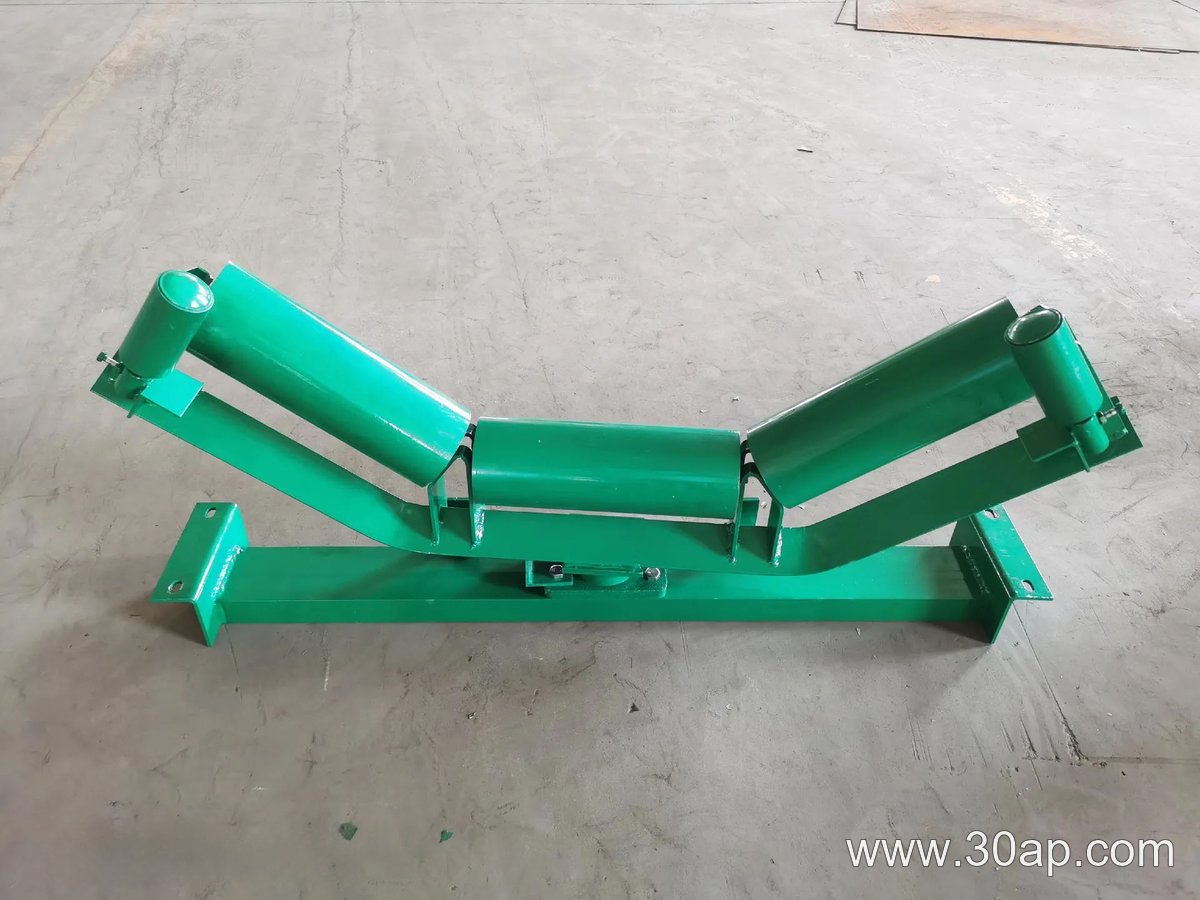
- Troughing brackets support three rollers on the carrying side and set the trough angle.
- Transition brackets ease the belt from a flat pulley area into a trough shape.
- Return brackets support the belt on the empty return run, often with a V-shaped or flat arrangement.
- Impact brackets sit under the loading point and use cushioning rollers to absorb falling material.
- Self-aligning brackets help correct belt tracking when the belt drifts to one side.
These types are not interchangeable with drive, tail, or bend pulleys. A bracket only holds rollers; it does not drive the belt or change its direction around a drum.
Where Q355 Conveyor Brackets Are Used
You will find these brackets in bulk material handling systems across many industries. In a quarry or crushing and screening line, they support the conveyor belt that carries rock from one stage to the next. In a coal washing plant or a power station coal yard, they keep rollers aligned through long conveying runs. They also appear in cement plants, steel mills, fertilizer plants, and grain silos, wherever a belt conveyor moves loose material continuously.
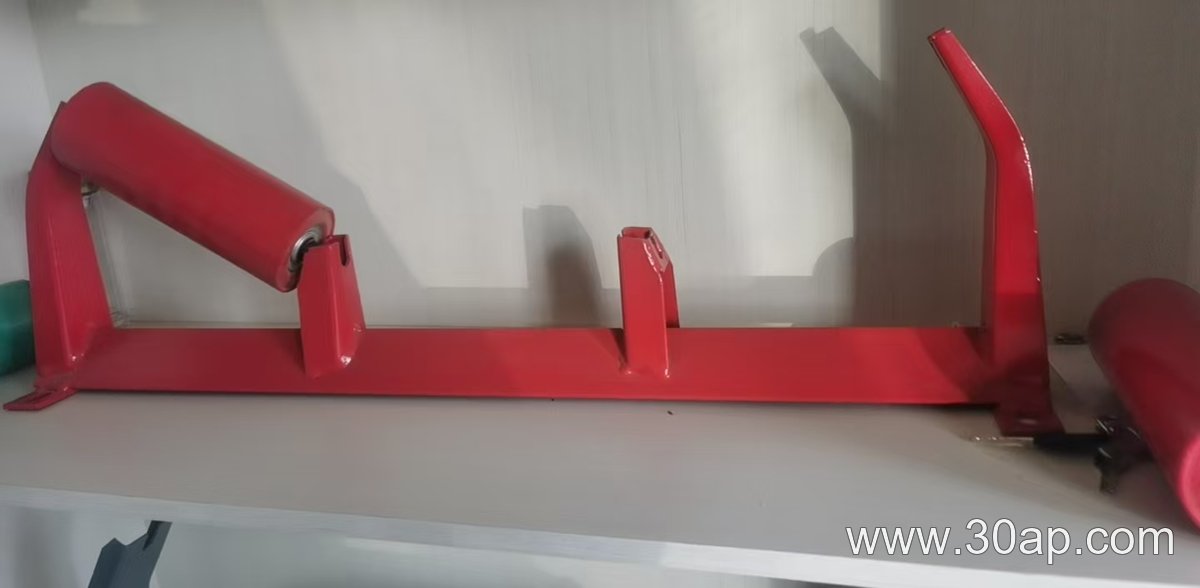
The working environment affects the choice of bracket. Dusty, wet, or corrosive conditions may call for galvanized or painted finishes, while high-impact loading points may need reinforced brackets and cushion rollers.
Matching Brackets to Belt Width and Roller Diameter
Belt width and roller diameter are related but not locked together. A bracket for a B800 belt can be built for Ø89, Ø108, or Ø133 rollers depending on the load and speed. Similarly, a B1200 conveyor might use Ø133 or Ø159 rollers, and a B650 line often works with Ø89 or Ø108. The mounting hole spacing and crossbeam length change with belt width and trough angle, so they should be confirmed from the conveyor drawing rather than assumed.
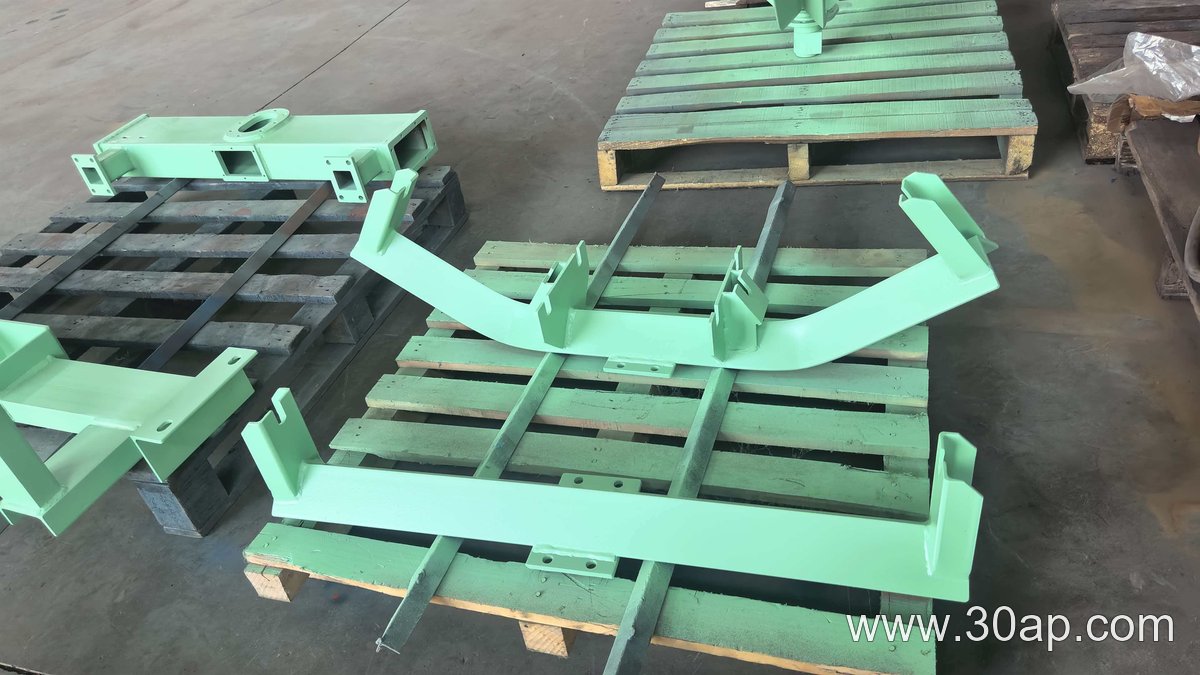
Common trough angles include 20, 30, 35, and 45 degrees. A forward-tilted bracket may use a tilt of about 1.5 to 2 degrees to help belt tracking. None of these values is mandatory for every conveyor; each is selected by design.
What Buyers Should Check Before Ordering
Before purchasing a Q355 conveyor bracket, confirm the belt width, the roller diameter, the trough angle, and whether the bracket is fixed or adjustable. Check the mounting hole pattern and the distance between roller seats against the existing frame. Ask about the steel thickness and surface treatment if the conveyor operates outdoors or in a corrosive area.
It also helps to know the roller type, since a bracket is usually designed around a specific roller seat. If the conveyor uses a self-aligning or impact bracket in one section, order that type for the same position rather than substituting a standard troughing bracket.
Finally, keep spare brackets on hand for high-wear zones such as loading points and transfer towers. A bent or cracked bracket can misalign rollers, damage the conveyor belt, and interrupt production. Replacing it promptly with the correct Q355 conveyor bracket is a practical way to protect the whole conveyor system.