What a Deep Trough Idler Does on a Conveying Line
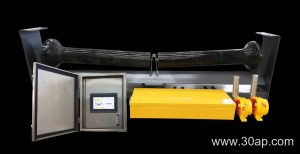
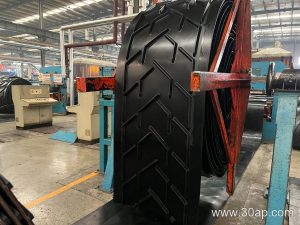
A deep trough idler is a carrying idler assembly whose rollers are set at a steep trough angle, usually 35 or 45 degrees, so the conveyor belt forms a deeper cradle than it would on a standard 20 or 30 degree arrangement. This deeper profile matters most when a line has to move a wide belt and a bulky, loose material without letting the load spill over the edges. In a quarry or a cement plant, the difference between a shallow and a deep trough shows up quickly in belt tracking and in how evenly the load sits across the belt.
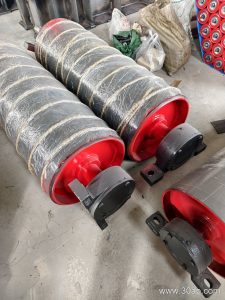
The product is also called a deep troughing idler or a deep trough carrying idler. It belongs to the troughing idler family, not to the return, impact or self-aligning groups. Drive pulleys, tail pulleys and bend pulleys do a completely different job at the ends and corners of the conveyor and are not interchangeable with it.
Construction and Typical Parts
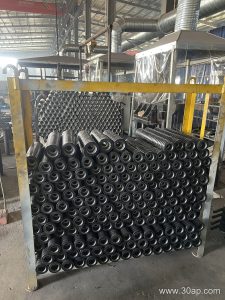
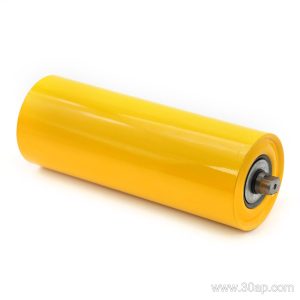
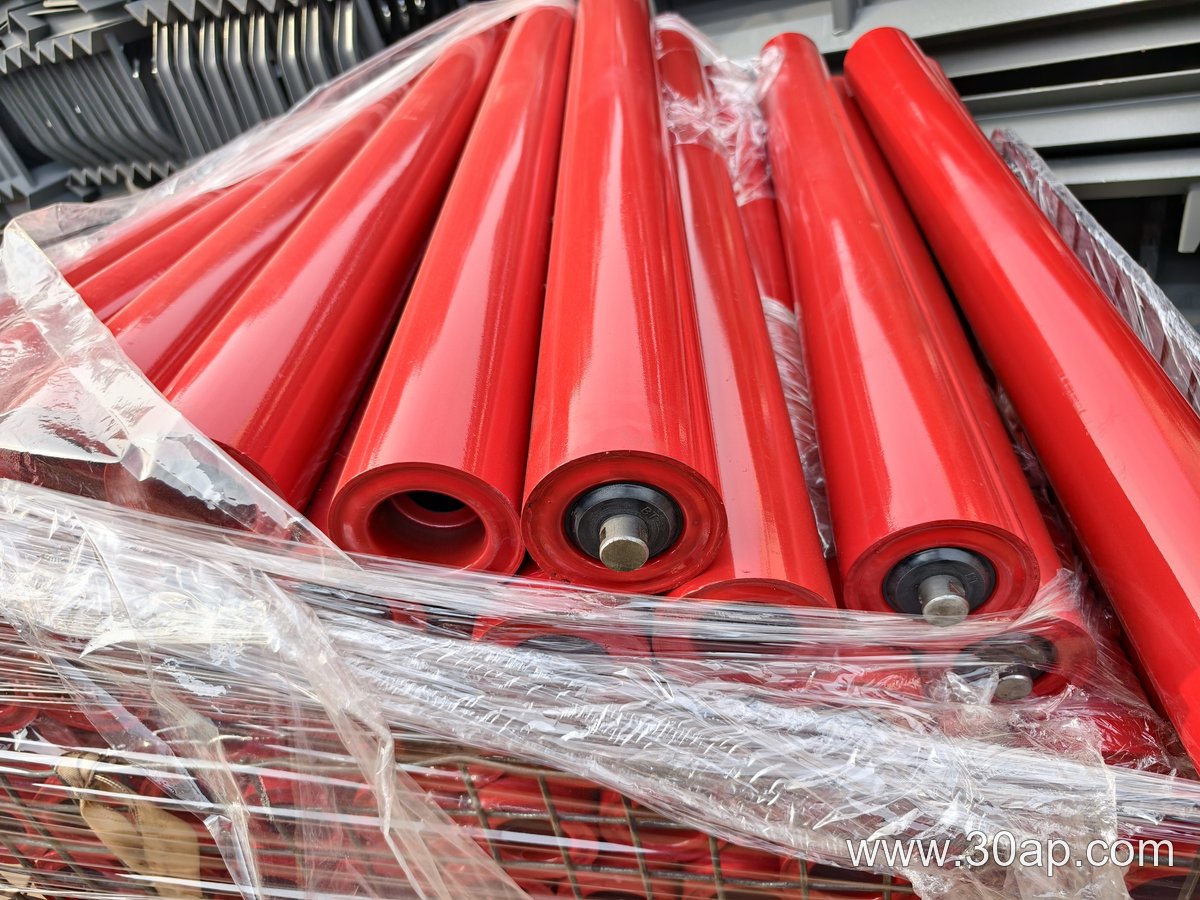
A deep trough idler is normally built as a three-roll set: one centre roller and two side rollers, all mounted on a common frame. Depending on belt width and load, two-roll and single-roll versions exist, but three-roll troughing sets are the common form for wide belts. The rollers themselves may use a steel tube shell, nylon, ceramic or rubber rings, and the bearings are usually deep groove ball bearings such as 6204, 6205, 6305, 6306, 6308 or 6310, chosen according to load and speed rather than tied to one roller diameter.
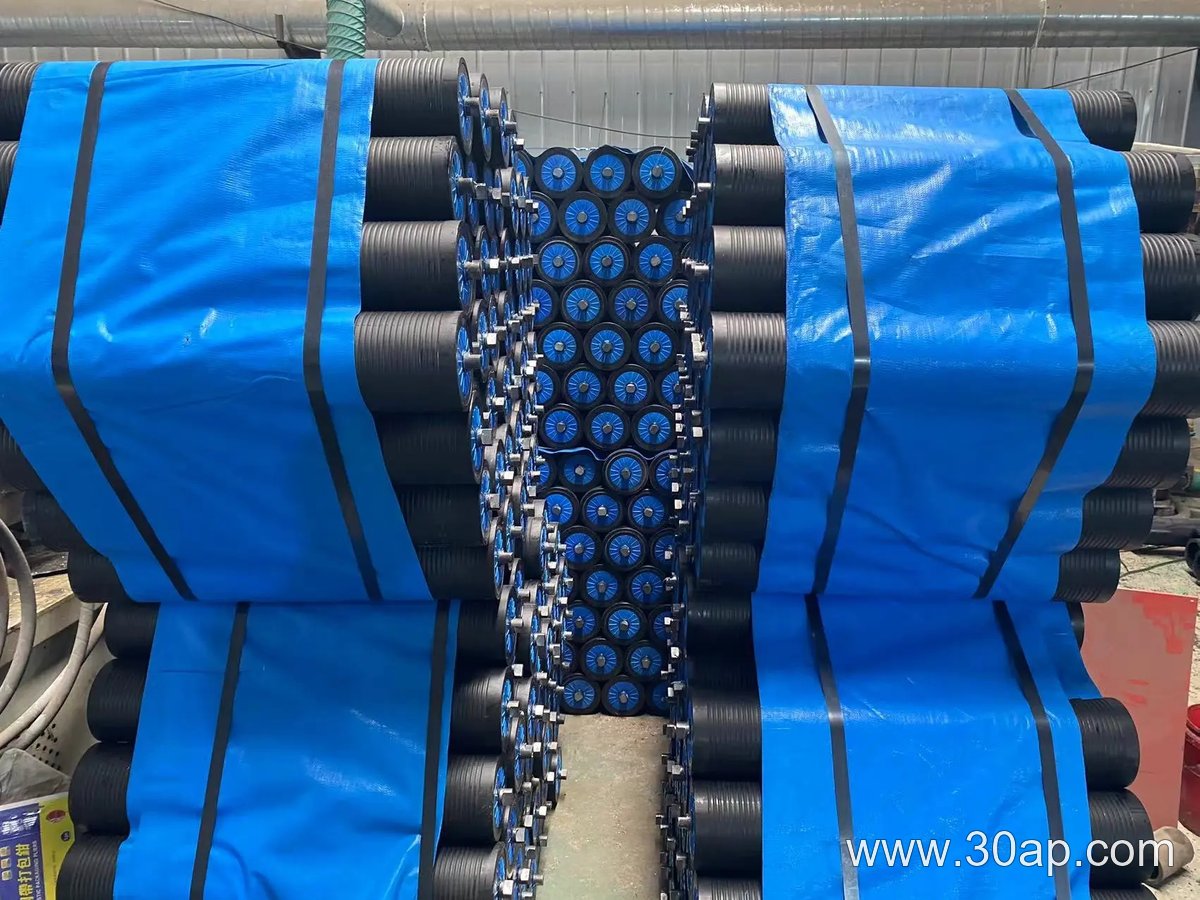
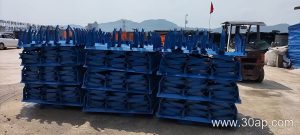
Roller diameters commonly seen in this group include Ø63, Ø76, Ø89, Ø102, Ø108, Ø127, Ø133, Ø159, Ø178, Ø194 and Ø219 mm. The trough angle and the roller length are designed together, because a steeper angle needs a different side roller position to keep the belt supported. A conveyor bracket or idler frame holds the rollers and sets the angle; the bracket must match the belt width and the mounting holes on the conveyor stringer.
Where Deep Troughing Idlers Are Used
These idlers suit lines that carry a heavy, coarse or free-flowing bulk material where belt capacity and load containment matter. They appear in sand and gravel plants, crushed stone operations, coal preparation plants, iron ore and copper ore handling, power station coal feed, and sinter plants. In a tunnel mucking line or a fertilizer blending plant, a deep trough can also help keep a wet or irregular load centred.
They are carrying idlers, so they sit on the loaded run of the conveyor belt. On the return run, a flat return idler or a V-return idler is the usual choice. Where the material drops onto the belt at the loading point, an impact idler with rubber rings is used rather than a deep trough idler, because the impact role is different even though both are trough-shaped.
Common Reference Dimensions
The table below gives common reference values, not fixed supply rules. Side rollers and centre rollers can differ, and the roller length follows belt width, trough angle and roll arrangement.
| Belt width | Typical roller length (three-roll trough) | Common trough angle | Common roller diameter |
|---|---|---|---|
| B500 | about 200 mm | 20–35 degrees | Ø63–Ø89 mm |
| B650 | about 250 mm | 20–35 degrees | Ø76–Ø108 mm |
| B800 | about 315 mm | 30–35 degrees | Ø89–Ø133 mm |
| B1000 | about 380 mm | 30–45 degrees | Ø108–Ø159 mm |
| B1200 | about 465 mm | 35–45 degrees | Ø108–Ø178 mm |
| B1400 | about 530 mm | 35–45 degrees | Ø127–Ø194 mm |
| B1600 | about 600 mm | 35–45 degrees | Ø133–Ø219 mm |
| B1800 | about 670 mm | 35–45 degrees | Ø133–Ø219 mm |
| B2000 | about 750 mm | 35–45 degrees | Ø159–Ø219 mm |
These values are reference examples. A 45 degree trough on a narrow belt and a 35 degree trough on a wide belt can both be correct if the design calls for them. Do not assume one belt width only matches one roller diameter or one shaft size.
What a Buyer Should Check
- Belt width and trough angle, because the two decide the roller length and the frame geometry.
- Roller diameter and bearing size, matched to load, belt speed and expected service life.
- Roller surface: steel tube for general duty, rubber rings for gentler contact, ceramic or nylon where wear or sticking is a concern.
- Sealing and grease retention, since dust from a coal yard or a limestone crusher is the main cause of early bearing failure.
- Bracket hole spacing and frame height, so the idler set fits the existing conveyor stringer without modification.
- Whether the position is a carrying station, a transition station or a loading point, because a transition idler or an impact idler may be the better fit at those spots.
A deep trough idler is a simple part, but its angle, roller length and bearing choice all interact. Getting those three right keeps the conveyor belt centred, reduces spillage and extends the working life of the whole carrying run.