What a Bulk Material Conveyor Belt Does
A bulk material conveyor belt is the continuous load-bearing surface in a conveyor system that moves loose materials such as aggregate, sand, grain, ore, coal, or fertilizer. It travels over a series of idler rollers and around pulleys, forming a closed loop that carries material from one point to another without stopping for individual loads. The belt is not just a flat strip; it is a composite structure engineered to handle abrasion, impact, and tension while keeping the material contained.
This article uses “bulk material conveyor belt” as the main product name. In everyday workshop language, the same item is also called a heavy-duty conveyor belt, but the function remains identical: a continuous rubber or polymer belt designed for loose bulk handling.
How the Belt Is Built
The construction of a bulk material conveyor belt usually includes three main layers. The carcass provides strength and resistance to stretching. Common carcass materials include EP fabric, NN nylon fabric, and steel cord. EP200, EP315, or EP500 are examples of strength ratings often seen in fabric belts, while steel cord belts are chosen for longer runs and higher tension. The number of fabric plies commonly ranges from two to six, depending on the load and the conveyor length.
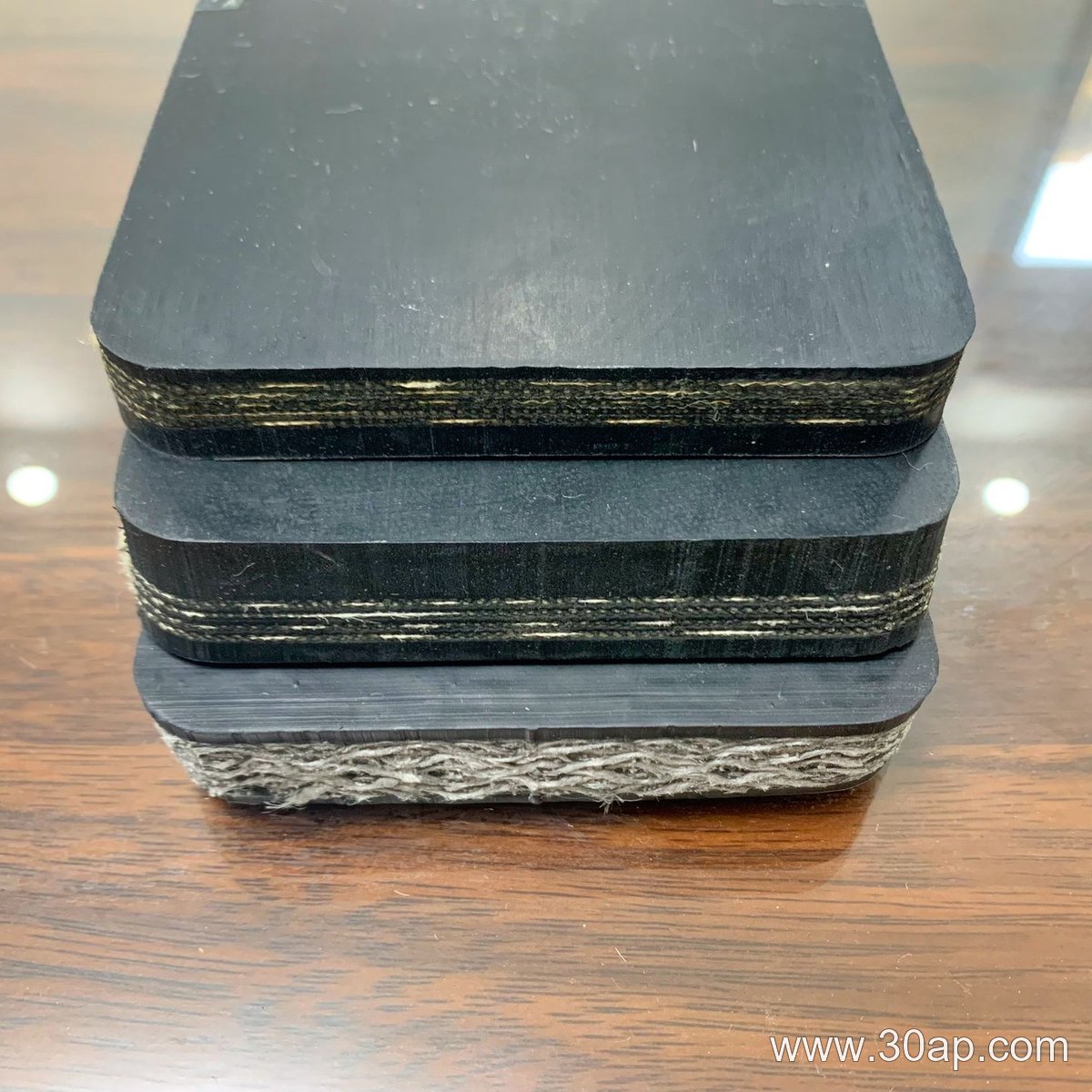
The top cover faces the material. Cover rubber protects the carcass from cutting, abrasion, heat, oil, or chemicals. Typical cover thickness combinations include 3+1.5 mm, 4+2 mm, 5+2 mm, 6+2 mm, and 8+3 mm, where the first number is the top cover and the second is the bottom cover. These values are common reference figures, not universal requirements. A belt carrying sharp rock may need a thicker top cover, while a belt moving grain may use a thinner, smoother cover.
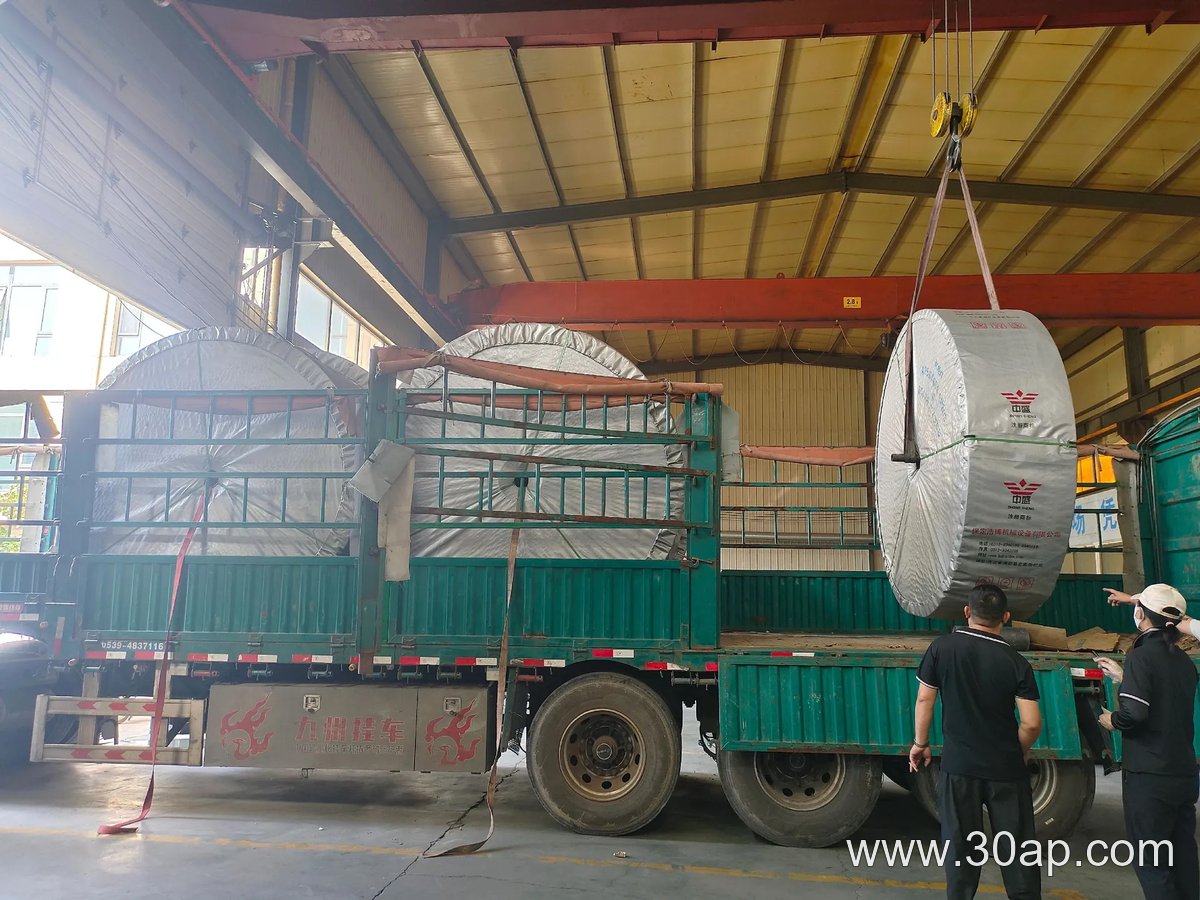
The bottom cover runs against the idler rollers and pulleys. It is usually thinner but still needs enough abrasion resistance to survive the return side of the loop. Some belts also include a breaker fabric or a special edge construction to resist tearing.
Drives, Pulleys, and Support Components
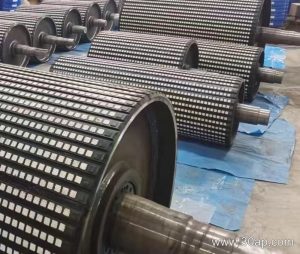
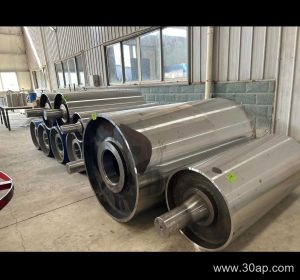
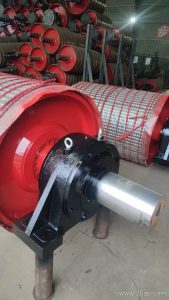
On the conveyor structure, the drive pulley, tail pulley, and bend pulley each have a distinct role. The drive pulley is connected to the motor and gearbox; it transmits motion to the belt. The tail pulley at the opposite end often serves as a turning point and may include a take-up mechanism. A bend pulley changes the belt direction without driving it. These parts are not interchangeable, and a belt must be matched to the pulley diameters and shaft loads specified by the conveyor designer.
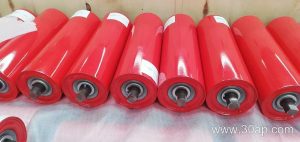
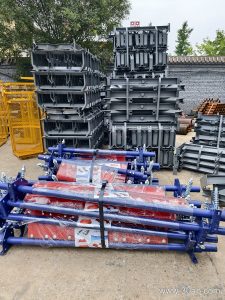
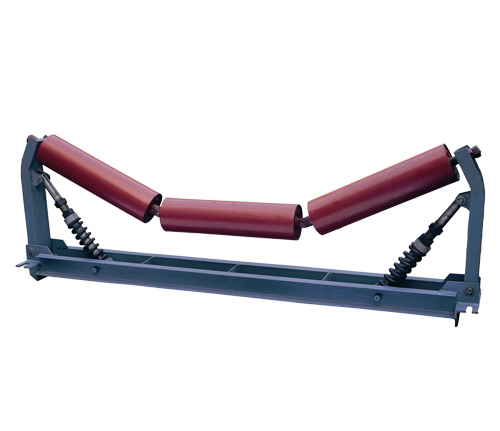
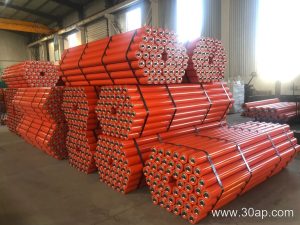
Idler rollers support the belt along the carrying and return runs. Conveyor brackets hold the idlers and pulleys in alignment. Poor alignment or worn idlers can cause the belt to mistrack, edge damage, or premature cover wear. A bulk material conveyor belt does not work in isolation; its service life depends on the whole conveyor train.
Common Bulk Materials and Operating Conditions
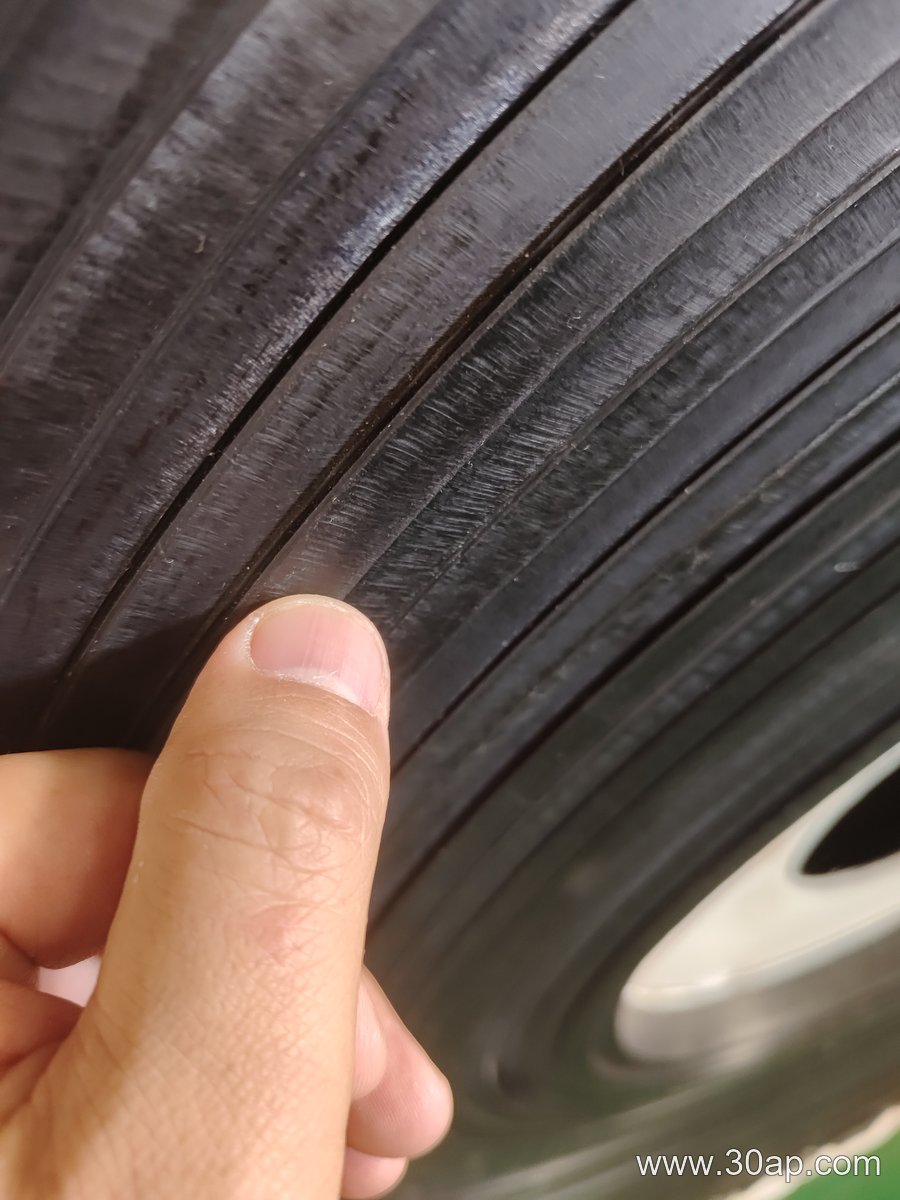
Bulk material conveyor belts are used in quarries, mines, ports, power plants, cement works, fertilizer plants, and grain terminals. The material may be dry, wet, dusty, hot, oily, or chemically active. For hot clinker or sinter, a heat-resistant belt is needed. For coal or grain dust, antistatic and flame-retardant properties are often specified. For outdoor cold, a cold-resistant compound helps prevent cracking. For fertilizer or salt, an acid- and alkali-resistant cover may be relevant.
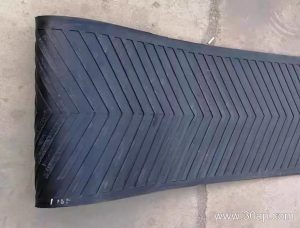
Surface forms also matter. A smooth cover suits fine, dry materials. A patterned or chevron belt can help on inclines by reducing rollback. Corrugated sidewall belts are another subtype used where material must be contained on steep inclines; they are not a replacement for a standard bulk material conveyor belt on a flat or gently inclined run. The choice depends on the angle, material size, and capacity.
What a Buyer Should Check
- Belt width: common widths include B500, B650, B800, B1000, B1200, B1400, B1600, B1800, and B2000. The width should match the conveyor frame and the lump size.
- Strength rating: select an EP or NN rating that meets the calculated tension with a suitable safety factor. Steel cord may be needed for very long or high-tension conveyors.
- Cover grade and thickness: match the cover to abrasion, impact, heat, oil, or chemical exposure. A thicker cover is not always better if flexibility is required.
- Pulley and idler compatibility: confirm the minimum pulley diameter, troughing angle, and idler spacing recommended for the belt type.
- Environmental and safety needs: consider antistatic, flame-retardant, cold-resistant, or oil-resistant properties where the working environment demands them.
No single belt width or strength grade fits every conveyor. A buyer should provide the material type, lump size, capacity, conveyor length, incline, ambient temperature, and available pulley dimensions so the supplier can recommend a suitable construction. The goal is a bulk material conveyor belt that carries the load reliably, tracks well, and wears evenly over its service life.