What a Discharge Pulley Does at the Head of the Line
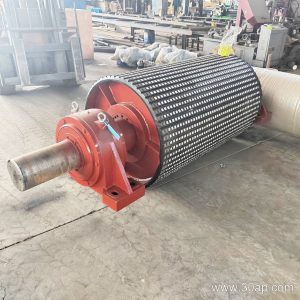
At the discharge end of a belt conveyor, the discharge pulley — also called the head pulley or unloading pulley — is the drum that turns the belt, throws off the material, and often drives the whole system. In a quarry or cement plant, it sits above the crusher or stockpile, so its diameter, face width, lagging and shaft must match the duty. It is not a tail pulley or a bend pulley; those serve different positions and loads.
Construction basics
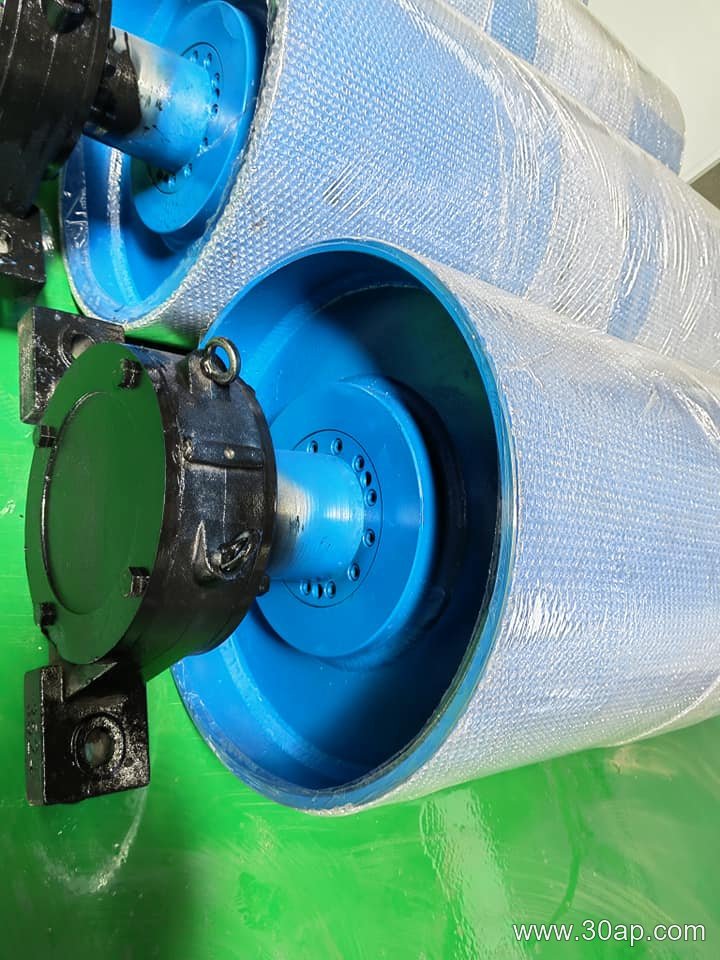
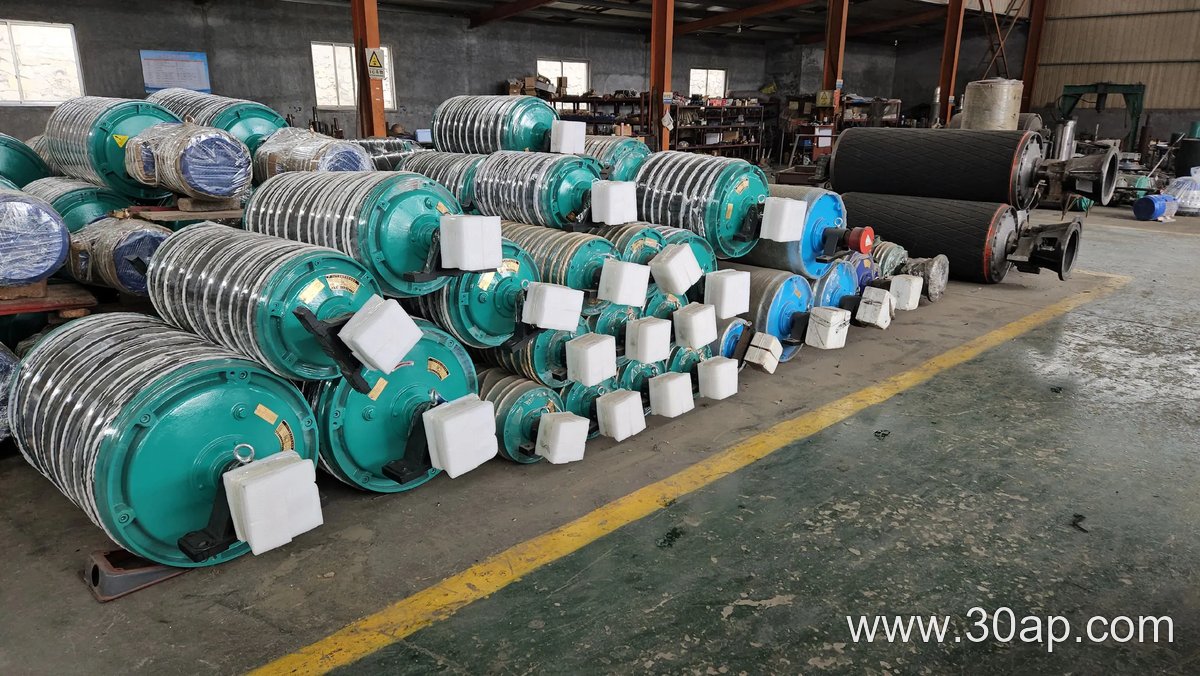
A discharge pulley is built around a steel shell, welded to end discs and a shaft. Common diameters run from Ø200 mm to Ø1800 mm, with shell lengths sized to the belt. For example, a B800 belt may use a face around 950 mm, while a B1200 unit often needs about 1400 mm. The shaft is selected by torque and load, not by belt width alone — Ø80, Ø120 or Ø160 shafts appear in different designs.
Surface options and lagging
Surface form affects grip and wear. Plain steel suits light, dry duty. Rubber lagging — cold‑bonded, hot‑spliced, diamond or herringbone — improves traction in wet or dusty conditions. Ceramic lagging is chosen for high abrasion. Lagging thickness commonly runs 8, 10, 12, 15 or 20 mm. The right choice depends on material, belt speed and whether the pulley is driving.
Where it is used
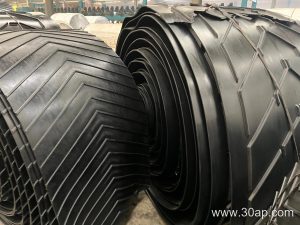
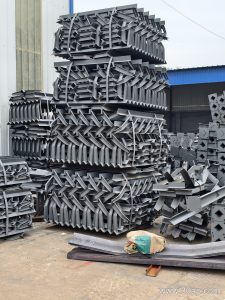
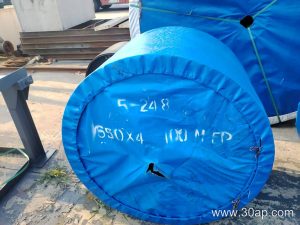
You will find discharge pulleys in sand and gravel lines, limestone mines, coal preparation plants and power‑station coal handling. They also appear in iron ore, copper concentrate and clinker transport. In each case the pulley works with the conveyor belt, idler rollers and conveyor brackets to keep the belt tracking and the load moving.
Matching the pulley to the conveyor
Several parameters guide selection. Belt width is one, but not the only one. A B650 belt might run on a Ø500 head pulley in one plant and a Ø630 in another, depending on tension and wrap angle. The table below shows common combinations, not fixed rules.
| Belt width | Typical pulley face | Common diameter range | Typical shaft range |
|---|---|---|---|
| B400 | ~500 mm | Ø200–Ø400 | Ø50–Ø80 |
| B650 | ~750 mm | Ø315–Ø630 | Ø70–Ø120 |
| B1000 | ~1150 mm | Ø500–Ø1000 | Ø100–Ø160 |
| B1400 | ~1600 mm | Ø630–Ø1250 | Ø120–Ø180 |
| B1800 | ~2000 mm | Ø800–Ø1600 | Ø140–Ø200 |
These values are reference data. A discharge pulley for a B1200 line could be Ø800 or Ø1000, depending on the drive and belt tension. Never assume one belt width locks you to one diameter.
What a buyer should check
- Position: head or discharge, not tail or bend.
- Drive duty: is the pulley powered or free‑running?
- Lagging type and thickness for the material.
- Shaft diameter and bearing size from the actual load.
- Face width greater than belt width, with room for tracking.
In a coal mine or a sand plant, a discharge pulley that is undersized for torque will slip or wear the lagging quickly. Over‑specifying adds cost and weight. The practical approach is to give the supplier the belt width, belt speed, material, tonnage and drive arrangement, then let the pulley be sized as a complete unit.
Maintenance notes
Check lagging wear, especially on the drive side. Worn diamond or herringbone rubber reduces grip. Inspect the shaft and bearing seats for fretting. Keep the pulley aligned with the conveyor frame and the idler rollers so the belt does not run off. In dusty cement or quarry service, clean buildup from the shell to prevent imbalance.
For any discharge pulley project, treat the drum, shaft, bearings and lagging as one assembly. The right combination keeps the belt running true from the head to the tail, whether the line carries crushed stone, clinker or coal.