What a Mining Equipment Idler Does on a Conveyor
A mining equipment idler is the rotating support that carries the conveyor belt along its path. It does not drive the belt, and it does not change the belt direction; those jobs belong to the conveyor pulley at the head, tail, or bend station. The idler roller simply supports the belt and the material load, letting the belt move with low resistance while keeping the belt profile stable. In hard rock, coal, and aggregate operations, idlers are among the most numerous components on a conveyor, so their condition strongly affects belt tracking, power demand, and maintenance frequency.
How an Idler Roller Is Built
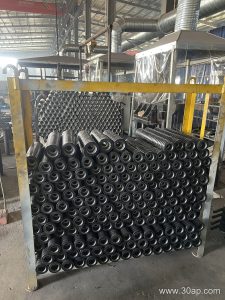
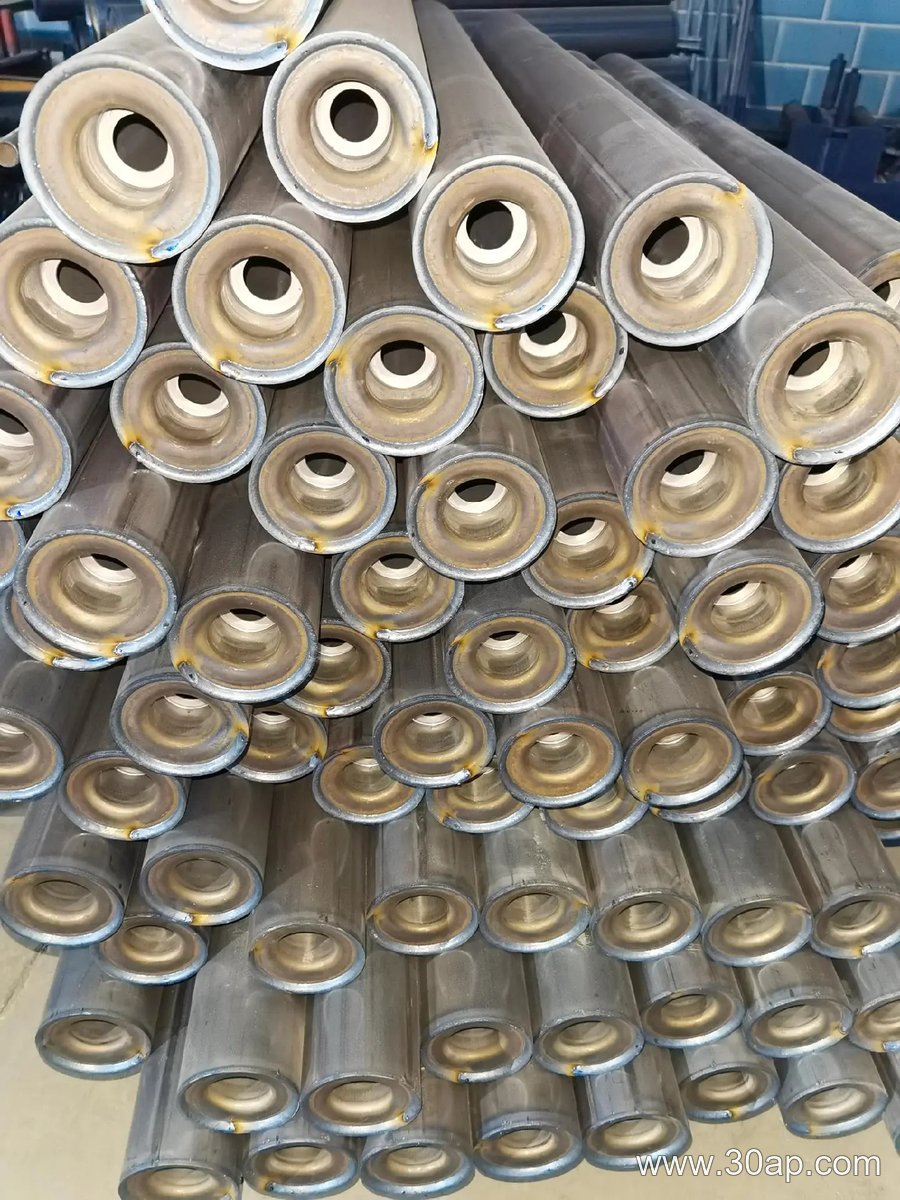
A typical idler roller has a steel tube shell, two end caps, a shaft, bearing housings, and a sealing arrangement. The shaft usually runs through the roller and is held at both ends by a conveyor bracket or frame. Bearings are commonly deep-groove ball bearings such as 6204, 6205, 6305, 6306, 6308, or 6310, but the correct bearing depends on load, speed, and roller diameter rather than on belt width alone. Roller diameters often range from about 63 mm to 219 mm, and a larger diameter is generally chosen when the belt is wide, the load is heavy, or the belt speed is high.
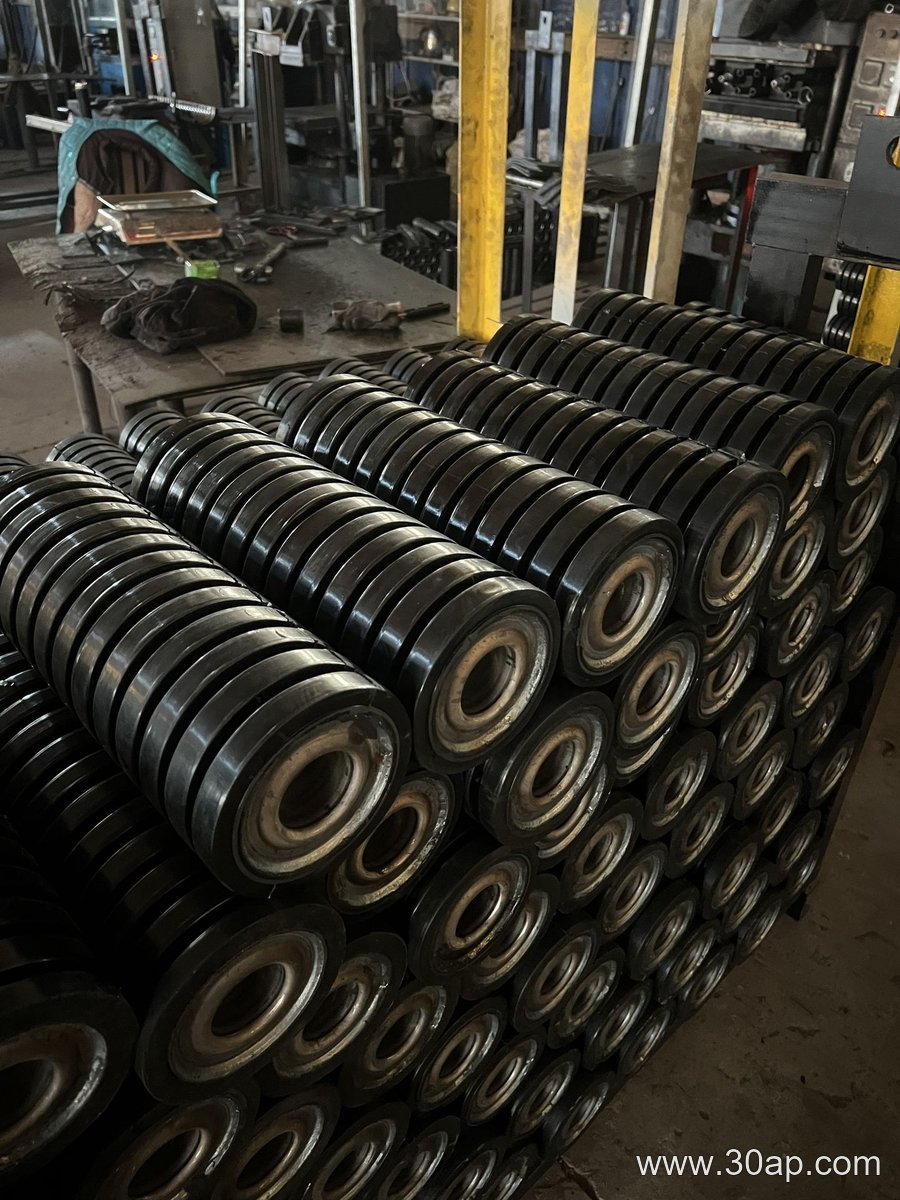
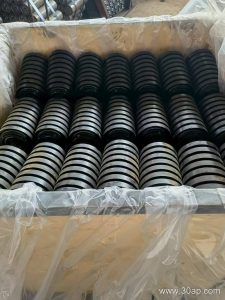
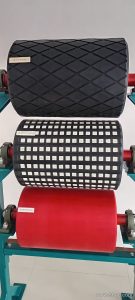
The roller surface may be plain steel, nylon, ceramic, or rubber. Rubber rings are often used on impact idlers under a loading chute, where falling material would otherwise damage a standard steel shell. Ceramic or nylon surfaces can help in wet or sticky conditions, though the choice should follow the actual material and environment. Seals matter as much as the bearing itself in dusty mines. A good labyrinth or contact seal keeps fine grit out and grease in, which extends service life in a quarry or coal preparation plant.
Common Idler Types and Where They Fit
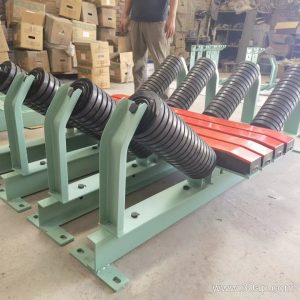
The main working positions are the carrying side and the return side. On the carrying side, a troughing idler set usually has two or three rolls that form a trough. A single-roll flat idler is used where the belt can run flat, and a two-roll set is common on narrower belts. Three-roll troughing idlers are widely used on wider belts because they support the belt with a deeper trough and keep material centered. The trough angle is often 20, 30, 35, or 45 degrees; a steeper angle suits free-flowing material, while a shallow angle may be better for large lumps or a transition zone.
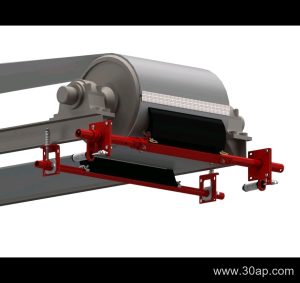
On the return side, a flat return idler supports the empty belt. A V-return idler uses two rolls set at an angle to help center the belt, and a spiral idler can reduce material buildup on the return strand. Training idlers, including friction and tapered types, are added where the belt tends to drift. Impact idlers and rubber-ring impact idlers are placed below the loading point to absorb the energy of falling ore or rock. Transition idlers sit between the head or tail pulley and the first full troughing set, guiding the belt as it changes from flat to troughed. These are all idler subtypes; they are not interchangeable with a drive pulley, a tail pulley, or a bend pulley.
Where Mining Equipment Idlers Are Used
In a quarry or sand and gravel line, idlers carry crushed stone from the crusher to the screen and then to stockpiles. In a coal preparation plant, they support the belt through washing and sizing circuits, where dust and moisture can be present. The same component appears in iron ore, copper ore, and limestone operations, as well as in cement plants and power-plant coal handling. The working conditions change the specification: a primary crusher discharge may need heavy impact rolls, while a clean product belt may use standard troughing idlers.
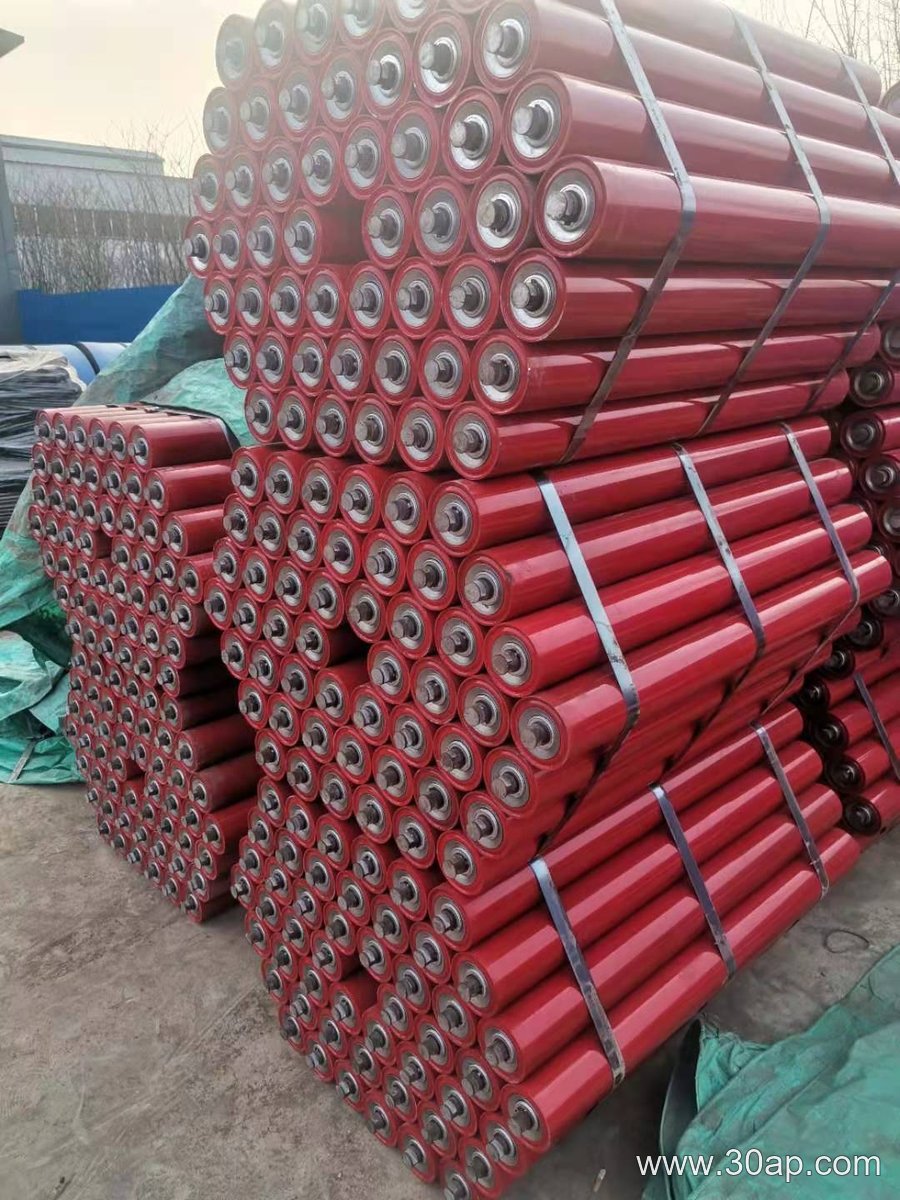
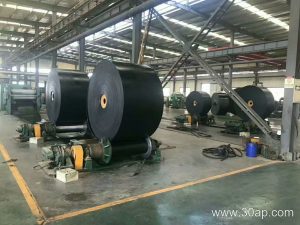
A conveyor belt is only as good as the idlers under it. If a roller seizes, the belt drags across a stationary shell, which can wear the belt cover, increase motor current, and misalign the belt. If a bearing collapses, the roller may drop and cut the belt. Regular inspection of roller rotation, noise, and end-play is therefore part of normal conveyor maintenance.
What Buyers Should Check Before Ordering
Begin with the belt width and the troughing configuration, because roller length follows the belt width, trough angle, and roll arrangement. For example, a three-roll troughing set on a B800 belt commonly uses a roll length near 315 mm, while a B1200 belt may use a roll near 465 mm. These are common reference examples, not fixed pairings, and side rolls can differ from the center roll. Do not assume that one belt width can only match one pulley diameter or one shaft diameter; the shaft and bearing are selected from the actual load and design.
Check the roller diameter, shaft diameter, bearing seat, and mounting dimensions against the existing conveyor bracket. Confirm the seal type for the site conditions, and decide whether the shell should be steel, nylon, ceramic, or rubber-covered. For a replacement program, it helps to group idlers by position: carrying, return, impact, training, and transition. That way, the maintenance team can stock the right spare without mixing a troughing roll with a return roll or a drive pulley. A clear specification of type, roll diameter, roll length, shaft, bearing, and seal will reduce ordering errors and keep the conveyor running.