What a 650mm Conveyor Belt Is
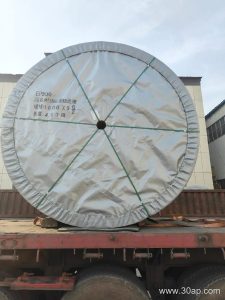
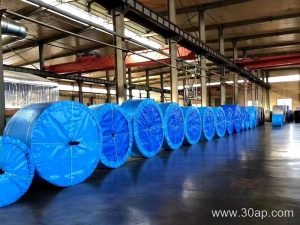
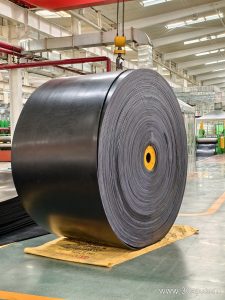
A 650mm conveyor belt is a belt with a nominal width of 650 millimetres, often written as B650 in technical documents. It sits in the middle range of common belt widths, between narrow belts used on small machines and wide belts used for high-tonnage bulk handling. Because of that middle position, it appears in many industrial settings where the conveyor must carry a steady flow of material without becoming too heavy or too wide for the structure.
The width is only one part of the specification. A complete description also includes the tension rating, the carcass construction, the cover grade and thickness, and any surface pattern or profile. Two belts with the same 650mm width can behave very differently if one is a light PVC belt and the other is a heavy-duty steel cord belt.
How the Belt Is Built
Most 650mm conveyor belts have three main layers. The carcass carries the tension and resists stretching. Common carcass options include EP fabric, NN nylon fabric, and steel cord. A fabric belt in this width often uses two to six plies depending on the load and the centre distance. Steel cord belts use parallel steel cables instead of fabric plies and are chosen for long runs and high tension.
The cover protects the carcass from abrasion, impact, heat, oil, and chemicals. Cover thickness is usually written as top plus bottom, for example 4+2 mm or 6+2 mm. A thicker top cover lasts longer when the material is sharp or heavy, while the bottom cover protects the pulley side.
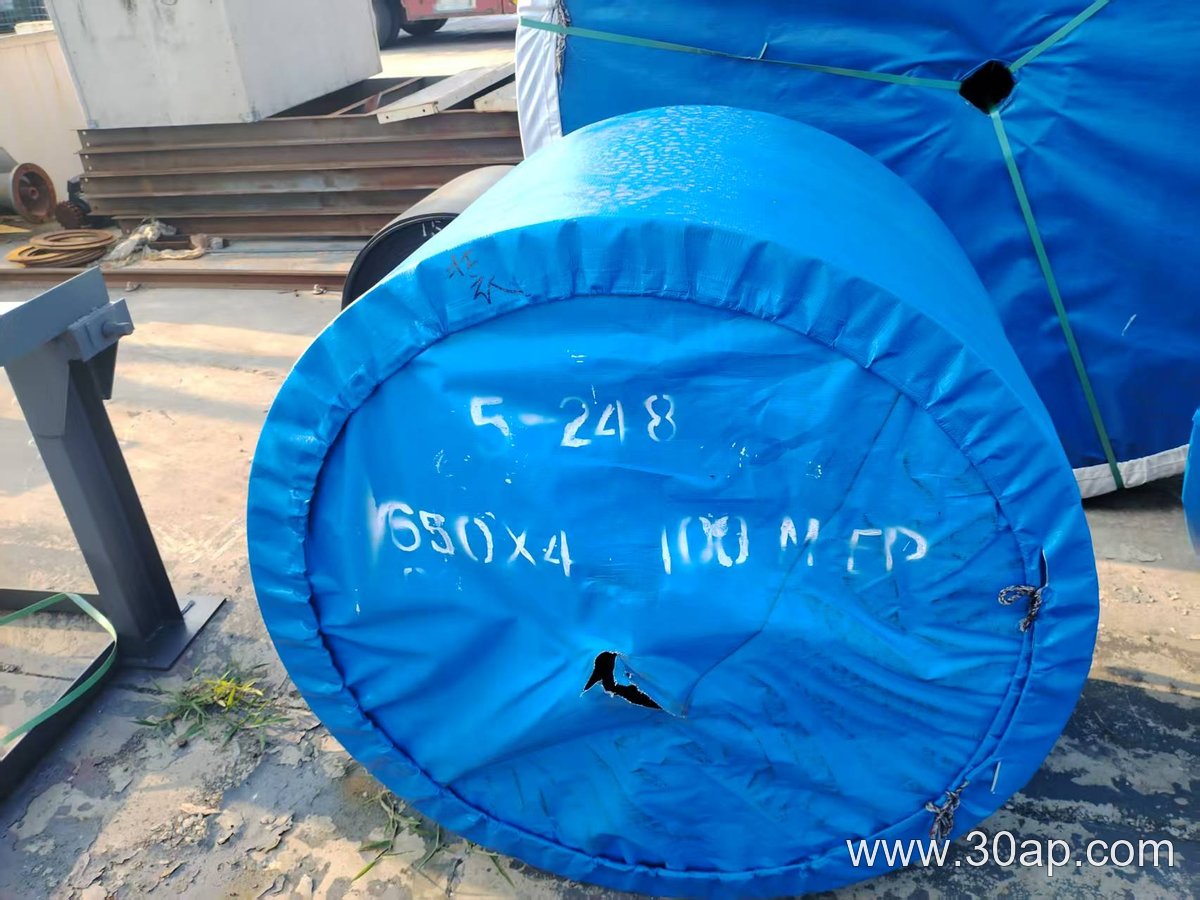
Edge construction matters too. Cut edges are common on fabric belts, while moulded edges are used when the belt must resist fraying or moisture. For special duties, the surface may be smooth, patterned with a chevron or herringbone profile, or fitted with corrugated sidewalls to stop material spilling.
Where It Fits in a Conveyor
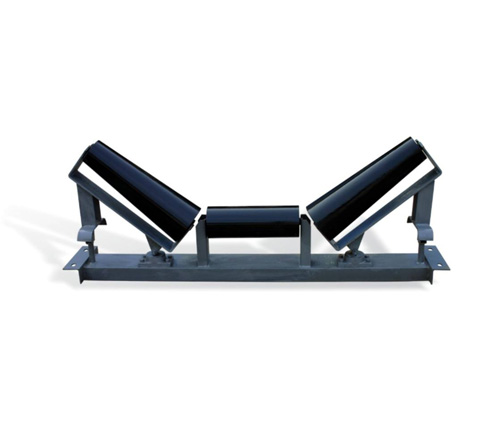
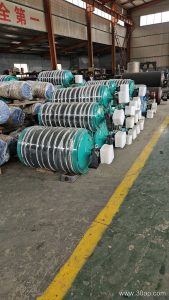
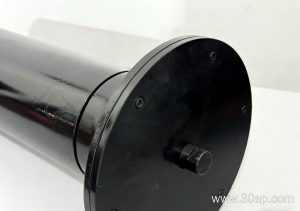
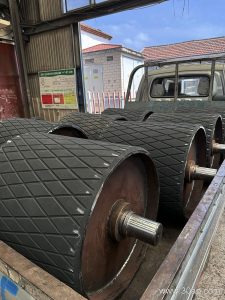
A 650mm belt runs over a set of pulleys and is supported by idler rollers along the carrying side. The drive pulley pulls the belt, the tail pulley returns it, and bend pulleys change direction where the layout requires. These pulley roles are not interchangeable. The drive pulley transmits torque, the tail pulley usually guides and tensions, and a bend pulley only redirects the belt. Choosing the wrong pulley for a role affects belt tracking and life.
Conveyor brackets and frames hold the idlers and pulleys in alignment. If the frame is twisted or the idlers are set at the wrong angle, even a well-made belt will drift to one side. The belt width must suit the material size and the desired capacity, but it does not by itself fix the pulley diameter. Pulley diameter is selected from belt tension, carcass type, and the required wrap angle, not from width alone.
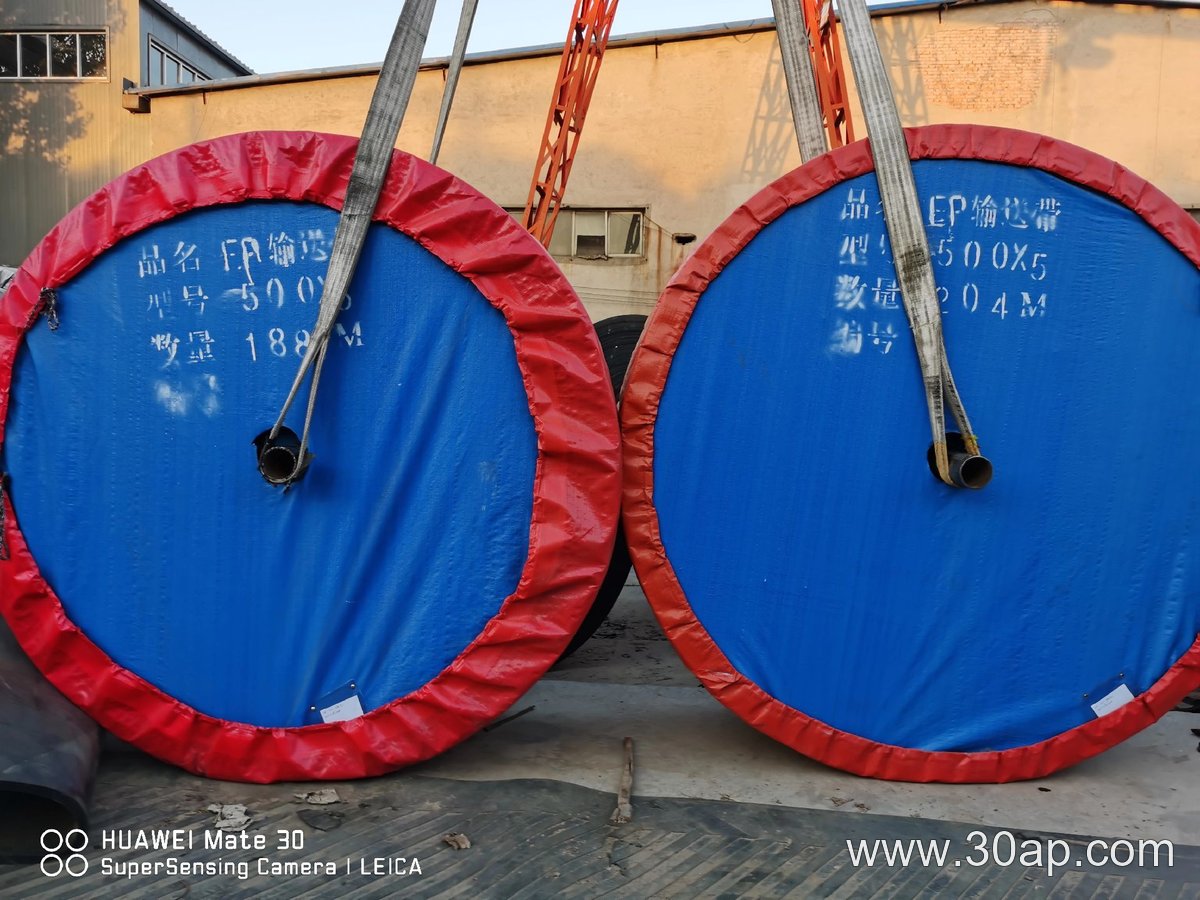
Typical Applications
Because 650mm is a practical mid-size width, it is used in many bulk and unit handling duties. Examples include:
- Crushed stone, sand, and gravel on quarry and aggregate lines
- Coal and coke in processing plants
- Fertiliser, grain, and other agricultural bulk materials
- Packages and cartons on light assembly or sorting lines
- Recycled material and general factory waste handling
For hot materials, a heat-resistant cover is used. For oily parts or food-related lines, an oil-resistant or PVC belt may be more suitable. In dusty or explosive atmospheres, antistatic and flame-retardant grades are common choices.
What Buyers Should Check
Before ordering a 650mm conveyor belt, confirm the actual belt width, the tension rating such as EP400 or EP630, the number of plies, and the cover thickness. Ask whether the surface should be smooth, patterned, or sidewalled. Check the minimum pulley diameter recommended for the chosen carcass, because a belt bent over too small a pulley can crack or delaminate.
Also confirm the joint method. Vulcanised splices are stronger and smoother, while mechanical fasteners allow faster replacement. The environment matters as well: temperature range, moisture, dust, and chemical exposure all affect belt life. Finally, verify that the idlers, pulleys, and brackets match the belt width and load so that the whole conveyor works as one system rather than a collection of parts.